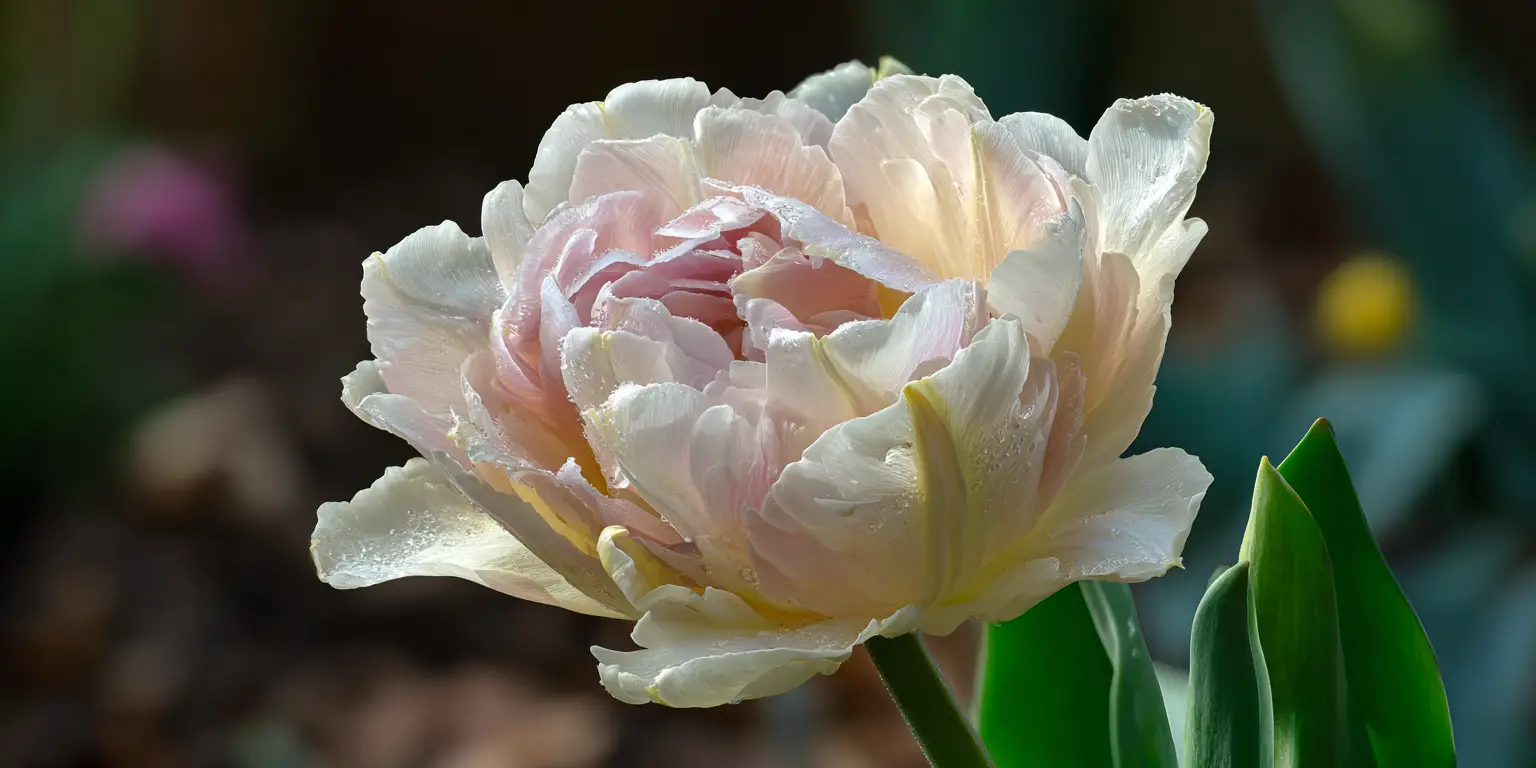
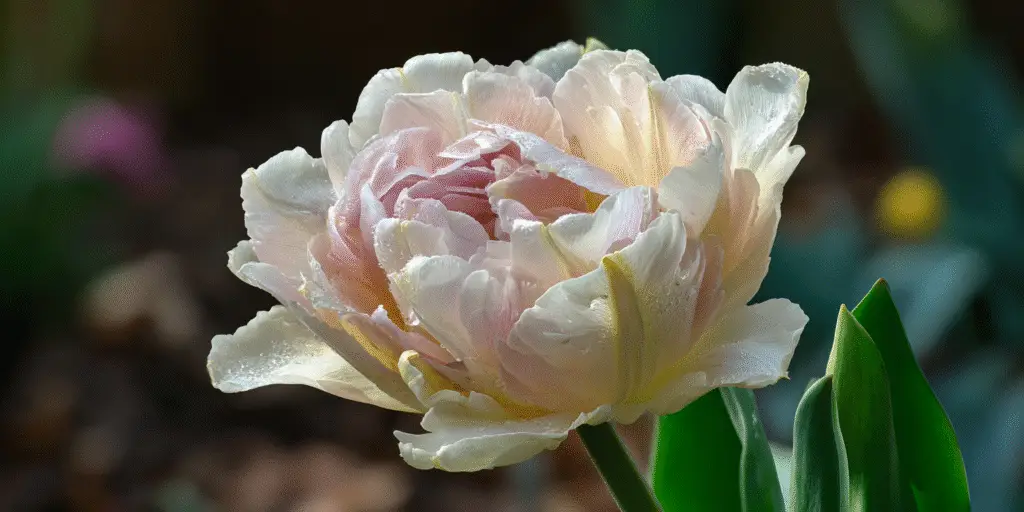
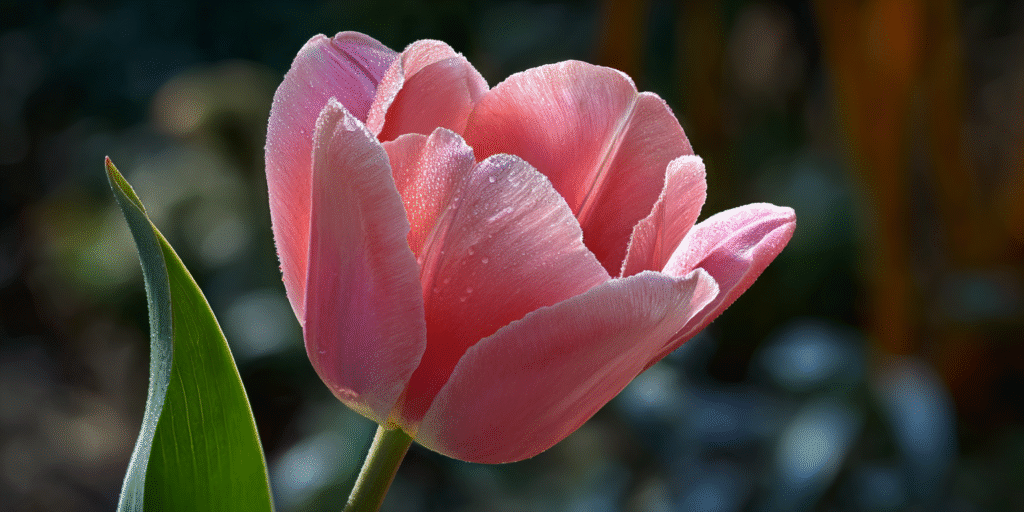
A Double Late tulip with peony‑like, blush‑pink blooms. Flowers late in spring and benefits from a sheltered site. Stems are sturdy, but heavy blooms can be marked by wind or rain. Best in USDA zones 3 to 8; grow as an annual where winters are mild. Well suited to containers and cutting for soft, late color.
At‑a‑glance
Group/Class: Double Late
Height × spread: 16–18 in (40–45 cm) × 4–6 in (10–15 cm)
Bloom window: late spring
Color & flower form: soft pink; peony‑like double
Fragrance: 1 trace
USDA hardiness: zones 3 to 8
Breeder / Year / Origin: unknown
Awards/registration: RHS Award of Garden Merit
Cut‑flower notes: heavy, double heads; handle gently; about 5–7 days in vase; do not mix with fresh‑cut daffodils for first 24 hours
Pet safety: avoid
How it differs
Fully double, peony‑like form versus single cups.
Shorter stature than many Single Late and Darwin Hybrids.
Late to very late bloom extends tulip season.
More weather‑sensitive due to extra petals.
Strengths
Full, romantic look in a compact plant.
Good in containers and sheltered borders.
Useful for cutting when harvested at first color.
Care in one minute
Full sun and a sheltered site.
Moist, well‑drained, moderately fertile soil.
Plant 6 in deep and 5–6 in apart; water to settle.
Light feed as shoots emerge; avoid overwatering.
Deadhead; let foliage ripen; lift in warm‑summer regions.
Zones 8–10: pre‑chill bulbs and grow as annuals.
Watch‑outs
Petals can bruise or shatter in wind and heavy rain.
Often unreliable to perennialize; replant for best display.
Requires sharp drainage to limit bulb rot.
Best uses (tags)
containers, borders, cutting, late season, mass planting
Provenance note
A long‑grown Double Late selection recognized by the RHS with the AGM.
Known for late bloom and peony‑like flowers in soft pink shades.
Written by: Your Flowers Guide editorial team We are a small independent group of flower lovers who research and review each guide using trusted horticultural and educational sources. Learn more about us