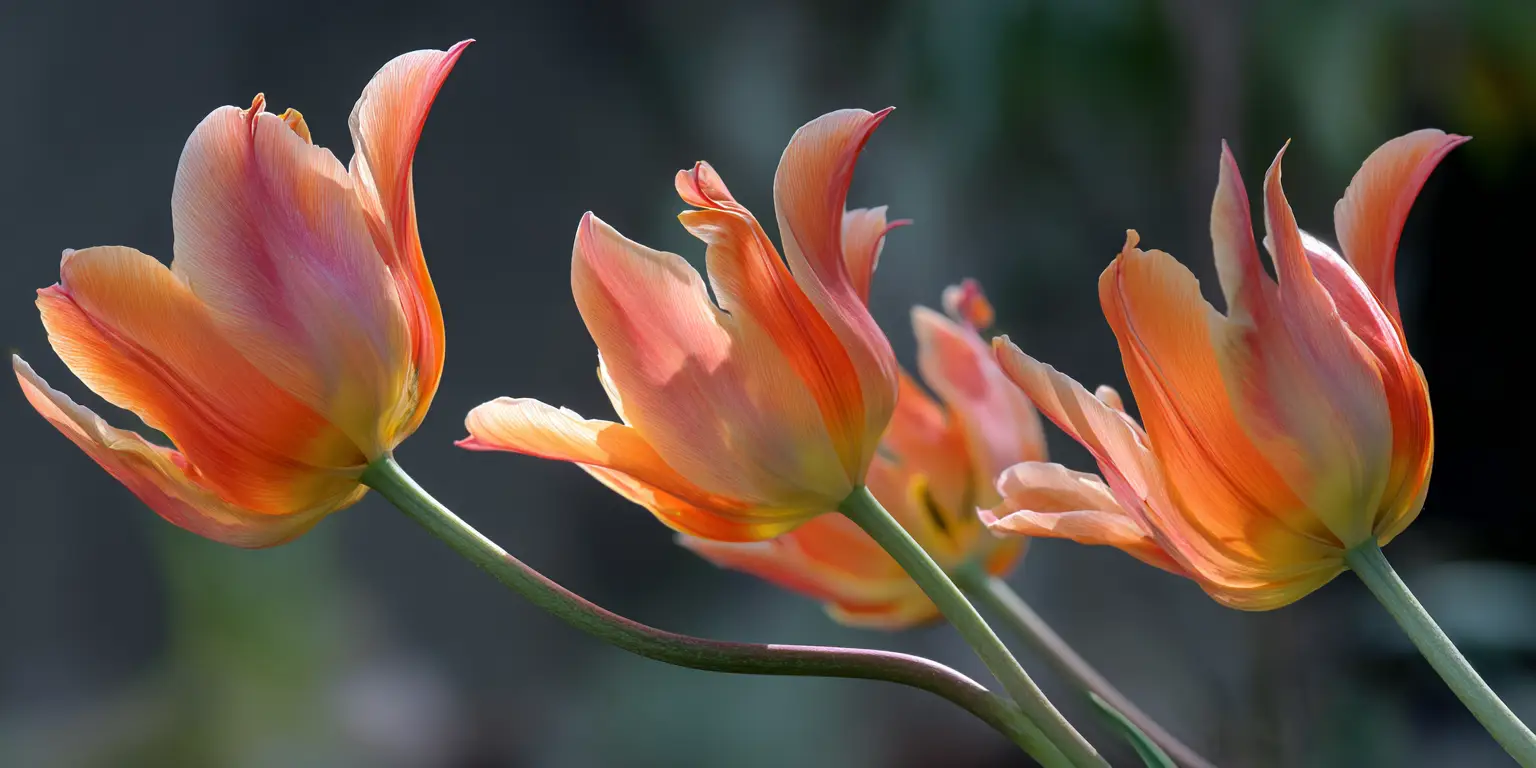
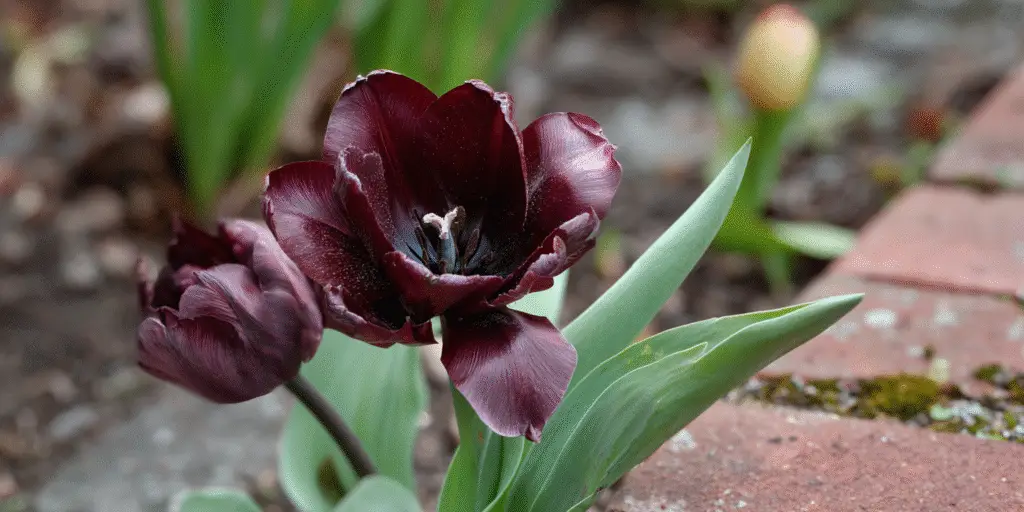
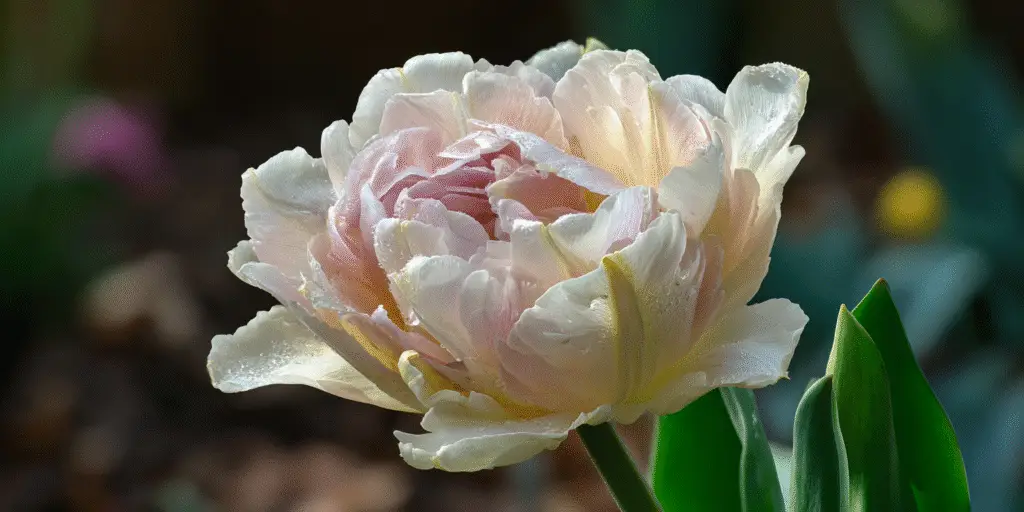
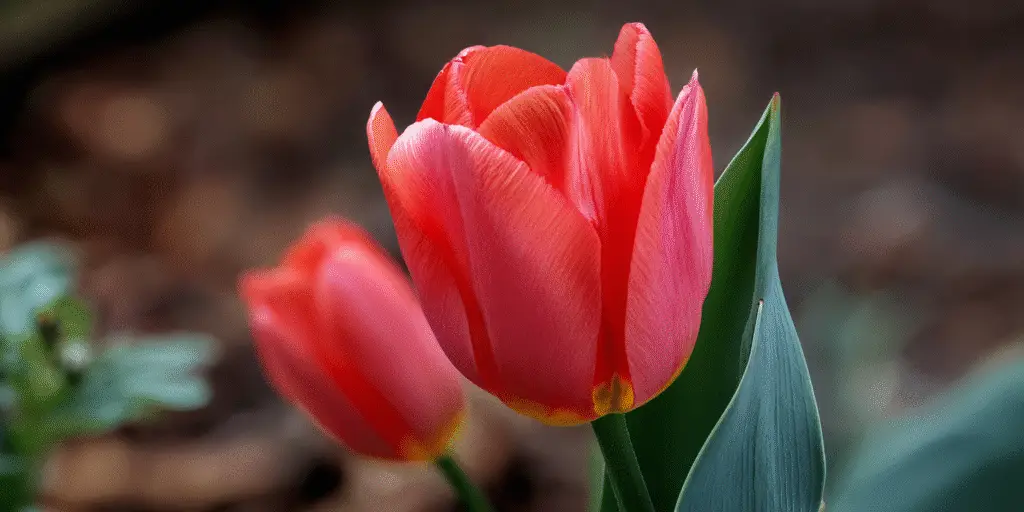
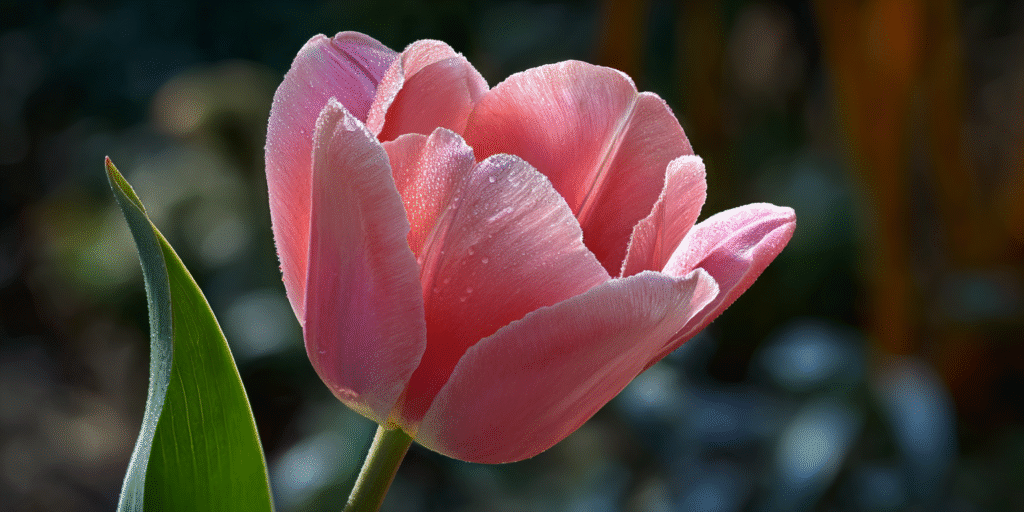
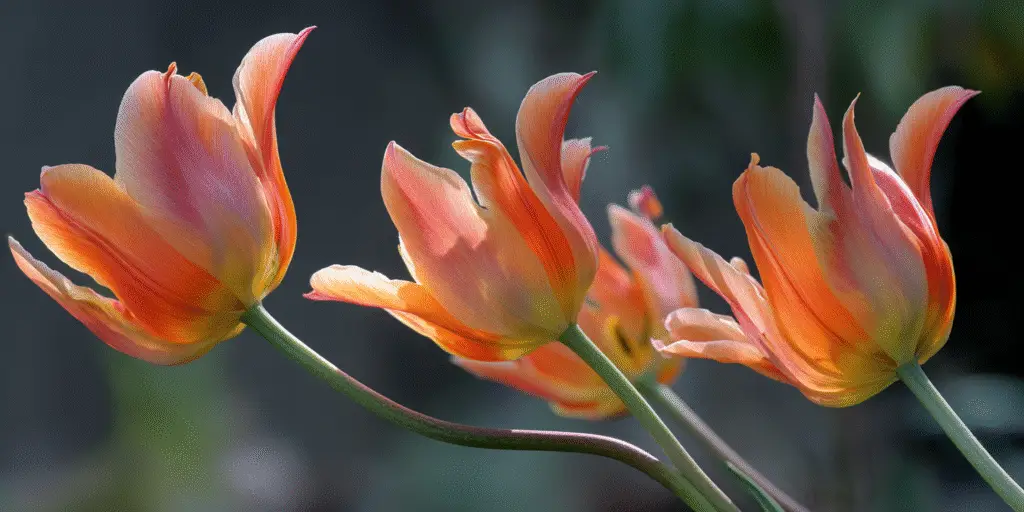
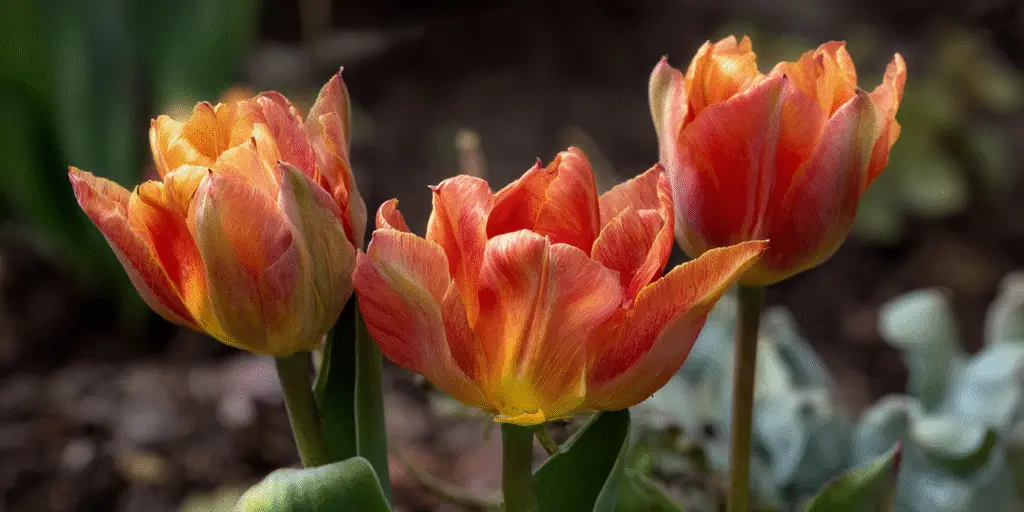
A lily‑flowered tulip with slender, pointed petals in luminous tangerine orange. Blooms late in spring and carries a noticeable sweet perfume. Tall stems suit borders and cutting. Grows in USDA zones 3 to 8; treat as annual in warm‑winter regions.
At‑a‑glance
Group/Class: Lily‑Flowered
Height × spread: 20–24 in (50–60 cm) × 4–6 in (10–15 cm)
Bloom window: late spring
Color & flower form: tangerine orange; lily‑flowered pointed petals
Fragrance: 2 noticeable
USDA hardiness: zones 3 to 8
Breeder / Year / Origin: unknown
Awards/registration: RHS Award of Garden Merit
Cut‑flower notes: slender yet strong stems; about 5–7 days in vase
Pet safety: avoid
How it differs
Distinct lily‑flowered silhouette versus standard cup shape.
Noticeable fragrance uncommon among tulips.
Late bloom extends the tulip season.
Strengths
Unique form and luminous color for combinations.
Good stem quality for cutting.
Proven performance signaled by the RHS AGM.
Care in one minute
Full sun; well‑drained, moderately fertile soil.
Plant 6–8 in deep and 4–6 in apart; water to settle.
Light feed as foliage emerges; avoid wet soils in summer dormancy.
Deadhead after bloom; allow foliage to die back naturally.
Zones 8–10: pre‑chill bulbs and replant annually.
Watch‑outs
Petals open wide in heat, shortening display on hot days.
Less persistent than species tulips over multiple years.
Disease pressure increases in wet springs; ensure air flow.
Best uses (tags)
cutting, borders, fragrance near paths, late season, containers
Provenance note
Long‑grown lily‑flowered selection; recognized with the RHS AGM.
Noted for fragrance and late bloom within the tulip season.
Written by: Your Flowers Guide editorial team We are a small independent group of flower lovers who research and review each guide using trusted horticultural and educational sources. Learn more about us