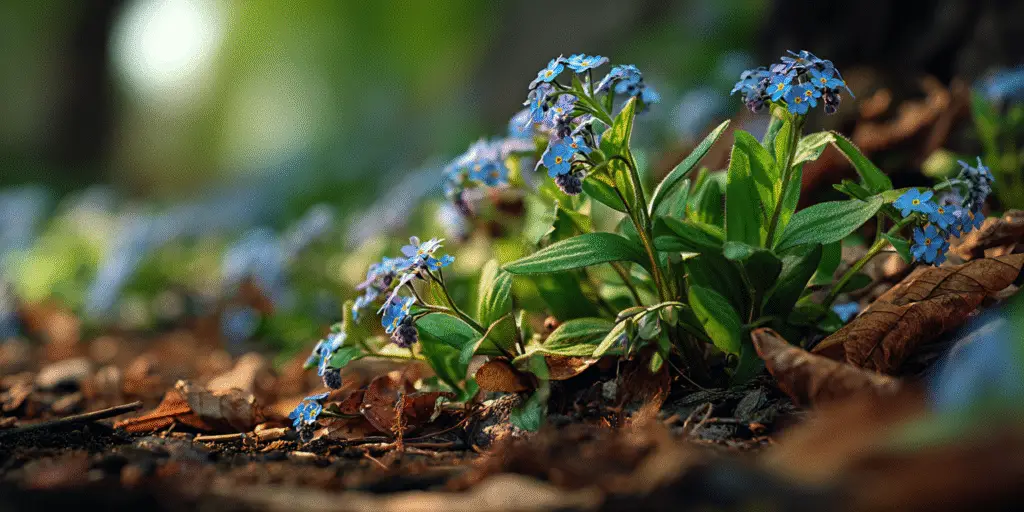
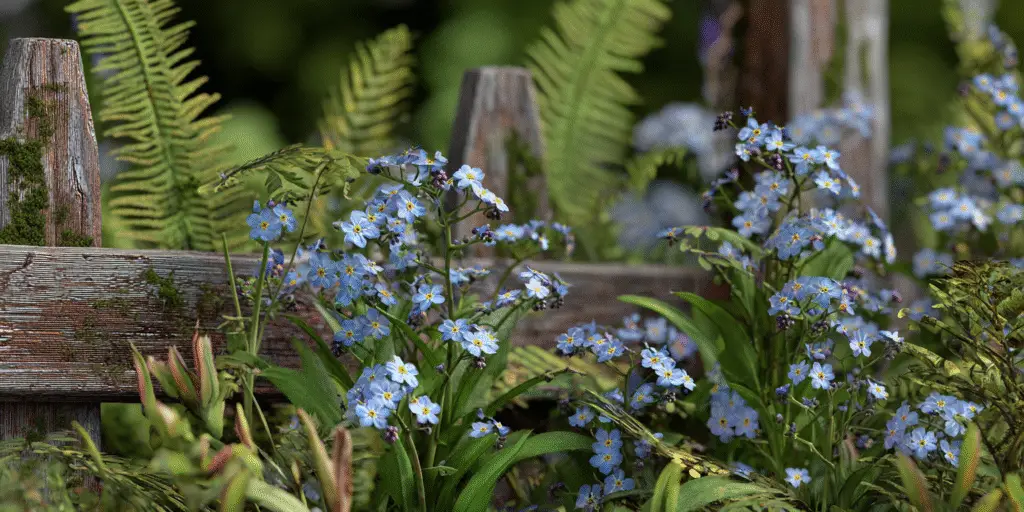
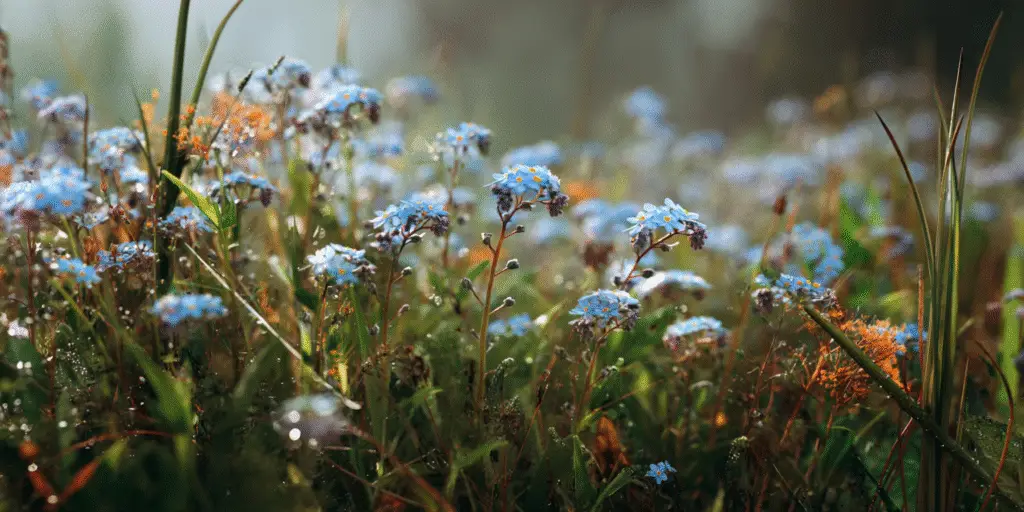
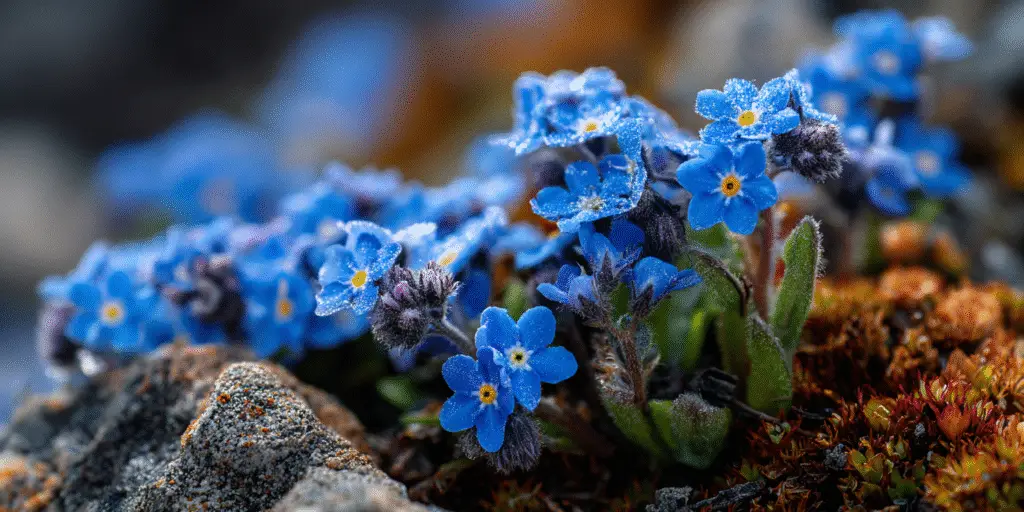
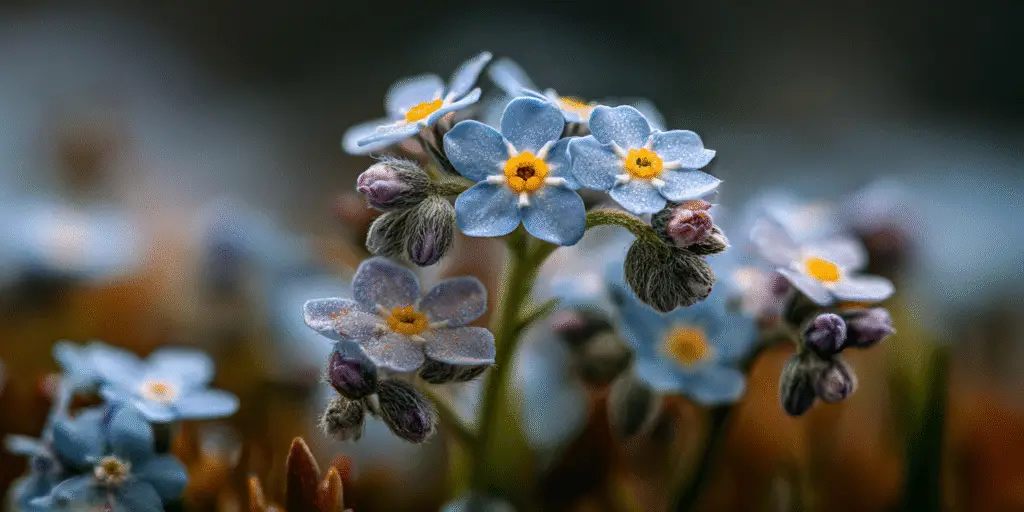
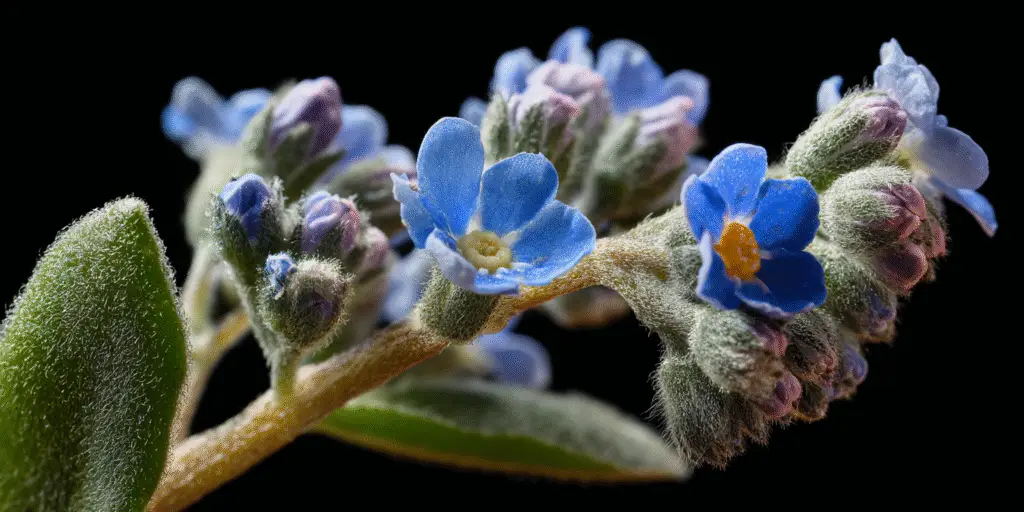
True forget‑me‑not (Myosotis scorpioides) is a rhizomatous, marginal aquatic species for pond edges and consistently wet soils. It carries light sky‑blue flowers over a long season in late spring and summer. Plants creep slowly and root at the nodes to make small colonies. It performs best in full sun to part shade with saturated to shallowly submerged soil. Introduced from Europe and Asia, it is now naturalized in many wet places across North America.
At‑a‑glance
Group/Class: species; marginal aquatic
Height × spread: 6 to 10 in × 9 to 12 in (15 to 25 cm × 23 to 30 cm)
Bloom window: May to August
Color & flower form: light sky‑blue five‑lobed flowers with yellow eye in coiled cymes
Fragrance: 0 none
USDA hardiness: zones 5 to 9
Breeder / Year / Origin: unknown
Pet safety: safe
How it differs
thrives in saturated soil and along pond margins
longer bloom window than typical woodland forms
spreads by rhizomes and rooting stems
taller and more sprawling than compact bedding types
Strengths
excellent for rain gardens and water features
long bloom in cool summers
handles wet soil well
attractive to pollinators
Care in one minute
Site in full sun to part shade at the water’s edge or in saturated soil.
Use loamy, organic soil; keep crowns just above standing water for best growth.
Do not allow soil to dry out; plants can be shallowly submerged.
No heavy feeding is needed; top‑dress with compost in spring.
Trim back after flowering to control spread and encourage fresh growth.
Monitor for escape and remove from natural streams where restricted.
Watch‑outs
can spread along waterways in favorable climates
check local advisories before planting near natural streams
needs constant moisture to look its best
Best uses (tags)
water gardens, pond margins, rain gardens, naturalizing
Provenance note
Native to Europe and western Asia, Myosotis scorpioides is widely naturalized in North America; it is also known by the synonym Myosotis palustris.
Written by: Your Flowers Guide editorial team We are a small independent group of flower lovers who research and review each guide using trusted horticultural and educational sources. Learn more about us