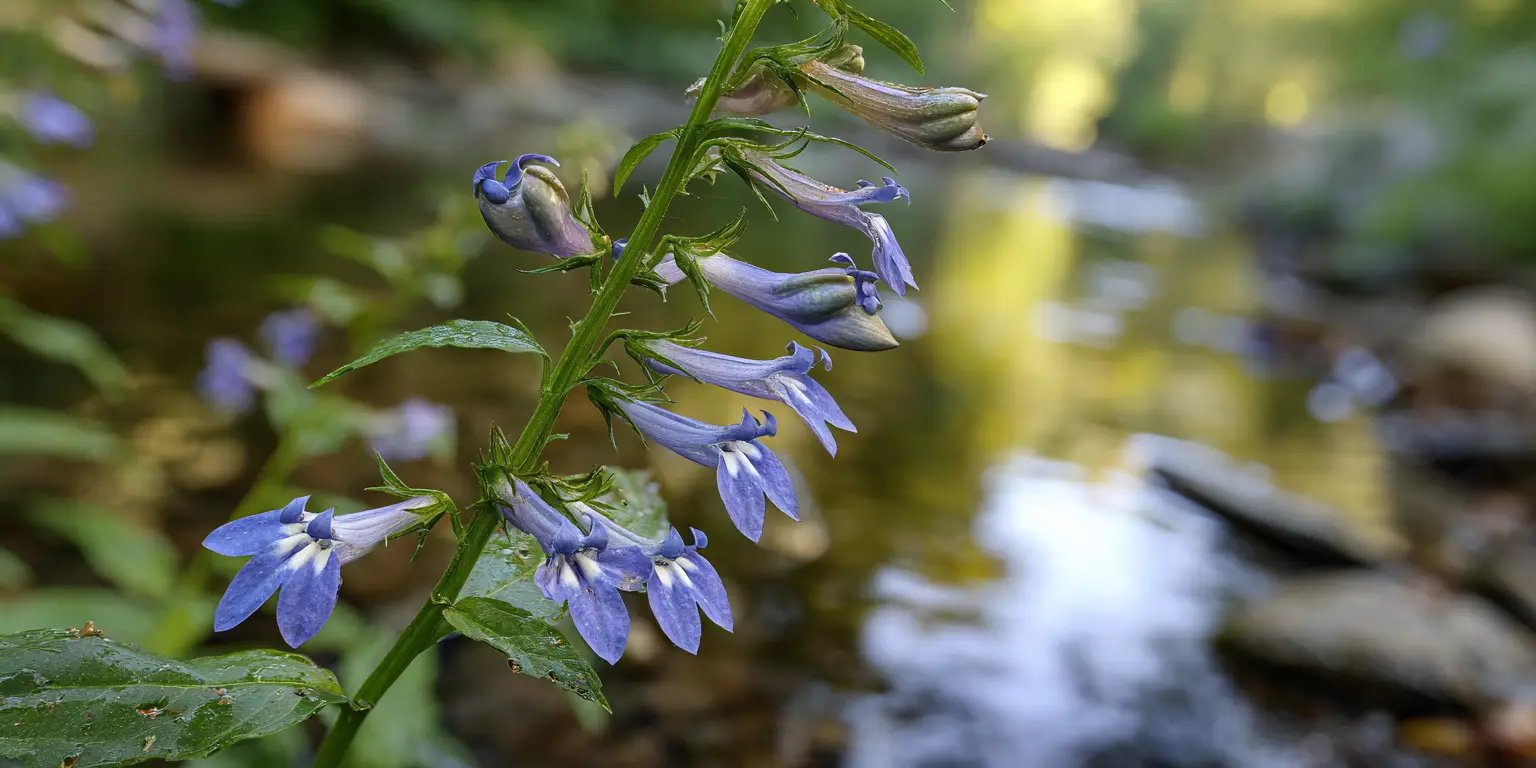
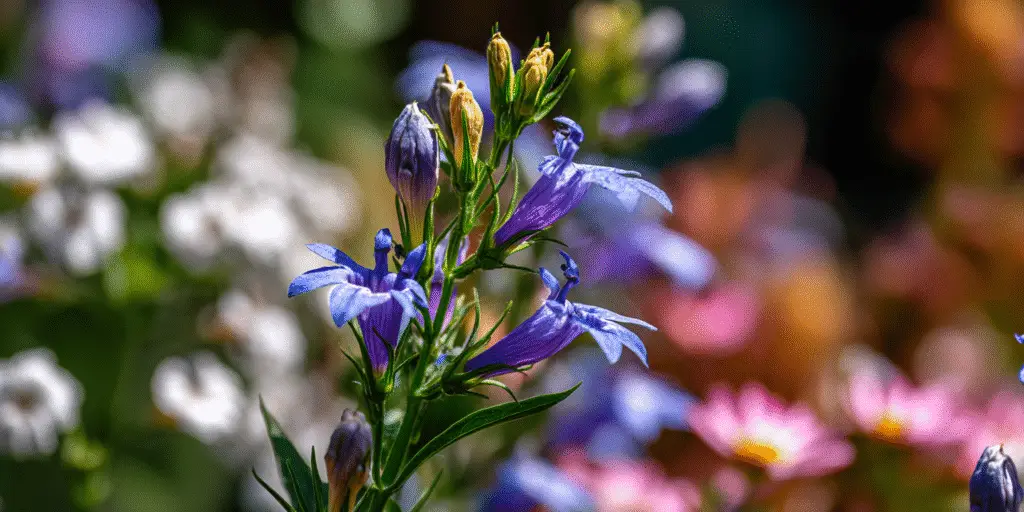
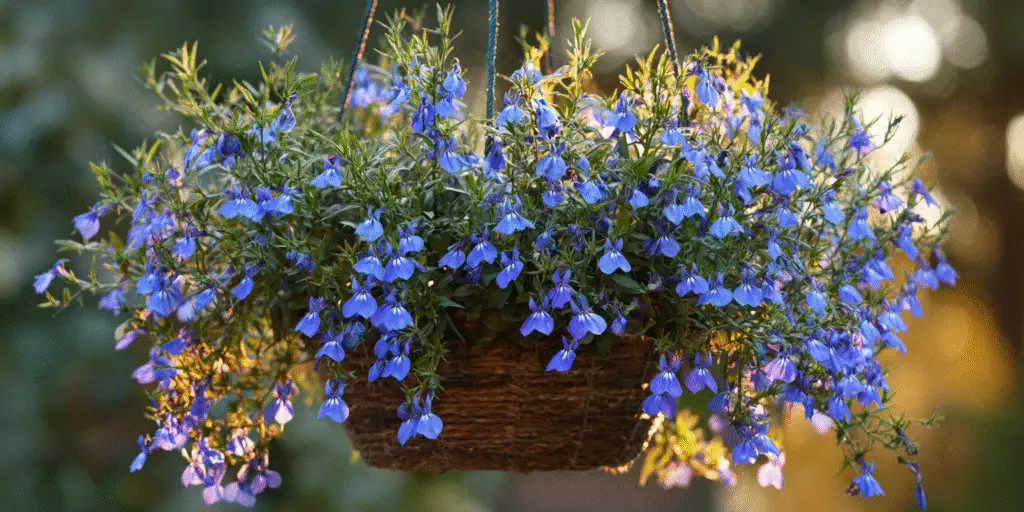
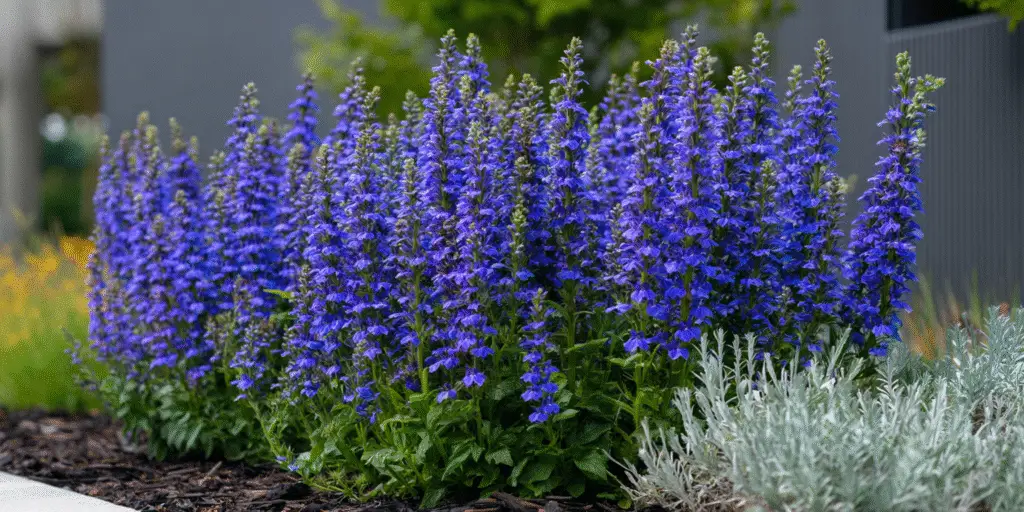
Great blue lobelia is a clump‑forming native perennial for rain gardens and pond edges. Plants reach 2 to 3 feet tall with upright spikes of blue, two‑lipped flowers in late summer. It grows best in full sun to part shade with rich, consistently moist soil. It tolerates wet sites and heavier soils when drainage is steady. It is reliable in cool to moderate summers across much of North America. In ideal conditions it may self‑seed and form small colonies.
At‑a‑glance
Group/Class: Species; herbaceous perennial
Height × spread: 24-36 in (60-90 cm) × 12-18 in (30-45 cm)
Bloom window: July to September
Color & flower form: Blue tubular flowers in dense terminal racemes
Fragrance: 0 none
USDA hardiness: zones 4-9
Breeder / Year / Origin: wild species; unknown; Eastern North America
Pet safety: avoid
How it differs
• Baseline species for the Great Blue Lobelia group in stature and timing. • Hardier to cold than many hybrid fan lobelias. • Later summer bloom compared with many border perennials. • Performs best in wetter soil than most perennials.
Strengths
Dependable late‑season color in rain gardens.
Tolerates wet soil and brief flooding when established.
Low maintenance in rich, moist sites.
Care in one minute
Site and light: full sun to part shade; afternoon shade helps in hot summers.
Soil and pH: rich, humusy soil with steady moisture; slightly acidic to neutral.
Watering: keep evenly moist from spring to fall; do not allow to dry out.
Feeding: work in compost in spring; avoid heavy nitrogen.
Grooming: remove spent spikes to tidy; divide clumps in spring if crowded.
Overwintering: hardy in the region; mulch lightly only where frost heave is common.
Watch‑outs
Needs consistent moisture; stems and foliage decline in drought.
Written by: Your Flowers Guide editorial team We are a small independent group of flower lovers who research and review each guide using trusted horticultural and educational sources. Learn more about us