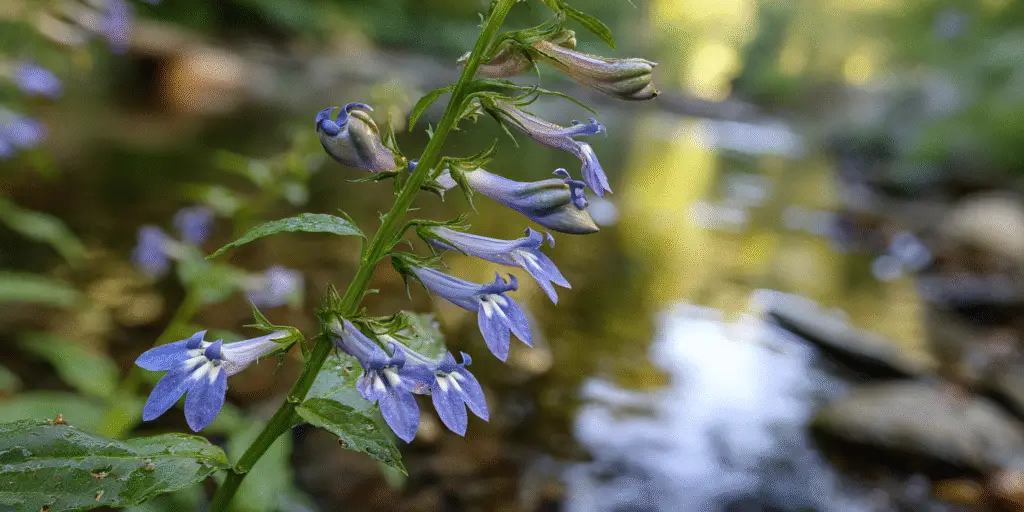
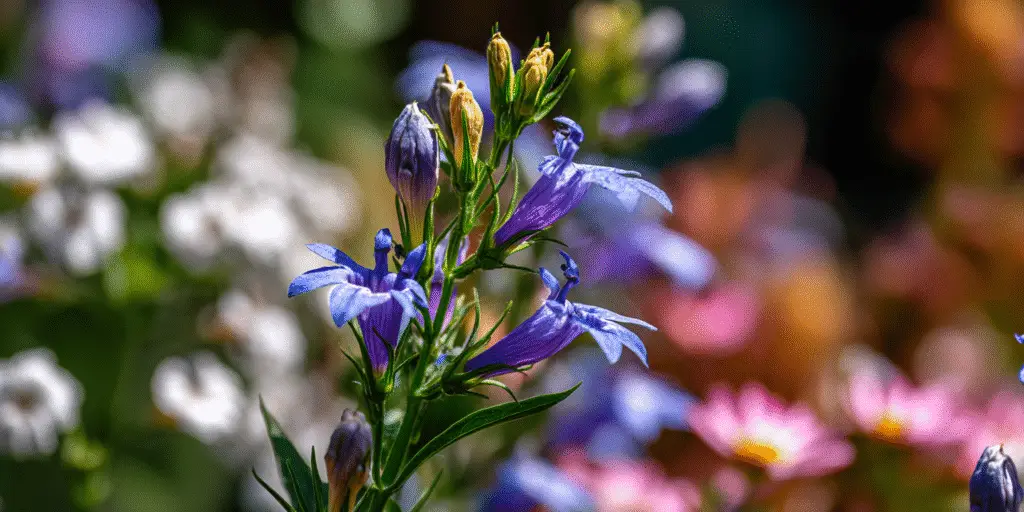
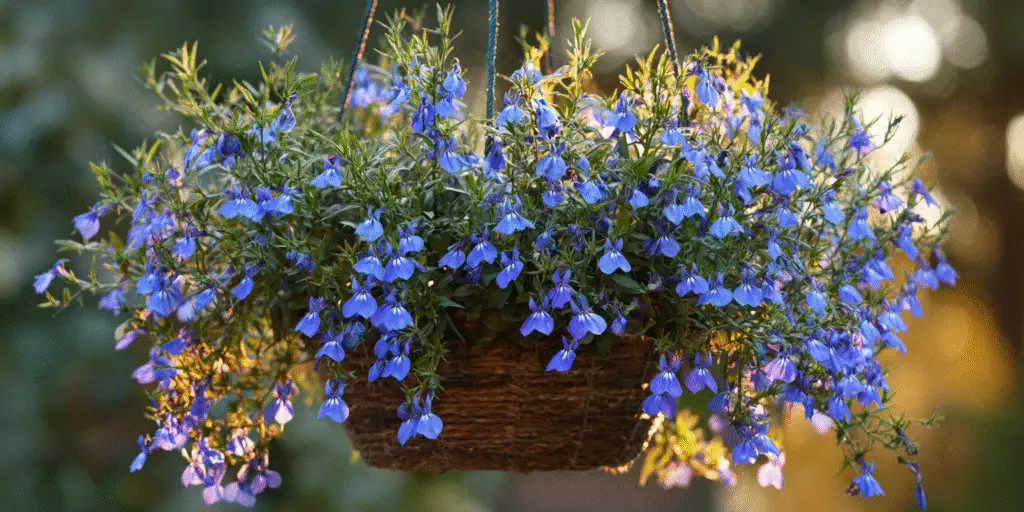
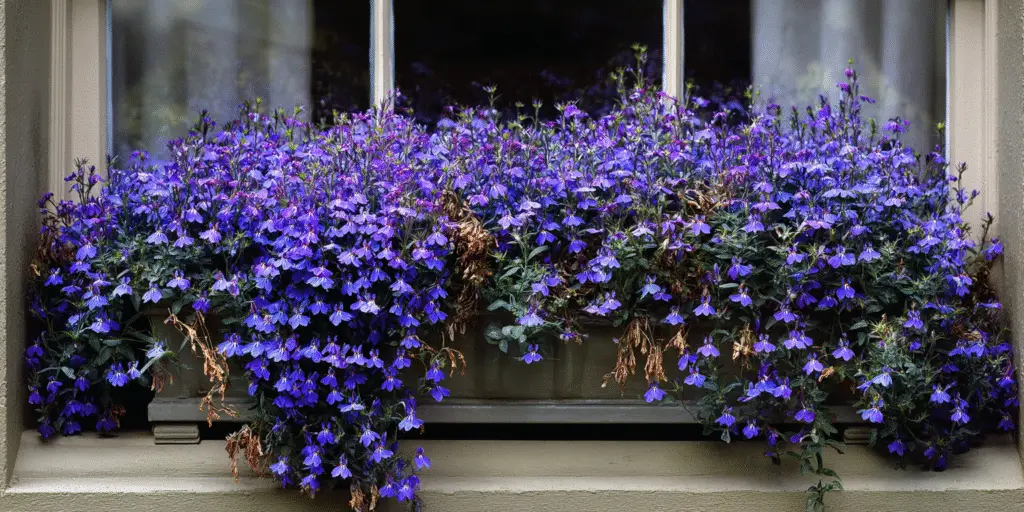
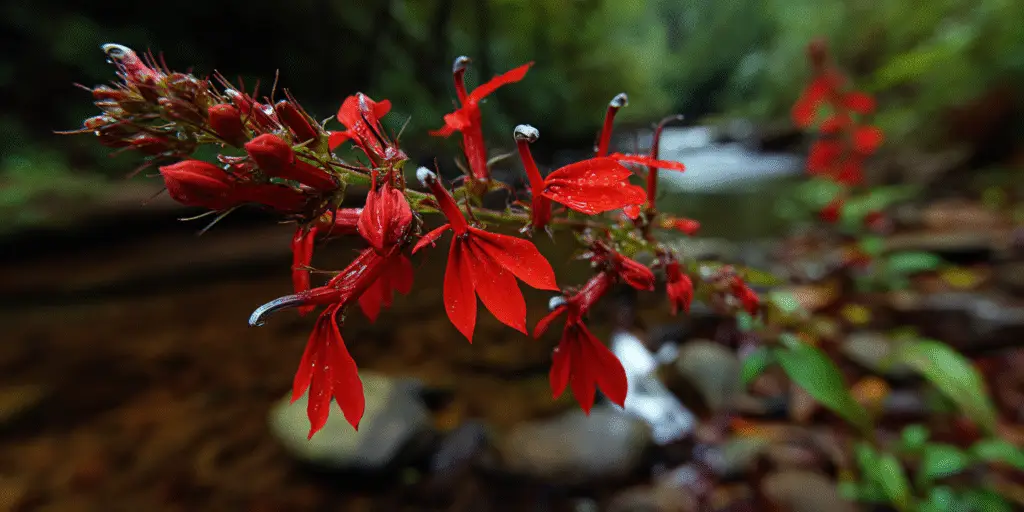
Cardinal flower is a moisture loving perennial prized for tall spikes of scarlet red blooms. Plants grow 2 to 4 feet tall and flower from mid to late summer. It thrives in full sun to part shade with constantly moist to wet soil. It is short lived in dry or thin soils and benefits from a cool root run. It is hardy through cold winters across much of North America when soil stays moist. Hummingbirds and butterflies visit the flowers readily.
At‑a‑glance
Group/Class: Species; herbaceous perennial
Height × spread: 24-48 in (60-120 cm) × 12-24 in (30-60 cm)
Bloom window: July to September
Color & flower form: Scarlet red tubular flowers on upright racemes
Fragrance: 0 none
USDA hardiness: zones 3-9
Breeder / Year / Origin: wild species; unknown; Americas
Pet safety: avoid
How it differs
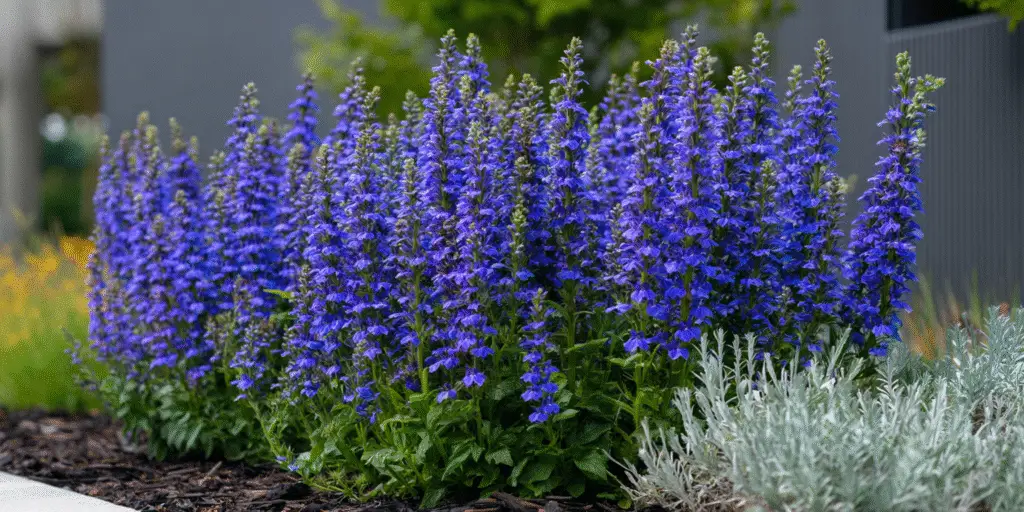
Blooms earlier and in red compared with the blue flowers of Great Blue Lobelia.
Can reach 4 feet in good soils, so it may stand taller than Great Blue Lobelia.
Somewhat shorter‑lived and more sensitive to drought.
Equally adapted to wet or boggy sites when moisture is constant.
Strengths
Striking vertical color for mid to late summer.
Excellent for hummingbirds in moist gardens.
Tolerates wet soil and brief flooding.
Care in one minute
Site and light: full sun to part shade; afternoon shade helps in hot regions.
Soil and pH: rich, evenly moist to wet soil; good organic matter.
Watering: do not allow soils to dry; irrigate during droughts.
Feeding: compost in spring; avoid excessive fertilizer.
Grooming: remove spent spikes to tidy; divide clumps in spring if needed.
Overwintering: apply a light root mulch in cold winters to limit heaving.
Watch‑outs
Requires steady moisture; plants decline if soils dry.
Often short‑lived; divide or replant every few years.
Written by: Your Flowers Guide editorial team We are a small independent group of flower lovers who research and review each guide using trusted horticultural and educational sources. Learn more about us