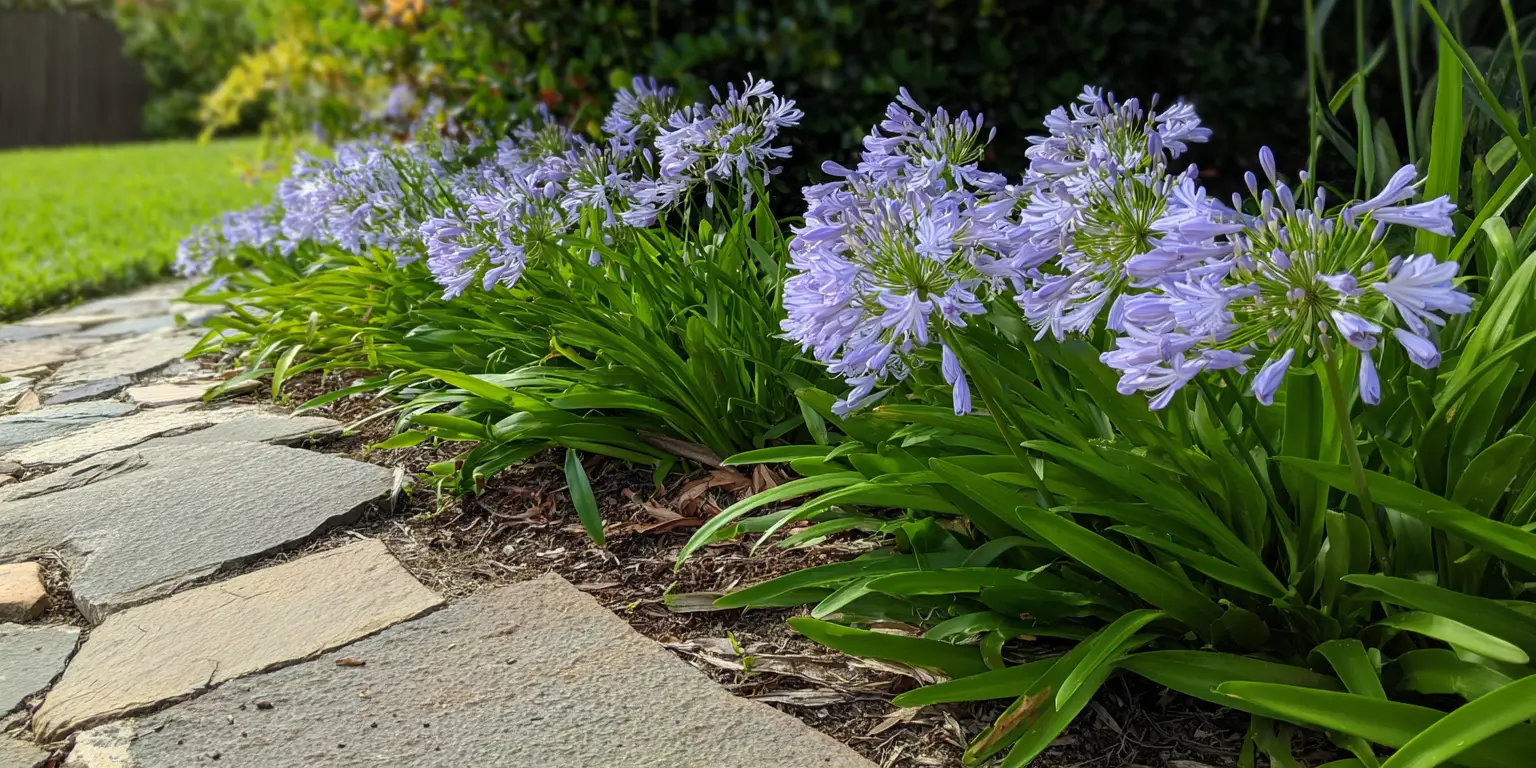
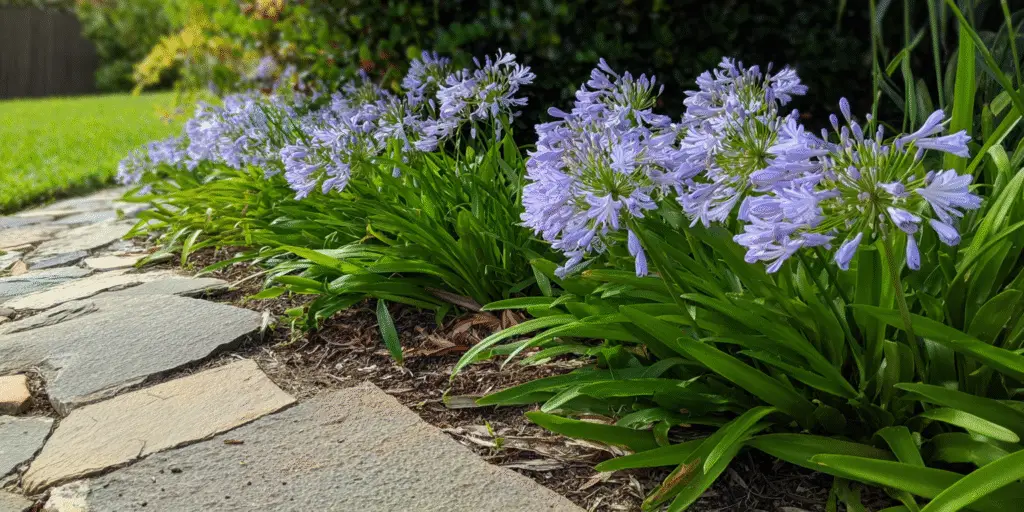
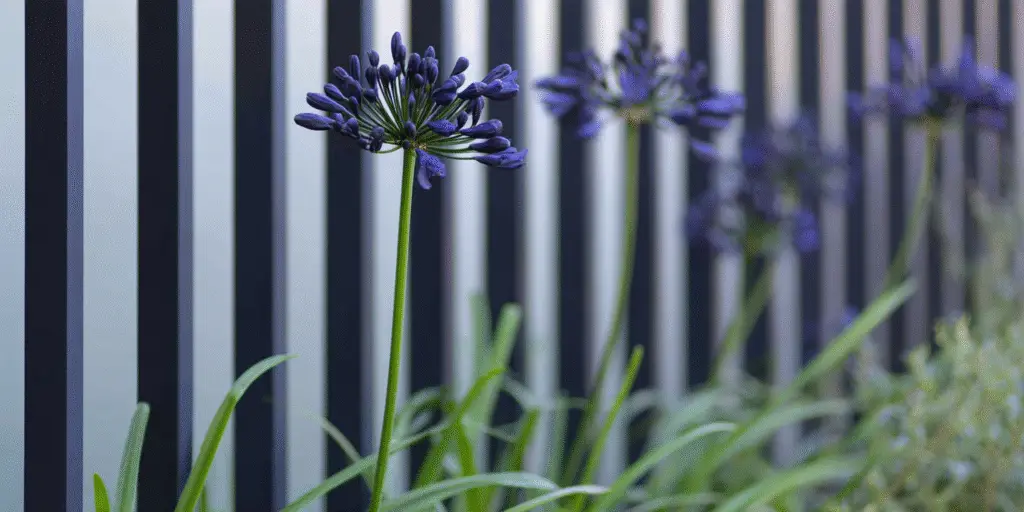
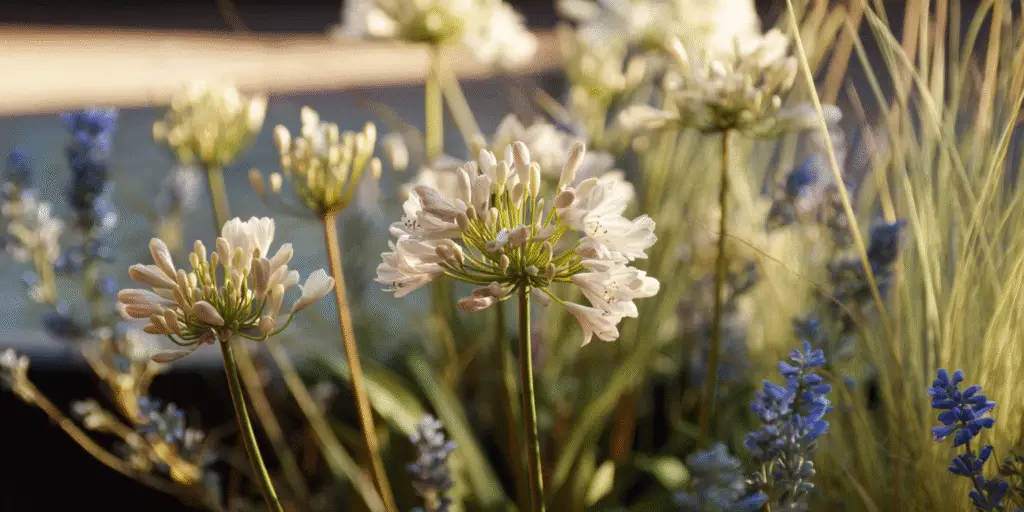
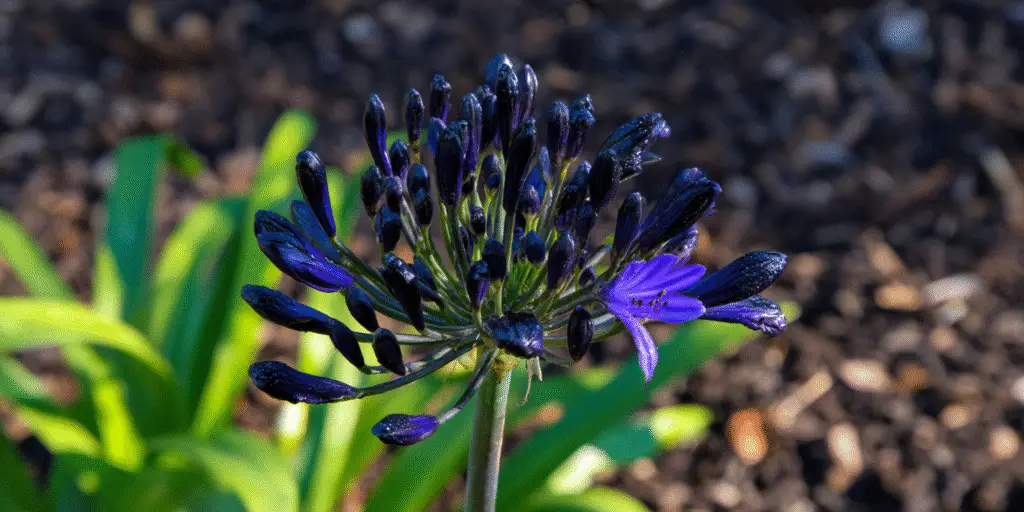
A compact agapanthus cultivar valued for low borders and containers. It forms a tight clump of narrow leaves and sends up short stems topped with light sky blue, rounded flower heads in summer. Plants perform best in full sun with moist but well‑drained soil. In much of North America it is perennial only in mild‑winter regions; elsewhere it is grown in containers and overwintered frost‑free. All parts are considered harmful if eaten and the sap may irritate skin, so site with pets and children in mind.
At‑a‑glance
Group/Class: dwarf evergreen agapanthus
Height × spread: 12 to 18 in (30 to 45 cm) × 12 to 18 in (30 to 45 cm)
Bloom window: mid to late summer
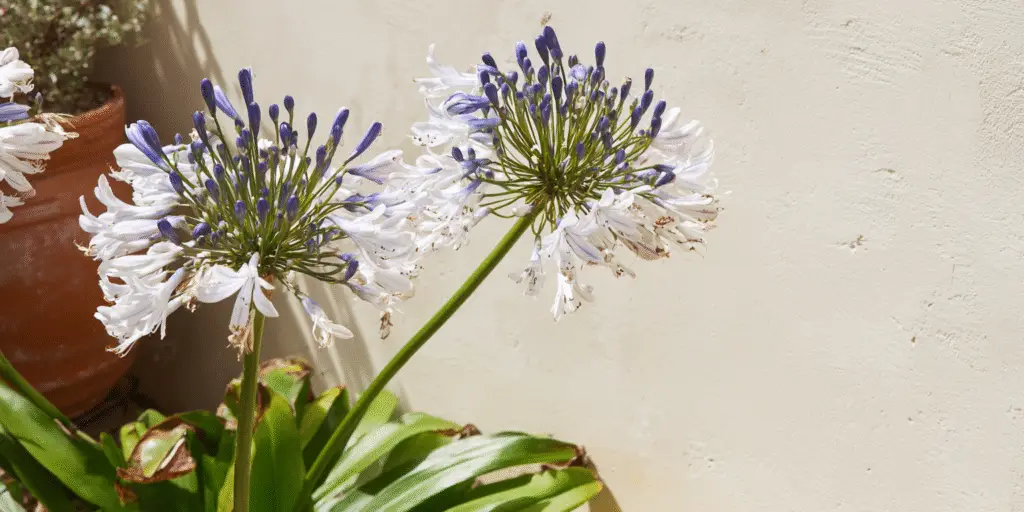
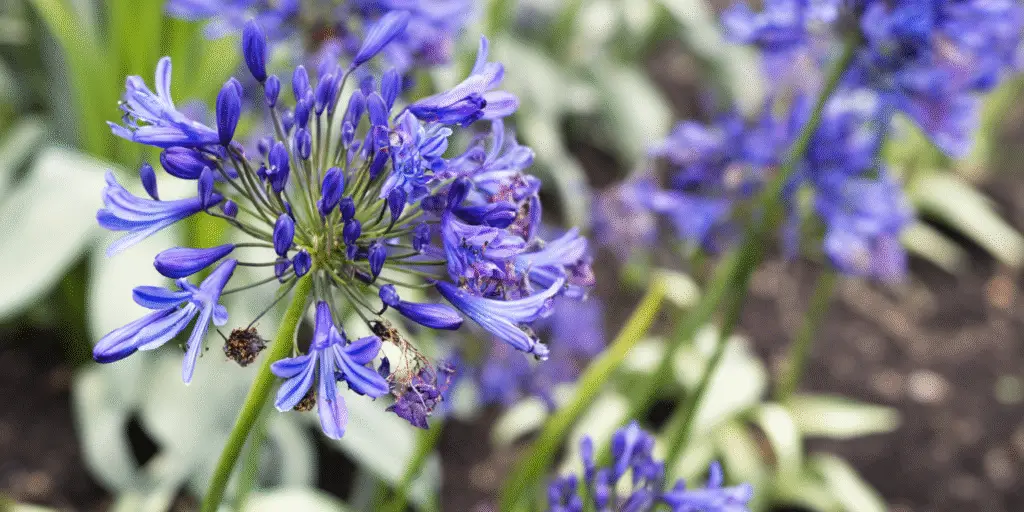
Color & flower form: light blue funnel‑shaped florets in rounded umbels
Fragrance: 0 none
USDA hardiness: 8 to 11; container plant in colder zones
Breeder / Year / Origin: unknown
Cut‑flower notes: moderately sturdy stems; typical vase life about 7 to 10 days
Pet safety: avoid
How it differs
Much shorter than typical agapanthus, fitting tight spaces and edging.
Smaller, looser umbels than many large hybrids.
Evergreen in mild climates; foliage may persist where winters are frost free.
Suited to container culture compared with taller border types.
Strengths
Compact habit for patios and paths.
Reliable summer bloom in full sun.
Handles coastal exposure when soil drains well.
Low maintenance once established.
Care in one minute
Site in full sun; light afternoon shade is acceptable in hot interiors.
Soil: fertile, moisture‑retentive but well drained; pH neutral to slightly acidic is fine.
Water: regular during active growth; allow the top inch to dry between waterings in containers.
Feed: a balanced or bloom‑forward fertilizer in late spring; avoid high nitrogen.
Spent blooms: remove spent stems to keep clumps tidy.
Overwinter: in zones colder than 8, move containers to a bright, frost‑free spot.
Watch‑outs
Tender to hard freezes; protect crowns in zone 8 and colder.
Flowering drops in deep shade.
Snails and slugs can scar leaves in spring.
Avoid soggy soils to prevent crown rot.
Best uses (tags)
containers, borders, edging, coastal, pollinators
Provenance note
A long‑circulated dwarf selection widely listed in horticultural references; status recorded by the Royal Horticultural Society as ‘ambiguous’ in rank, reflecting historic naming differences.
Written by: Your Flowers Guide editorial team We are a small independent group of flower lovers who research and review each guide using trusted horticultural and educational sources. Learn more about us