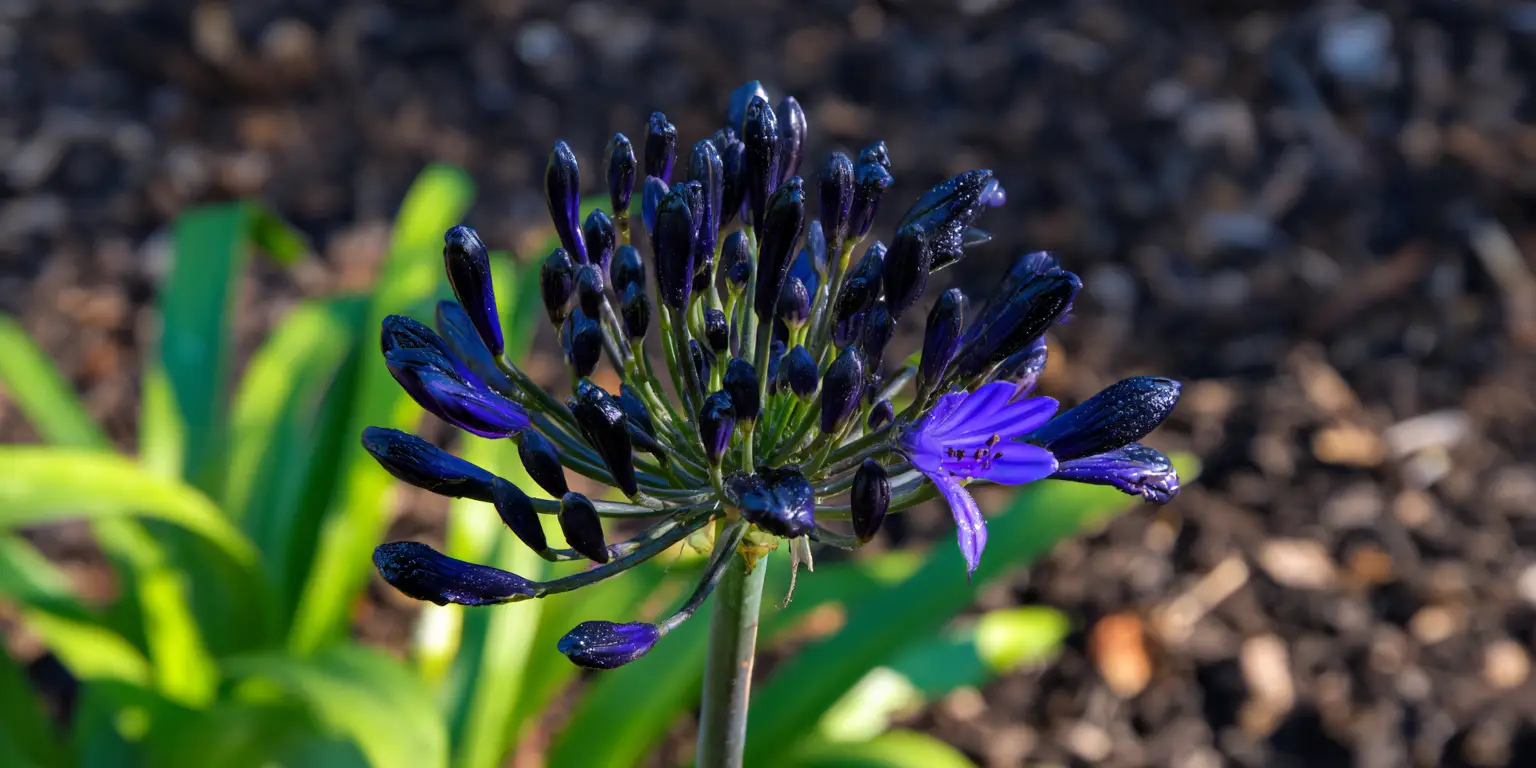
in bloom
now
through Sep
Bloom calendar
Northern Star
deciduous agapanthus cultivar
At‑a‑glance
- Group/Class: deciduous agapanthus cultivar
- Height × spread: 30 to 40 in (75 to 100 cm) × 18 to 24 in (45 to 60 cm)
- Bloom window: mid to late summer
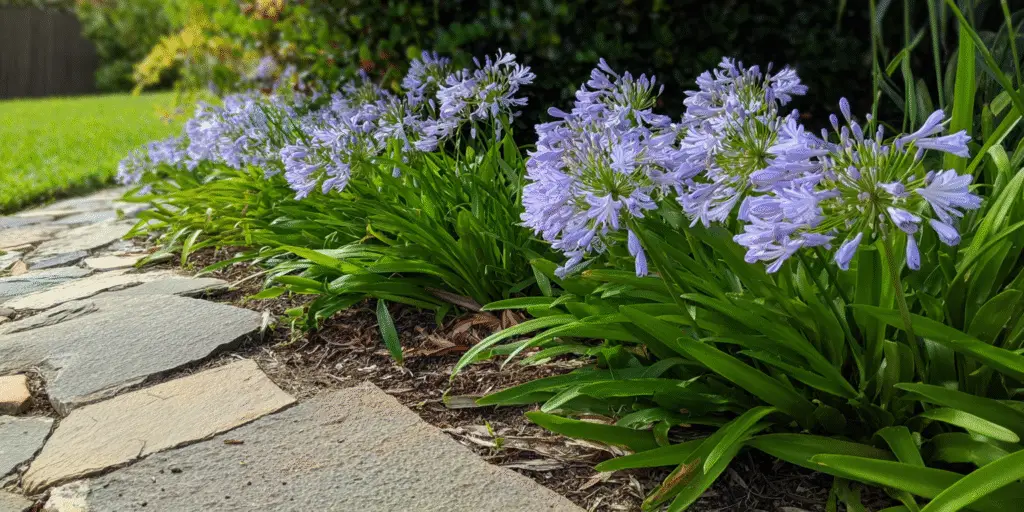
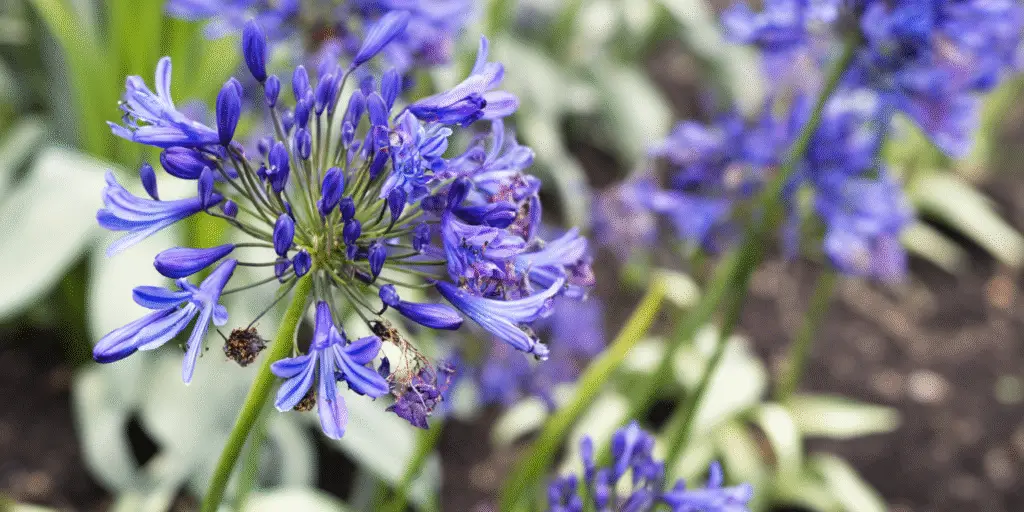
- Color & flower form: dark violet‑blue, rounded umbels with purple petal stripes
- Fragrance: 0 none
- USDA hardiness: 6 to 9; mulch and provide drainage in cold sites
- Breeder / Year / Origin: unknown
- Awards/registration: RHS Award of Garden Merit
- Cut‑flower notes: upright, firm stems; typical vase life about 7 to 10 days
- Pet safety: avoid
How it differs
- Notably cold‑tolerant compared with many evergreen types.
- Distinct purple stripe on petals adds depth of color.
- Sturdy, upright scapes support well‑rounded heads.
Strengths
- Reliable flowering in cool‑summer regions.
- Useful for mid to late‑season color.
- Strong stems for arrangements.
- Performs in borders and large containers.
Care in one minute
Full sun in most climates; light afternoon shade inland.
Soil: fertile and well drained; raise beds or add grit where winters are wet.
Water regularly through bud formation, then moderately.
Feed in spring with a balanced fertilizer; avoid heavy nitrogen.
Remove spent stems; divide congested clumps in spring.
In zones 6 to 7, apply a deep, breathable mulch after the ground cools.
Watch‑outs
- Requires sharp drainage in winter, especially in zone 6.
- Shade and rich nitrogen feeds can reduce flowering.
- Slug and snail feeding on young leaves.
Best uses (tags)
Provenance note
Recorded by the Royal Horticultural Society and protected by a U.S. plant patent; widely distributed in North American horticulture.
References
- Royal Horticultural Society – Agapanthus ‘Northern Star’ (AGM) profile
- US Plant Patent PP20957 – ‘Northern Star’ (public record)
- Missouri Botanical Garden – Agapanthus (group) profile
- UC ANR – Agapanthus spp. safety note
Similar Flowers
Enjoying our flower guides? Add YourFlowersGuide as a preferred source on Google. It helps more readers find us.
Add to Preferred Sources