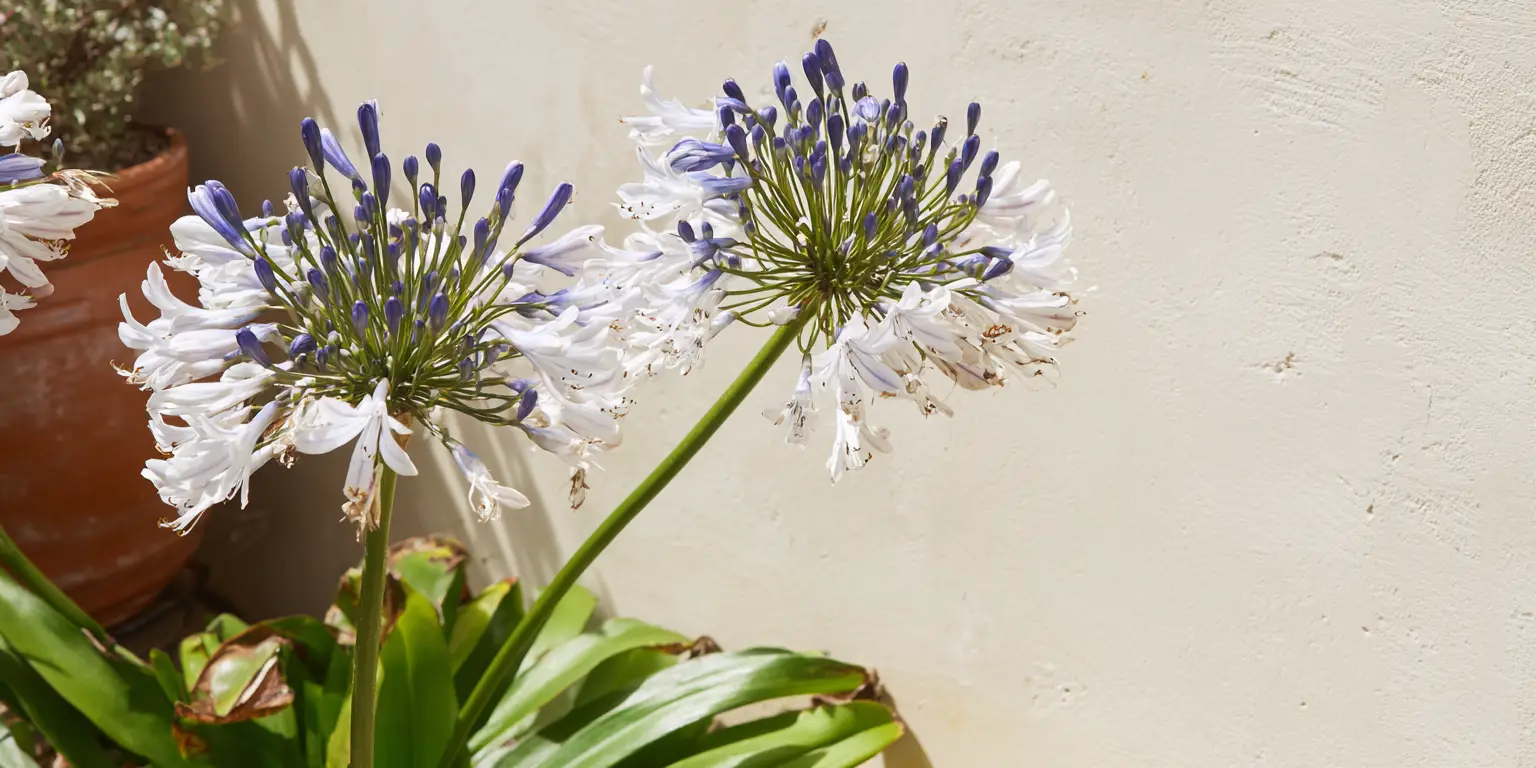
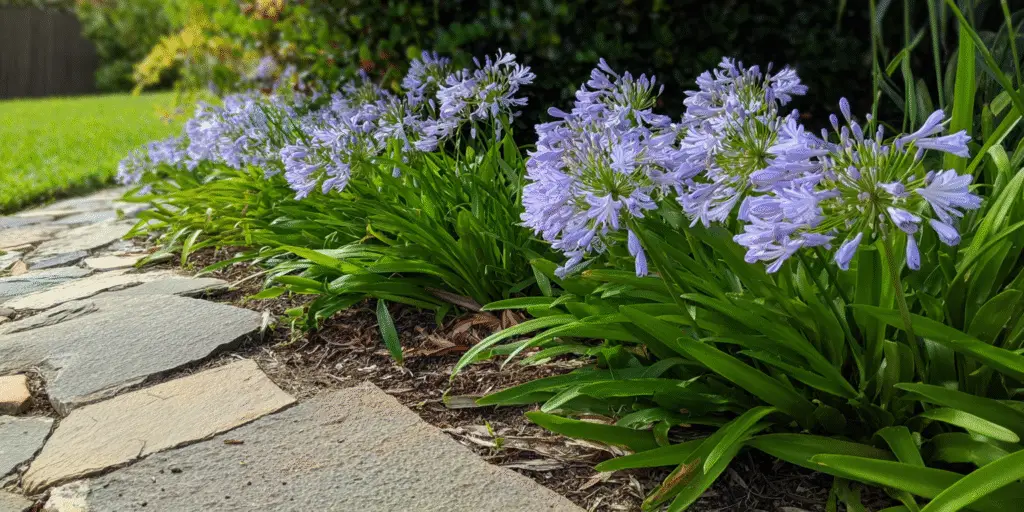
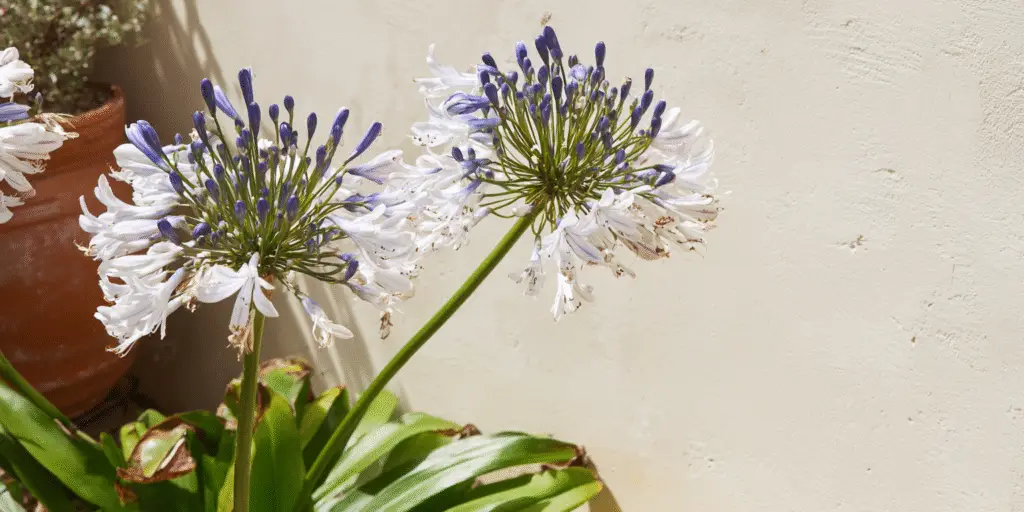
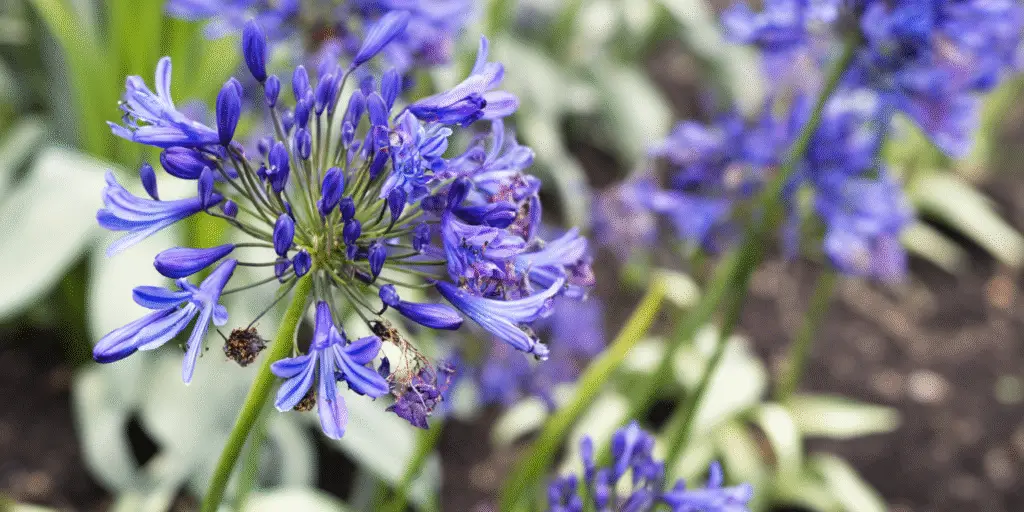
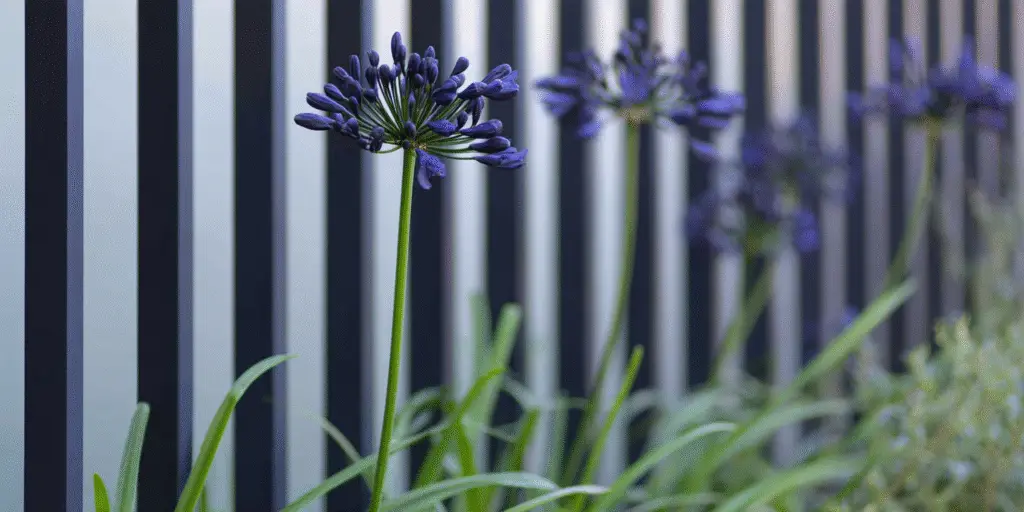
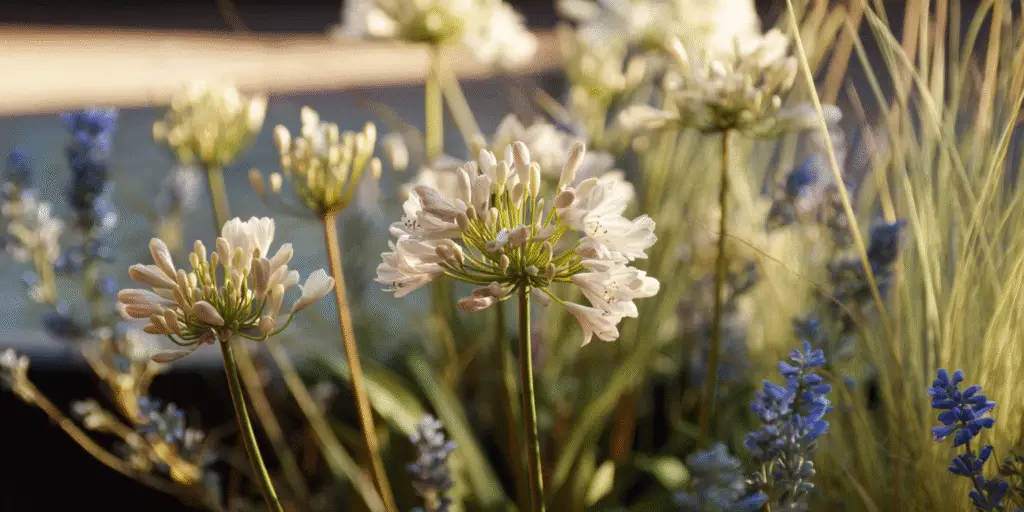
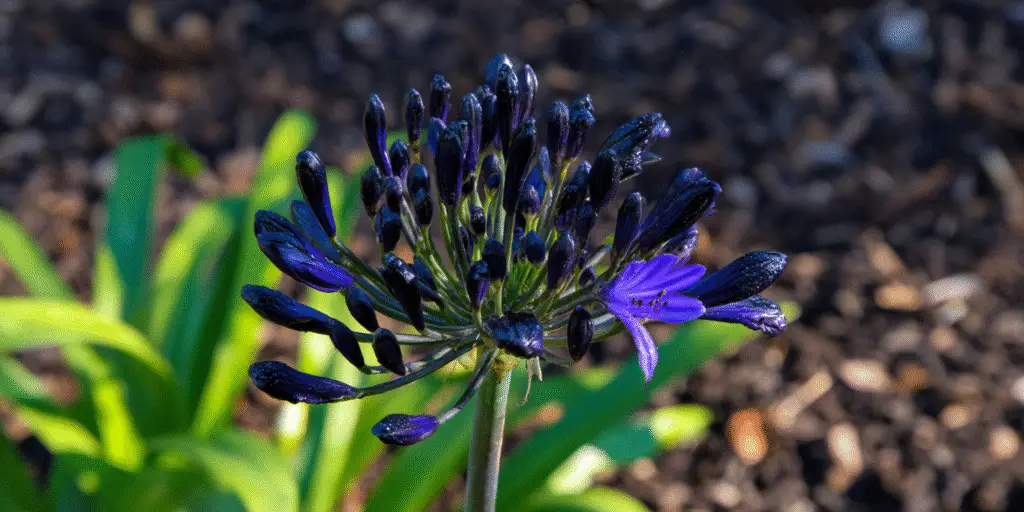
A tall, bicolored agapanthus that carries large rounded flower heads of white petals flushed blue at the base. Stems rise well above the foliage in mid to late summer, giving a bold architectural look in borders and large containers. Plants prefer full sun and moist but well‑drained soil, and benefit from winter mulch where freezes occur. In much of North America it is treated as a perennial in warm coastal and southern regions and as a container plant elsewhere. All parts are harmful if eaten; wear gloves if the sap contacts skin.
At‑a‑glance
Group/Class: deciduous agapanthus cultivar
Height × spread: 40 to 48 in (100 to 120 cm) × 15 to 20 in (40 to 50 cm)
Bloom window: mid to late summer
Color & flower form: large rounded umbels; white with blue at petal bases
Fragrance: 0 none
USDA hardiness: varies by climate; commonly grown as perennial in zones 8 to 10
Breeder / Year / Origin: unknown; trade designation ‘PMN06’
Cut‑flower notes: thick stems; typical vase life about 7 to 10 days
Pet safety: avoid
How it differs
Bicolored flowers contrasted with the single‑colored heads of most cultivars.
Taller stature than common compact forms like ‘Peter Pan’.
Dense, rounded umbels on sturdy stalks for a strong architectural effect.
Semi‑evergreen to deciduous habit depending on winter conditions.
Strengths
Statement flower heads for midsummer displays.
Performs well in sunny, well‑drained coastal settings.
Useful as a feature in large containers.
Good stem height for cutting.
Care in one minute
Full sun; provide at least 6 hours of direct light.
Soil: fertile, moist but well drained; incorporate organic matter on planting.
Water: steady moisture through bud set; reduce after flowering.
Feed: low‑nitrogen, high‑phosphorus fertilizer in late spring.
Deadhead after bloom to keep clumps tidy and limit self‑sowing.
Winter: mulch crowns in cold snaps; overwinter containers frost‑free.
Watch‑outs
Borderline hardy; protect crowns in colder winters.
Wet, heavy soils can reduce flowering and increase rot risk.
Written by: Your Flowers Guide editorial team We are a small independent group of flower lovers who research and review each guide using trusted horticultural and educational sources. Learn more about us