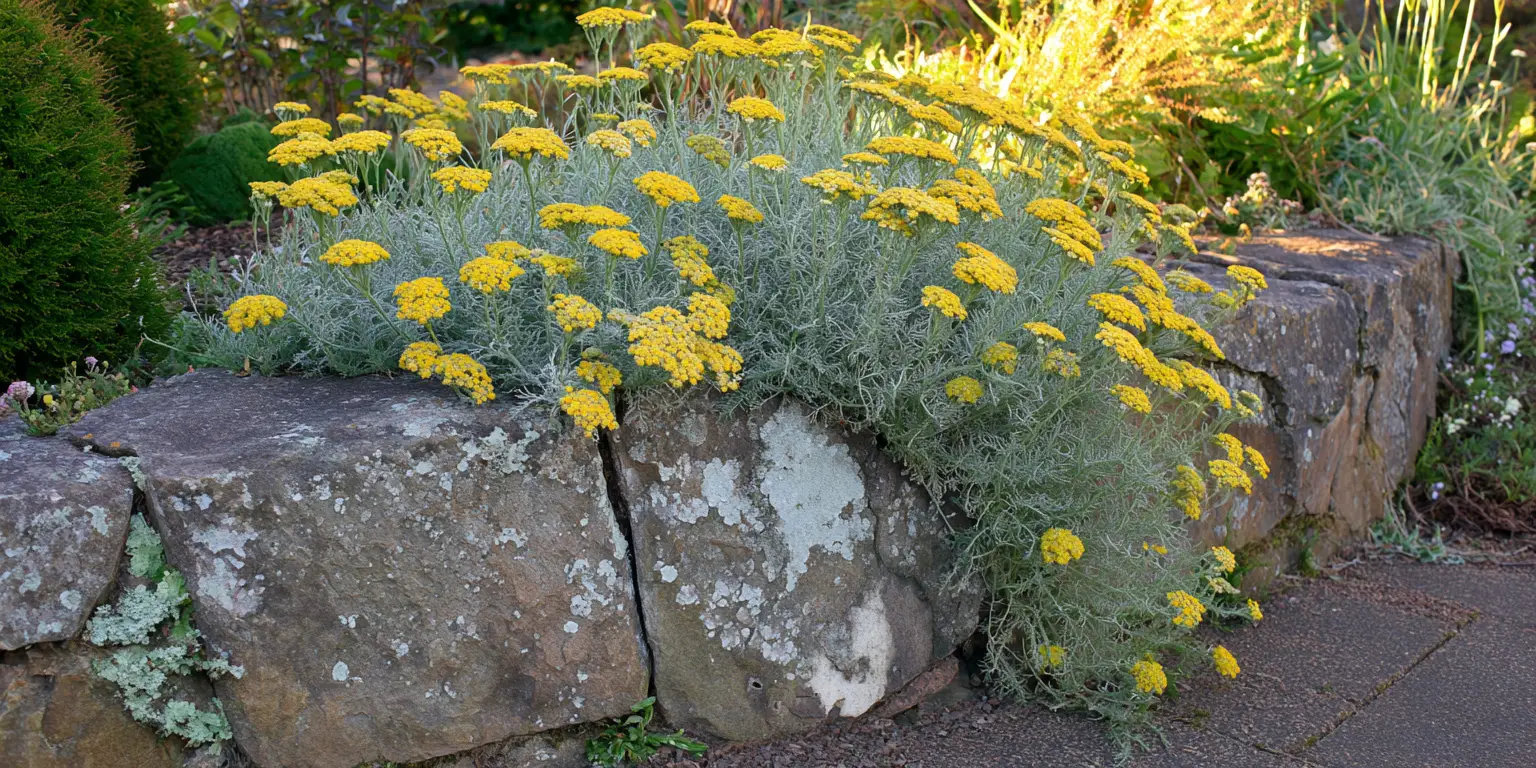
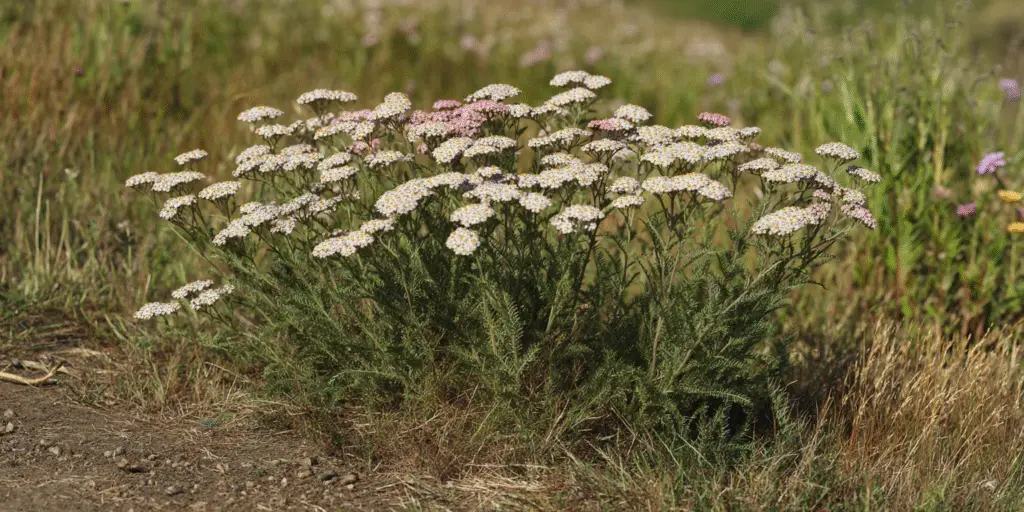
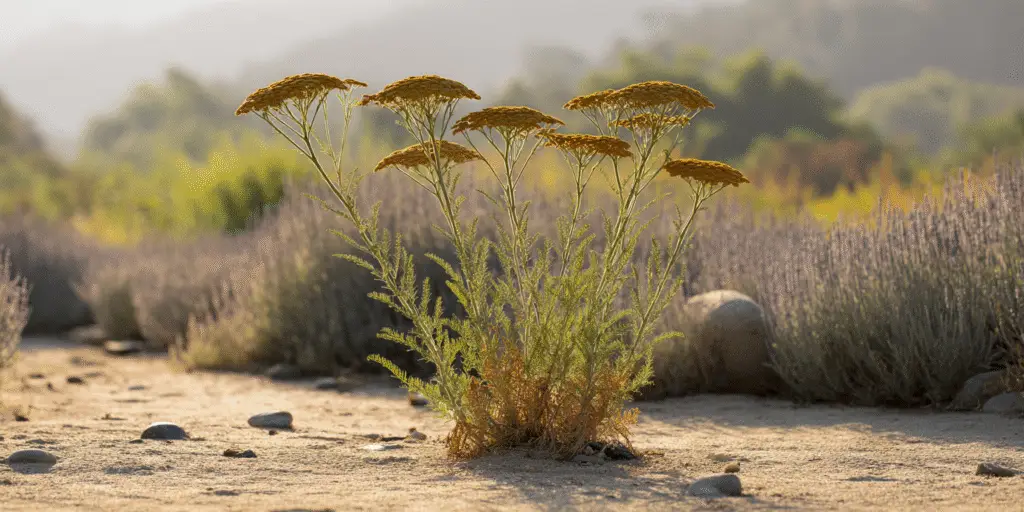
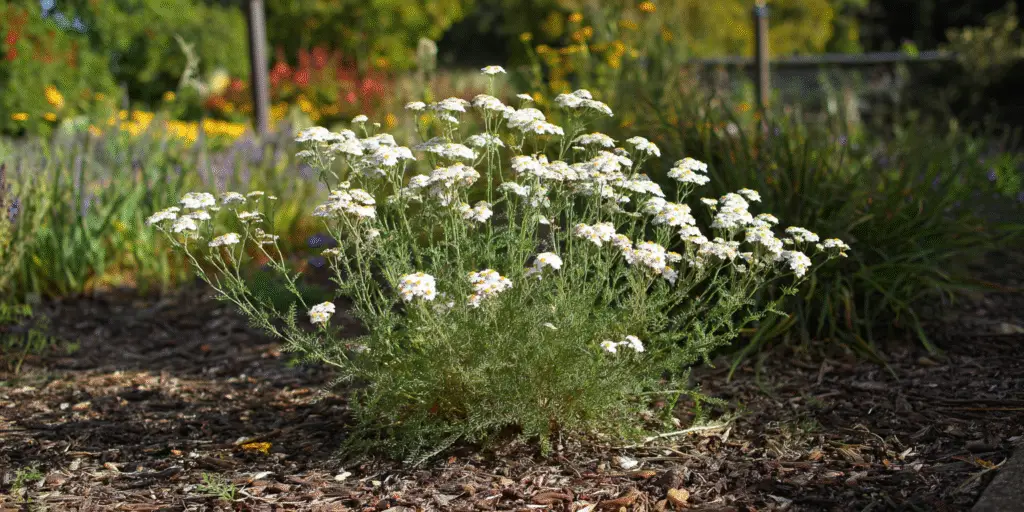
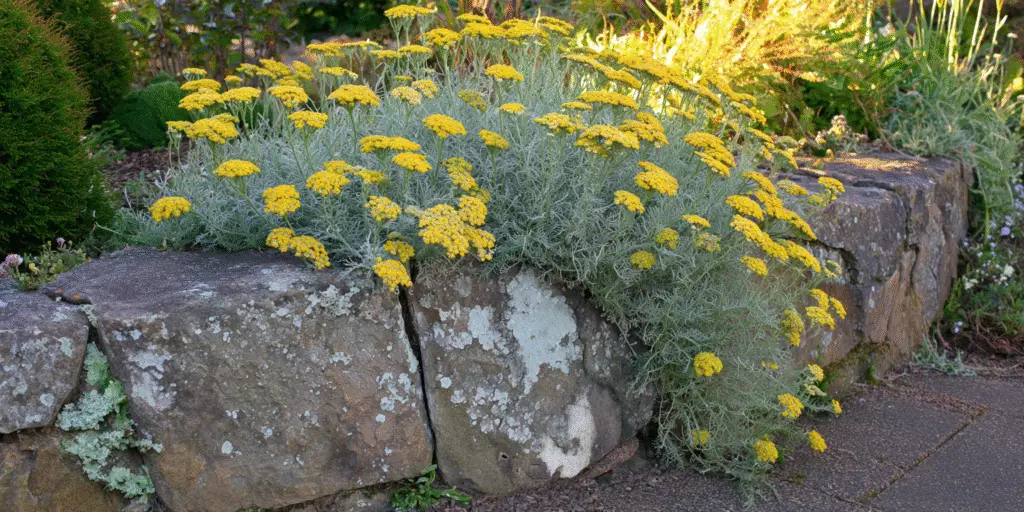
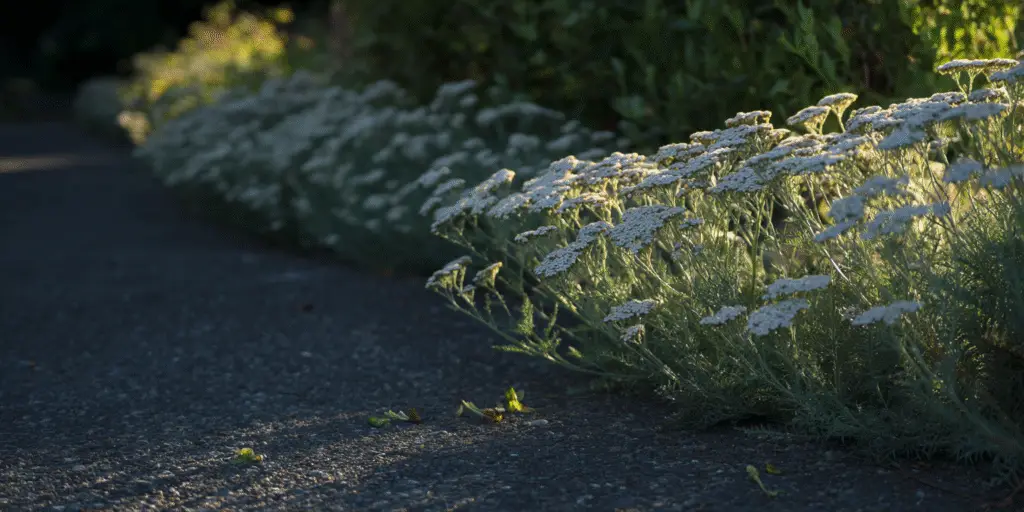
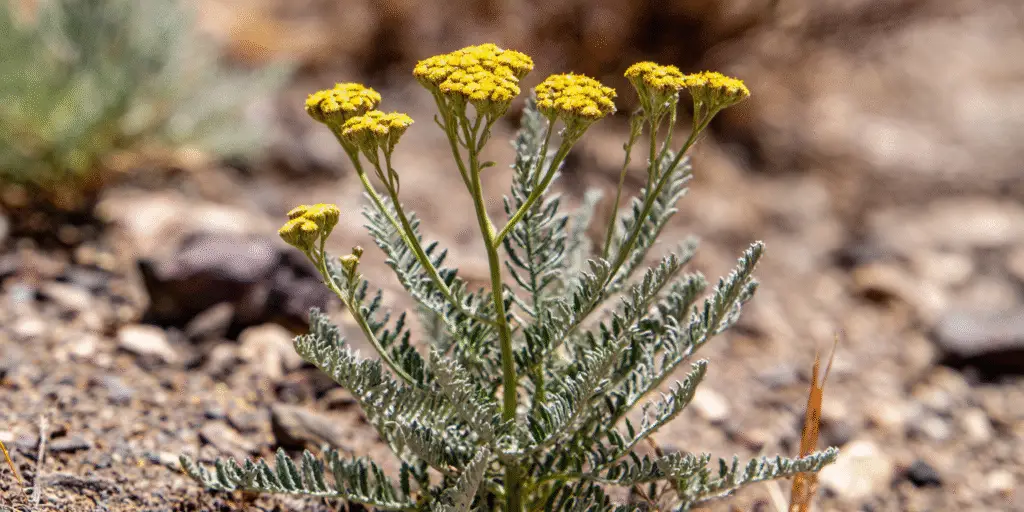
This low species forms a tight, woolly mat of gray‑green foliage. Short stems carry flat heads of bright yellow flowers in late spring and early summer. It performs best in sunny, dry sites with sharp drainage and lean soil. Plants are useful as a small‑scale ground cover or edging in rock and gravel gardens. Growth is slow to moderate and foliage texture is a key feature. It dislikes hot, humid summers and poorly drained soils.
At‑a‑glance
Group/Class: Species; herbaceous perennial
Height × spread: 6 to 12 in (15 to 30 cm) × 12 to 18 in (30 to 45 cm)
Bloom window: May to June
Color & flower form: Bright yellow, small flat heads
Fragrance: 1 trace
USDA hardiness: zones 3 to 7
Breeder / Year / Origin: unknown, unknown, southwestern Europe to central Italy
Awards/registration: RHS Award of Garden Merit
Pet safety: unknown
How it differs
Much lower and mat‑forming compared with typical border yarrows
Excellent drought tolerance when established
Prefers very well‑drained soil and hates humidity
Silvery, woolly leaves add texture year‑round in mild climates
Strengths
Reliable ground cover in dry, sunny sites
Deer resistant
Good heat and drought tolerance where humidity is low
Low maintenance with occasional division
Care in one minute
Site: full sun with excellent drainage.
Soil: sandy or gravelly and lean; neutral to alkaline.
Water: light; avoid frequent irrigation once established.
Feeding: none to very light.
Grooming: shear lightly after bloom to keep dense; divide if mats thin in the center.
Winter: fully hardy in listed zones; keep crowns dry.
Watch‑outs
Declines in hot, humid summers south of cooler regions
Written by: Your Flowers Guide editorial team We are a small independent group of flower lovers who research and review each guide using trusted horticultural and educational sources. Learn more about us