in bloom
now
through Sep
Bloom calendar
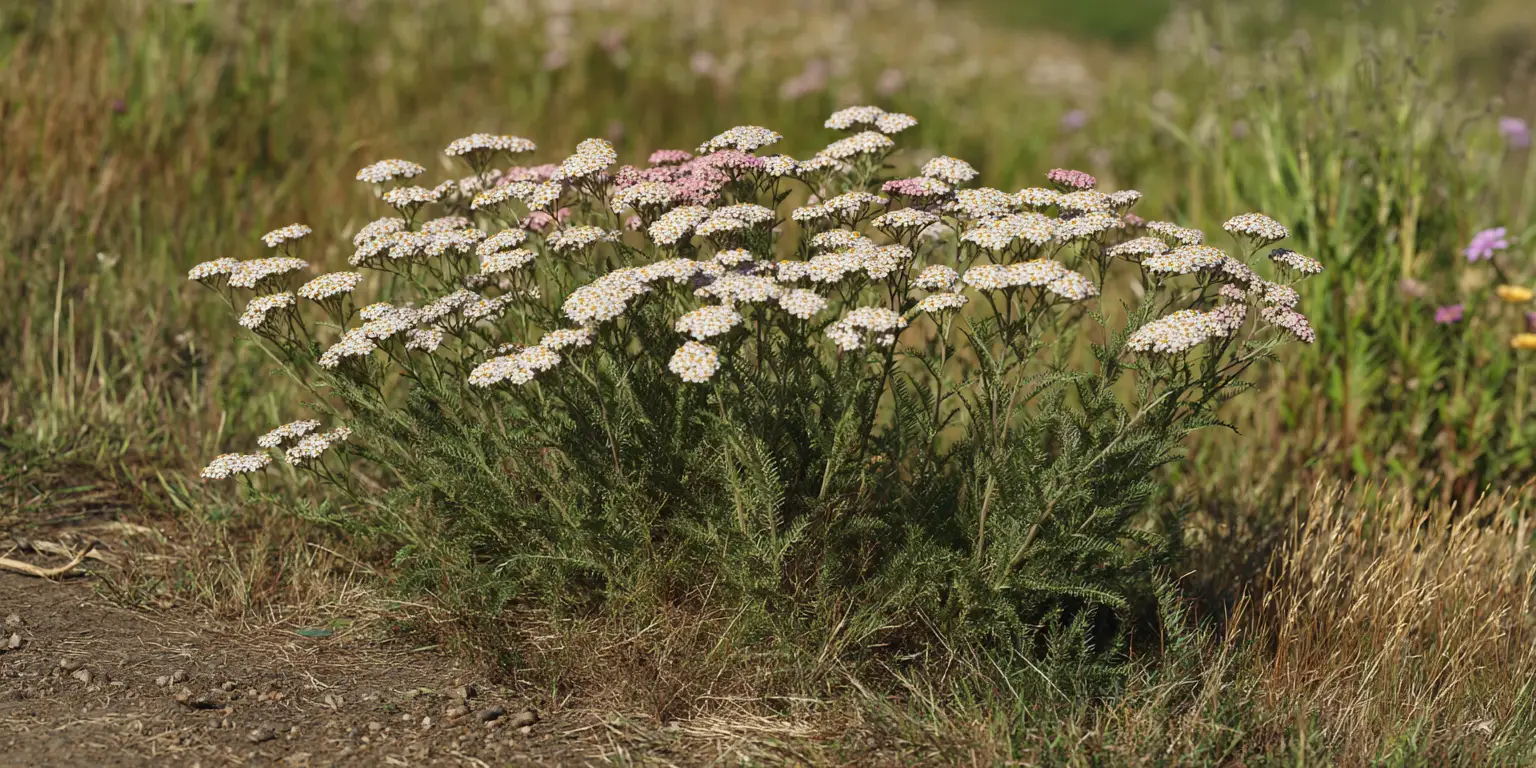
Achillea millefolium
Species; herbaceous perennial
At‑a‑glance
- Group/Class: Species; herbaceous perennial
- Height × spread: 2 to 3 ft (0.6 to 0.9 m) × 2 to 3 ft (0.6 to 0.9 m)
- Bloom window: June to September
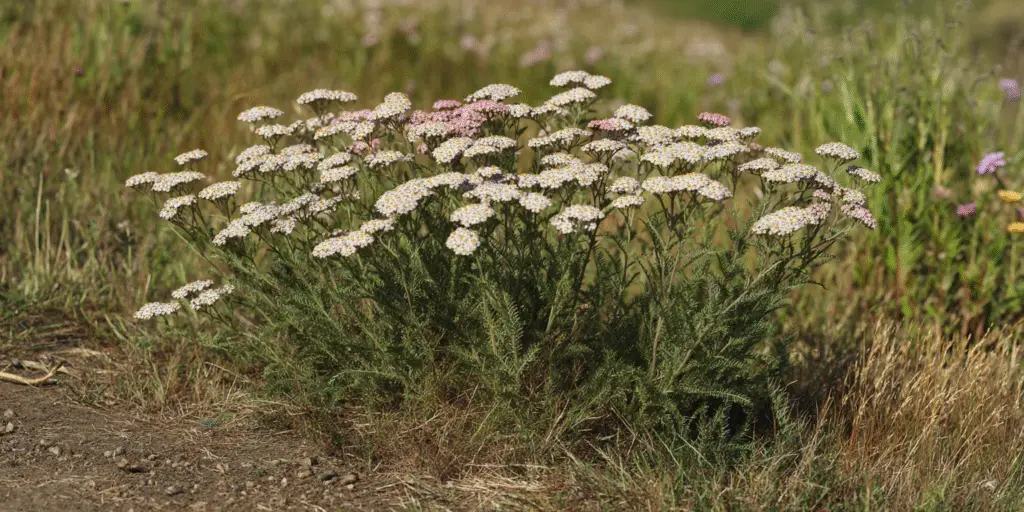
- Color & flower form: White heads in flat‑topped corymbs
- Fragrance: 1 trace
- USDA hardiness: zones 3 to 9
- Breeder / Year / Origin: unknown, unknown, Eurasia and North America
- Cut‑flower notes: Stems are usable fresh and dried; stem strength and vase life vary by selection and conditioning; many trials note good performance in cuts.
- Pet safety: avoid
How it differs
- Spreads by rhizomes more than many border yarrows
- Flowers are typically white rather than the wide color range of hybrids
- Can lodge in rich soil or shade
- Often more variable in height and habit
Strengths
- Tolerates drought once established
- Handles lean soils with good drainage
- Long summer bloom in full sun
- Attractive to pollinators
Care in one minute
Site: full sun with open airflow.
Soil: lean, well‑drained loam or sandy loam; neutral to slightly alkaline.
Water: moderate to low once established; avoid waterlogged spots.
Feeding: minimal; excess nitrogen increases flopping.
Grooming: deadhead after first flush to encourage more bloom; divide every 2 to 3 years to control spread.
Winter: hardy across most of North America; leave seed heads for winter interest if desired.
Watch‑outs
- Can spread by rhizomes and self‑seed
- Stems may flop in fertile or moist soil
- Can be weedy in small borders
- Occasional rust or powdery mildew in humid weather
Best uses (tags)
Provenance note
A circumboreal species native across Europe, western Asia, and North America; long naturalized and widely variable in the wild.
References
- Missouri Botanical Garden – Plant Finder: Achillea millefolium
- USDA PLANTS – Achillea millefolium
- NC State Extension Gardener Plant Toolbox – Achillea millefolium
- ASPCA – Toxic and Non‑Toxic Plants: Yarrow
Similar Flowers
Enjoying our flower guides? Add YourFlowersGuide as a preferred source on Google. It helps more readers find us.
Add to Preferred Sources