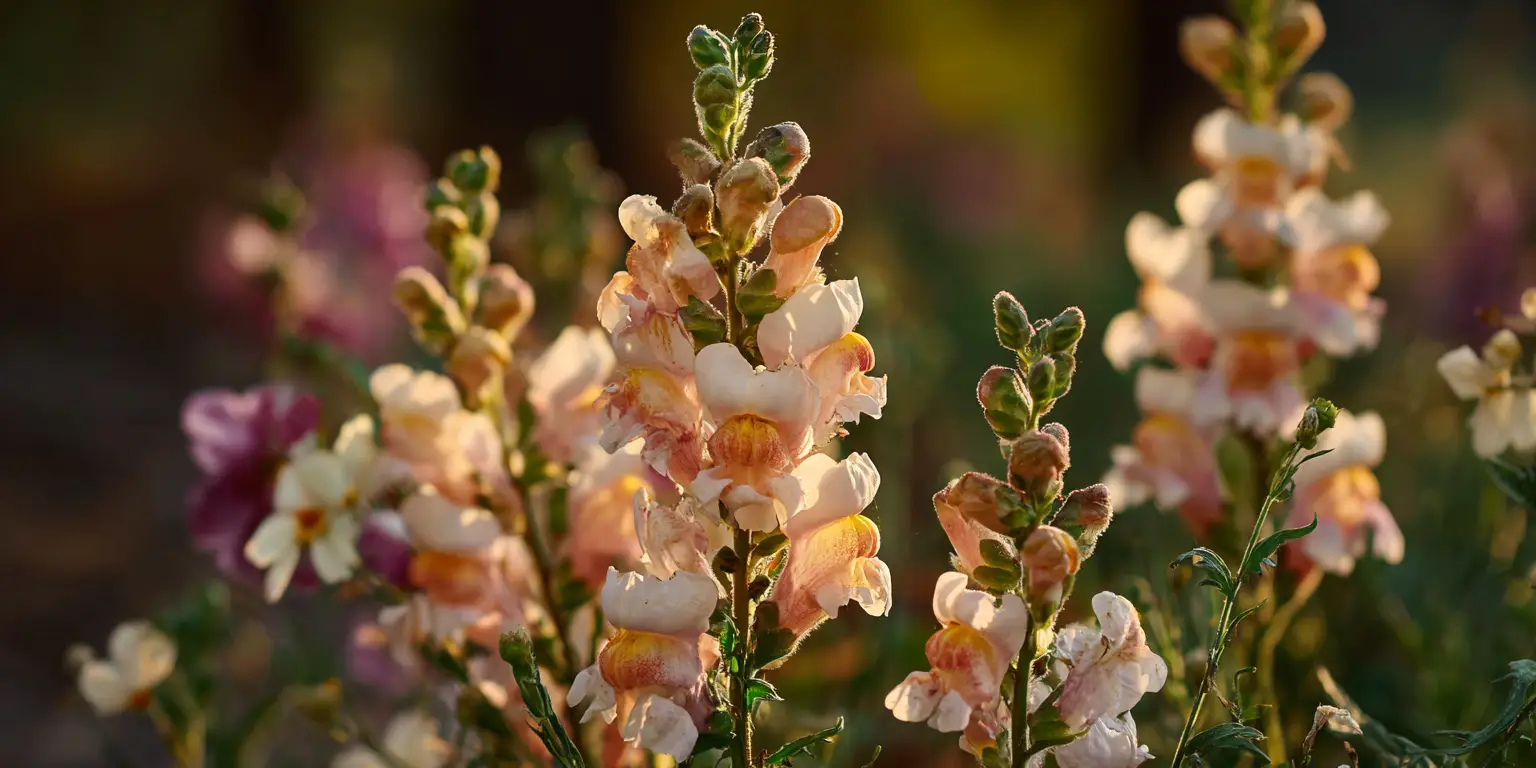
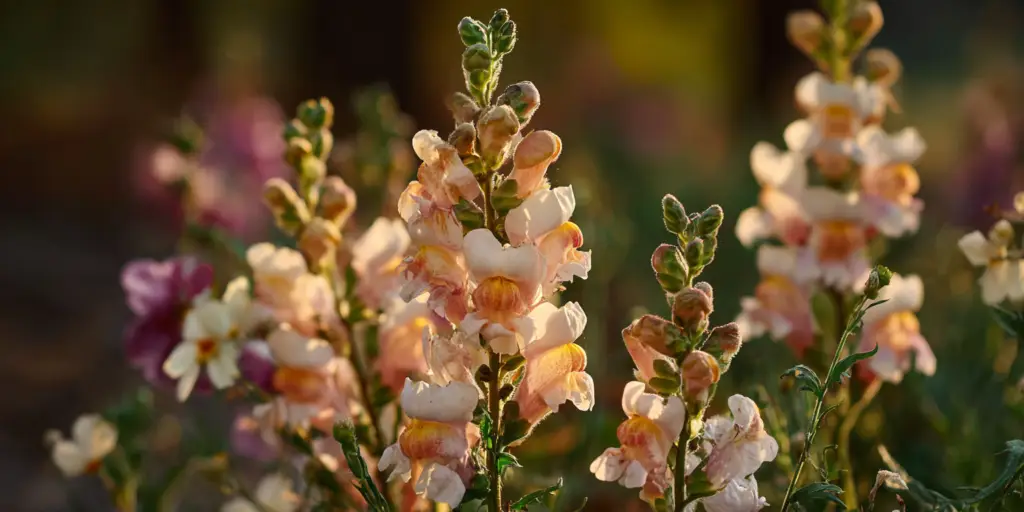
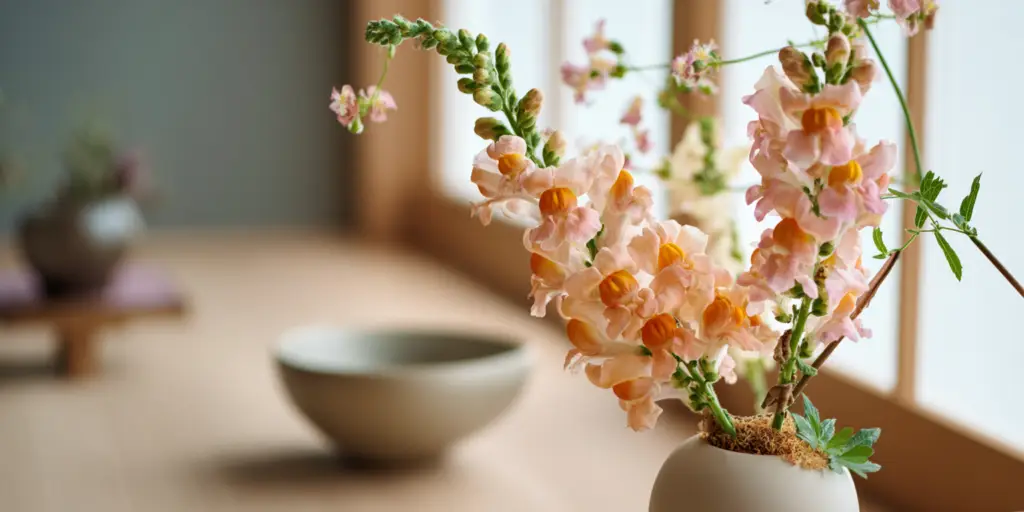
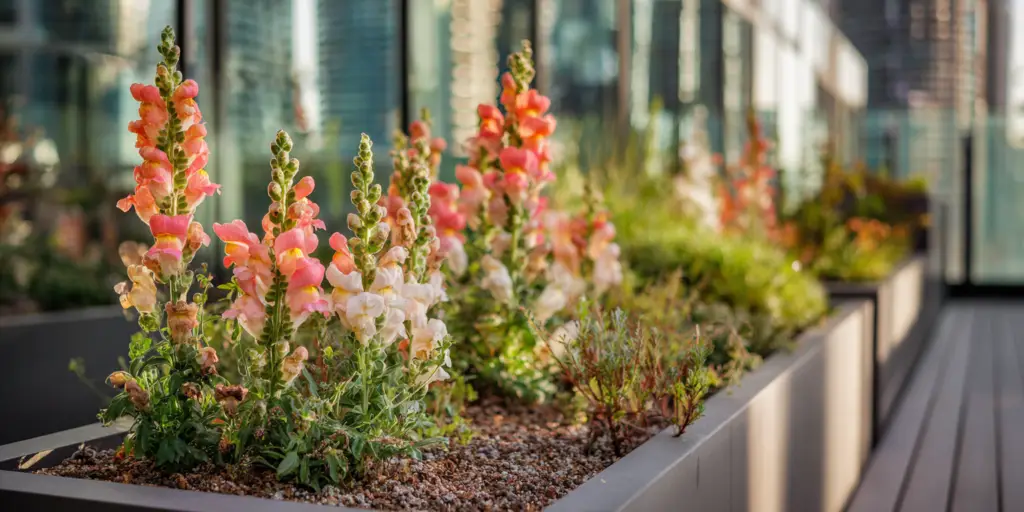
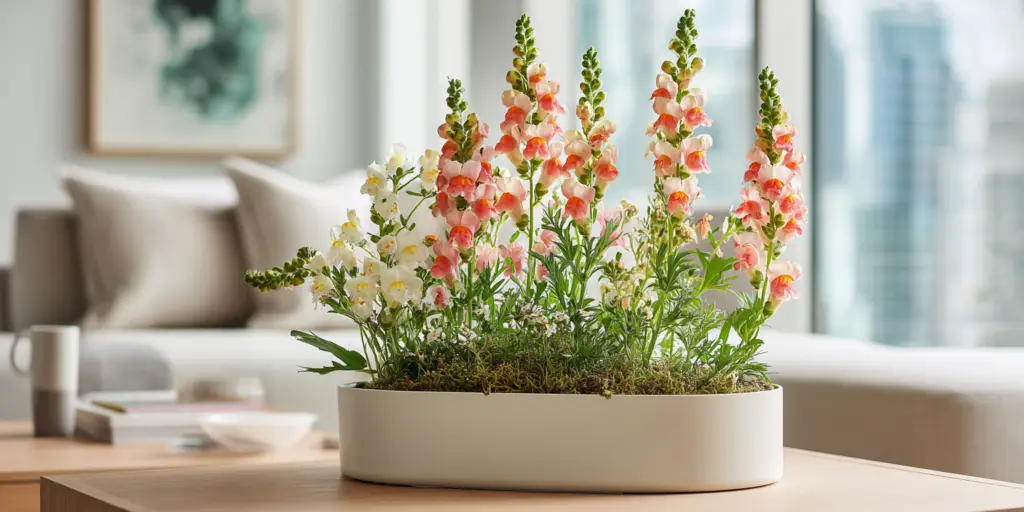
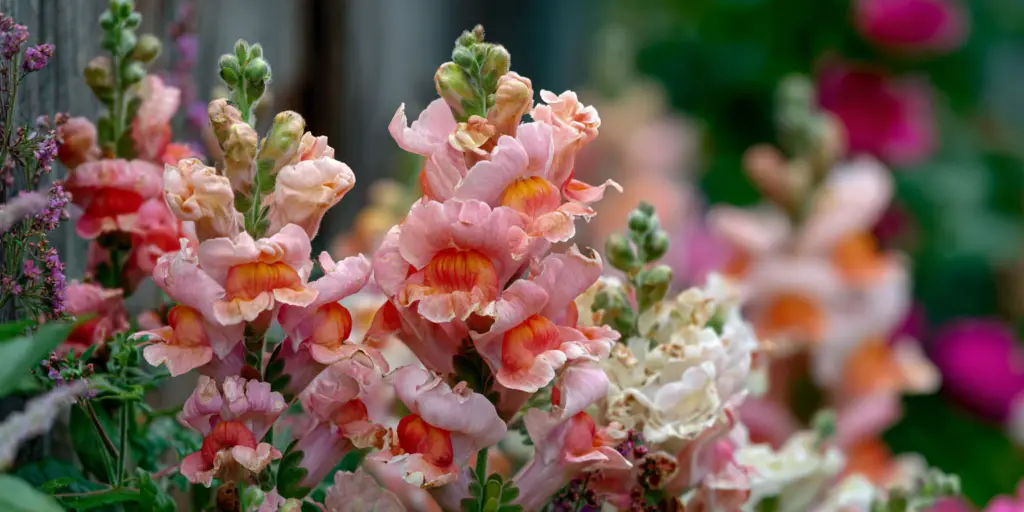
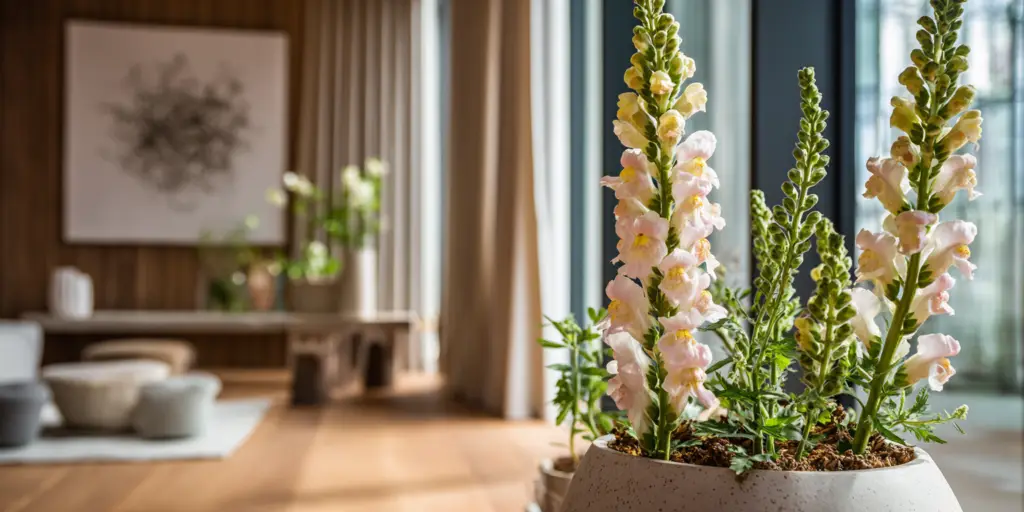
Antirrhinum majus ‘Chantilly’ is a tall F1 cut-flower series with open-faced butterfly blooms. It stands out for long stems and early flowering under cool, short-day conditions. Plants perform best from late winter to spring in mild areas and in spring to early summer elsewhere. Spikes have a light scent often noted by growers.
At‑a‑glance
Group/Class: F1 series; butterfly type; Group 1-2 timing
Height × spread: 36-48 in (90-120 cm) × 14-16 in (35-40 cm)
Bloom window: late winter to spring in mild zones; spring to early summer elsewhere
Color & flower form: multiple colors; open-faced butterfly form
Fragrance: 2 noticeable
USDA hardiness: grown as annual in most of North America; short-lived perennial in zones 7-10
Breeder / Year / Origin: Takii, unknown, Japan
Cut-flower notes: stems commonly 36-40 in; not recommended for long-day production; vase life ~7-10 days
Pet safety: safe
How it differs
Earlier under short days than main-season groups.
Open-faced form differs from classic snapping types.
Very long stems suited to florist work.
Strengths
Tall stems with strong spikes for cutting.
Performs in cool conditions and tunnels.
Light fragrance noted by growers.
Care in one minute
Site: full sun to light shade; protect from hot, drying winds.
Soil and pH: fertile, well-drained soil; production pH 5.5 to 6.5; many gardens succeed near neutral.
Water: keep evenly moist and water mornings to limit foliar disease.
Feeding: steady, moderate feed.
Pinch and support: pinch once; net or stake for straight stems; harvest at one third open.
Watch‑outs
Quality declines under long days and heat; plan plantings accordingly.
Tall stems need netting or staking.
Prone to rust and botrytis in wet springs.
Best uses (tags)
cutting
cool-season
tunnels
back of bed
Provenance note
A Takii F1 series developed for early, cool-season cut-flower production with extra-long stems and open-faced form.
Written by: Your Flowers Guide editorial team We are a small independent group of flower lovers who research and review each guide using trusted horticultural and educational sources. Learn more about us