What to plant with poppies
The pairing · pick a flower
All poppies companions
What not to plant near poppies
The best companions for poppies, explained
Poppy is not one plant when it comes to companion planning, and what grows well beside it depends on which poppy is actually in the ground. The self-sowing annual field poppy and Shirley poppy want fellow lean-soil annuals that germinate on bare, undisturbed dirt at the same rhythm they do. California poppy, a different genus entirely, wants the dry-meadow companions of its native West Coast range. Oriental poppy, the huge-flowered perennial, wants something else altogether: a plant that can fill the hole it leaves behind, because after its brief early summer show the whole plant collapses to bare ground and stays gone until fall.
For the annual types, cornflower is the closest thing poppy has to a historical partner. The two grew wild together in unsprayed European grain fields long before anyone called it companion planting, and the pairing still works for the same reason it always did: both germinate straight into bare, undisturbed soil, both want lean ground and full sun, and cornflower’s cool blue sits directly across the color wheel from poppy red. Love-in-a-mist does a different job in the same bed. Its foliage is threadlike and ferny, the strongest textural contrast poppy’s broad papery petals get from anything on this list, and once both plants finish flowering they leave behind ornamental seed pods that carry the display into late summer. Cosmos arrives later and taller, picking up the meadow look once the early poppies have thinned out.
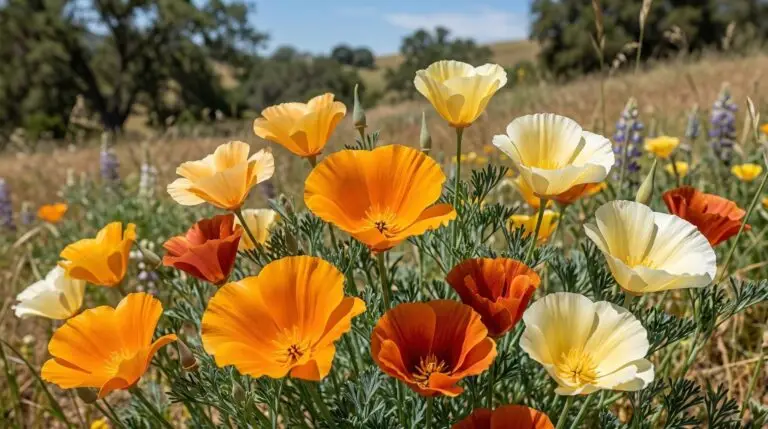
California poppy runs on a version of the same lean-soil logic but with its own regional cast. Lupine is the single most repeated partner for the classic western superbloom look, the orange-and-blue combination that shows up in every wildflower meadow photo from that part of the country, and it shares California poppy’s preference for dry, mineral-poor ground. Lacy phacelia fills a similar role in native meadow plantings, with the added benefit of drawing in the same native bees California poppy is documented to attract on its own.
Oriental poppy’s companion problem is structural rather than aesthetic. NC State Extension names baby’s breath and false chamomile directly as the fix for the gap the plant leaves after its early summer bloom, both chosen because their sprawling habit and late flowering window occupy the exact space and the exact calendar slot the dormant poppy leaves empty. Catmint does a related job with a different mechanism: instead of waiting for the gap to open, its billowing mound spreads over the collapsing poppy foliage as it happens, and its own lean-soil, full-sun preference means it never competes with the poppy for the wrong kind of ground in the meantime.
What not to plant near poppies
The genuine avoid list for poppy is shorter and less dramatic than a lot of garden content suggests, and the honest reason is that poppy has almost no verified allelopathic footprint of its own, unlike sunflower or black walnut. The real conflicts are about conditions, not chemistry. Moisture-loving shade perennials like hosta and astilbe sit at the top of the list for the simplest possible reason: poppy wants full sun and sharp drainage, hosta wants shade, and astilbe browns quickly the moment its soil dries out. Put the two in the same spot and neither plant’s actual needs get met, which makes this less a mistake gardeners commonly make and more a pairing that would never survive first contact with reality.
The counterintuitive avoid rule, the one that makes poppy different from most flowers in a companion bed, is rich soil itself. Extension sources and RHS growing guides agree that poppies grown in fertile, heavily fed ground put their energy into leaves and stems instead of flowers, producing lanky plants that flop over and bloom poorly. That means a genuinely hungry companion, the kind that needs regular feeding and rich amended soil to perform, creates a direct conflict: satisfying it means fertilizing the bed, and fertilizing the bed works against the one thing poppy actually wants. This is not a myth to bust so much as an ordinary soil-management fact that happens to run opposite to what most flowers on this site are asking for.
Then there is the claim that deserves to be called out plainly rather than quietly repeated. A cluster of garden sites states that sunflowers and fennel release compounds that stunt or poison poppies growing nearby, and nothing in the extension or research literature was found to back that specific claim. Sunflower allelopathy is real and well documented against certain crops, and fennel genuinely suppresses some neighboring vegetables through its own root chemistry, but neither effect has been shown to apply to poppy in particular. The more honest explanation for a bad sunflower-poppy pairing is much less exciting: a six to eight foot sunflower blocks the direct sun poppy needs and competes hard for water in the same patch of ground, which is reason enough to keep distance without inventing a poison. Mint belongs on the list for the same generic reason it belongs on almost every flower’s avoid list on this site, its running roots invade and compete at the shallow root level, a real but unremarkable risk rather than anything specific to poppy.
Do they like the same conditions?
Every poppy type agrees on one thing without exception: full sun, six or more hours a day, with nothing that comes close to a workaround. Shade cuts bloom hard across the whole genus, and it is the first filter worth applying to any candidate companion before anything else about soil or water even matters. Past that shared point, the three types diverge enough that treating "poppy" as one plant with one ruler produces bad advice.
Water tolerance follows a similar pattern. All three are drought-tolerant once established, and California poppy is the most emphatically so, needing supplemental water only in an unusually dry stretch. But drought tolerance is not the same as indifference to wet soil, and this is where the honest nuance lives: standing moisture is actively dangerous to poppy’s deep taproot, causing root rot rather than simply slowing growth, with NC State Extension stating the caution directly for Oriental poppy. Soil pH, by contrast, is genuinely not a constraint worth worrying about. NC State lists Oriental poppy as tolerating acid, neutral, and alkaline soil alike, which puts poppy in the small group of flowers on this site where pH just is not a load-bearing fact.
Soil richness is the trait that actually separates poppy from most companion logic. Where a lot of flowers reward feeding with bigger, more reliable blooms, poppy does the opposite: it is one of the few ornamentals that performs best in lean, mineral-poor ground and gets visibly worse, leggier, floppier, more leaves and fewer flowers, the richer the soil gets. The OSU Extension guide to California poppy states plainly that the species is not a heavy feeder and that excess fertilizer pushes leaf growth at the expense of flowers, and RHS gives the same warning for Oriental poppy on the other side of the Atlantic. Any companion plan for poppy should treat this as the anchor fact ahead of everything else on this page: match it to plants that are equally happy on lean ground, and resist the urge to feed the bed to make a hungrier neighbor happy.
How to plant them together
Because poppy’s taproot resents disturbance, the planning has to happen before anything goes in the ground rather than after. Annual poppies and their self-sowing companions, cornflower, love-in-a-mist, cosmos, all direct-sow best on bare, cleared soil rather than being started in trays and transplanted, and the practical move is to sow poppy seed and its companion seed at the same time in the same bed so both germinate together without either one disturbing the other’s roots later. Spacing runs from about 8 to 18 inches depending on the companion’s mature spread, tight enough to read as a meadow drift once everything fills in, loose enough that nothing crowds the poppy’s crown.
Oriental poppy asks for a different kind of planning, one built around calendar rather than distance. Since the whole point of pairing it with baby’s breath, false chamomile, or catmint is filling a gap that does not exist yet in spring, plant the companion close enough (roughly 12 to 24 inches from the crown, depending on its mature spread) that it can spread into that space once the poppy foliage collapses in early to midsummer, but not so close that it smothers the poppy’s spring growth while it is still doing its job. This is functionally succession planting on a single footprint: one plant’s exit is the cue for another’s entrance, and the companion should already be established and ready to expand rather than being planted in a panic once the gap opens.
In containers, the lean-soil rule matters even more than it does in the ground, since potting mix is almost always richer than what poppy actually wants. A large pot with unamended, gritty, well-drained mix suits both poppy and lean-soil companions like lupine or lacy phacelia, and skipping the fertilizer entirely is the right call rather than an oversight. Whatever the setting, resist moving an established poppy once it is up. The taproot that makes companion planning worth doing carefully in the first place is the same taproot that makes rearranging the bed later a losing proposition.
Does companion planting actually work for poppy?
Some of it is genuinely proven, some of it is a reasonable design call with real conditions logic behind it, and a smaller piece of it is folklore dressed up as fact, and poppy is a useful case for seeing the difference clearly because the genus does not have much middle ground. The Oriental poppy gap-filler pairings sit at the strong end: NC State Extension names baby’s breath and false chamomile specifically for this job, which is about as close to a direct, sourced recommendation as this kind of companion advice gets, built on a real, observable mechanism (bloom timing filling a physical and seasonal gap) rather than a vague compatibility claim.
The lean-soil principle is even more solidly proven, and it happens to be the single most useful, most poppy-specific fact on this page: multiple extension and RHS sources agree independently that rich, well-fed soil produces floppy, foliage-heavy poppies with fewer flowers, which means the companion choices that actually help are the ones that share poppy’s preference for being left alone nutritionally, not the ones offering some imagined chemical benefit. Design-fit pairings like cornflower, love-in-a-mist, and lupine sit in the middle: real, repeatable, backed by shared growing conditions and genuine color or texture logic, but resting on horticultural tradition and matched conditions rather than a controlled study of the pairing itself.
The sunflower and fennel allelopathy claims sit at the weak end, and they deserve to be named as weak rather than quietly dropped, because the underlying concern, shading and resource competition from a tall, thirsty neighbor, is real and worth respecting even without the invented poison story riding along with it. The most honest summary is that poppy rewards a gardener who plans around its taproot and its appetite for lean soil more than one chasing a specific magic pairing, and the plants that pass that test earn their spot for reasons you can actually verify.
Frequently asked questions
What can I plant in front of poppies?
Low, lean-soil annuals that will not shade the poppy’s base work best, since anything taller in front blocks the sun poppy needs. Love-in-a-mist and cornflower both stay under 3 feet and share poppy’s preference for undisturbed, unfed ground, making either one a reasonable low front planting rather than a true understory.
What should you not plant near poppies?
Skip anything that needs shade or consistent moisture, like hosta or astilbe, since poppy’s full-sun, sharp-drainage needs sit at the opposite end of the spectrum. Also avoid feeding the bed heavily to satisfy a hungry companion, since rich soil is the one condition that reliably makes poppies flop and stop flowering.
What can I plant to fill the gap after Oriental poppies die back?
Baby’s breath and false chamomile are the two options named directly by NC State Extension for this job, chosen because their sprawling habit and late-summer bloom occupy the same footprint and calendar slot the dormant poppy leaves empty. Catmint does a similar job earlier, spreading over the foliage as it collapses rather than waiting for the gap to fully open.
Can I plant lupine with California poppy?
Yes, and it is the most repeated pairing for the classic West Coast superbloom look, since both share the same dry, lean, full-sun conditions and bloom at the same time in spring. Lupine also fixes some nitrogen as a legume, though the benefit to a plant that prefers poor soil is closer to neutral than a genuine boost.
Can I move a poppy if I planted it in the wrong spot?
Not reliably. Poppy’s central taproot is genuinely hostile to disturbance, and digging up an established plant to relocate it usually ends in shock and collapse rather than a successful transplant. The practical implication for companion planning is to choose the permanent location and neighbors up front, since this is a plant you get right once rather than adjust later.
Sources
NC State Extension Gardener Plant Toolbox: Papaver orientale · RHS: Papaver orientale growing guide · OSU Extension Service: Eschscholzia californica (California poppy) · Iowa State University Extension, Yard and Garden: Growing astilbe in Iowa · NC State Extension Gardener Plant Toolbox: Papaver rhoeas · NC State Extension Gardener Plant Toolbox: Nepeta x faassenii · NC State Extension Gardener Plant Toolbox: Cosmos bipinnatus · NC State Extension Gardener Plant Toolbox: Phacelia tanacetifolia · PMC: Iconic arable weeds, corn poppy and cornflower in Hungarian ethnobotany · Wisconsin Horticulture Extension: Love-in-a-mist (Nigella damascena)
More About Poppies
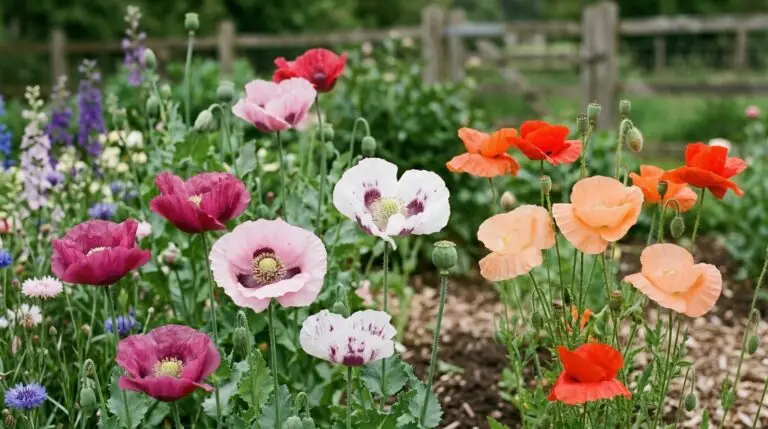
Iceland poppies for pastel spring color in cool climate gardens and cutting beds
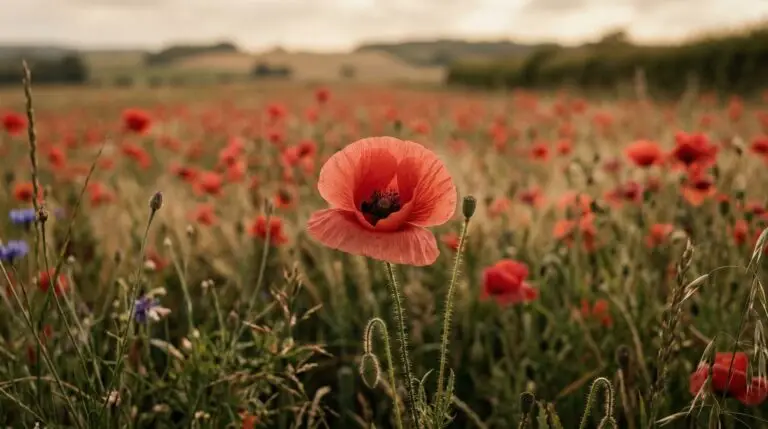
Poppy flower meaning from Remembrance Day red to the sleep and peace of ancient mythology
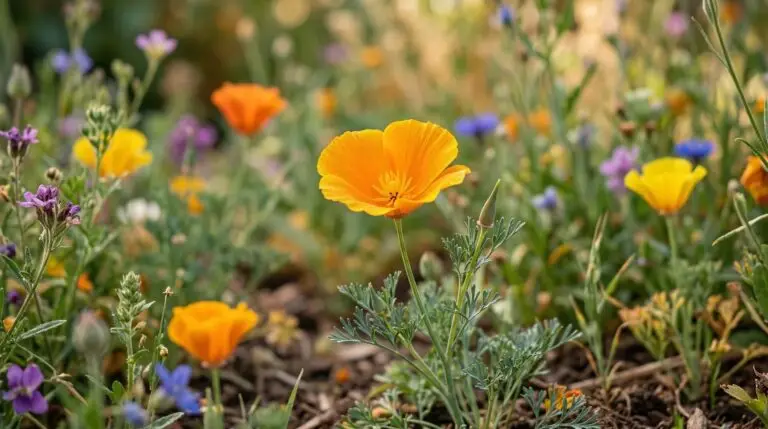
Growing California poppies for golden wildflower color in dry sunny gardens
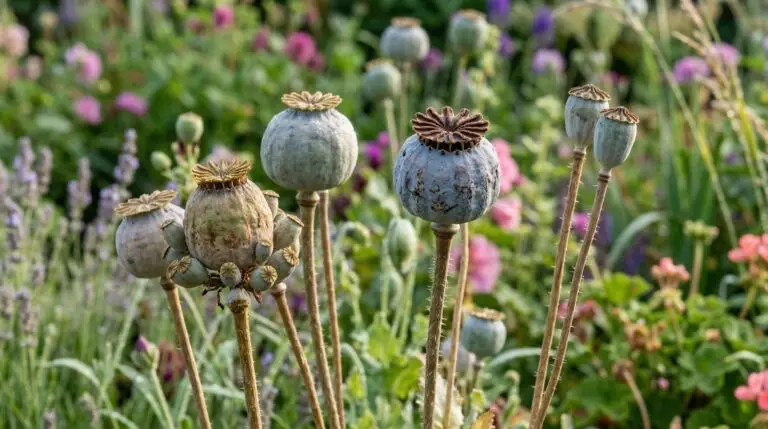
Poppy seed pods in dried flower arrangements and crafts for lasting garden beauty
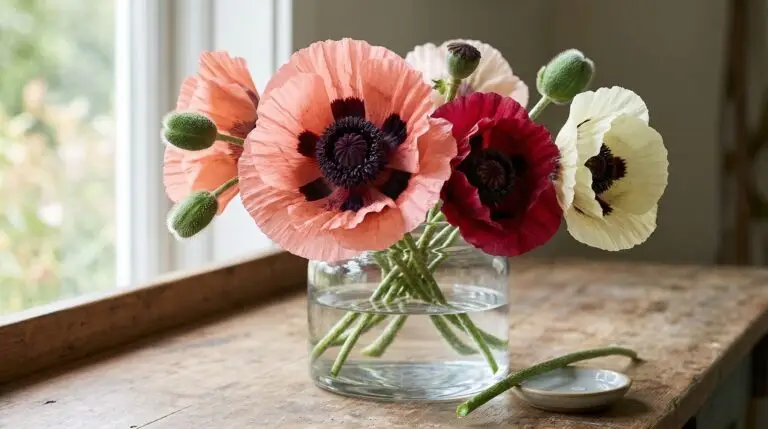
Oriental poppies for enormous papery blooms that are the stars of the early summer border
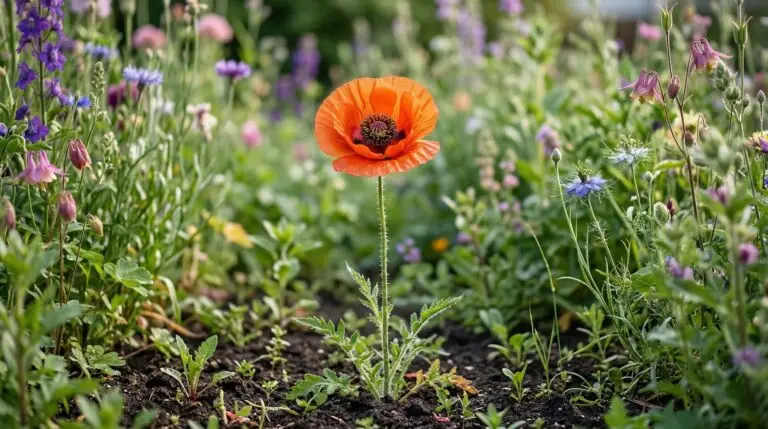
How to grow poppies from seed for tissue-paper petals that dance in the breeze
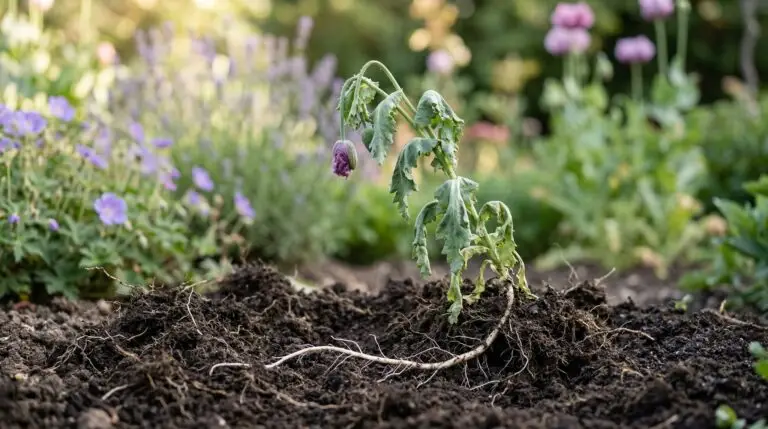
Why you cannot transplant poppies and the direct sowing secret to success

Poppies as self-sowing annuals that create effortless wildflower meadow effects