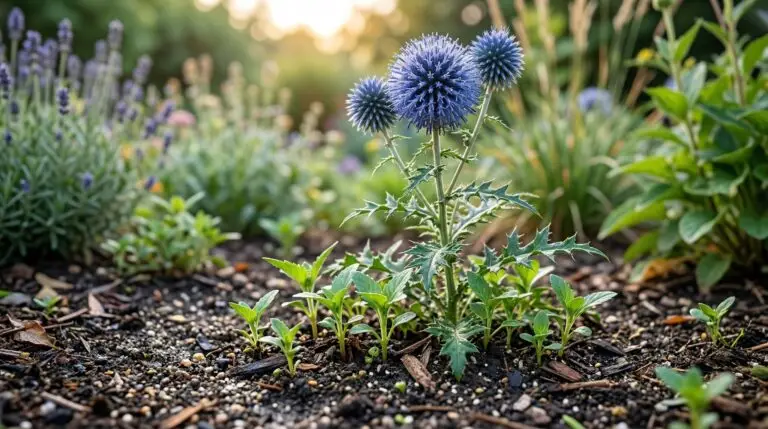
Many gardeners bring a globe thistle home from the nursery, plant it for those distinctive blue spherical blooms, and spend the next five years pulling prickly seedlings out of every nearby bed. People often reach out to me in a panic, convinced they have planted an aggressive weed that will consume their entire yard. When globe thistle spreading gets out of hand, it happens because the plant produces thousands of highly viable seeds that scatter on the wind. You might hear people call globe thistle invasive, but in most residential gardens, it is simply a prolific self seeder taking advantage of ideal growing conditions. You can absolutely grow this plant without it taking over, provided you understand how it reproduces and are willing to put in a little targeted maintenance at the right time of year.
Understanding how globe thistle spreads
The main reason globe thistle gets out of control is the sheer volume of seeds produced by a single mature plant. Each of those spiky blue spheres is actually a cluster of tiny individual flowers that eventually dry into hundreds of separate seeds. When the flower head turns completely brown and brittle, it shatters at the slightest breeze or bump from a passing animal. The seeds are lightweight and easily travel several feet from the parent plant to settle into bare patches of dirt. If you have open soil, gravel pathways, or thin layers of mulch nearby, you are providing the perfect nursery for echinops self seeding. The problem compounds quickly because globe thistle thrives in the exact dry, poor soil conditions where many other garden plants struggle to survive. This aggressive seeding behavior is common among tough prairie and meadow plants, much like the management required when growing goldenrod in a residential border.
Timing your deadheading to stop seed drop
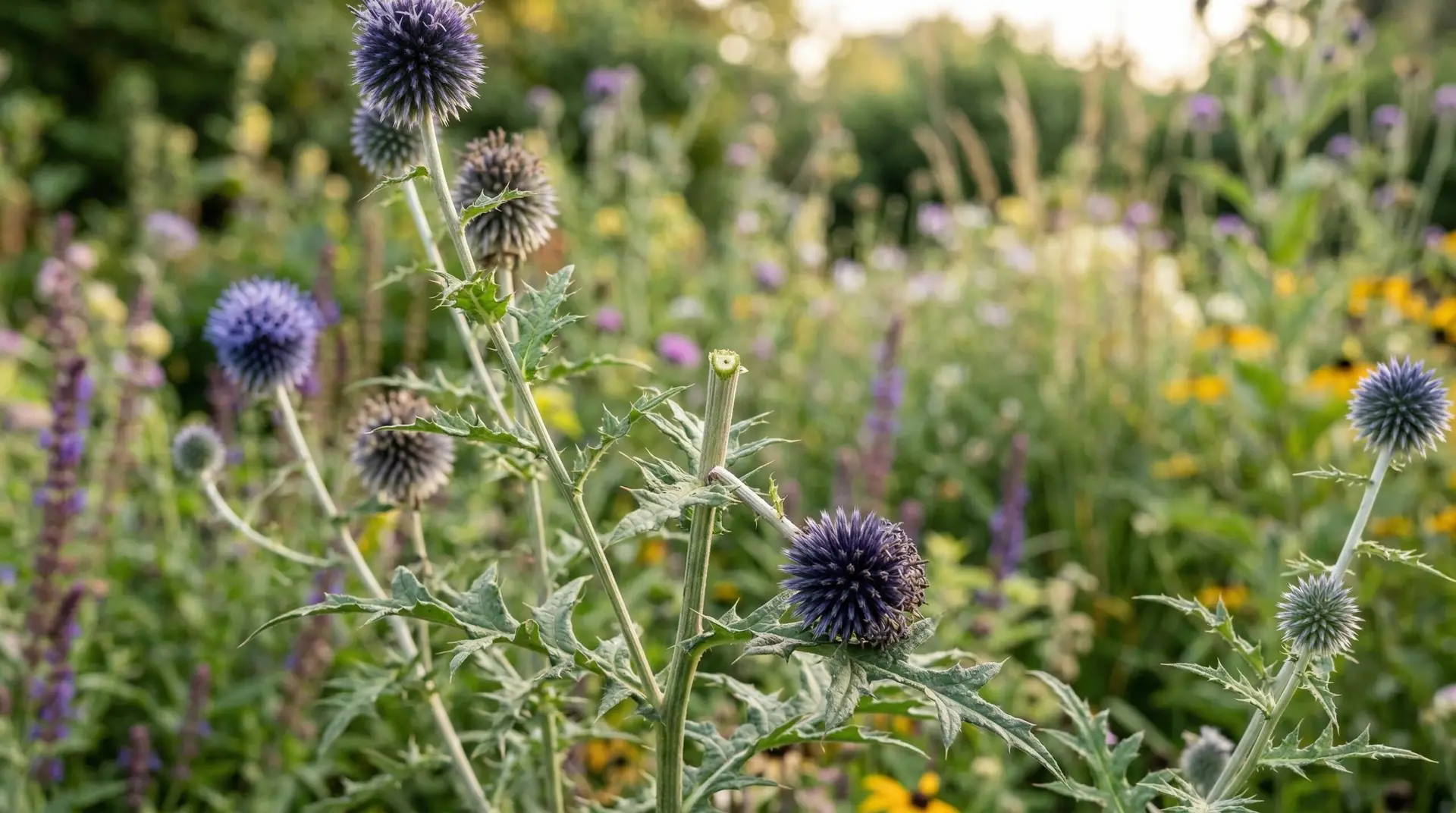
The most effective way to stop globe thistle from spreading is to remove the flower heads before the seeds fully mature. The exact timing of your deadheading determines whether you succeed or fail at controlling this plant. If you wait until the spheres are entirely brown and dry, the seeds will fall apart in your hands the moment you try to cut them off. You must watch the blooms closely in late summer and cut the stems when the blue color just begins to fade to a dull gray. The flower head should still feel solid and slightly green at the base when you make your cuts. Use a sharp pair of bypass pruners and take the entire stem down to the basal foliage to keep the plant looking tidy. Always drop the cut flower heads directly into a yard waste bag rather than tossing them in your home compost bin. Globe thistle seeds can continue to mature and ripen on cut stems, and a standard home compost pile rarely gets hot enough to destroy their viability.
Removing established plants and taproots
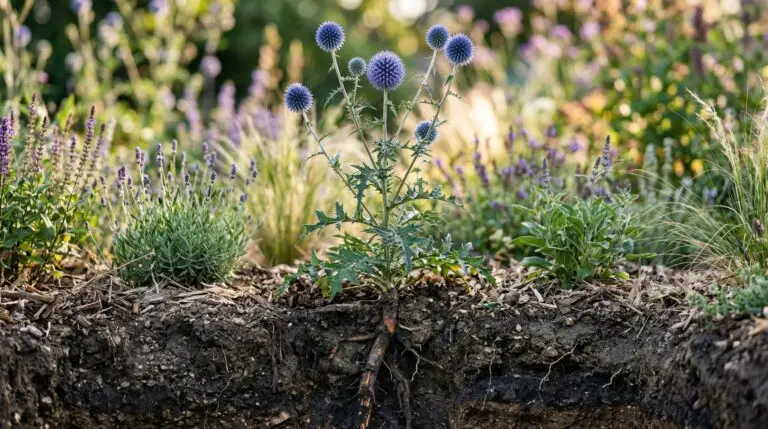
If you miss the deadheading window and seedlings take hold, you will quickly discover the second reason globe thistle is so hard to control. This plant develops a thick, deep taproot that anchors it firmly into the soil and stores enough energy to survive severe drought. When you try to pull a mature globe thistle out of the ground by hand, the stem almost always snaps off at the soil line. The root remains safely underground, and the plant simply pushes up new growth a few weeks later with renewed vigor. To permanently remove an unwanted globe thistle, you have to dig out the entire taproot intact. Wait for a day after a heavy, soaking rain when the ground is soft and yielding. Use a long, narrow spade to dig a wide circle around the base of the plant, gently levering the soil back and forth until the root slides out completely. You will need to use this same deep digging strategy if you are trying to divide or remove mature clumps of coneflower that have spread beyond their designated space.
Strategic placement and prevention
You can prevent a lot of future frustration by planting your globe thistle in a location that naturally suppresses seed germination. Seeds require sunlight and direct contact with soil to sprout successfully. If you surround your globe thistle with dense, low growing groundcovers, the dropped seeds will get trapped in the foliage and rot before they can reach the dirt. Maintaining a thick, three inch layer of wood chip mulch around the base of the plant creates a similar physical barrier against rogue seedlings. You should also pay attention to the prevailing winds in your yard when choosing a permanent spot for this perennial. Do not place globe thistle on the edge of a property that borders wild, unmanaged natural areas. In those situations, globe thistle invasive tendencies can emerge, allowing the plant to escape cultivation and outcompete native vegetation. Keep the plant in the middle of a well managed border where you can easily reach it for maintenance and spot any young seedlings early.
The single most useful piece of advice I give gardeners about globe thistle is to treat it like a scheduled annual chore rather than a low maintenance perennial. Set a recurring reminder on your calendar for mid August to check the fading blooms. Taking ten minutes to cut down the flower stalks at the end of the summer saves you hours of backbreaking digging the following spring. If you stay ahead of the seed drop and deal with young seedlings the moment they appear, you can enjoy the unique architectural beauty of globe thistle without sacrificing the rest of your garden to its offspring.
More About Globe Thistle
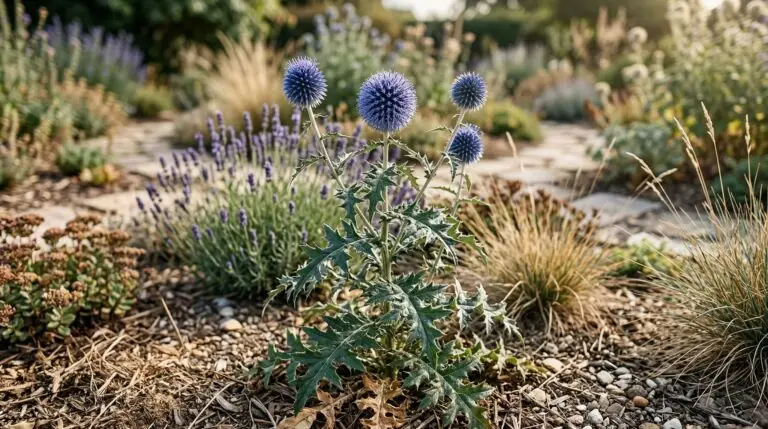
How to grow globe thistle for perfectly round steel-blue flower heads that bees adore
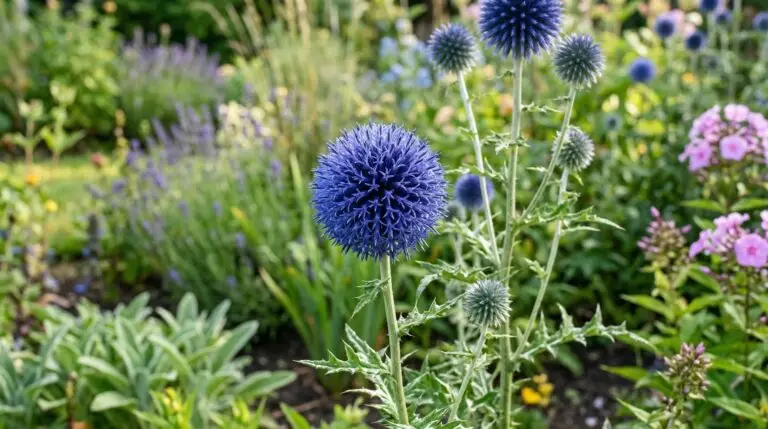
Dried globe thistle flower heads for everlasting arrangements that last for years

Globe thistle in modern garden design and the trend toward architectural perennials
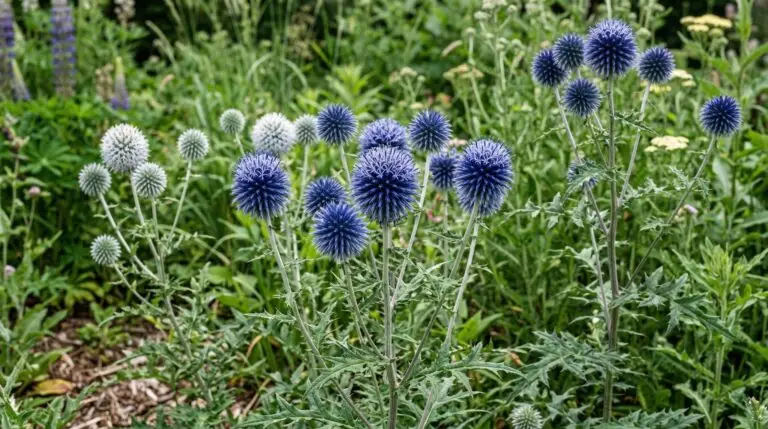
Best globe thistle varieties from compact Veitch’s Blue to towering Taplow Blue
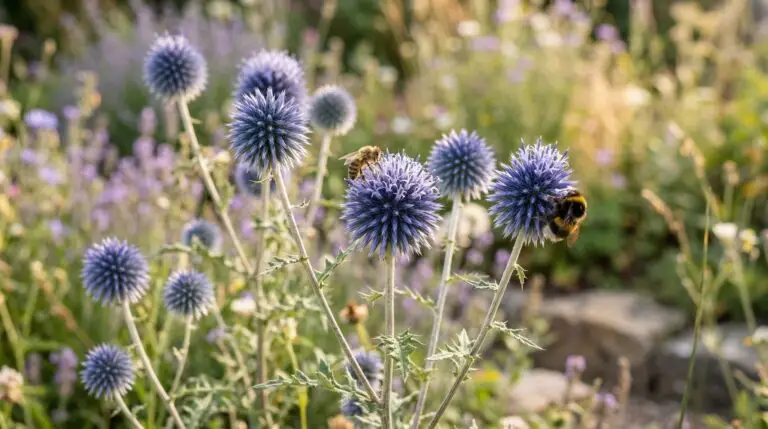
Globe thistle as a pollinator powerhouse attracting more bees than almost any perennial
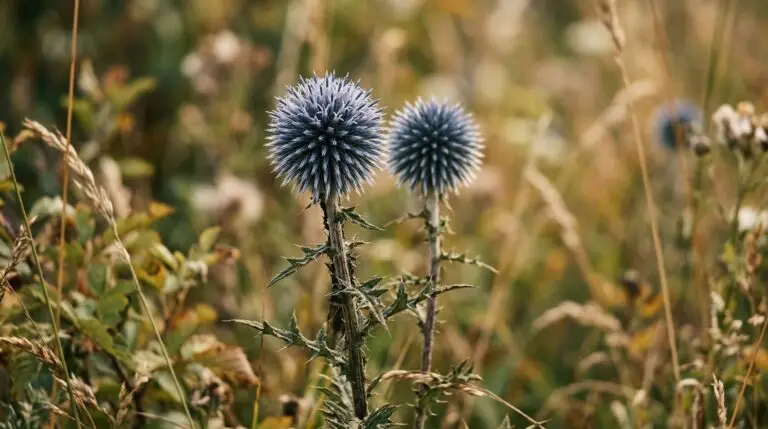
Globe thistle flower meaning and the quiet strength of this spiny blue sphere
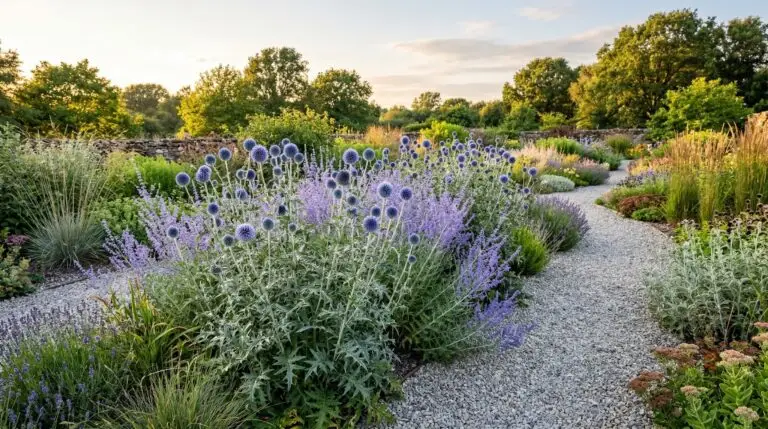
Globe thistle companions: what to grow and what to avoid
Growing globe thistle from seed for the most budget-friendly perennial border