The pairing · pick a flower
 Globe thistle+
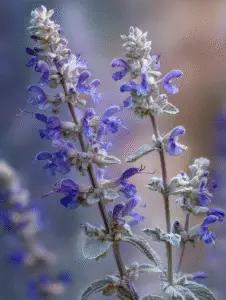 Russian sageProven
Wisconsin Horticulture Extension confirms the same full sun, well-drained soil and drought tolerance once established, and its hazy violet-blue haze is the strongest textural foil to the thistle's hard steel-blue spheres.
Globe thistle+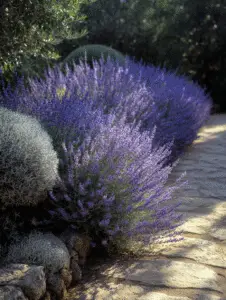 LavenderProven
Utah State University Extension confirms lavender wants the same full sun, dry sandy well-drained soil, and that it 'does not perform well in wet or water-logged soils,' the exact mismatch that also rots globe thistle's taproot.
Globe thistle+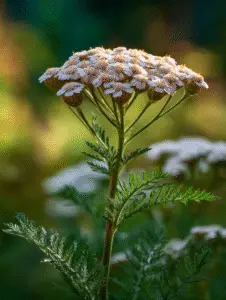 YarrowProven
NC State Extension lists the same full sun, well-drained, drought-tolerant profile, and flags that yarrow 'may be too weedy for flower bed borders' unless a named cultivar is chosen, an honest caveat worth repeating here.
Globe thistle+ ConeflowerProven
Penn State Extension confirms full sun, well-drained soil and strong drought tolerance once established, plus real pollinator draw for bees, butterflies and hummingbirds, matching the thistle's own conditions and mid-to-late-summer bloom window.
Globe thistle+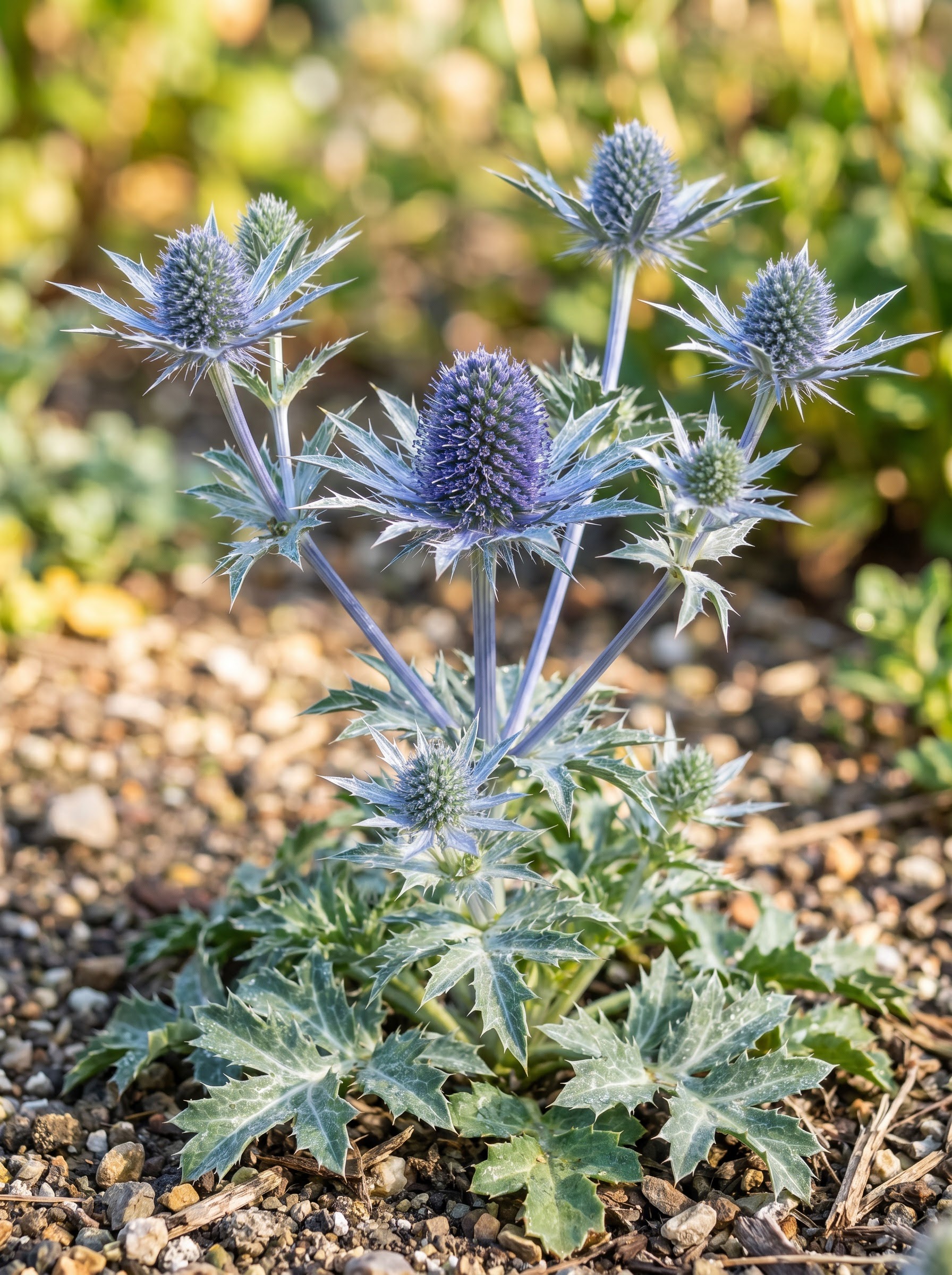 Sea hollyProven
NC State Extension confirms sea holly wants the identical full sun, lean, well-drained soil, and that rich conditions cause the same legginess problem globe thistle has; its own steely-blue, spiny architecture doubles the effect rather than fighting it.
Globe thistle+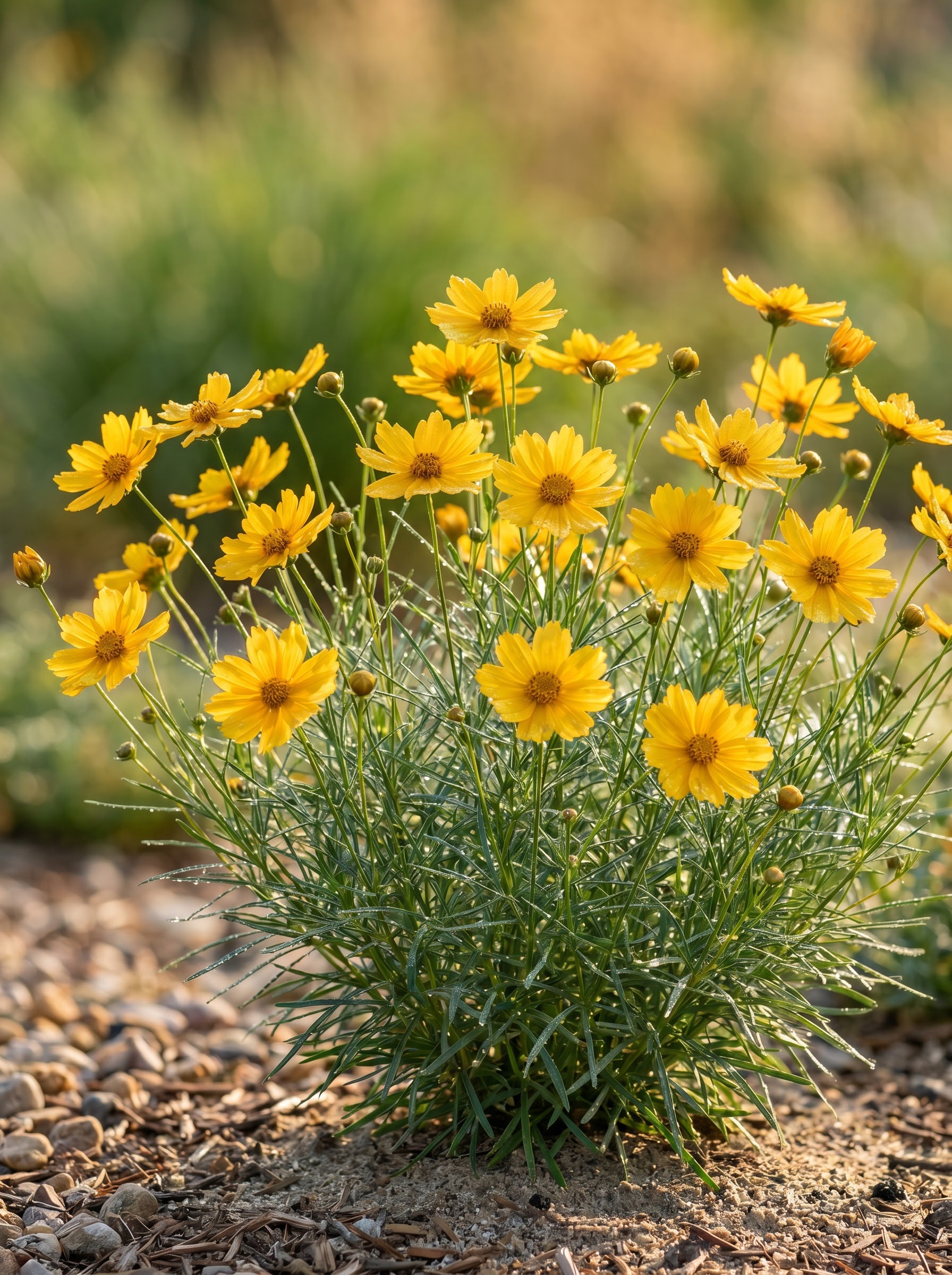 Threadleaf coreopsisProven
NC State Extension confirms the identical lean, infertile, well-drained, drought-tolerant profile, and warns that 'if the soil is too rich or moist, stems become weak and plants tend to flop,' the same failure mode as globe thistle in a fed bed.
Globe thistle+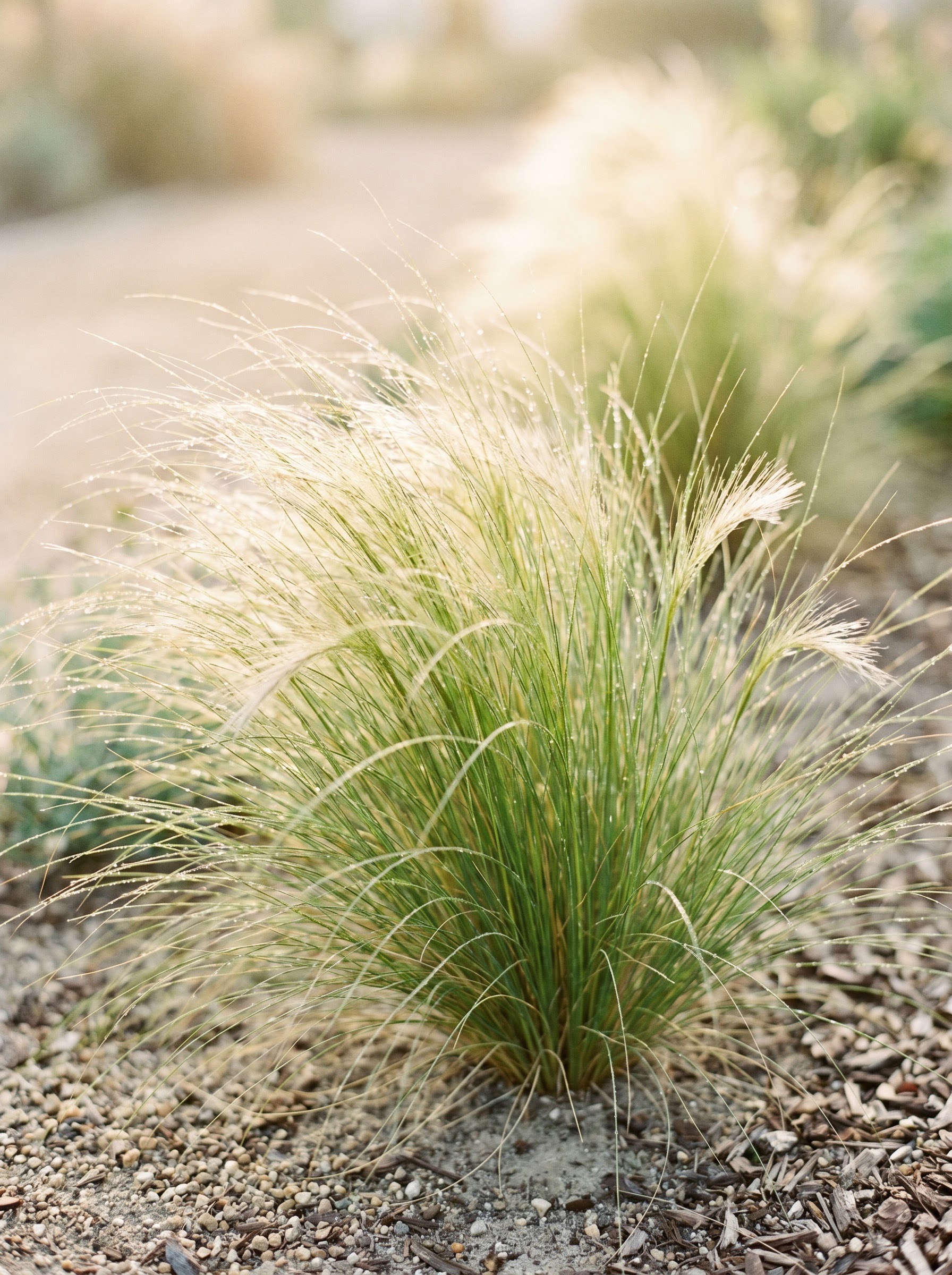 Mexican featherProven
NC State Extension confirms the same full sun and dry-to-occasionally-moist, well-drained preference, noting it 'may go dormant during the hottest months in drought,' the honest tradeoff for a plant this lean-adapted; its fine, arching blades soften the thistle's static, rigid posture.
Globe thistle+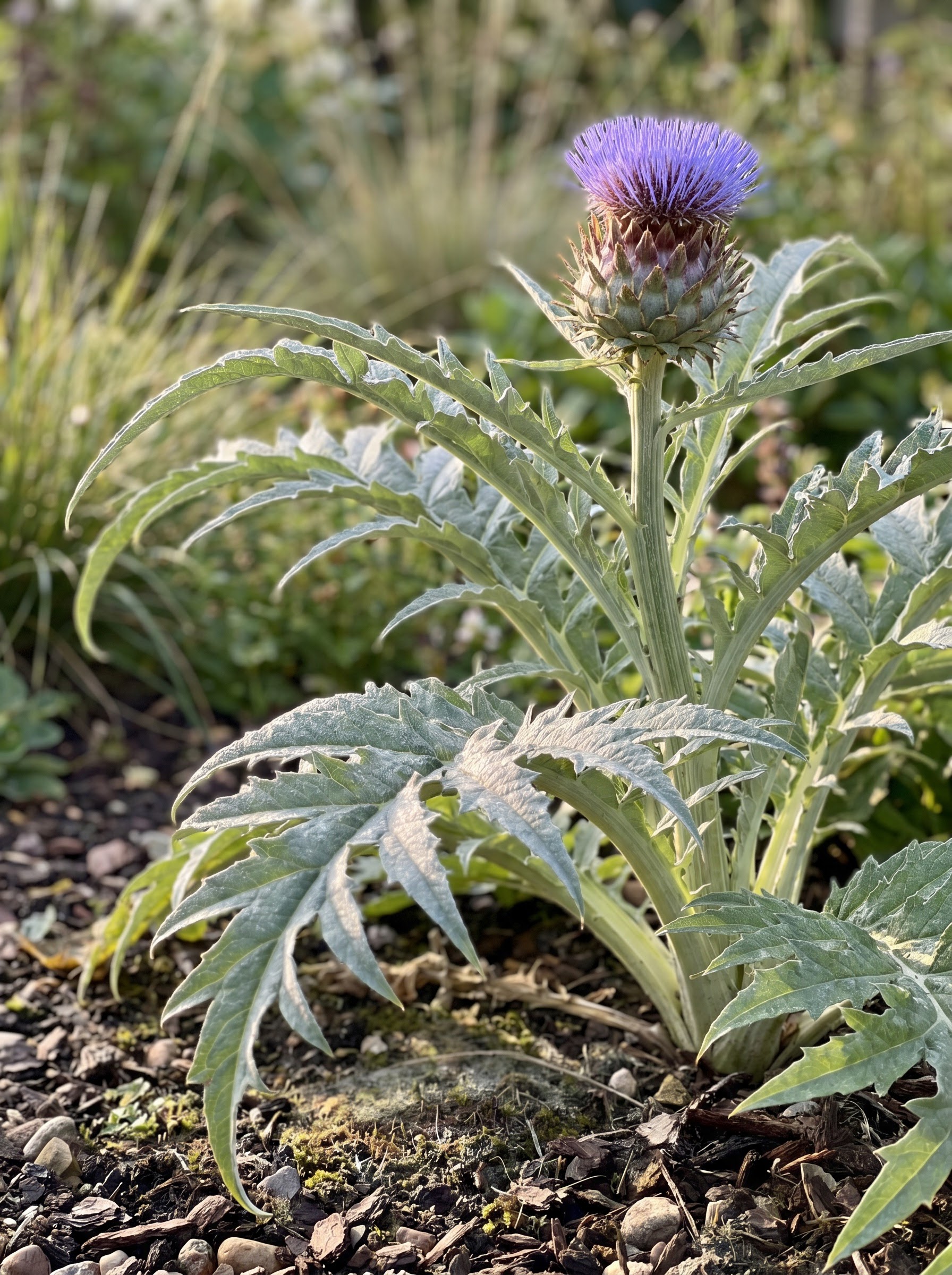 CardoonPartial
NC State Extension confirms full sun and strong drought tolerance, but cardoon actually prefers richer, moister soil than globe thistle tolerates, so treat this as a bold backdrop pairing at a distance, not a bed-mate on the same feeding schedule.
All Globe thistle companions
8 flower companions, best match first
What not to plant near Globe thistle
Most bad neighbours are not evil, they just want the opposite light, water or root run. Here is what to keep away, and what to do instead.
Rich, heavily fertilized, or heavily organic-matter-amended garden beds
This is a site-condition avoid rather than a single plant: NC State Extension's own globe thistle listing instructs gardeners to 'avoid wet, soggy, or rich organic, amended soils,' since rich feeding produces the same weak, floppy stems that overwatering does.
Consistently moist or clay, wet-footed companions (astilbe, ligularia, most hosta)
Iowa State University Extension's own shade-perennial guidance notes astilbe is 'unforgiving in dry soils,' the exact opposite of what globe thistle needs; sharing a bed means one plant's correct watering schedule kills the other's taproot through rot or drought stress.
Shade-preferring or part-shade perennials
NC State Extension lists globe thistle as needing full sun for best form, tolerating only partial shade at the cost of lankier, weaker stems, so a shade-lover tucked nearby either scorches in the thistle's sunny spot or the thistle underperforms trying to suit a shadier one.
Aggressive spreaders and running mats (mint and similar)
University of Maryland Extension describes mint as spreading 'aggressively' through runners that root wherever they touch soil; while this is not Echinops-specific, it competes hard at the base while the thistle's own taproot is trying to establish.
Globe thistle earns its spot in a hot, dry border the way an architectural accent does anywhere: stiff upright stems topped with hard steel-blue spheres that hold their shape from July into fall, then dry to brown seed heads that still look deliberate in January. Almost nobody plants it hoping it will survive. Most gardeners already know it will, since Echinops ritro shrugs off drought once established and needs nothing from a gravel garden or a struggling lawn edge except full sun and a spot that drains fast. The real question is what earns a place beside those blue globes, and just as importantly, what quietly ruins the plant by asking the bed to do two incompatible jobs at once.
The best companions for globe thistle, explained
Russian sage does the most work with the least effort. Wisconsin Horticulture Extension confirms it wants the identical full sun and well-drained soil globe thistle wants, and once established it tolerates drought just as completely, so the shared-conditions math is settled before the design math even starts. What it adds visually is the sharpest available contrast: a hazy, indistinct violet-blue cloud standing next to a hard geometric sphere, softness against structure, in nearly the same color family so nothing clashes. Lavender does a related job at a smaller scale. Utah State University Extension is direct that lavender "does not perform well in wet or water-logged soils" and wants the same dry, sandy, well-drained ground, which means the two plants can be watered on the exact same forgiving schedule, something that is not true of most flower pairings on this site. Its silver-green foliage echoes the thistle’s own leaf cast rather than fighting it, a quieter kind of harmony than Russian sage’s contrast.
Yarrow and coreopsis pull the eye in the opposite direction, straight into color-wheel opposition. NC State Extension lists yarrow’s full sun, well-drained, drought-tolerant profile as a near-perfect match, and its flat mustard-yellow umbels sit directly across the color wheel from steel blue, the strongest contrast available in this bed. Threadleaf coreopsis works the same trick at front-of-border height, and NC State’s own listing for it warns that "if the soil is too rich or moist, stems become weak and plants tend to flop," which is worth pausing on: this is the identical failure mode globe thistle has in the same conditions, so the two plants are not just color opposites, they are honestly matched in what kind of bed keeps them both upright. Coneflower brings a softer daisy form into the same window; Penn State Extension confirms its own full sun, well-drained, drought-tolerant needs along with real pollinator draw for bees, butterflies and hummingbirds, and its rounded mauve-pink blooms extend the display later into the season than the thistle manages alone.
Texture does the rest. Sea holly is the closest thing to a mirror image globe thistle has: NC State Extension confirms the identical lean, well-drained preference, and its own metallic blue, spiny bracted flowers sit in nearly the same color family while reading as finer and more angular than the thistle’s smooth spheres, doubling the steely-blue effect instead of competing with it. Mexican feather grass does the opposite job, trading rigidity for motion; its hairlike blades never stop moving in wind, a genuine contrast to the thistle’s fixed, static posture, though NC State’s own page notes it belongs in zones 7 through 10 and may go dormant in the hottest months, an honest tradeoff for how lean-adapted it is. Cardoon is worth naming even though it asks for slightly more, since NC State confirms its drought tolerance but also notes it wants richer, moister soil than globe thistle tolerates well; treat it as a bold silver-leaved backdrop planted at a real distance, not a bed-mate sharing the same feeding schedule.
What not to plant near globe thistle
There is no allelopathy here, no chemical warfare, nothing in the research suggesting globe thistle harms a neighboring plant directly. The honest avoid list is entirely about site conditions clashing, and the biggest one is soil richness, not plant choice at all. NC State Extension’s own globe thistle listing is explicit: "avoid wet, soggy, or rich organic, amended soils." That single line does more work than any specific plant name, because it means any companion that demands a fed, moisture-retentive bed to perform, most classic cottage perennials, most annuals bred for continuous bloom, is asking for exactly the opposite of what keeps this plant’s stems rigid and its taproot alive. Feed the bed to satisfy a hungrier neighbor and the thistle is the one that pays for it with weak, floppy growth that needs staking it was never built to need.
Moisture-loving shade perennials are the second honest mismatch. Iowa State University Extension notes astilbe is "unforgiving in dry soils," which is a fair description of exactly the opposite plant from globe thistle. Put astilbe, ligularia or most hosta varieties in the same bed and one of two things happens: water it enough to keep them alive and the thistle’s taproot sits in conditions that invite rot, or let the bed dry the way the thistle wants and the moisture lovers scorch. Shade preference follows the same logic in reverse. Globe thistle needs full sun for compact growth and strong flowering, tolerating only light afternoon shade in the hottest climates before its stems start stretching and weakening, so a true shade perennial tucked nearby either gets burned in the thistle’s sunny spot or forces a compromise that leaves the thistle underperforming. Aggressive runners like mint round out the list for a more ordinary reason: University of Maryland Extension describes mint spreading "aggressively" through runners that root wherever they touch soil, competing hard at the base while the thistle’s own taproot is still trying to establish itself, a generic dry-border risk rather than anything specific to Echinops.
Do they like the same conditions?
Pulled straight from NC State Extension’s own listing, globe thistle’s real profile is full sun, six or more hours a day, tolerant of light afternoon shade in intense heat but not built for it as a preference. Water is where most companion mistakes happen: this plant genuinely wants to dry out between waterings, and treating "drought-tolerant" as loosely compatible with "evenly moist" is the error that undoes half the plants people try next to it. Soil is the load-bearing constraint above all else, lean to average, sharply well-drained, tolerant of sand, loam, chalk and rocky ground, explicitly intolerant of rich or wet conditions. Zone is genuinely permissive by comparison; NC State rates it hardy from zone 3a through 8b, wider than most of the flowering perennials people pair it with, so zone is rarely the limiting factor here the way drainage and sun are.
The myth worth resolving directly is whether globe thistle itself is invasive, a real, searched fear that most flowers on this site do not carry. It is not, and the sourcing on this is unusually solid for a garden myth: Washington State’s own Noxious Weed Control Board lists Echinops ritro by name as a recommended non-invasive alternative to true noxious thistles like milk thistle and Scotch thistle, the exact opposite of a warning label. The confusion traces almost entirely to lookalikes, spiny young rosettes that resemble genuinely aggressive weeds like bull thistle before either plant flowers, not to anything Echinops ritro actually does in a garden bed. It self-seeds, which is a real trait worth managing by deadheading if unwanted seedlings bother you, but self-seeding and invasiveness are not the same claim, and conflating them here would be dishonest.
How to plant them together
Give the thistle’s own taproot room before worrying about anyone else’s, 18 to 24 in from the crown to a close companion for most of the plants on this list, tighter at 12 to 18 in for lower growers like yarrow, coreopsis or sea holly that will not shade the base. Layer by height and form rather than just height alone: Russian sage or cardoon at the back for scale and haze, globe thistle itself doing the mid-border architectural work, and low, flat or fine-textured plants like yarrow, coreopsis and Mexican feather grass at the front where their shape actually contrasts the thistle’s rigid spheres instead of repeating them. Grouping in odd numbers, three or five thistles rather than a single specimen, reads as more deliberate in a border and avoids the plant looking like a stray accident among softer neighbors.
Containers are a smaller-scale version of the same logic, and they solve a real problem: gardeners without in-ground space for a dry, well-drained bed can still grow this plant in a pot with sharp drainage and full sun, as long as nothing sharing that container needs more water than the thistle can tolerate. Winter is where the payoff shows up if you resist the tidying instinct. Leave the dried brown seed heads standing rather than cutting the plant back in fall, since they hold their geometric shape against a dormant backdrop of ornamental grasses and Russian sage’s own dried stems, genuine winter structure that a spring cleanup would erase for no real benefit.
Does companion planting actually work for globe thistle?
Some of this is genuinely settled, and some of it is closer to a widely repeated design choice than a study. The shared-conditions matches, Russian sage, lavender, yarrow, coneflower and sea holly, are all independently confirmed against extension listings for both plants, as close to proven as garden advice gets in this category. The rich-soil-causes-flopping mechanism is unusually well corroborated too, showing up nearly word for word in NC State’s own descriptions of both globe thistle and threadleaf coreopsis, which makes it more than a one-source claim. The avoid list splits the same honest way: moisture and shade mismatches are documented cultural facts about both plants involved, not folklore, while the specific claim that blue oat grass is a uniquely studied Echinops pairing, as opposed to just two dry-garden plants that happen to share a color, is a popular design habit without a dedicated source behind it, and it is labeled Folklore here rather than dressed up as more certain than it is. What actually works is matching the bed’s drainage and feeding to what the thistle needs first, then choosing color and form on top of that foundation, not the reverse.
FAQ
What can I plant in front of globe thistle to soften its base?
Yarrow, threadleaf coreopsis or Mexican feather grass all stay low and share the same lean, dry, full-sun conditions, so they hide the thistle’s coarse lower foliage without asking for a different watering schedule.
What should you not plant near globe thistle?
Anything that needs rich, heavily fed soil or consistent moisture, including most hosta, astilbe and ligularia, since NC State Extension is explicit that rich or wet ground weakens the thistle’s stems and rots its taproot.
Is globe thistle invasive?
No. Washington State’s own Noxious Weed Control Board lists Echinops ritro as a non-invasive alternative to true noxious thistles, and it self-seeds without being classified as aggressive; the fear usually comes from confusing it with a genuinely weedy lookalike.
Does globe thistle attract bees and pollinators?
Yes, its globe-shaped flower heads draw bees and butterflies heavily through its July to September bloom window, which is a real reason to pair it with other pollinator-friendly dry-garden plants like coneflower and yarrow rather than a myth.
Can globe thistle grow in a container with other plants?
Yes, as long as the pot has sharp drainage and full sun and nothing sharing it needs more water than the thistle can tolerate; lavender or sea holly make honest container partners for the same reason they work in the ground.
Sources
- NC State Extension Gardener Plant Toolbox: Echinops ritro
- NC State Extension Gardener Plant Toolbox: Achillea millefolium
- NC State Extension Gardener Plant Toolbox: Anacis verticillata (threadleaf coreopsis)
- NC State Extension Gardener Plant Toolbox: Eryngium planum
- NC State Extension Gardener Plant Toolbox: Nassella tenuissima
- NC State Extension Gardener Plant Toolbox: Cynara cardunculus
- Wisconsin Horticulture Extension: Russian sage
- Utah State University Extension: English lavender
- Penn State Extension: Purple coneflower
- Iowa State University Extension: Growing astilbe in Iowa
More About Globe Thistle
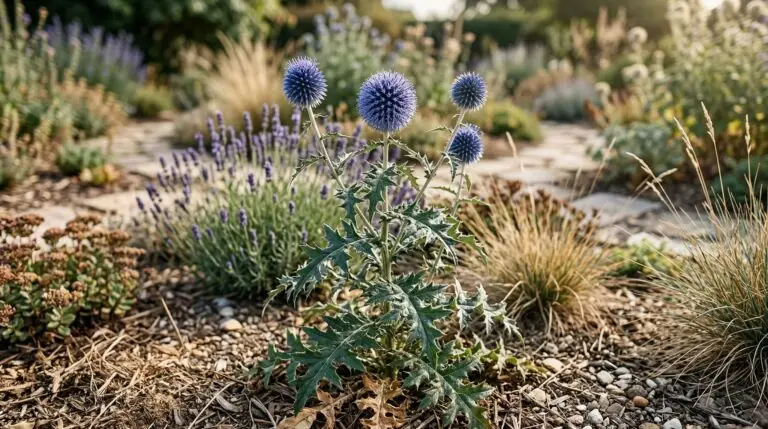
How to grow globe thistle for perfectly round steel-blue flower heads that bees adore
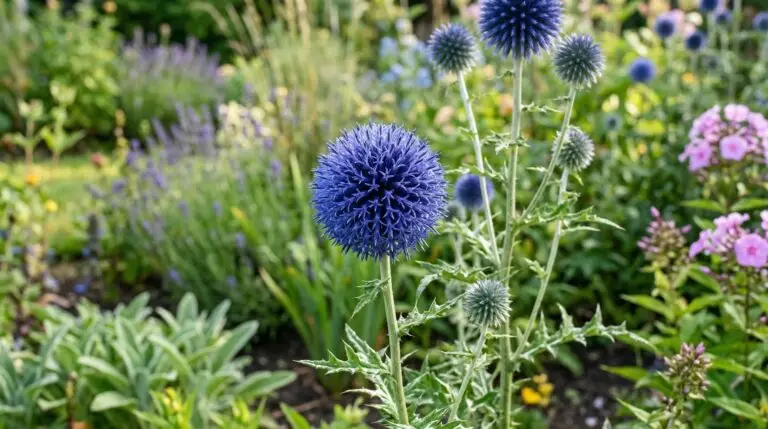
Dried globe thistle flower heads for everlasting arrangements that last for years
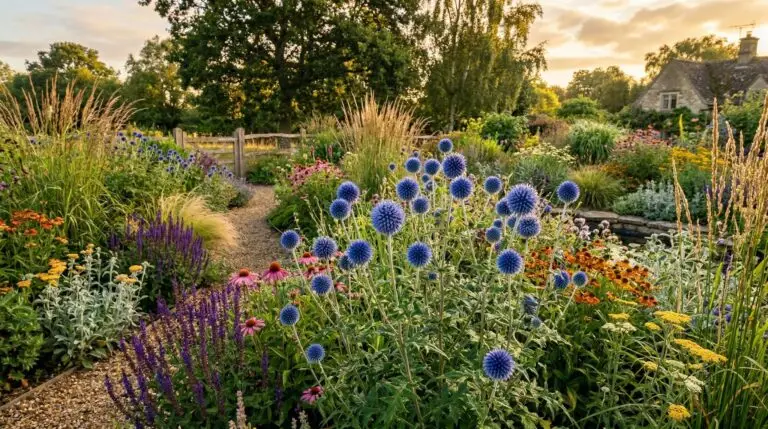
Globe thistle in modern garden design and the trend toward architectural perennials
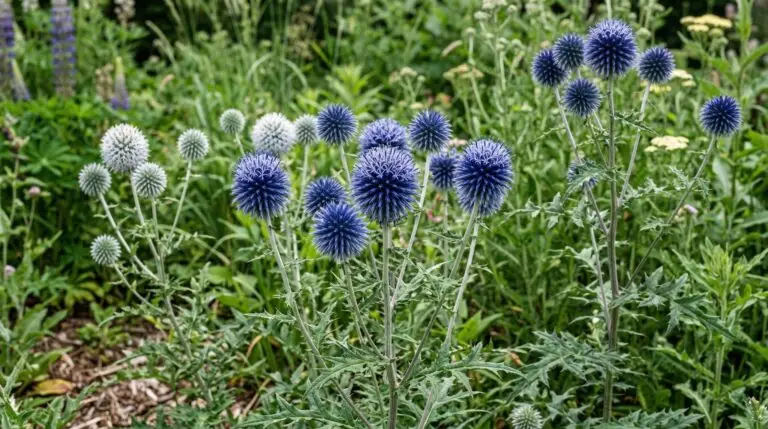
Best globe thistle varieties from compact Veitch’s Blue to towering Taplow Blue
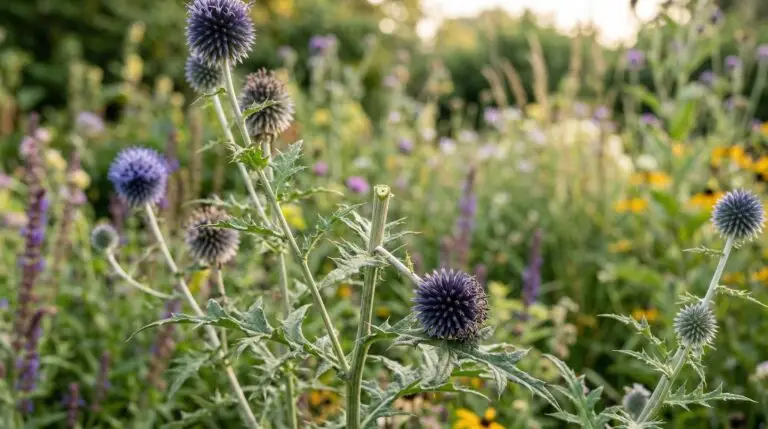
How to control globe thistle self-seeding and prevent unwanted spread in borders
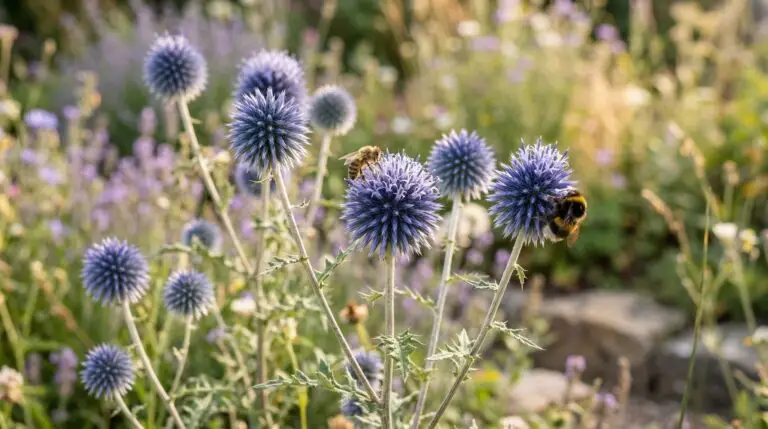
Globe thistle as a pollinator powerhouse attracting more bees than almost any perennial

Globe thistle flower meaning and the quiet strength of this spiny blue sphere
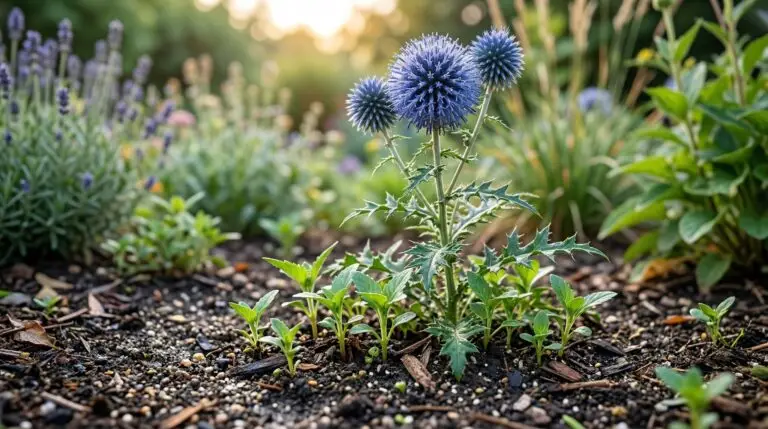
Growing globe thistle from seed for the most budget-friendly perennial border
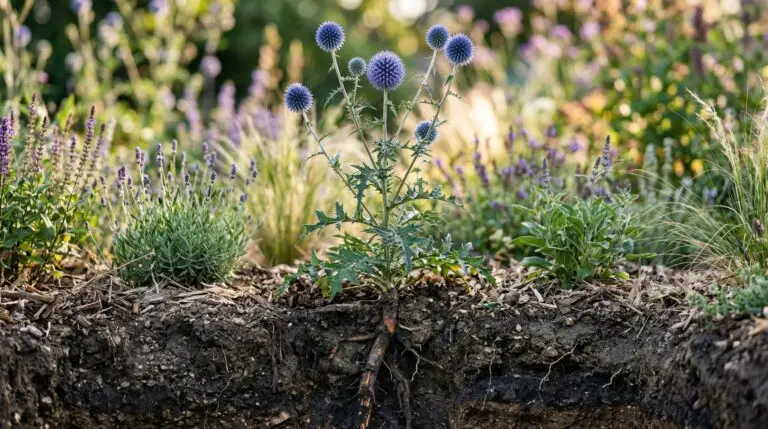
Globe thistle for hot dry slopes and problem areas where other perennials fail