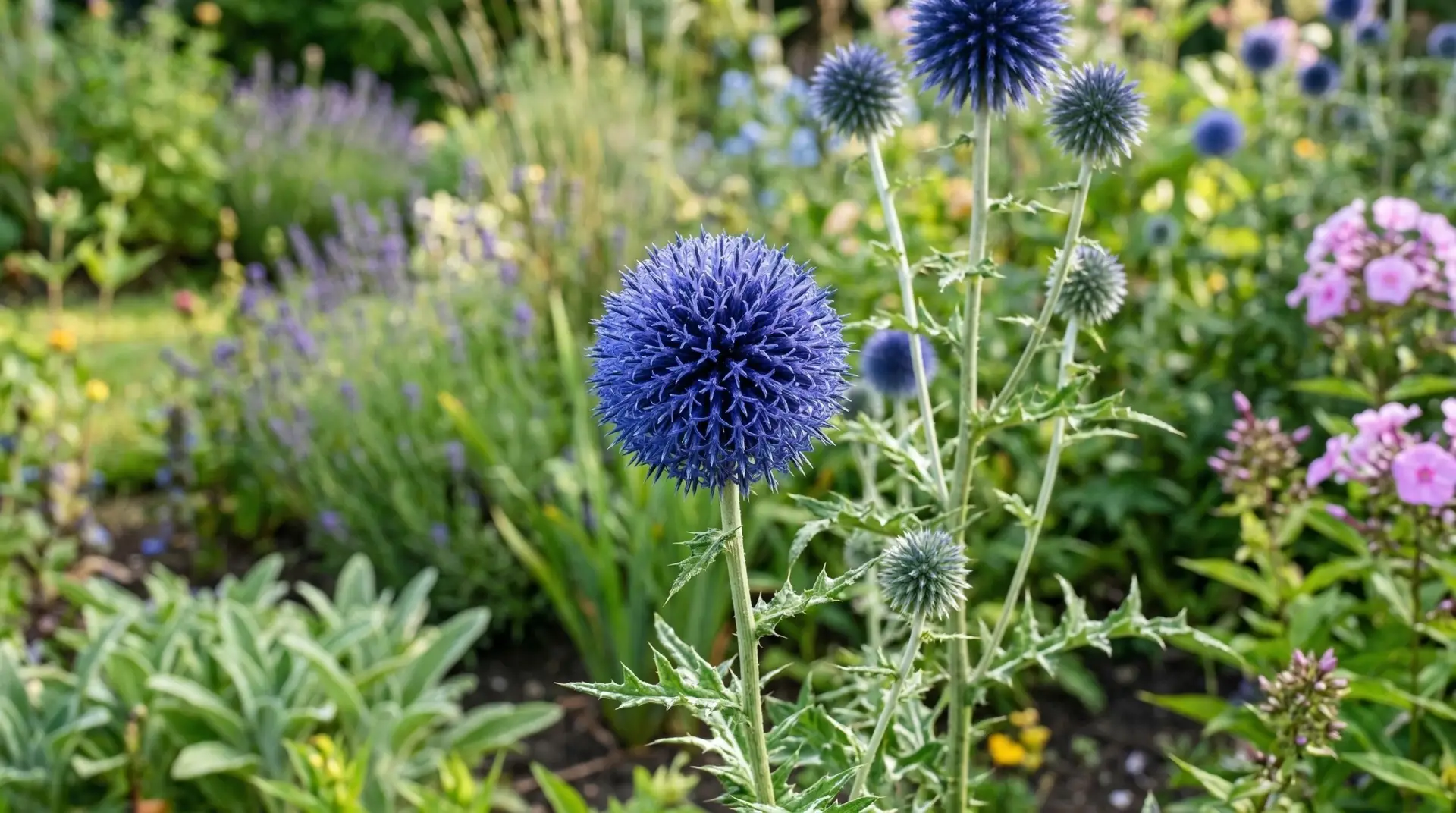
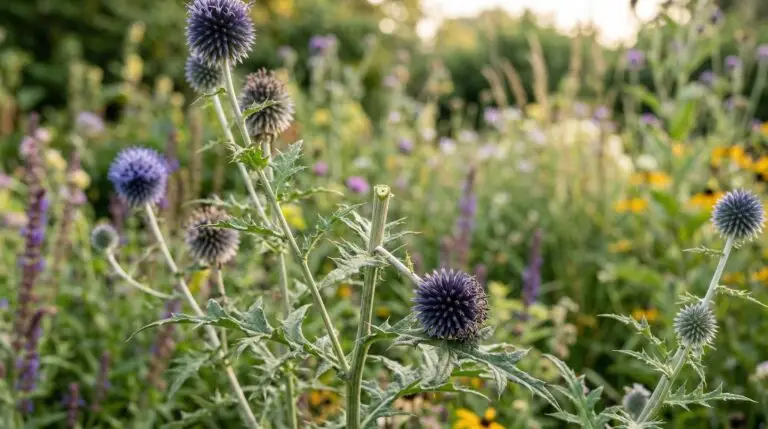
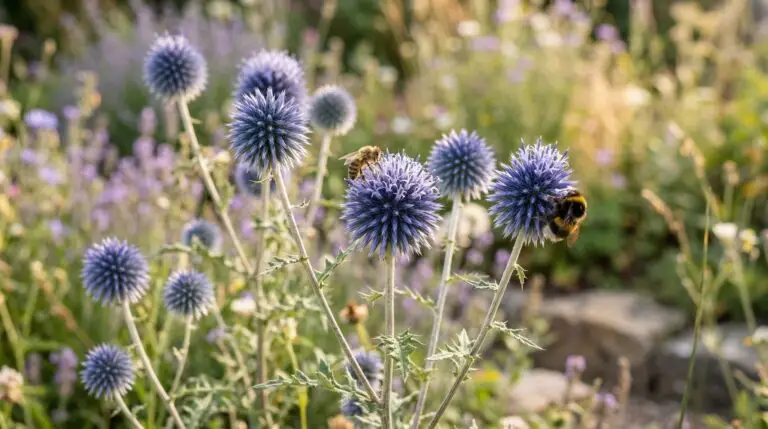
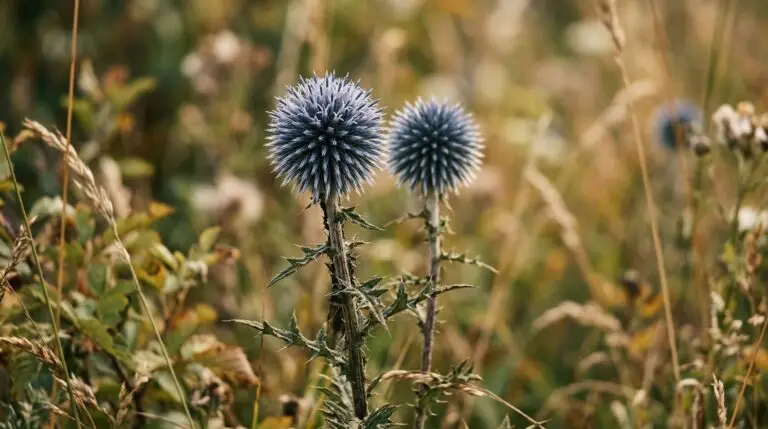
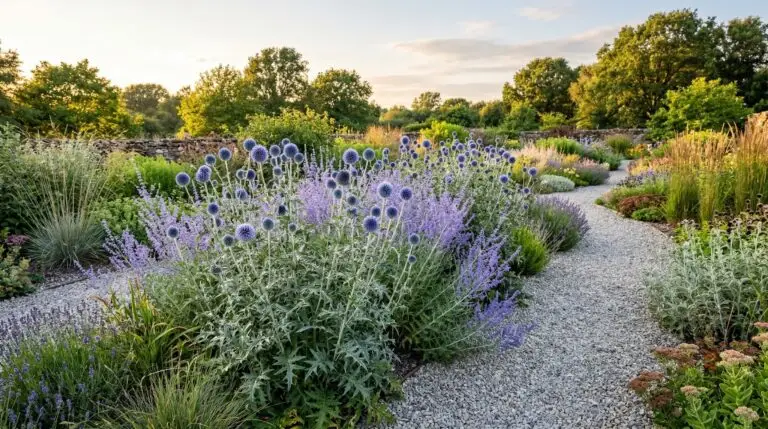
Late August brings a specific kind of light to the garden, a lower, golden angle that catches the structural elements of plants transitioning past their peak. It is during this late summer shift that globe thistle, known botanically as Echinops, commands the most attention. The perfectly spherical heads rise on stiff, silvered stems, looking more like architectural models than traditional garden flowers. The foliage below is deeply lobed and prickly, warning passersby to keep their distance, but the blue globes floating above invite closer inspection. As the season cools, gardeners often feel the urge to capture this fleeting geometry before the autumn rains arrive. Preserving these metallic blue orbs offers a way to carry the architecture of the summer border directly into the house. Most gardeners discover that dried globe thistle becomes the backbone of winter displays, holding its shape long after softer blooms have faded to dust. The process of turning these fresh spikes into everlasting material requires only a little timing and a dry room.
The secret to preserving that specific, steely blue color lies entirely in knowing exactly when to approach the plant with your clippers. If you wait until the tiny individual star-shaped flowers open all over the sphere, the head will shatter into a mess of seeds a few weeks after drying. The ideal moment for harvesting dried globe thistle occurs just before those true flowers emerge, when the orb is still a tight cluster of spiky blue bracts. You want the sphere to feel firm to the touch, with a deep, saturated color that has not yet softened into the fuzziness of full bloom. Inspect the heads daily as they develop, looking for that peak moment of tight, colorful tension. Cutting them at this precise stage locks the structure in place, ensuring the heads remain intact for years on your mantel or dining table.
Contents 3 sections
Setting up a dedicated drying space
Once you gather your stems, the environment where they cure dictates the final quality of the dried flowers. Light is the enemy of preserved color, bleaching the subtle blues and silvers into a uniform, papery tan if the stems are left in a sunny window. You need a dark, warm, and well-ventilated space, like an attic, a spare closet, or a dry basement corner away from direct windows. Strip all the foliage from the stems immediately after cutting, as the leaves dry into brittle, unappealing shapes that detract from the clean lines of the spherical heads. Wearing thick leather gloves protects your hands from the sharp spines lining the stems. Bundle the naked stems in small groups of five or six, securing them with a rubber band that will naturally contract as the stems shrink during the drying process. Hanging them upside down ensures the stems dry perfectly straight, giving you rigid wands that are easy to manipulate in future designs. The air in a good drying room soon takes on the crisp, herbal scent of suspended summer, especially if you are also curing bundles of garden yarrow alongside your thistles.
The drying process usually takes two to three weeks, depending on the humidity of your local climate. You can test for readiness by feeling the stem right just below the flower head. If the stalk snaps cleanly like a dry twig rather than bending, the moisture has fully evaporated, and the globe thistle dried flowers are ready for indoor life. Leaving them hanging longer does no harm, and many people simply use their drying racks as temporary storage until inspiration strikes. The finished product feels remarkably durable, resembling little medieval maces that can withstand regular handling without dropping petals.
Designing with everlasting architecture
Modern dried arrangements favor strong silhouettes and negative space over the tightly packed, dusty bouquets of past decades. Echinops dried naturally fits this contemporary aesthetic, offering instant focal points that draw the eye upward. A simple ceramic vase holding an odd number of bare thistle stems creates a striking, minimalist display that requires absolutely no water or maintenance. For more complex designs, the rigid spheres contrast beautifully with softer preserved elements, anchoring the feathery textures of ornamental grasses or the fragrant, dusty purple spikes of dried lavender. When building a winter wreath for a sheltered door or interior wall, the thistle heads can be snipped short and wired directly into a grapevine base. Their uniform, round shapes create a satisfying rhythm around the circle, breaking up the predictability of flat leaves and twigs. Grouping three heads together on a wreath creates a strong visual anchor that mimics how they grow in the garden.
While the natural metallic blue and silver tones suit most interiors, globe thistle also accepts alteration beautifully. The dense, spiky surface of the flower head takes spray paint exceptionally well, opening up completely different design possibilities. A light misting of matte black paint turns the orbs into stark, graphic silhouettes that look incredibly modern against a white wall. Alternatively, a coat of metallic gold or copper transforms them into festive ornaments suitable for holiday centerpieces. Because the dried structure is so rigid, the paint adheres evenly without causing the flower to wilt or collapse under the moisture.
The quiet permanence of winter displays
There is something deeply satisfying about living with plants that have bypassed the usual cycle of decay. Fresh flowers demand our immediate attention with their fleeting scents and dropping petals, but dried botanicals ask for nothing while offering a steady, quiet presence. They become familiar fixtures in a room, shifting slightly in mood as the indoor lighting changes from morning to evening. Dusting them occasionally with a soft makeup brush or a gentle burst of cool air from a hairdryer keeps the spheres looking clean through the darkest months of the year. If kept out of direct sunlight and away from damp areas like bathrooms, a well-preserved globe thistle will easily maintain its shape and color for three to four years. Eventually, the blue will fade to a soft, antique silver, marking the passage of time in a slow, graceful way.
The garden rests under snow or heavy rain, but the sharp, architectural energy of summer remains indoors. Arranging these dried stems on a cold January afternoon is a physical reminder of the heat and light that produced them. You are holding the preserved intention of the August garden, suspended perfectly in time. The globe thistle stands quietly in its vase, a permanent globe of summer color waiting out the winter.
More About Globe Thistle
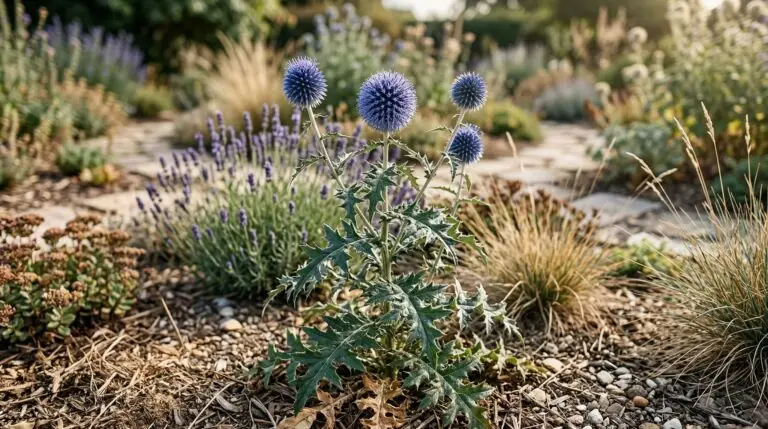
How to grow globe thistle for perfectly round steel-blue flower heads that bees adore
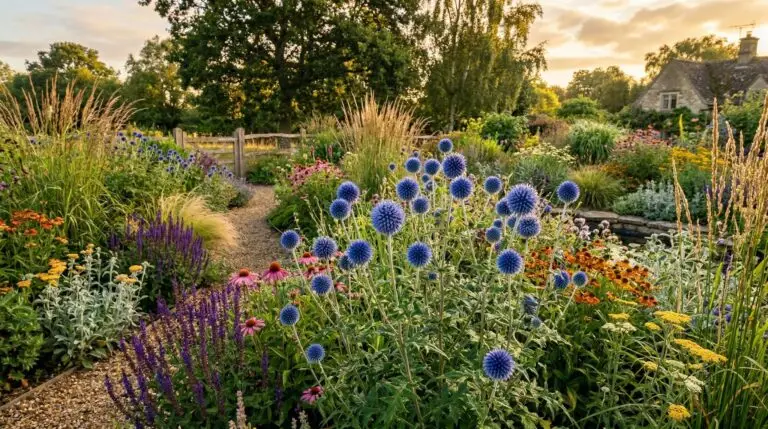
Globe thistle in modern garden design and the trend toward architectural perennials
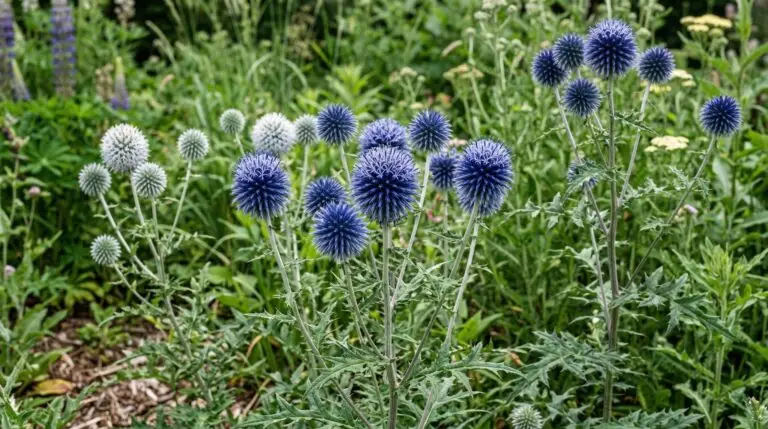
Best globe thistle varieties from compact Veitch’s Blue to towering Taplow Blue
How to control globe thistle self-seeding and prevent unwanted spread in borders
Globe thistle as a pollinator powerhouse attracting more bees than almost any perennial
Globe thistle flower meaning and the quiet strength of this spiny blue sphere
Globe thistle companions: what to grow and what to avoid
Growing globe thistle from seed for the most budget-friendly perennial border
Globe thistle for hot dry slopes and problem areas where other perennials fail
Enjoying our flower guides? Add YourFlowersGuide as a preferred source on Google. It helps more readers find us.
Add to Preferred Sources