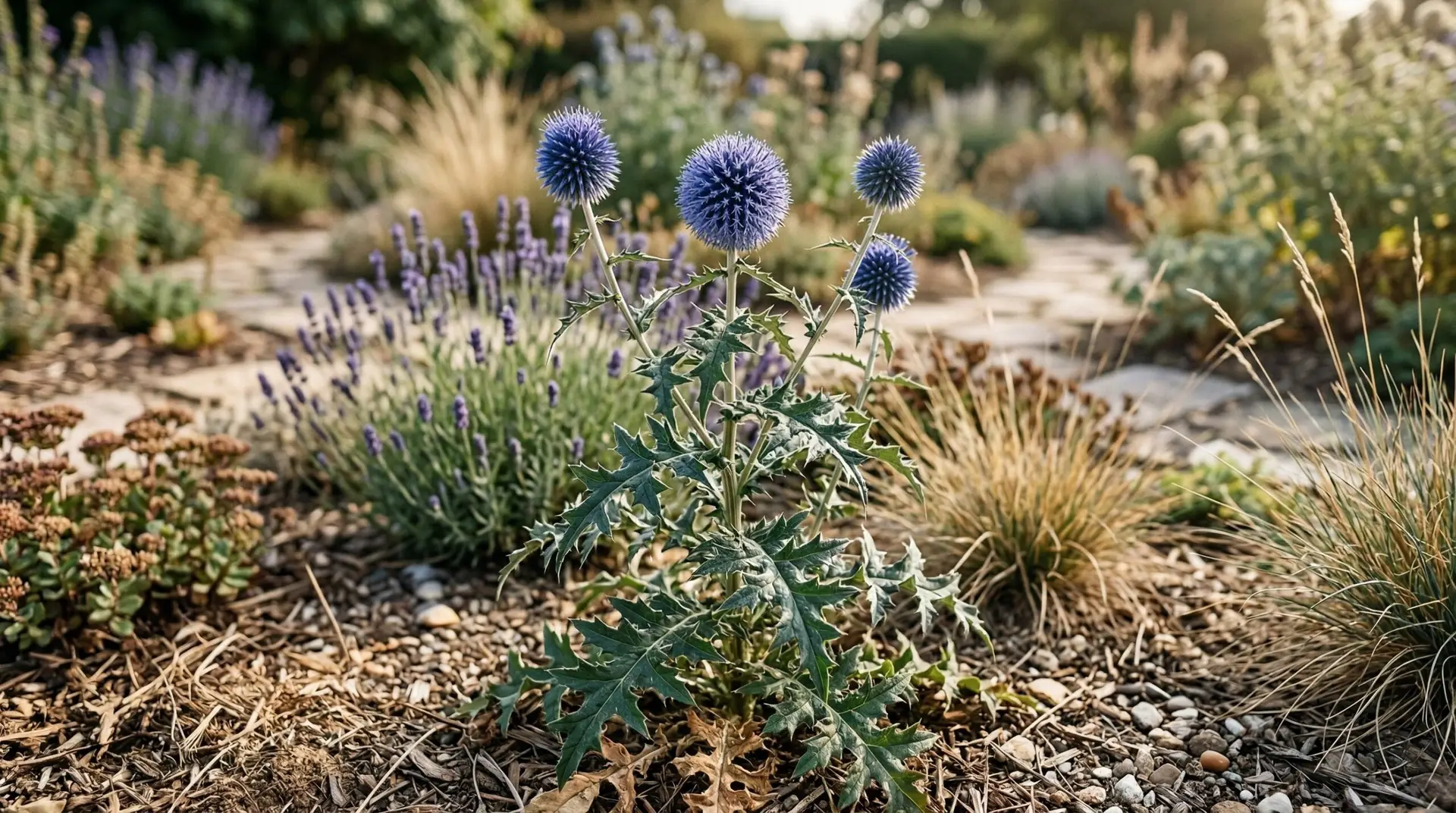
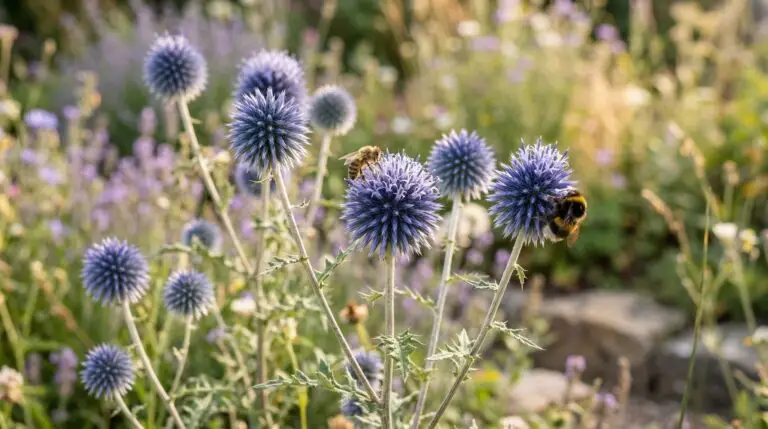
I have cultivated Echinops ritro in both controlled botanical settings and rugged trial gardens for many years, and it consistently proves itself as one of the most reliable perennials available. The common name refers to the perfectly spherical flower heads that rise above deeply cut, prickly foliage in midsummer. These steel-blue orbs provide a distinct architectural element that contrasts sharply with the flat or daisy-like blooms common in summer borders. When you observe a globe thistle plant in full bloom, you will notice it is almost constantly buzzing with pollinator activity. Bees, in particular, spend long periods working their way around the spherical heads to access the nectar. Growing globe thistle requires a fundamental shift in how we usually treat garden perennials, as this is a plant that actively resents being pampered.
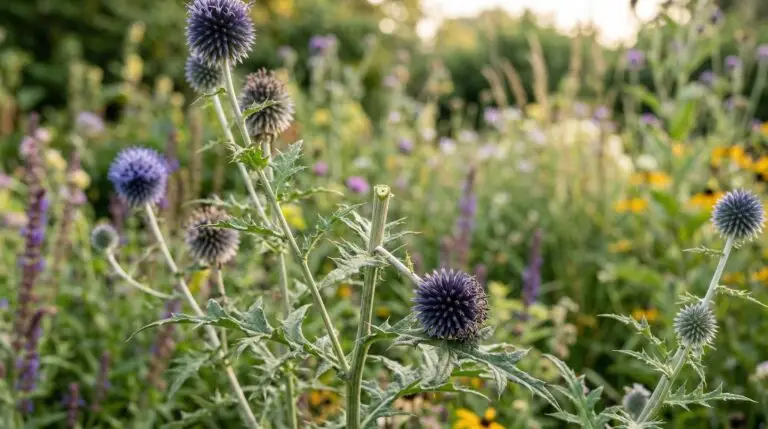
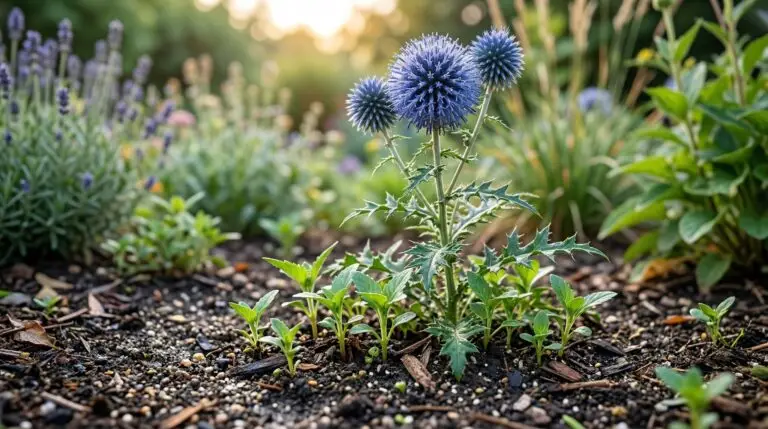
The genus Echinops contains over one hundred species, but Echinops ritro is generally the most suitable choice for residential landscapes. This specific species remains relatively compact, usually reaching three to four feet in height, whereas some of the wilder Asian species can easily exceed six feet and become unruly. The foliage is deeply lobed, a botanical trait known as pinnatifid, with a dark green upper surface and a silvery, downy underside. This adaptation helps the plant reflect intense sunlight and conserve moisture during extended dry periods. The stems are rigid and covered in a fine white fuzz, providing strong support for the heavy flower heads that develop at the terminal ends. Understanding this physical structure helps explain why the plant thrives in environments that would stress more delicate herbaceous perennials.
Contents 3 sections
Soil requirements and drought tolerance
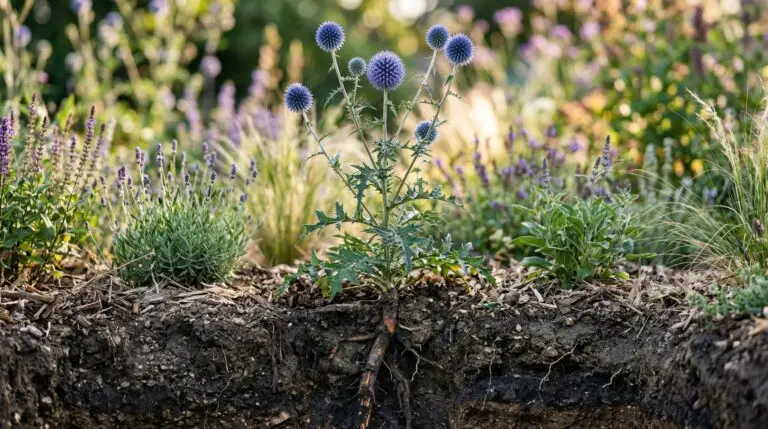
The most frequent mistake gardeners make with echinops care is amending the soil too generously before planting. This species evolved in the dry, rocky soils of southern Europe and central Asia, meaning it performs best in lean conditions with rapid drainage. If you plant it in rich loam heavily amended with compost, the stems will grow too rapidly and flop over under the weight of the flower heads. A soil pH ranging from 6.0 to 8.0 is perfectly acceptable, and the plant actually demonstrates a slight preference for alkaline conditions. Heavy clay soils present a significant problem because poor winter drainage will quickly rot the crown and the deep taproot. If you garden on heavy clay, you must plant on a raised berm or incorporate significant amounts of coarse sand and gravel to ensure water moves away from the roots rapidly.
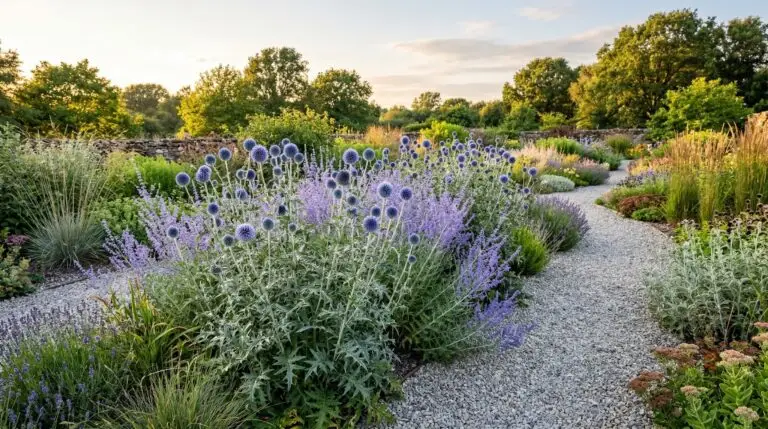
Once established, the drought tolerance of this perennial is exceptional due to its thick, fleshy taproot that drives deep into the subsoil. During the first growing season, you should provide deep, infrequent watering to encourage this root system to search downward for moisture. By the second year, supplemental irrigation is rarely necessary unless your region experiences an unusually prolonged drought accompanied by extreme heat. The plant handles high summer temperatures without wilting, maintaining its rigid posture long after shallow-rooted plants have collapsed. You can pair it with other resilient, sun-loving perennials like yarrow to create an unthirsty garden bed that requires minimal intervention. This combination of structural integrity and low water demand makes it highly valuable for xeriscaping or planting in the dry strip between a sidewalk and a street.
Cultivating the architectural sphere shape
The defining characteristic of the globe thistle is its inflorescence, which is not a single flower but rather a dense cluster of hundreds of individual disc florets. These florets are arranged in a perfect geometric sphere, opening sequentially from the top of the globe downward. The color is a distinct metallic blue that shifts in intensity depending on the specific cultivar and the angle of the sun. ‘Veitch’s Blue’ is a particularly reliable cultivar that I frequently recommend, as it produces slightly darker blooms and exhibits a more prolific branching habit than the straight species. ‘Taplow Blue’ is another excellent selection, offering slightly larger spheres that measure up to two inches in diameter. To ensure the stems remain upright and the spheres develop fully, the plant must receive a minimum of six hours of direct, unfiltered sunlight every day.
In partial shade, the plant will stretch toward the light, resulting in weakened stems that require staking to keep the heavy spheres off the ground. Proper spacing is also necessary for maintaining the health and shape of the plant. You should allow at least two feet of space between individual plants to ensure adequate air circulation through the prickly foliage. Good airflow prevents powdery mildew, which is one of the few foliar diseases that will occasionally blemish the leaves in humid climates. When positioned correctly in full sun, the plant is a strong vertical accent behind mid-border perennials. Placing it alongside a classic coneflower creates an excellent contrast in both shape and texture, highlighting the unique geometry of the spherical blooms.
Routine maintenance and propagation methods
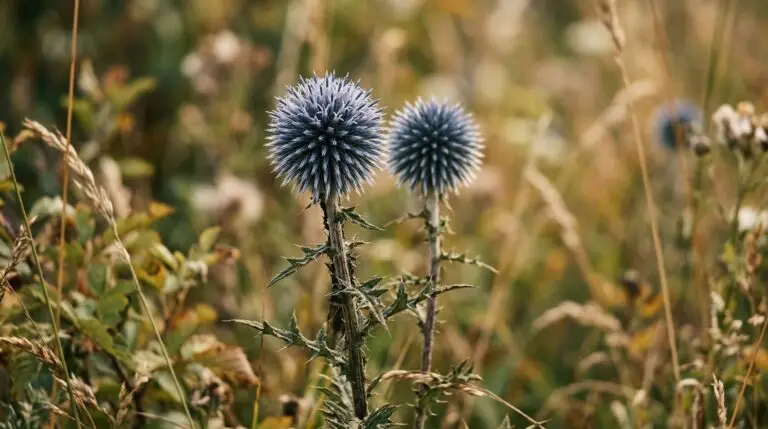
Maintenance requirements are minimal, but understanding how the plant responds to pruning will help you manage its appearance and longevity. You can practice deadheading, the removal of spent blooms, to encourage a smaller secondary flush of flowers late in the season. However, many horticulturists prefer to leave the final round of flower heads intact as they fade from blue to a pale, structural tan. These dried spheres provide excellent winter interest in the garden, catching frost and snow while standing rigidly above the dormant landscape. Goldfinches and other small birds frequently visit the dried seed heads in late autumn to extract the seeds. Leaving the seed heads does introduce the possibility of self-sowing, but the resulting seedlings are generally easy to identify and remove in early spring if they appear where they are not wanted.
Propagation of taprooted plants often sparks debate among growers regarding the best approach for long-term success. While some manuals suggest dividing mature clumps every three to four years, I have found that disturbing the deep taproot often sets the plant back significantly. A much more reliable method of propagation is taking root cuttings in late winter or early spring while the plant is still dormant. You can excavate a small section of soil near the base, remove a pencil-thick section of root, and pot it up in a sandy mix to develop a new crown. If you prefer growing from seed, you can sow them directly in the garden in early spring or start them indoors six weeks before your last frost date. They germinate readily, though seed-grown plants from named cultivars may not perfectly replicate the intense blue color of the parent plant.
The true value of incorporating this perennial into your landscape is its rugged self-sufficiency and distinct visual character. You will find that it anchors a sunny border with an architectural presence that softer, more traditional flowers simply cannot provide. It mixes effortlessly with native prairie plants, and planting it near a black eyed susan creates a classic late-summer display that requires almost no supplemental watering or fertilizer. The deep roots will sustain the plant through years of seasonal extremes without demanding your constant attention. If you have a particularly dry, sunny spot with poor soil where other plants have struggled, that is precisely where you should dig your planting hole. Set the crown just at the soil level, water it deeply once to settle the surrounding earth, and let the plant establish itself entirely on its own terms.
More About Globe Thistle
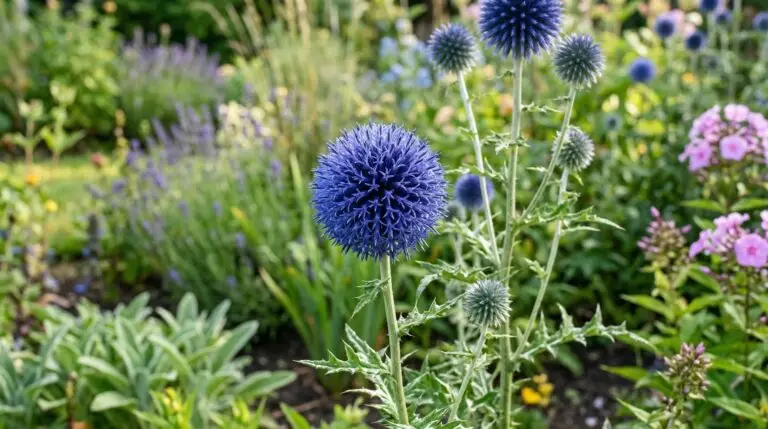
Dried globe thistle flower heads for everlasting arrangements that last for years
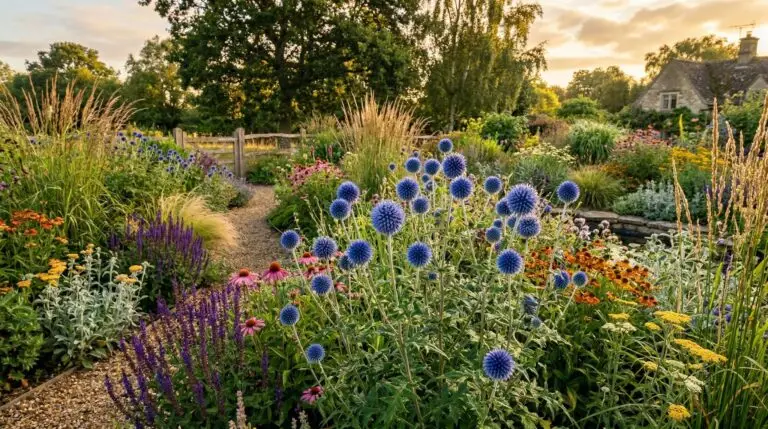
Globe thistle in modern garden design and the trend toward architectural perennials
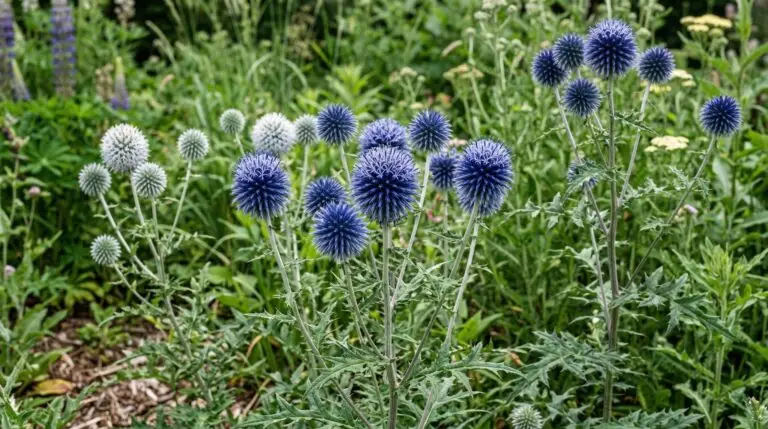
Best globe thistle varieties from compact Veitch’s Blue to towering Taplow Blue
How to control globe thistle self-seeding and prevent unwanted spread in borders
Globe thistle as a pollinator powerhouse attracting more bees than almost any perennial
Globe thistle flower meaning and the quiet strength of this spiny blue sphere
Globe thistle companions: what to grow and what to avoid
Growing globe thistle from seed for the most budget-friendly perennial border
Globe thistle for hot dry slopes and problem areas where other perennials fail
Enjoying our flower guides? Add YourFlowersGuide as a preferred source on Google. It helps more readers find us.
Add to Preferred Sources