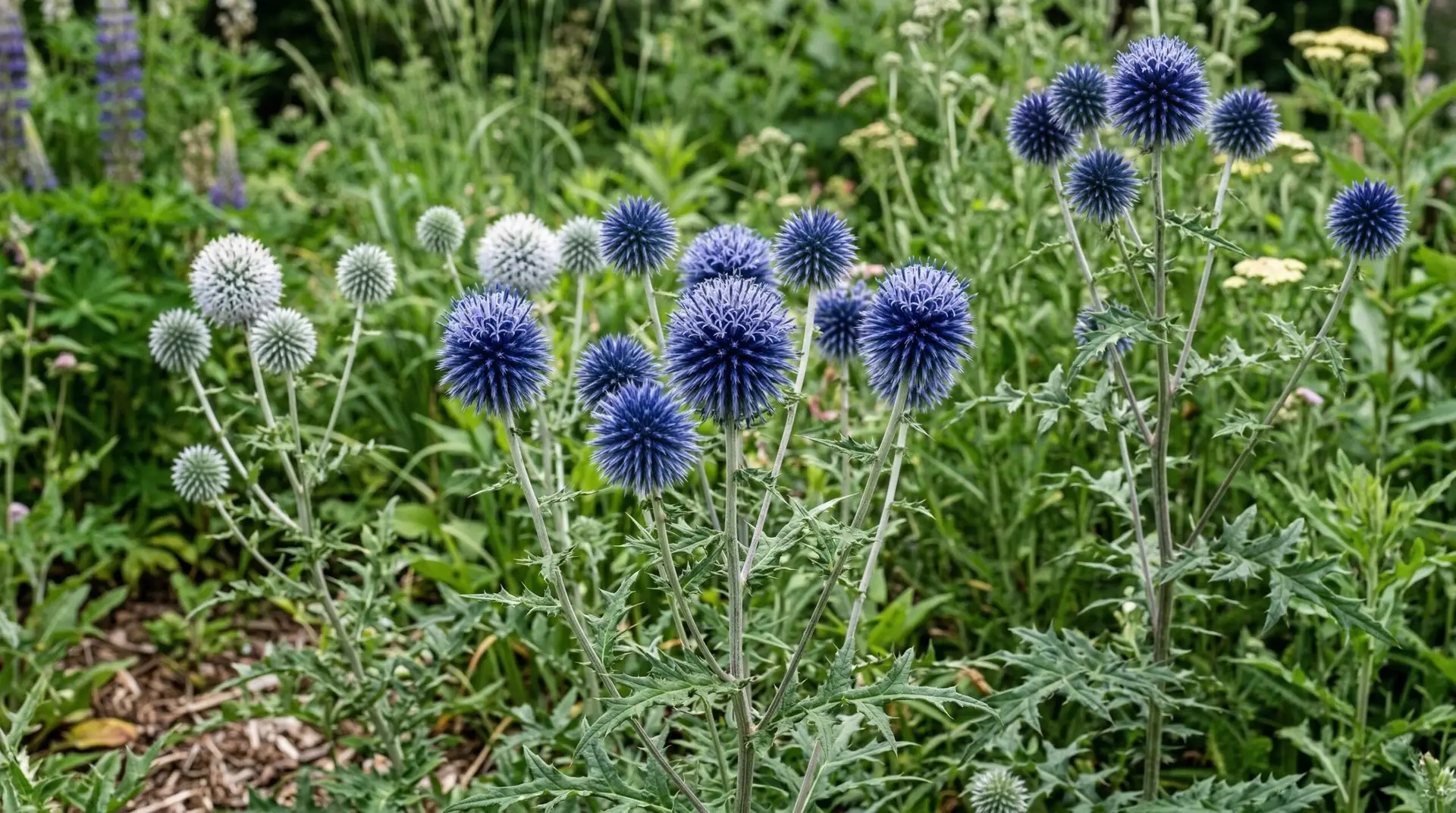
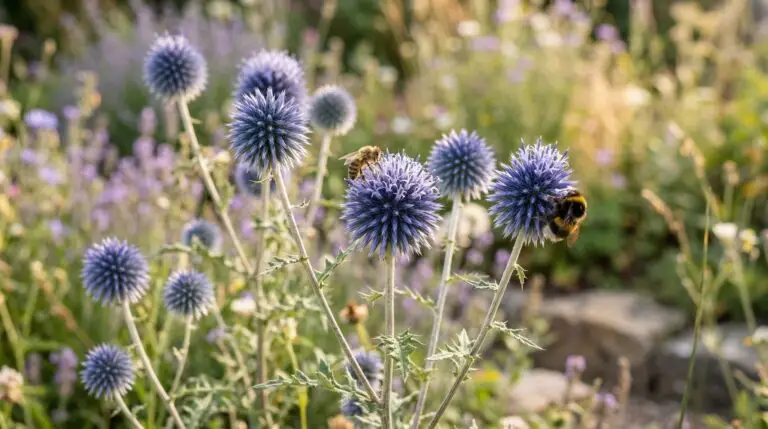
I remember the exact moment I realized I needed a globe thistle in my garden. I was walking through a local botanical garden in mid-July when a cluster of perfectly spherical, metallic blue flower heads caught my eye from across the path. The structure was entirely different from the soft petals of typical summer perennials. Hundreds of tiny, star-shaped flowers made up each globe, and the entire plant was humming with the energy of dozens of foraging bees. That architectural presence is the hook that draws so many of us to Echinops in the first place. You plant it for the strange, spiky buds that slowly swell through early summer, and you keep it for the intense wash of blue that eventually erupts from those spheres. Getting a globe thistle to thrive is deeply satisfying because it asks for so little but gives the garden a completely unique silhouette.
Contents 3 sections
Finding the right size with Taplow Blue and Veitch’s Blue
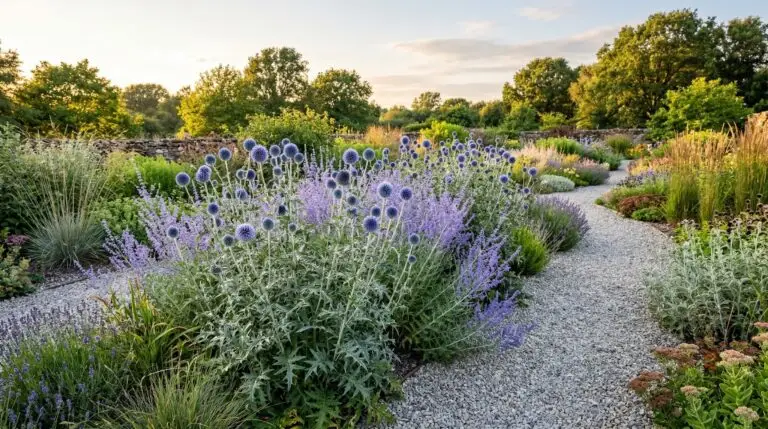
When you start exploring globe thistle varieties, you quickly realize that size and color intensity dictate where these plants belong in your beds. Taplow Blue is the variety that comes to mind when most people picture a classic globe thistle. This plant easily reaches five feet tall in good soil, producing massive steel-blue spheres that demand attention at the back of a border. I love watching Taplow Blue sway slightly on a breezy afternoon, its thick stems holding those heavy heads high above neighboring plants. The blue is pale at first, almost silvery, before deepening into a rich, powdery hue as the individual florets open. It is a big, assertive plant that needs room to breathe, and it looks incredibly natural when planted alongside late-summer classics like a sturdy coneflower patch.
If you have a smaller garden, Taplow Blue might feel a bit overwhelming, which is exactly why Veitch’s Blue is such a rewarding alternative. Veitch’s Blue stays much more compact, rarely pushing past three feet tall, making it entirely manageable for middle-of-the-border placements. What this variety lacks in height, it makes up for with an exceptionally dark, intense coloration. The spheres on Veitch’s Blue open to a deep, saturated cobalt that holds its color much longer in the summer heat than many paler types. I find myself recommending Veitch’s Blue to almost anyone who asks about globe thistles because it delivers all the architectural drama without requiring staking or endless space. It is a tidy, well-behaved grower that still manages to look wild and interesting.
Exploring the unusual with Arctic Glow and Platinum Blue
While the classic blues are the heart of the Echinops family, the white and silver varieties offer completely different design possibilities. Arctic Glow is a fascinating departure from the norm, producing stark white floral spheres that sit atop deeply contrasting red stems. The foliage is slightly darker green than the blue varieties, which makes the bright white globes pop even more in the evening light. I appreciate Arctic Glow for the way it breaks up a sea of summer color, acting as a visual resting place among brighter blooms. It is completely unexpected, and visitors always stop to ask what it is when they see those white spheres hovering over the garden. However, I am always honest with fellow growers about its fading process. When the white flowers finish blooming, they can take on a slightly dusty, brown appearance rather than drying cleanly like the blue varieties do.
Platinum Blue sits perfectly in the middle ground between the deep cobalts and the stark whites. This variety produces flowers that are heavily frosted with silver, giving the entire plant a shimmering, metallic quality. The blue underneath the silver is pale and icy, making it a fantastic companion for cool-toned garden palettes. I love planting Platinum Blue near bright yellow late-summer bloomers, especially a patch of black-eyed Susan, where the contrasting textures and colors play off each other beautifully. Platinum Blue tends to be a medium-sized grower, usually settling in around three to four feet tall. It has a slightly more open branching habit than Veitch’s Blue, giving it a loose, informal feeling that works perfectly in cottage gardens or naturalized meadow plantings.
The daily rhythm of growing globe thistles
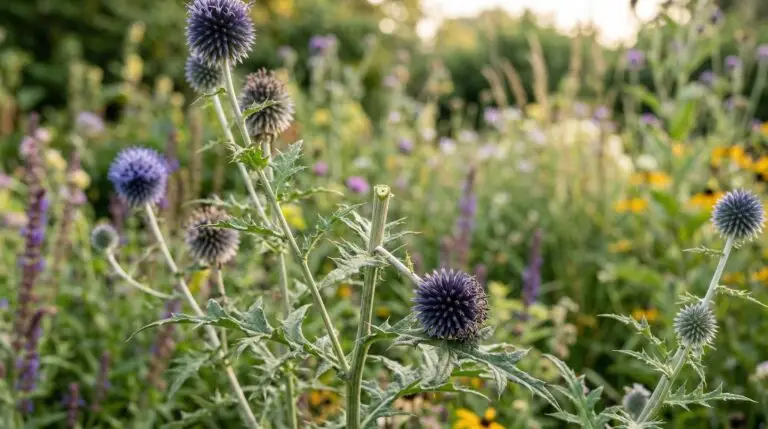
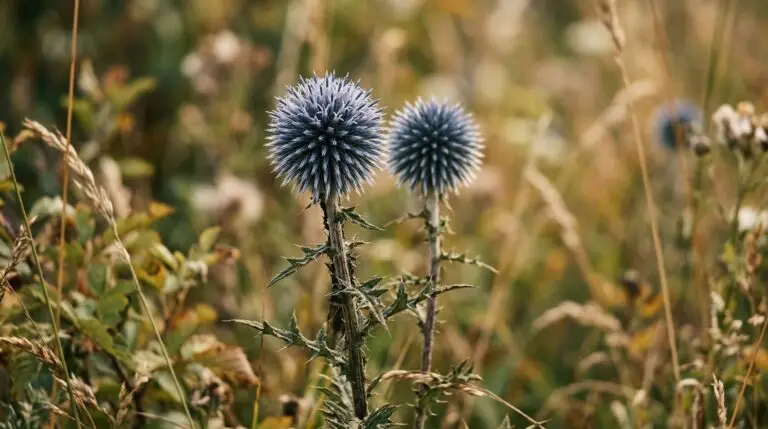
Living with globe thistles through the seasons is a masterclass in patience and observation. In spring, the thistle-like foliage emerges close to the ground, looking a bit rough and weedy to the untrained eye. You have to handle them carefully when weeding around the base, as the deeply lobed leaves have sharp tips that will quickly remind you of their true thistle nature. By early summer, the thick stalks begin their upward push, forming tightly packed, spiky green orbs that sit quietly for weeks. The anticipation builds until mid-July when a faint blush of color appears at the top of the sphere and slowly travels downward until the entire head is colored. The satisfaction of cutting a few stems just as they reach full color to bring inside is immense. They dry perfectly if hung upside down in a dark room, holding their shape and a good portion of their color for winter arrangements.
For all their good qualities, globe thistles do have a few habits that keep you on your toes. They are enthusiastic self-seeders if you leave the flower heads on the plant to mature fully. Finding a surprise seedling in a gravel path or tucked between stepping stones is a fun discovery the first few times, but it can become a chore if you let a large stand go to seed unchecked. I usually leave a few heads for the goldfinches, who love picking the seeds apart in autumn, and deadhead the rest before they can scatter. Despite the occasional unwanted seedling and the prickly foliage, the sheer reliability of Echinops makes it indispensable. I keep coming back to these plants year after year because nothing else offers that precise, geometric shape combined with such saturated summer color. They stand firm through drought, ignore poor soil, and reliably fill the garden with life and structure exactly when the late summer heat is at its worst.
More About Globe Thistle
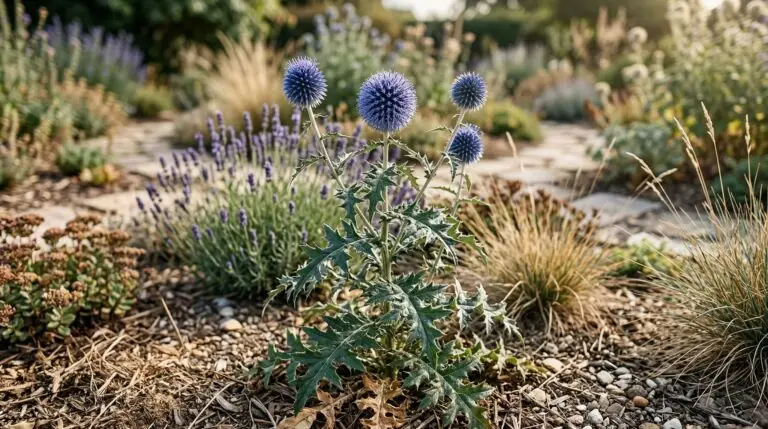
How to grow globe thistle for perfectly round steel-blue flower heads that bees adore
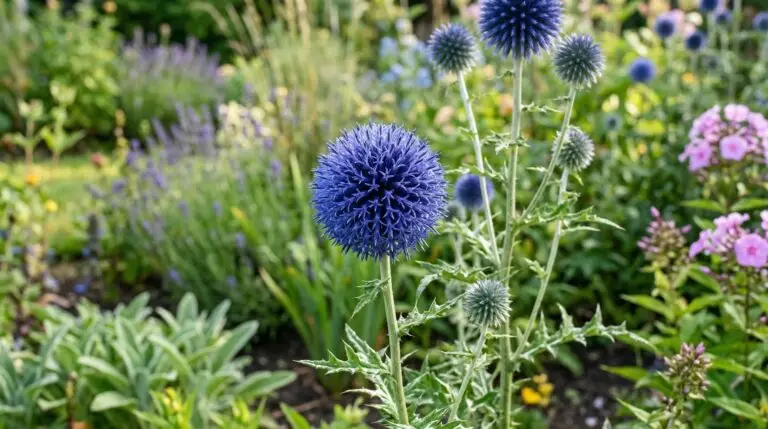
Dried globe thistle flower heads for everlasting arrangements that last for years
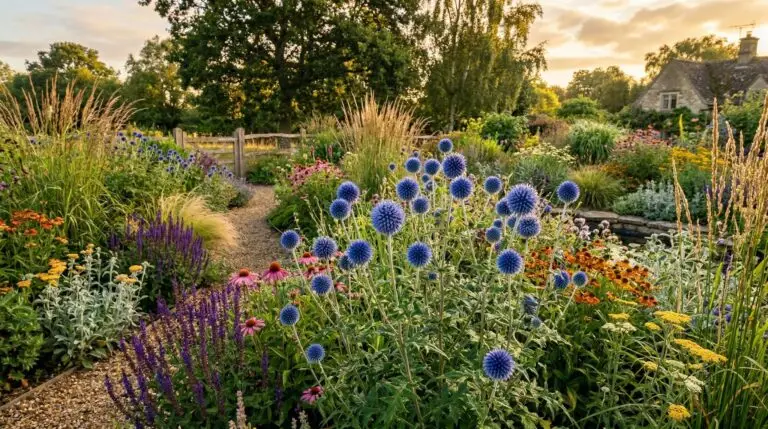
Globe thistle in modern garden design and the trend toward architectural perennials
How to control globe thistle self-seeding and prevent unwanted spread in borders
Globe thistle as a pollinator powerhouse attracting more bees than almost any perennial
Globe thistle flower meaning and the quiet strength of this spiny blue sphere
Globe thistle companions: what to grow and what to avoid
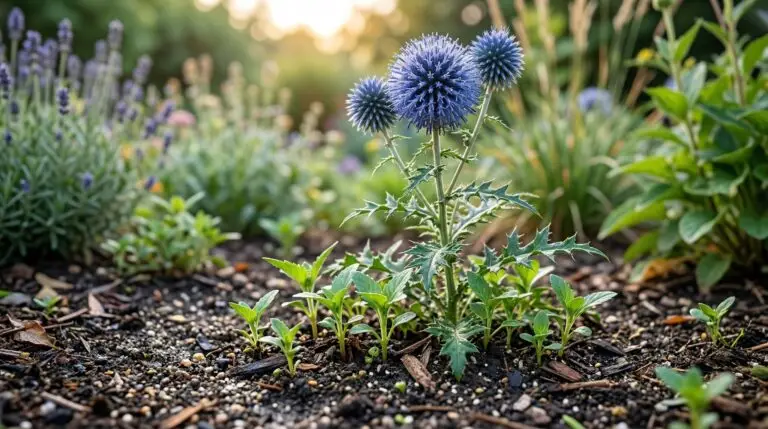
Growing globe thistle from seed for the most budget-friendly perennial border
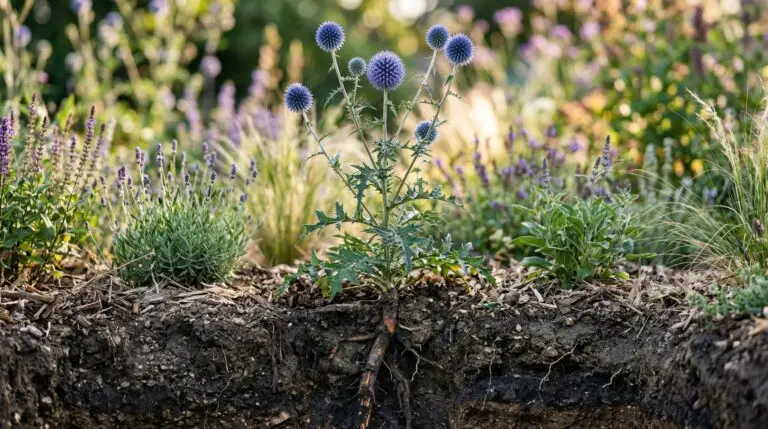
Globe thistle for hot dry slopes and problem areas where other perennials fail
Enjoying our flower guides? Add YourFlowersGuide as a preferred source on Google. It helps more readers find us.
Add to Preferred Sources