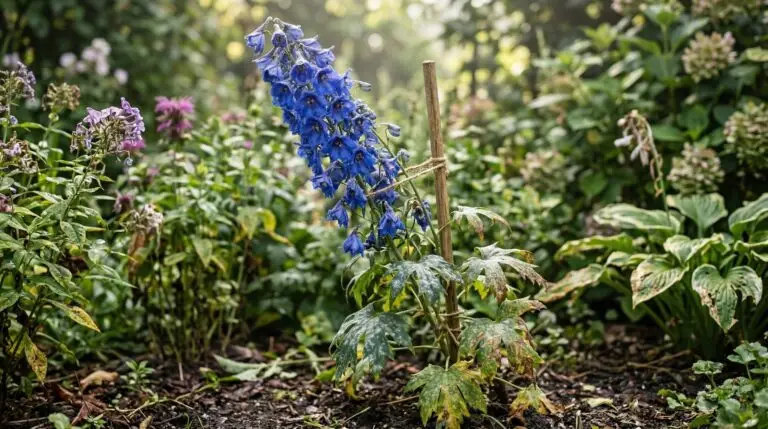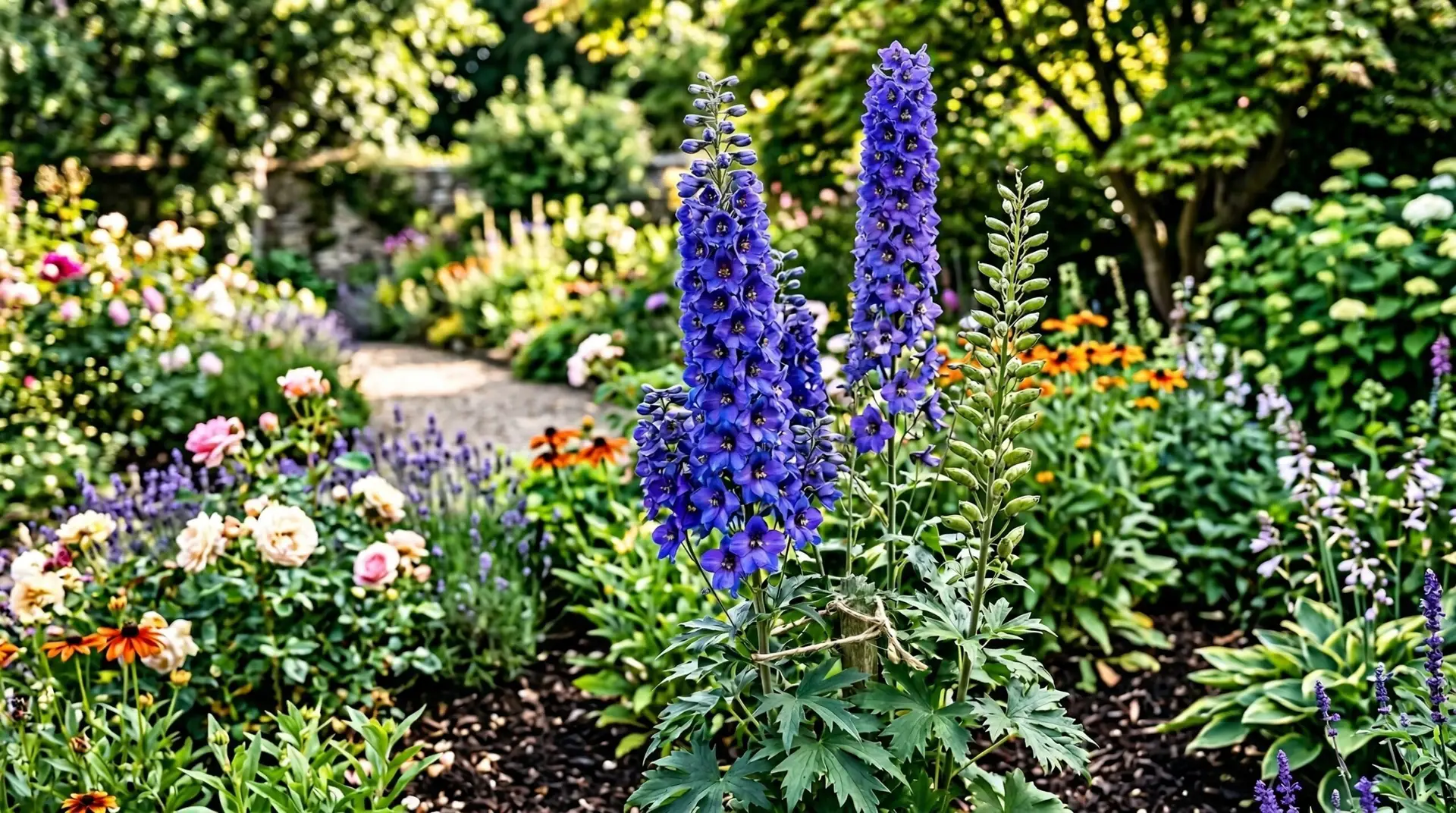
You spend good money on a tall blue plant at the nursery, put it in the ground, and enjoy a heavy bloom that first summer. The next year it comes back a bit weaker, and by year three, the spot is completely bare. This is the most common frustration I hear from gardeners trying to grow Delphinium elatum. People assume that because a plant is labeled as a perennial, it will live in their garden for decades like a peony or a hosta. The truth is that the typical delphinium lifespan is only about three to four years under the best conditions. When you see your older delphinium dying out, you have usually not done anything wrong. You are simply running up against the natural biological clock of a plant that puts all its energy into massive flowers rather than long-term survival.
Understanding this short lifespan completely changes how you manage these plants in your garden. Instead of treating them as permanent structural elements, you need to view them as temporary guests that require active management to stick around. They share this trait with other popular garden favorites like lupine and hollyhock, which also tend to exhaust themselves after a few seasons of heavy blooming. If you live in an area with hot and humid summers, that three-year lifespan often shrinks to just one or two years. Delphiniums are native to regions with cool summers, and high nighttime temperatures stress the plants heavily while encouraging fungal diseases. Recognizing these limitations is the first step in troubleshooting, because you can stop blaming yourself for bad soil or poor watering habits when the plant was simply acting out its normal life cycle.
Why environmental stress accelerates decline
Heat and humidity are the biggest enemies of a long-lived delphinium perennial. When summer temperatures regularly stay above eighty degrees, the plant stops growing and goes into survival mode. The crown of the plant sits right at the soil surface, and in wet or humid weather, this dense cluster of stems becomes a breeding ground for rot. If you notice the lower leaves turning yellow and brown while the stems collapse at the base, crown rot has likely set in. You cannot reverse crown rot once it takes hold of the main root system. The best preventive measure is to plant them in a spot that gets morning sun to dry the dew off the leaves but offers some dappled shade during the hottest part of the afternoon. You also need to keep mulch pulled a few inches away from the base of the stems to allow air to circulate around the crown.
Winter wetness is another major reason these plants fail to return in the spring. Delphiniums can survive extremely cold temperatures, but they cannot survive sitting in cold and soggy soil. When water pools around the roots during winter thaws or heavy spring rains, the hollow stems fill with water and freeze, splitting the crown apart and introducing decay. If your garden has heavy clay soil, you will struggle to keep these plants alive for more than a single season. You can improve your odds by planting them on a raised mound of soil or mixing in a significant amount of coarse sand and compost to ensure water drains away instantly. Checking your drainage before planting will save you a lot of money and frustration down the road.
How to extend the life of your plants through division
Even with perfect weather and excellent drainage, a delphinium crown naturally degrades over time. As the plant grows, it expands outward, leaving an old and woody center that produces fewer shoots and becomes highly susceptible to rot. When a mature plant suddenly collapses or fails to return, that dead center is usually the cause. The most reliable way to reset the clock on your delphinium lifespan is to divide the plant every two to three years. You must do this early in the spring just as the new green shoots are emerging from the soil. Dig up the entire root ball carefully, and use a sharp knife to slice the healthy outer sections away from the woody middle. Discard the old center entirely, and replant the vigorous outer chunks in freshly amended soil.
This division process requires a bit of courage because you are cutting apart a plant that already seems fragile. Leaving an aging delphinium alone guarantees its eventual death within a season or two. Each new division acts like a brand new plant, with a fresh root system and renewed vigor for producing those massive flower spikes. When you replant the divisions, make sure the top of the crown is sitting exactly level with the soil surface, as planting too deep will smother the emerging shoots. Water the new divisions deeply but infrequently, allowing the top inch of soil to dry out between waterings to encourage the roots to reach downward. You will likely see slightly smaller flower spikes the first year after division, but the plant will be significantly healthier and set up for a strong performance the following year.
Creating a continuous cycle with cuttings and seeds
If you want to maintain a specific color or variety in your garden forever, you need to learn how to take basal cuttings. This is the exact method professional nurseries use to propagate named varieties because it guarantees an identical clone of the parent plant. In early spring, when the new shoots are about three to four inches tall, clear away the soil around the base of the plant. Look for solid shoots that are growing from the outside edge of the crown, avoiding any hollow stems. Use a sharp knife to cut the shoot away, making sure to take a small sliver of the woody crown material with the base of the stem. Dip the base in rooting hormone and stick it into a pot filled with a mix of perlite and potting soil. Keep the cutting moist and out of direct sunlight, and it will develop its own root system in about four weeks. This gives you a brand new plant to replace the aging parent.
For gardeners who are less concerned about exact color matching, allowing your plants to reseed is a much easier way to keep delphiniums in the garden permanently. When the first flush of flowers finishes in early summer, you normally cut the stalks down to encourage a second bloom in the fall. To encourage reseeding, you should leave one or two of those fall flower spikes on the plant to form seed pods. Once the pods turn brown and begin to crack open at the top, you can let the wind scatter the seeds naturally or collect them to sow exactly where you want them. The resulting seedlings will often be different shades of blue, purple, or white, depending on the parentage of your original plant. These new seedlings will spend their first year growing a strong root system. They will take over the blooming duties just as your original plants are reaching the end of their natural lives.
The most useful piece of advice I give anyone planting Delphinium elatum is to treat them as an ongoing project rather than a one-time purchase. Stop expecting them to act like indestructible shrubs and accept that their massive flowers come at the cost of longevity. If you plant a new seedling or root a new cutting every single spring, you will create a staggered population in your garden. This means you will always have first-year plants establishing roots, second-year plants putting on a heavy bloom, and older plants ready for division or the compost bin. By managing your patch this way, you remove the stress of trying to keep one individual plant alive forever. You will finally get that reliable display of tall flowers year after year. You succeed because you are working with the natural life cycle of the plant instead of fighting against it.
More About Delphinium elatum
Delphiniums as show-stopping cut flowers for dramatic tall arrangements
Best delphinium varieties from towering Pacific Giants to compact Magic Fountains
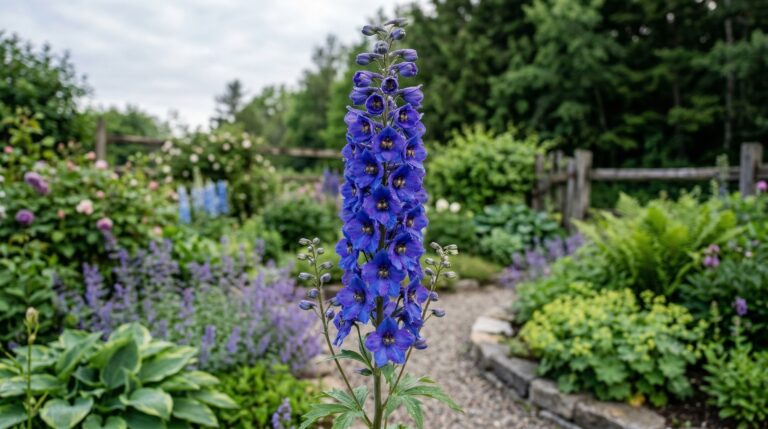
How to grow tall delphinium spires that tower above the garden like living architecture
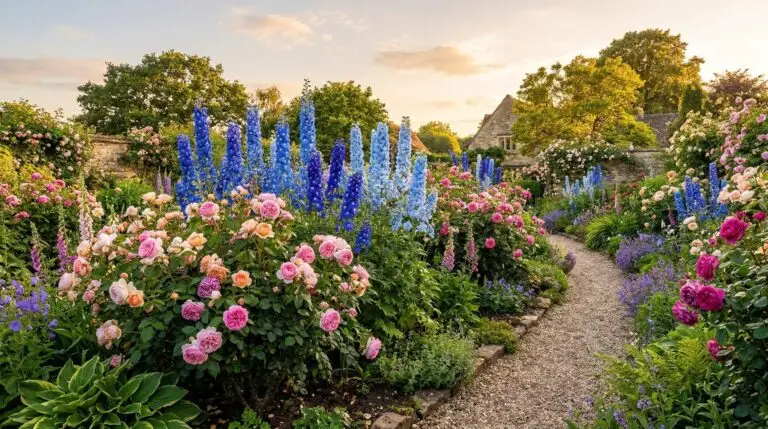
Companion plants for delphiniums that create a classic English cottage garden border
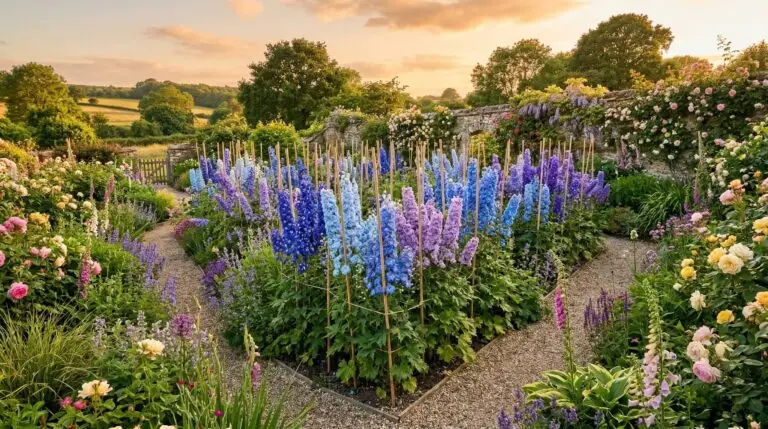
Staking delphiniums properly so tall flower spikes survive wind and rain storms
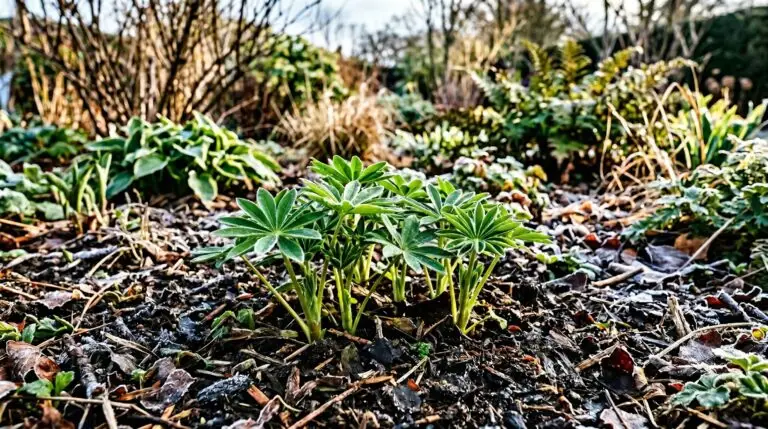
Growing delphiniums from seed and the patience required for first-year blooms
How to get delphiniums to rebloom by cutting back spent flower spikes
Delphinium flower meaning and the symbolism of true blue in the garden