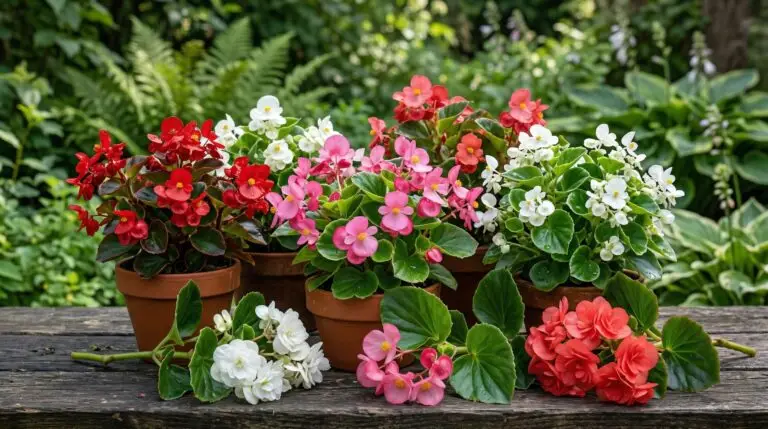
I wish you could sit beside me on the porch right now, just as the late afternoon sun dips behind the oak trees and bathes the wooden floorboards in a cool, blue shadow. The air out here always smells a bit like damp earth and crushed mint when the heat finally breaks for the evening. I have spent the last few weeks arranging pots along the steps, trying to capture light in the spaces where the sun refuses to reach. The star of this shaded retreat is a massive terracotta bowl overflowing with begonias, their thick, waxy leaves catching the ambient light like polished leather. When you brush your hand against the foliage, it feels cool and substantial, a stark contrast to the delicate, almost papery texture of the blossoms themselves. These flowers open in shades of soft blush pink, reminiscent of the sky just before dawn breaks over the horizon. I wanted to share these begonia container ideas with you, knowing how much you appreciate the quiet beauty of a shaded garden space.
Building a foundation of foliage and flowers
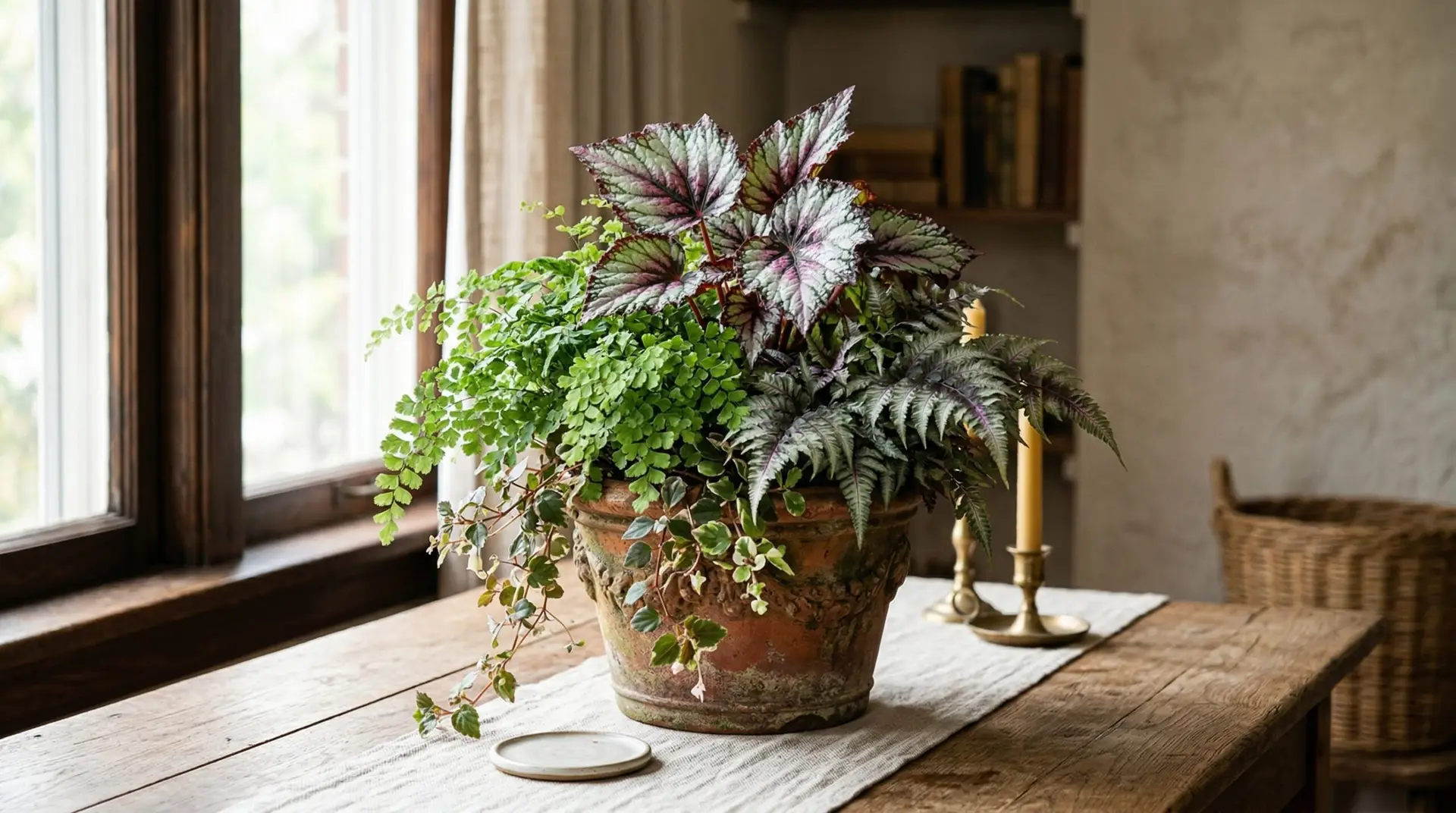
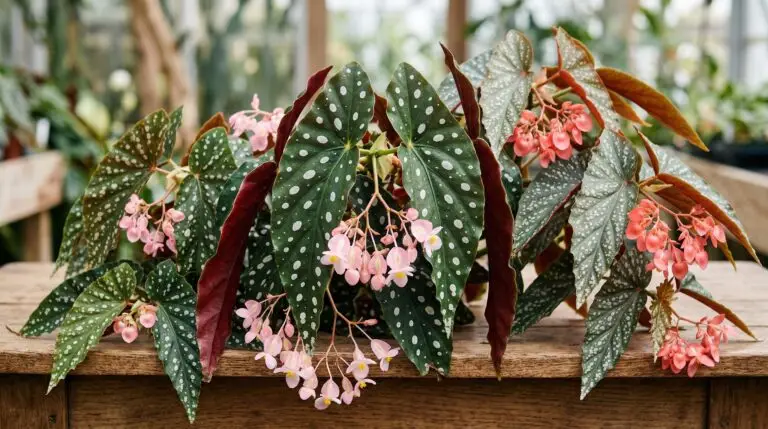
Creating shade container plants requires a careful eye for how different textures catch the sparse light available under a porch roof. I always start with a tall, commanding presence in the center of the pot, often a cane begonia with asymmetrical leaves that look like angel wings dusted with silver paint. The rough, bamboo-like stems of these taller varieties provide a sturdy backbone for the softer, mounding plants that will surround them. Around this central figure, I tuck in maidenhair ferns, their wiry black stems and fragile, pale green leaflets shivering with every slight breeze that crosses the porch. The pale green of the new fern fronds practically glows against the mature, deep emerald foliage of the begonia, creating a visual depth that draws you closer. When a heavy summer rain arrives, the water beads up perfectly on the begonia leaves like scattered pearls, while the ferns simply bow under the weight of the drops. The combination feels wild but intentional, like a tiny forest floor scooped up and placed into a weathered stone urn.
Pairing dark leaves with luminous colors
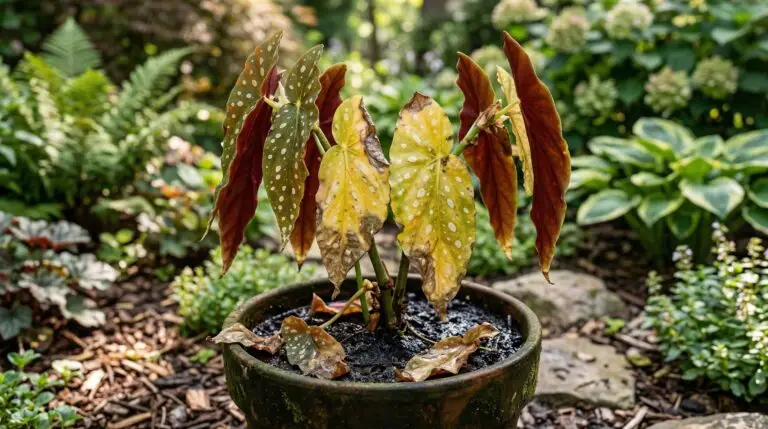
There is a particular magic in combining deep, moody foliage with sudden flashes of bright, luminous color in the shadows. In the large glazed pot near the front door, I planted a begonia with leaves the color of old burgundy wine, so dark they photograph almost purple in the evening light. The undersides of these leaves offer a surprise, revealing a saturated red that flashes whenever the wind turns them over. To keep the arrangement from looking too heavy, I surrounded the dark begonia with lime green coleus, a shade of green so acidic and bright it mimics a pool of direct sunlight. Between these two bold choices, I wove in handfuls of pale white impatiens, which open their flat, simple faces toward the edges of the porch. The smooth, almost glassy stems of the impatiens contrast sharply with the velvet-like texture of the coleus leaves. Together, these begonia pot combinations look like a carefully painted canvas where every brushstroke of color serves to make the others sing louder.
Trailing vines that spill over the edges
No container feels truly finished until something softens the hard rim of the pot and reaches down toward the wooden floorboards. For the hanging baskets suspended from the porch eaves, trailing begonia varieties tumble downward, their heavy, bell-shaped flowers nodding heavily toward the ground. I paired them with chartreuse sweet potato vines that grow with an almost reckless energy, their heart-shaped leaves overlapping like scales as they cascade over the rough coir lining of the baskets. The vine leaves feel slightly rough to the touch, a distinct texture against the smooth, fleshy stems of the begonias. To add a layer of fragrance to the visual display, I tucked small plugs of sweet alyssum along the very edges of the soil line. On warm evenings, the tiny, snow-white clusters of the alyssum release a scent exactly like warm honey, drifting across the porch and mixing with the smell of the damp potting soil. You can sit in the rocking chair and watch the trailing vines sway, tracing the lines of color as they spill downward in a continuous waterfall of foliage and flowers.
Mixing silver and pink for a cool morning glow
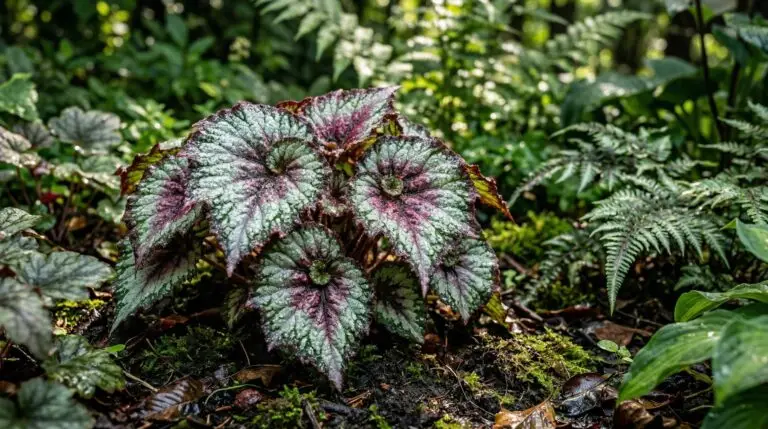
Some mornings, a thick fog rolls in from the valley, wrapping the porch in a heavy, cool mist that leaves fine droplets on every surface. This is the best time to appreciate the pots where I have paired silver-leaved plants with cool pink begonias. I found a Rex begonia with leaves that look like they were cut from hammered pewter, traced with dark charcoal veins that map the surface of each jagged leaf. The texture is incredibly complex, feeling rough and blistered under your thumb, almost like a piece of embossed metal. Beside it, I planted a delicate trailing plant with tiny, silver-dusted leaves that spill over the edge of a mossy, concrete planter. When the fog finally lifts and the weak morning light filters through the oak canopy, the silver foliage catches the pale rays and reflects them back, creating a cool, silvery aura around the pot. The pink flowers of the begonia rise above this metallic base, their soft, ruffled edges providing a gentle contrast to the sharp, dramatic leaves below.
Creating the right environment in the roots
Tending to these pots engages every sense, starting long before the first flower bud even begins to swell. When mixing the soil for these containers, I always use my bare hands to ensure the texture is exactly right for plants that despise sitting in cold, heavy water. You will know the soil is right when it feels like a wrung-out sponge in your hand, loose enough to let air circulate but rich enough to hold a gentle moisture. I blend in handfuls of dark, earthy compost that smells like a forest floor in late autumn, rich with the scent of decaying leaves and damp bark. As I water the pots in the early morning, the dry surface of the soil hisses slightly, drinking in the moisture before it runs out the drainage holes and stains the terracotta a deep, rust red. The begonias respond to this careful watering by pushing out new growth that emerges tightly curled and slightly sticky, slowly unfurling over a few days into perfect, glossy leaves. Taking care of them becomes a quiet morning ritual, a time to notice exactly how the light shifts across the porch as the sun climbs higher in the sky.
Watching the colors shift at dusk
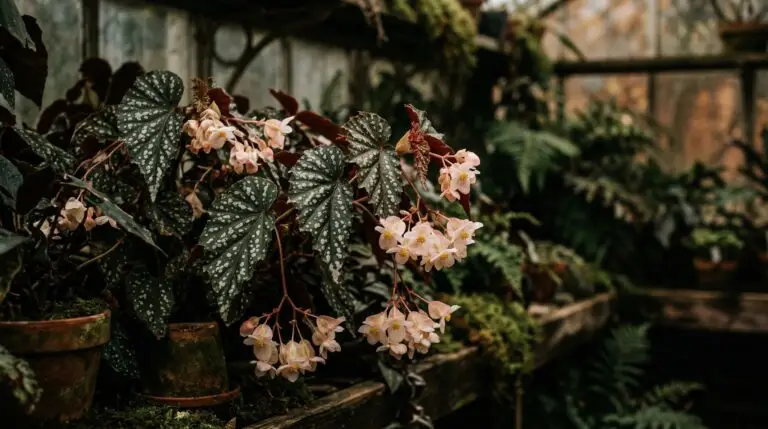
The true reward of these shaded containers reveals itself just as the day begins to end and the light turns soft and gray. When the harsh afternoon glare retreats, the white and pale pink begonia blossoms seem to catch and hold onto the fading light, glowing like small paper lanterns against the darkening brick of the house. The deep purple and bronze leaves recede into the shadows, becoming a dark, invisible backdrop that makes the pale flowers appear to float completely untethered in the air. The humid evening air traps the sweet, honeyed scent of the trailing flowers, holding it close to the porch where the night insects begin their rhythmic humming. Moths occasionally flutter past, drawn to the luminous white petals, their powdery wings brushing against the waxy leaves with a sound so faint you have to hold your breath to hear it. I leave the porch light off just to watch this slow fade into darkness, letting the garden settle into its nighttime quiet. The image of those pale pink petals glowing in the twilight is one I wish I could package up and mail directly to you.
More About Begonia
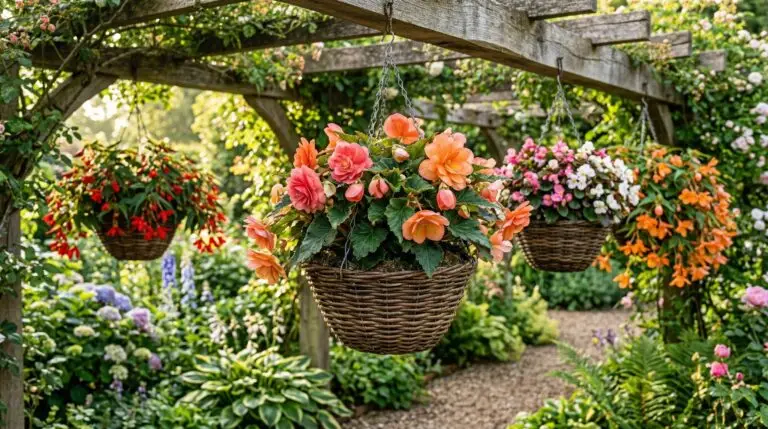
Growing tuberous begonias in hanging baskets for cascading summer color
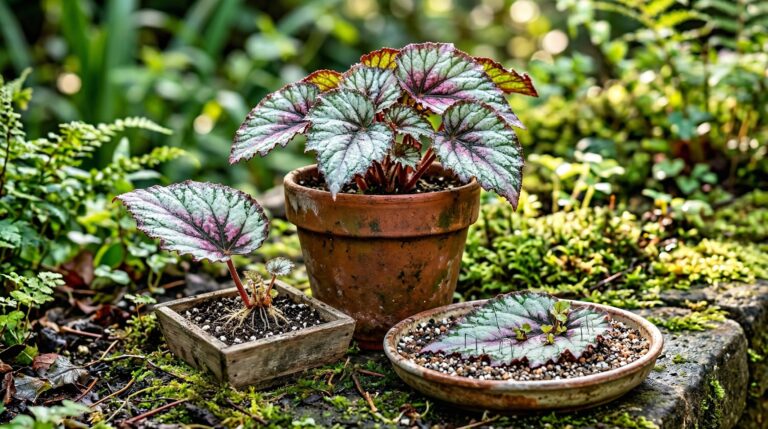
How to propagate begonias from leaf cuttings and stem cuttings step by step
Best begonia varieties for shade gardens that add color where sun rarely reaches
Angel wing begonias as statement houseplants with polka dot leaves and hanging clusters
How to overwinter begonia tubers and bring them back bigger next summer
Begonia flower meaning and the Victorian message of caution and gratitude
Why begonia leaves are curling dropping or developing brown spots