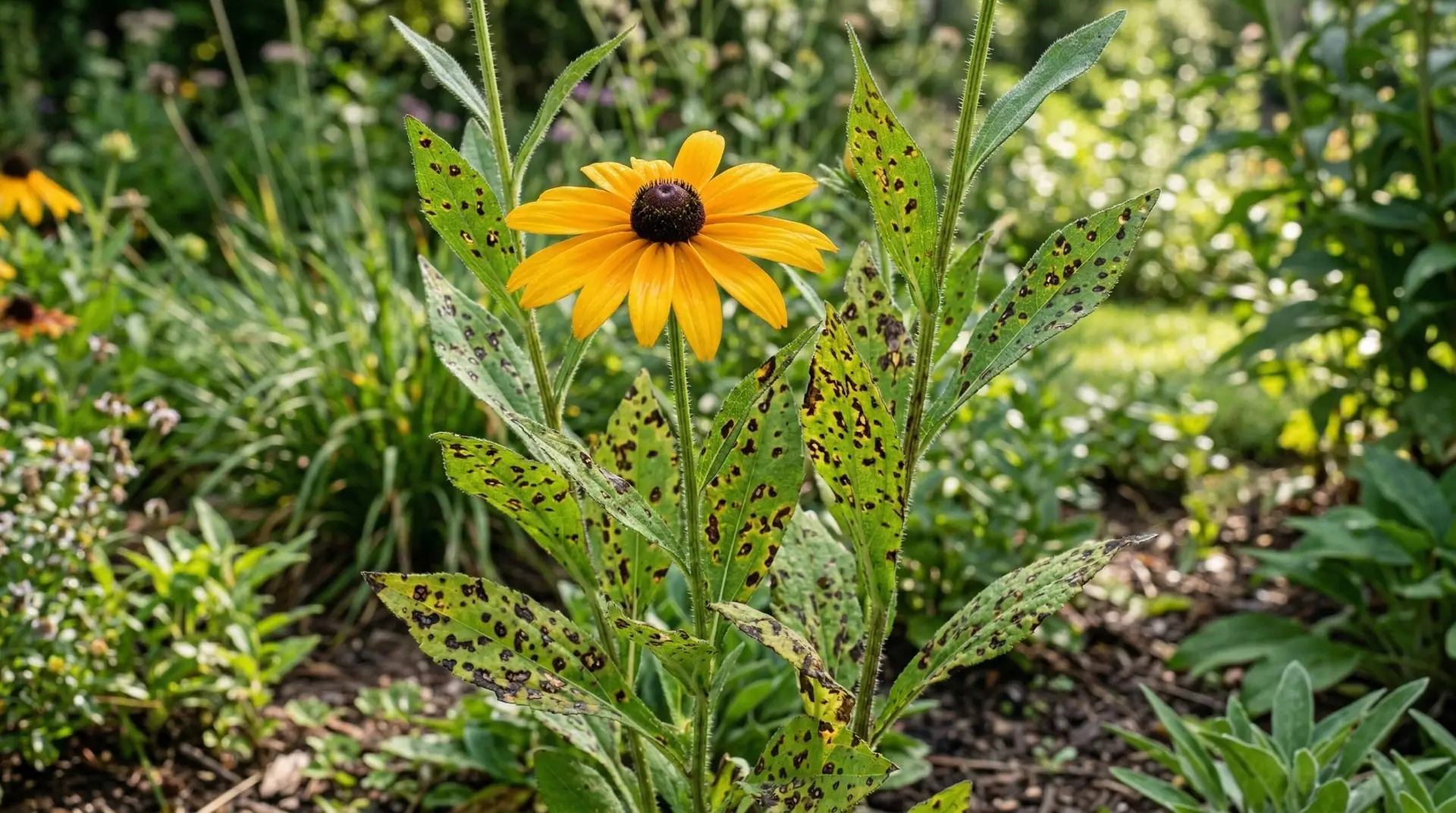
The single most important distinction to make when diagnosing black eyed Susan problems is whether you are looking at a treatable fungal infection or a fatal phytoplasma disease. Most gardeners panic at the sight of blackened leaves, assuming the plant is dying rapidly. Black spotting on the lower foliage is almost always a manageable fungal issue that looks worse than it actually is. True plant death usually comes from aster yellows, a systemic disease that requires immediate removal of the entire root ball. Learning to tell the difference saves both time and healthy plants. You cannot spray your way out of poor plant placement, so understanding the environmental triggers for these conditions is your primary defense. Proper diagnosis dictates whether you reach for the pruning shears, the organic fungicide, or the shovel.
Contents 5 sections
Fungal diseases and rudbeckia leaf spot
Septoria leaf spot causes dark brown or black angular lesions on the lower leaves of black eyed Susans starting in midsummer. The fungus thrives in warm, wet conditions and splashes up from the soil onto the lowest foliage during heavy rain or overhead irrigation. As the disease progresses, the spots merge, and the lower leaves turn completely black and shrivel against the stem. Despite what many sources claim, you do not need to pull up plants affected by septoria leaf spot. The infection rarely kills the plant, though it ruins the aesthetic appeal of the lower stems and reduces overall vigor. You can manage this by cutting away the blackened leaves and disposing of them in the trash rather than the compost pile to reduce the spore load in your garden. Powdery mildew presents as a white or gray dusty coating on the leaf surfaces during periods of high humidity combined with dry soil at the roots. Treat both fungal issues organically by applying a copper fungicide or a biological fungicide containing Bacillus subtilis early in the season before the spots appear.
Identifying and managing aster yellows
Aster yellows is a systemic disease caused by a phytoplasma organism that completely alters the growth habit of the plant. The earliest symptom is usually a strange discoloration where the flower petals emerge green instead of yellow. The flower heads often develop bizarre, distorted tufts of stunted green growth sprouting directly out of the dark central cone. This pathogen is transmitted by the aster leafhopper, a small insect that injects the phytoplasma into the plant tissue while feeding on the sap. Aster yellows does not just affect rudbeckia, as it easily spreads to coneflower and other related species in the same garden bed. There is no cure or organic treatment for aster yellows once the plant is infected. You must dig up the entire infected plant, including the root system, and throw it in the garbage immediately to prevent leafhoppers from spreading the disease to healthy neighbors. Do not replant susceptible species in the exact same hole until the leafhopper population has moved on, and keep the surrounding area free of broadleaf weeds that can harbor the disease over the winter.
Controlling aphids and structural pests naturally
Aphids congregate in dense clusters on the tender new growth and just below the flower buds of black eyed Susans. These soft-bodied insects suck sap from the stems, causing the new leaves to curl and stunting the developing flowers. You will often notice ants farming the aphids for their sticky honeydew secretions before you spot the tiny green or black aphids themselves. The most effective organic solution is the simplest, requiring only a strong blast of water from the garden hose to knock the insects off the plant. Aphids are poor climbers and usually perish on the ground or fall prey to ground beetles before they can remount the stems. For severe infestations that resist water treatments, spray the affected areas with insecticidal soap or neem oil, ensuring you coat the undersides of the leaves where the insects hide. Apply these horticultural oils only in the early morning or late evening to prevent the hot sun from burning the treated foliage. Similar sap-sucking pests often target aster plantings nearby, so checking all your composite flowers at once saves time and prevents pest populations from rebounding.
Soil health and watering practices
Black eyed Susans are native prairie plants that tolerate poor soils, but they become highly susceptible to stress-induced pests when planted in heavy, waterlogged clay. Roots suffocating in poorly draining soil cannot uptake nutrients efficiently, leading to weakened cellular walls that are easily pierced by aphids and fungal hyphae. Amend dense soils with coarse sand and organic compost to improve drainage before planting, or build raised mounds to lift the root crowns above sitting water. Mulch is useful for retaining moisture during July and August, but pushing wood chips directly against the stems traps moisture and invites crown rot. Keep a bare circle of soil about two inches wide around the base of each plant. When you water, do so deeply and infrequently to encourage the roots to grow downward, making the plant more resilient during droughts. Frequent, shallow watering creates a weak, surface-level root system that requires constant babysitting and leaves the plant vulnerable to every passing pest.
Prevention through spacing and variety selection
Most rudbeckia leaf spot and mildew problems originate from poor airflow and excessive moisture sitting on the foliage overnight. Space your plants at least eighteen to twenty-four inches apart to allow wind to dry the leaves quickly after a rain shower or heavy morning dew. Water the soil directly at the base of the plant using drip irrigation or a soaker hose rather than spraying the leaves with a sprinkler. Variety selection plays a massive role in disease resistance, yet many gardeners automatically buy the popular ‘Goldsturm’ cultivar without researching its flaws. ‘Goldsturm’ is notoriously susceptible to septoria leaf spot and will almost always develop blackened lower leaves by August in humid climates. Choose naturally resistant species like Rudbeckia maxima or newer resistant cultivars like ‘American Gold Rush’ to bypass the leaf spot problem entirely. Dividing overgrown clumps every three years also maintains vigor and prevents the center of the plant from becoming a stagnant, disease-prone dead zone. A garden requires ruthless editing, and replacing a chronically diseased plant with a resistant variety is always smarter than buying more fungicide.
More About Black-eyed Susan
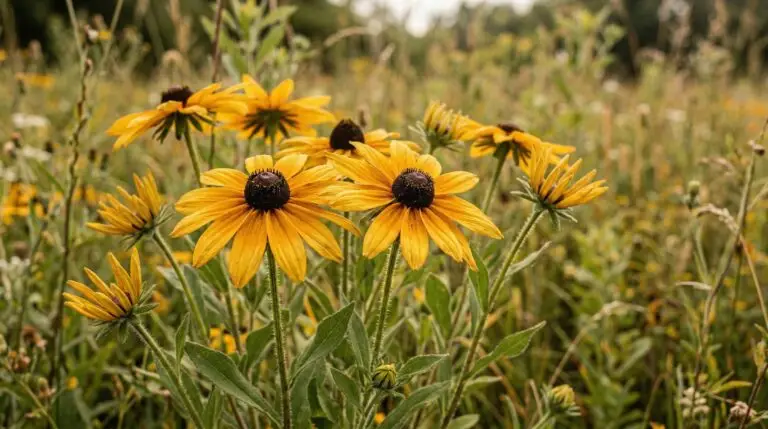
Black eyed Susan flower meaning as a symbol of encouragement and justice

Black eyed Susan and coneflower planted together for the ultimate prairie garden
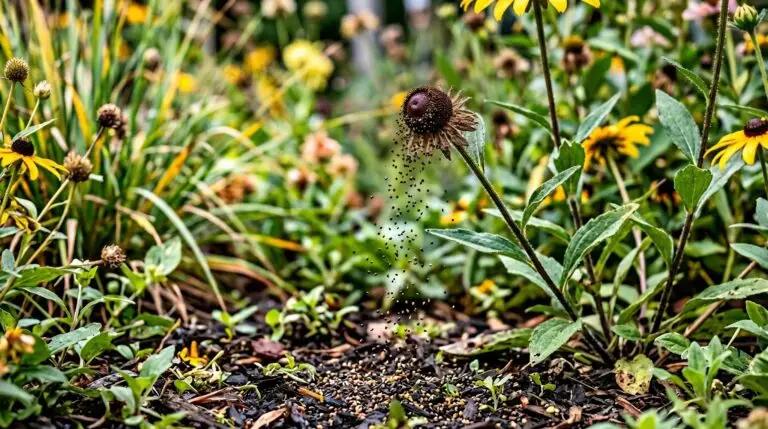
How to keep black eyed Susans from taking over your garden while still enjoying them

Naturalizing black eyed Susans along roadsides and meadows for wild beauty
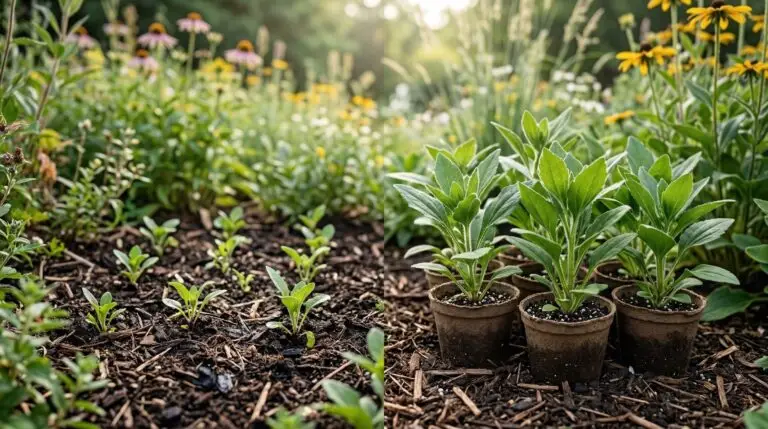
How to grow black eyed Susans from seed for masses of golden summer blooms
Why black eyed Susans are one of the best native plants for pollinator gardens
Using black eyed Susans as cut flowers for cheerful late summer bouquets

Black eyed Susan varieties from classic Goldsturm to dramatic Cherokee Sunset

Growing black eyed Susans in containers for sunny decks and apartment balconies
Enjoying our flower guides? Add YourFlowersGuide as a preferred source on Google. It helps more readers find us.
Add to Preferred Sources