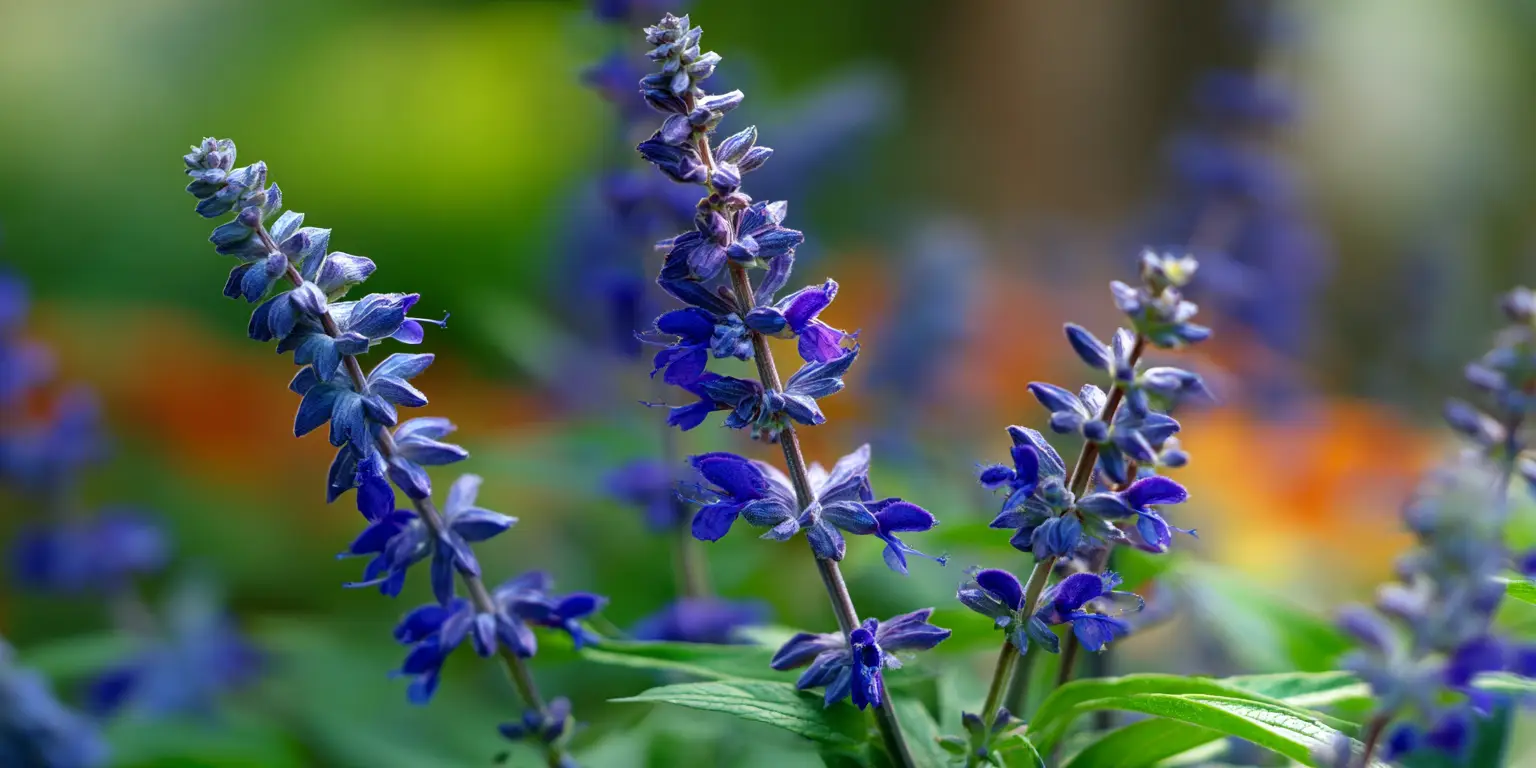
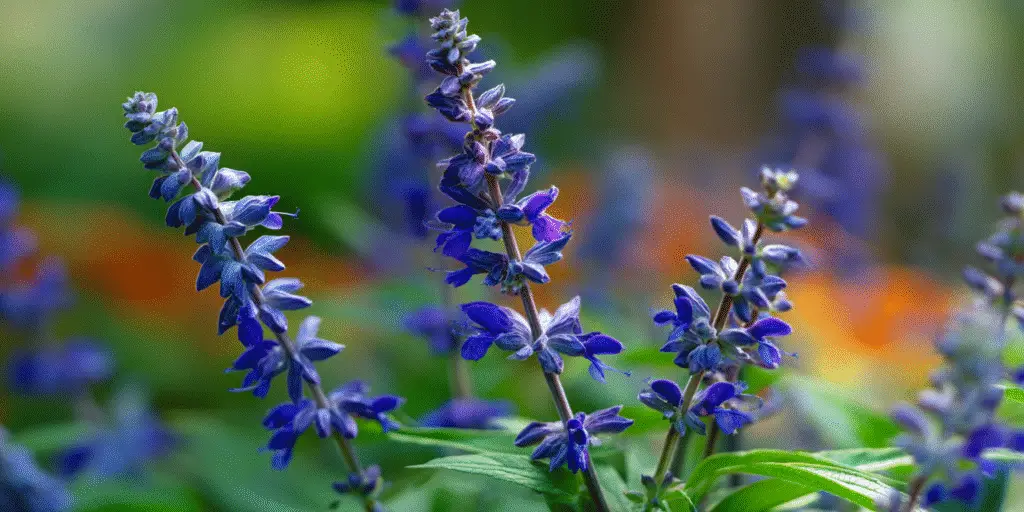
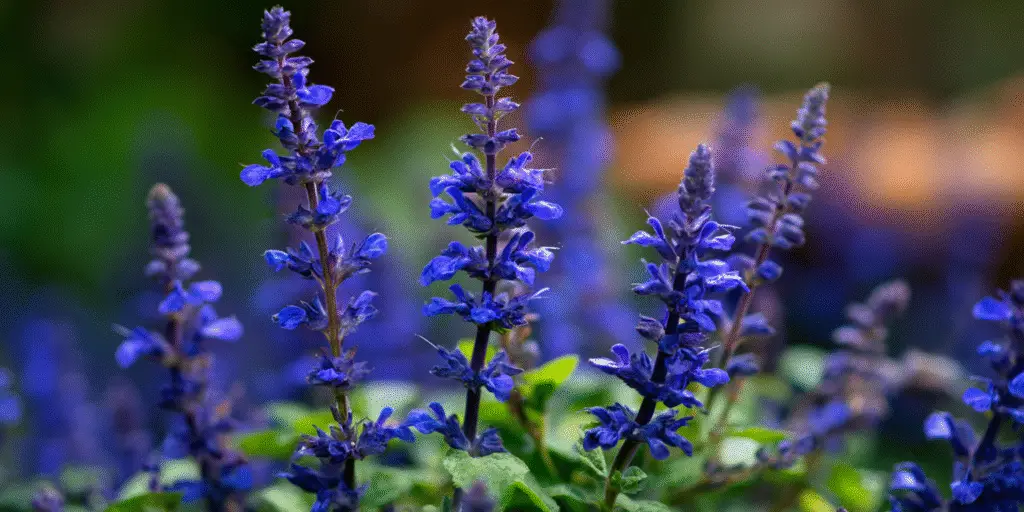
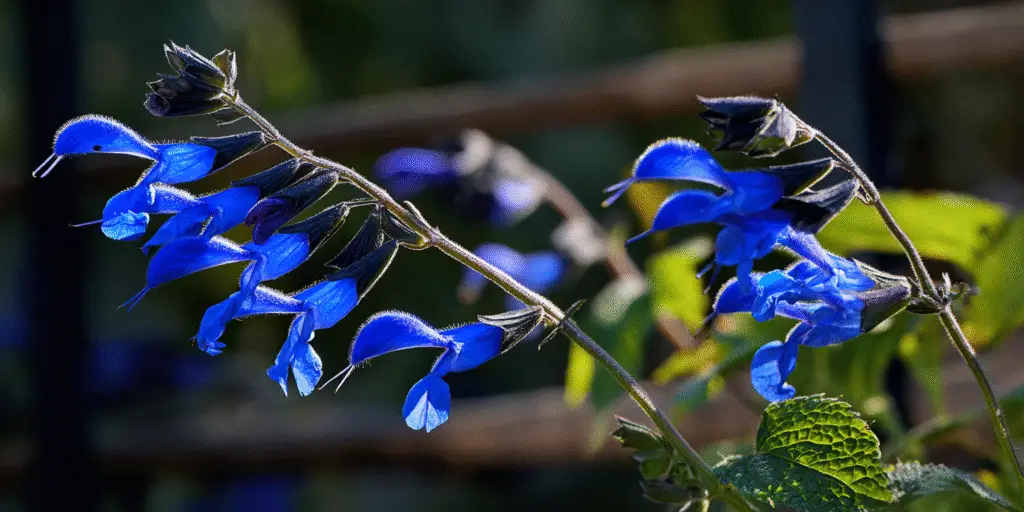
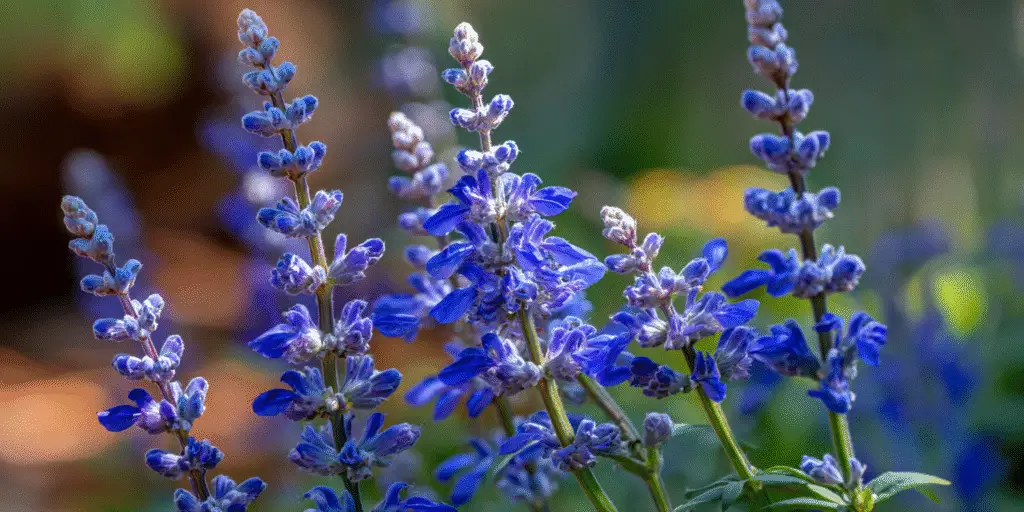
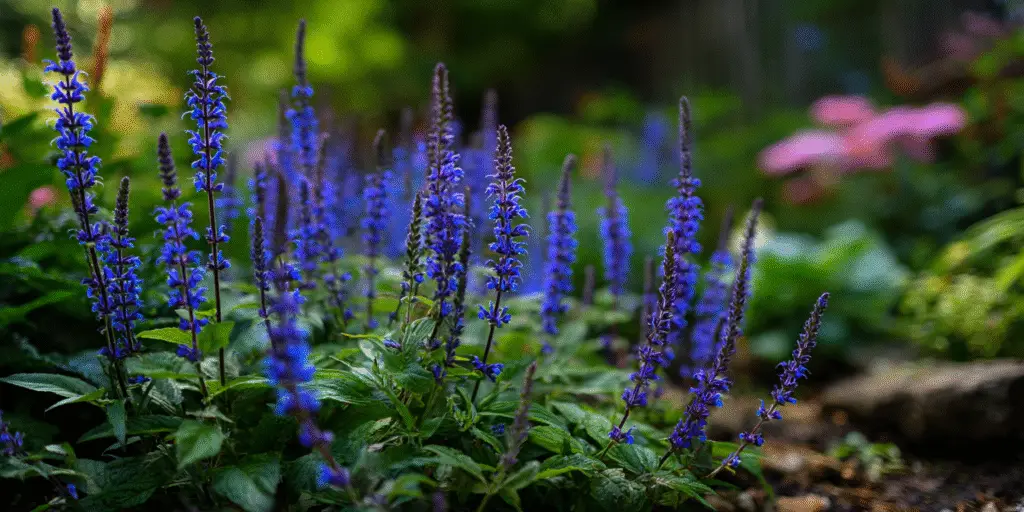
Salvia farinacea ‘Victoria Blue’ is a compact mealycup sage grown for deep blue flower spikes. It stands out for tidy habit and long bloom from warm weather into frost in most regions. It performs best in full sun with well‑drained soil. It is a tender perennial in warm climates and is used as an annual elsewhere in North America. Foliage is lightly aromatic and attractive to pollinators. Plants stay relatively short, which suits edging and containers.
At‑a‑glance
Group/Class: Mealycup sage
Height × spread: 15-24 in × 9-18 in (38-61 cm × 23-46 cm)
Bloom window: late spring to frost
Color & flower form: deep blue, two‑lipped flowers on dense spikes
Fragrance: 1 trace
USDA hardiness: 8-10; grown as annual in colder zones
Breeder / Year / Origin: unknown
Awards/registration: Plant of Merit (Missouri Botanical Garden)
Pet safety: safe
How it differs
Shorter and denser than many blue salvias.
Starts flowering earlier than taller hybrid types in warm sites.
Spikes are thick and uniform for bedding displays.
Strengths
Long season of bloom with routine deadheading.
Tolerates heat and short dry spells once established.
Attracts butterflies and hummingbirds.
Deer tolerance commonly noted.
Care in one minute
Site: full sun; light afternoon shade in hottest areas.
Soil: average to lean, well‑drained; neutral to slightly alkaline pH.
Water: moderate; allow top inch to dry between waterings after establishment.
Feeding: light monthly feeding during bloom if soils are poor.
Written by: Your Flowers Guide editorial team We are a small independent group of flower lovers who research and review each guide using trusted horticultural and educational sources. Learn more about us