Contents 5 sections
Assessing your balcony space and resources
Before you buy a single packet of seeds or a flat of nursery starts, you need to evaluate your balcony environment to determine if a cosmos container garden makes sense for your space. Cosmos are sun-loving plants that require a minimum of six to eight hours of direct, unfiltered sunlight every day to produce flowers rather than just weak, spindly foliage. Assess the light path across your balcony over the course of a typical day to verify you have the right conditions. If your space is shaded by neighboring buildings or large trees, you will need to pivot to shade-tolerant plants instead. You also need to consider the structural capacity of your balcony, as large pots filled with wet soil and mature plants carry significant weight. From a time perspective, a cosmos balcony garden requires a low to moderate commitment, demanding about ten minutes of watering and deadheading every few days during the peak summer months. Budgeting for this project is relatively inexpensive if you start from seed, usually costing under thirty dollars for seeds, basic potting soil, and a few standard plastic or resin containers.
Selecting the right containers and dwarf varieties
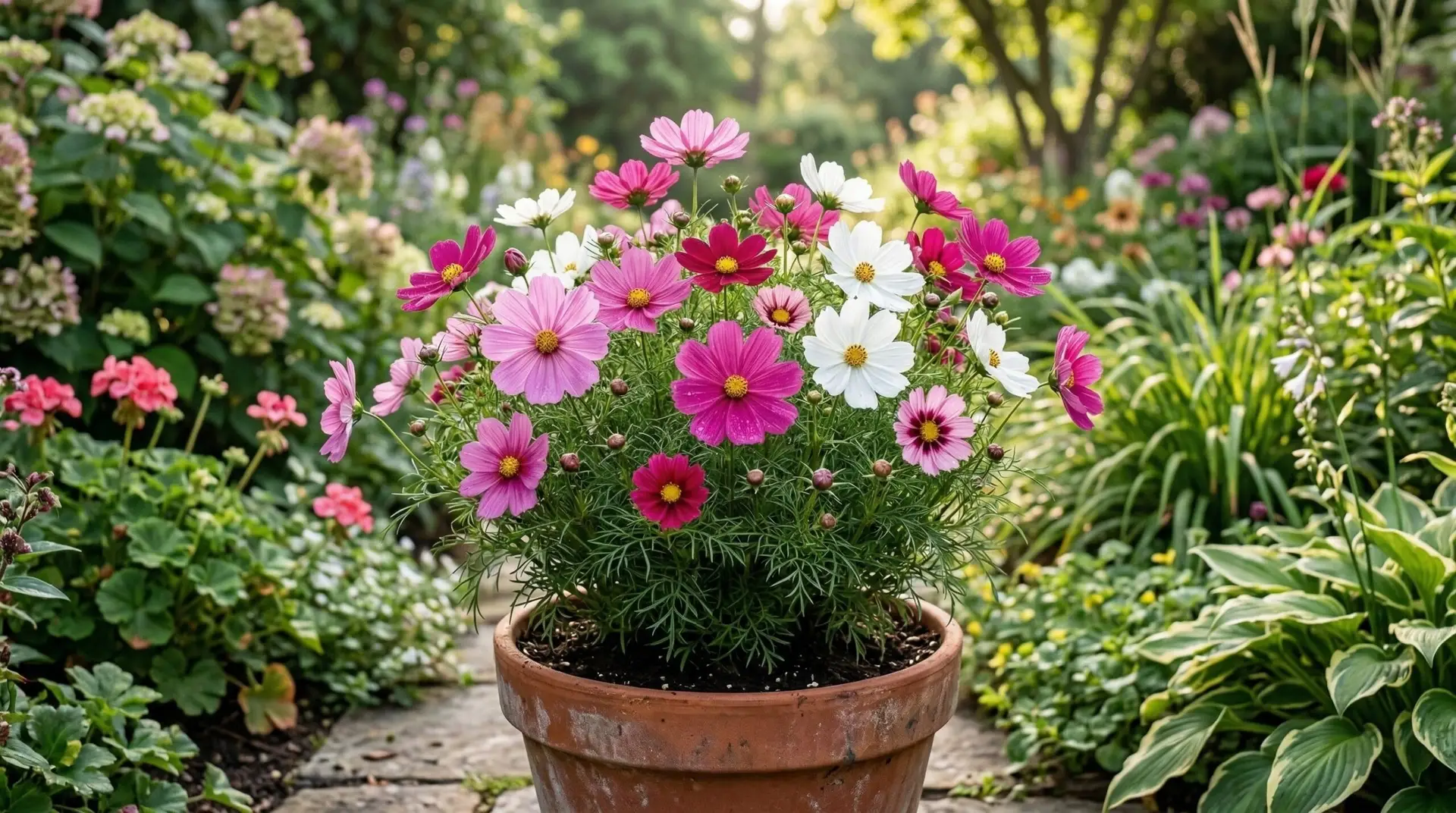
The most common mistake gardeners make when planning a cosmos container garden is selecting the wrong seed variety for confined spaces. Standard cosmos easily reach four to five feet in height, which makes them top-heavy, prone to wind damage on exposed balconies, and entirely unsuitable for a cosmos hanging basket. You must specifically seek out dwarf varieties engineered for compact growth, such as the Sonata series or the Cosmic series. The Sonata series typically stays under twenty-four inches tall while producing classic white, pink, and carmine daisy-like flowers. The Cosmic series is even more compact, usually maxing out at twelve to eighteen inches, offering bright orange and yellow blooms that fit perfectly into smaller pots. Once you identify your seeds, you need to select containers that provide adequate root space and excellent drainage. A single dwarf cosmos plant requires a pot that is at least ten to twelve inches deep and equally wide, with multiple drainage holes punched in the bottom. For hanging baskets, choose a container at least fourteen inches in diameter to prevent the soil from drying out entirely within a single afternoon.
Preparation and planting timelines
With your space evaluated and your dwarf varieties selected, you can map out your planting timeline and gather your soil materials. Cosmos germinate very quickly and usually require only four to six weeks from the day you plant the seed to the appearance of the first bloom. You should plan to sow your seeds directly into your final outdoor containers right after your region passes its final frost date. When purchasing soil, avoid premium mixes loaded with heavy compost or slow-release fertilizers. Cosmos perform best in average, well-draining potting soil, and giving them too much nitrogen will result in massive green bushes with zero flowers. If you want to create a mixed container display, you need to select companion plants that tolerate the same lean soil and bright sun conditions. You might plant your tall dwarf cosmos in the center of a large pot surrounded by trailing petunia plants that will spill over the edges. Alternatively, you could fill the lower gaps in your arrangement with a low-growing verbena to create a dense mat of color at the base of the stems. For a softer look around the rim of a hanging basket, a border of white sweet alyssum pairs beautifully with the fern-like foliage of the cosmos.
Managing watering and ongoing maintenance
Understanding the maintenance requirements before you plant will help you keep your cosmos blooming steadily through the late summer. Cosmos are naturally drought-tolerant plants once established in the ground, but growing cosmos in pots changes the watering dynamic significantly. Container soil dries out much faster than garden earth, especially on a breezy balcony, so you will need to practice a minimalist but attentive watering routine. Check the soil moisture every two days by pressing your finger an inch below the surface, and only apply water when that top layer feels completely dry. Overwatering is the fastest way to kill these plants, as soggy roots will quickly rot in a poorly draining pot. The second necessary maintenance task is deadheading, which involves pinching off the faded blooms before they can develop into seed pods. You should schedule five minutes twice a week to inspect your plants and snap off the spent flower heads just above the next set of leaves. This regular deadheading signals the plant to produce new buds, which keeps your balcony an active pollinator destination for local bees and butterflies all season long.
Your immediate action plan for a balcony cosmos garden
To get your balcony garden started properly, you need to take a few concrete steps this week rather than waiting for the planting season to arrive. Go outside and measure the exact dimensions of your available floor space and railing areas to determine exactly how many pots or baskets you can comfortably fit. Write down a shopping list that includes your specific dwarf seed varieties, standard potting soil without added fertilizer, and containers with drainage holes. If you are ordering seeds online, do so immediately, as popular compact varieties like the Sonata and Cosmic series often sell out early in the spring. Wash any old pots you plan to reuse with warm soapy water to remove lingering soil diseases from previous years. By completing these preparatory tasks now, you will be completely ready to sow your seeds the moment the weather warms up.
More About Cosmos
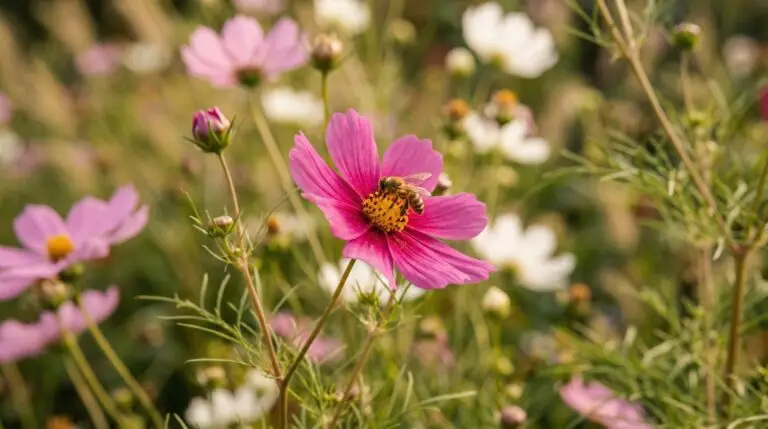
Cosmos for pollinators and why butterflies and bees cannot resist these flowers
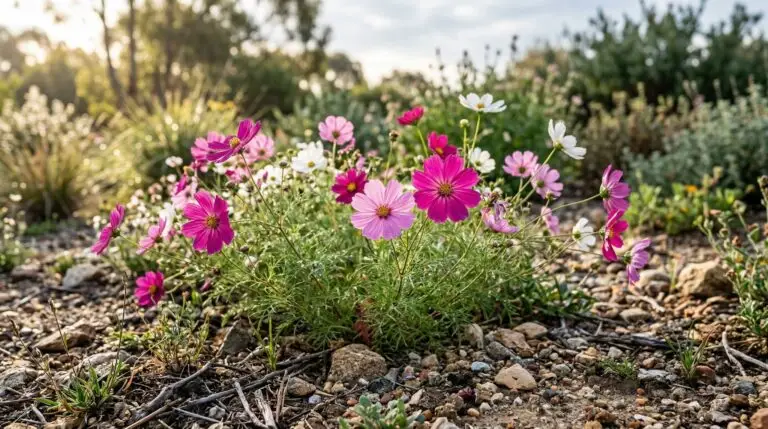
Why cosmos grows tall and leggy and how to get compact bushy plants instead

How to save cosmos seeds at the end of the season for free flowers next year
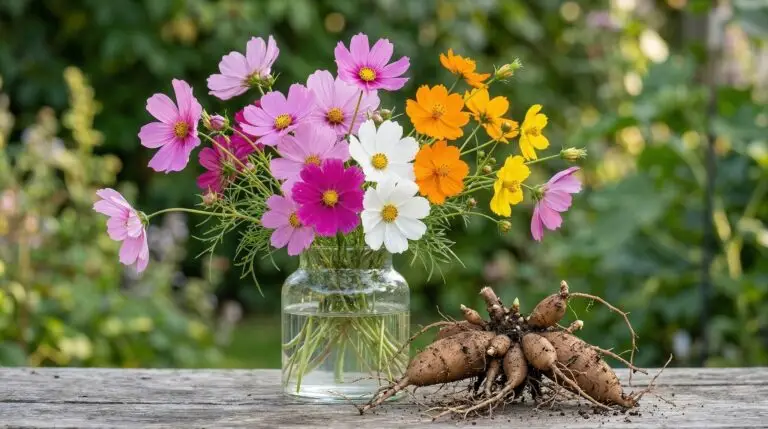
Chocolate cosmos the rare perennial with flowers that smell like dark chocolate
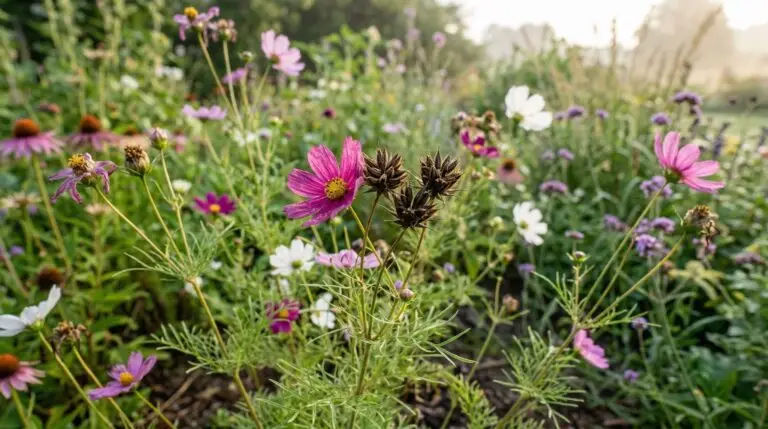
Cosmos as the perfect cut flower for beginners who want armloads of bouquets

Creating a cosmos flower field effect in your backyard for photogenic garden magic
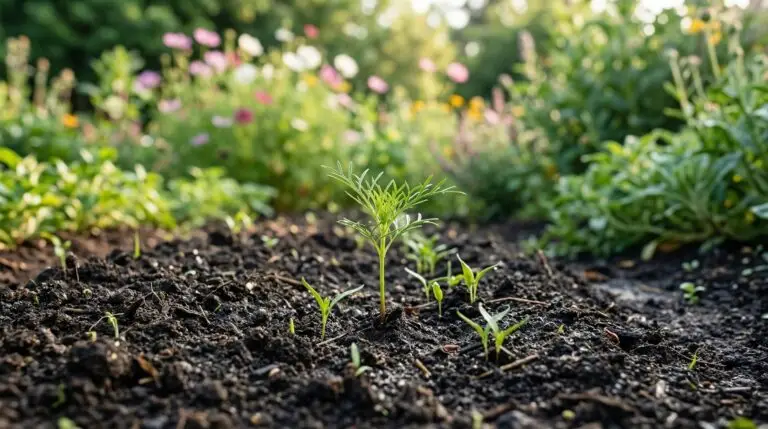
How to grow cosmos from seed for effortless clouds of color all summer long
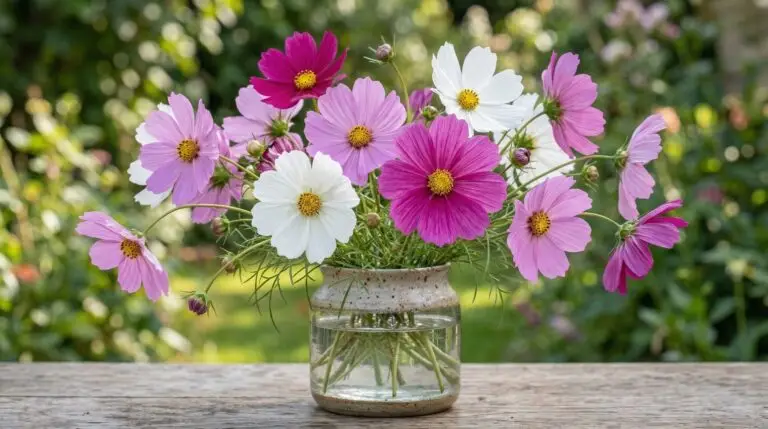
Best cosmos varieties from classic Sensation to chocolate-scented Cosmos atrosanguineus
Enjoying our flower guides? Add YourFlowersGuide as a preferred source on Google. It helps more readers find us.
Add to Preferred Sources