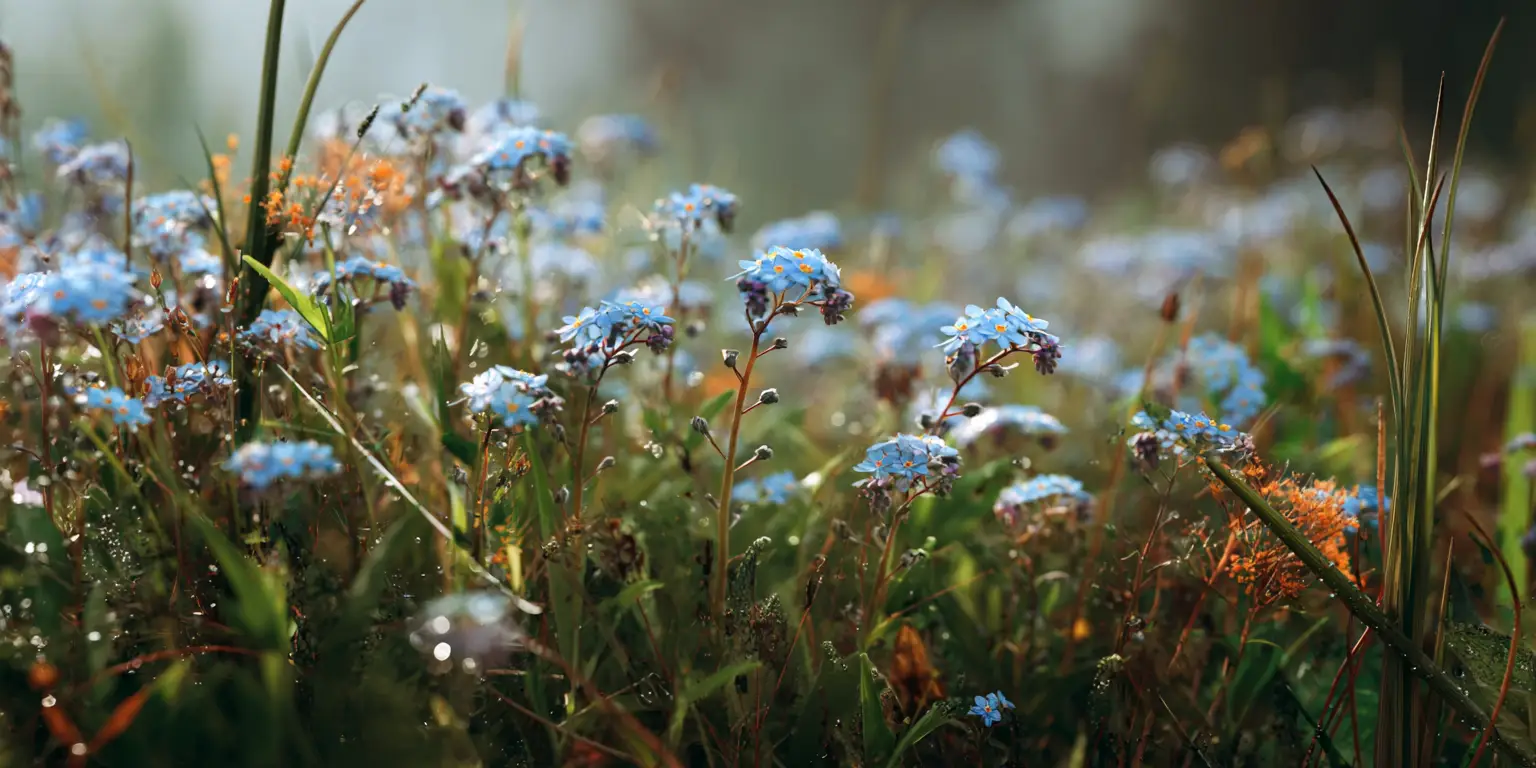
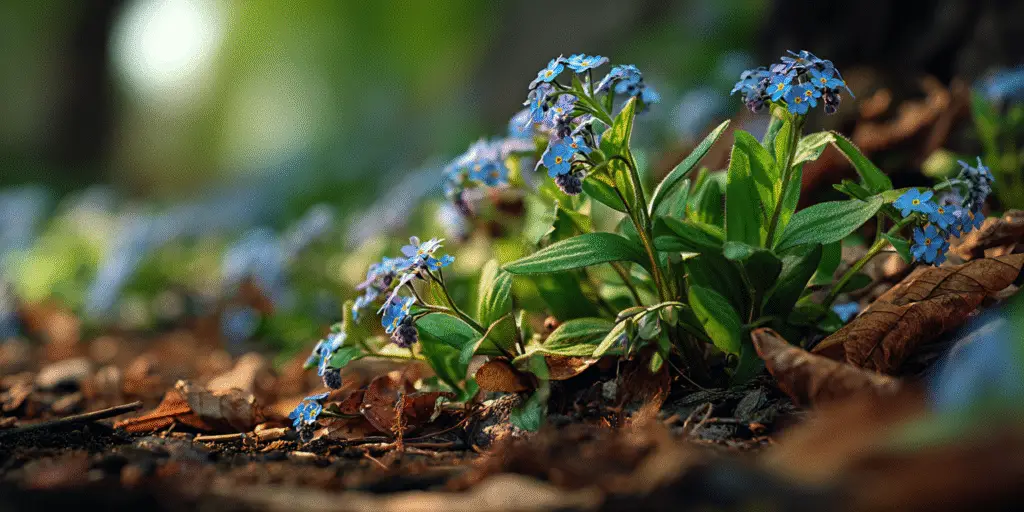
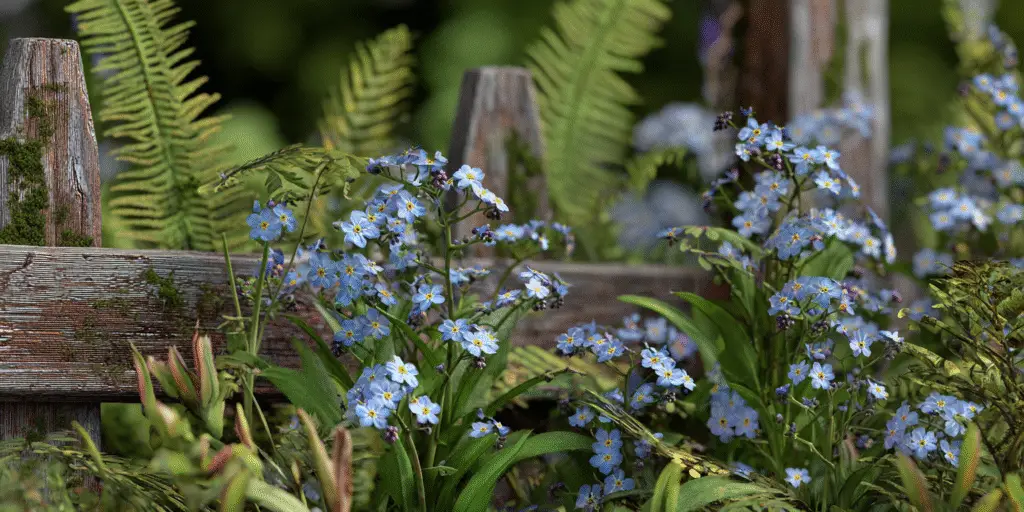
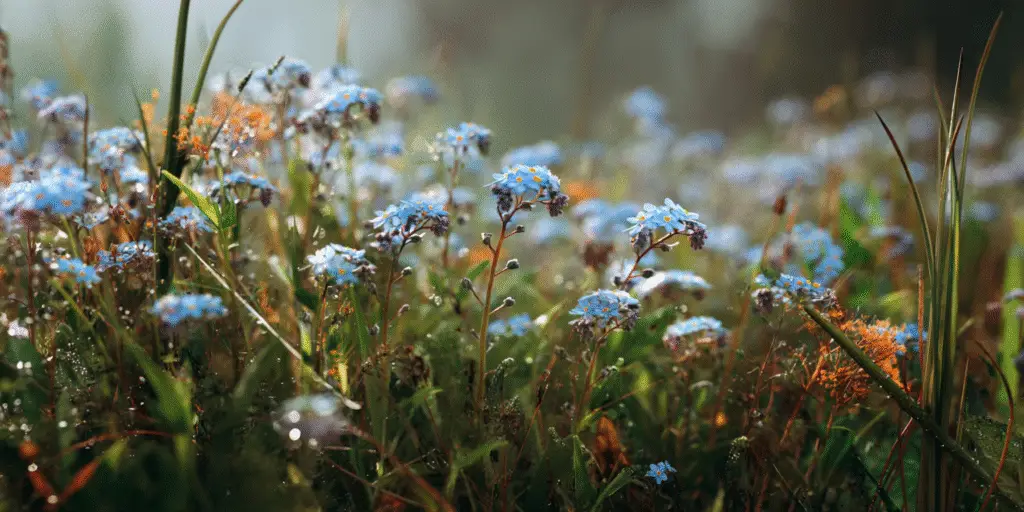
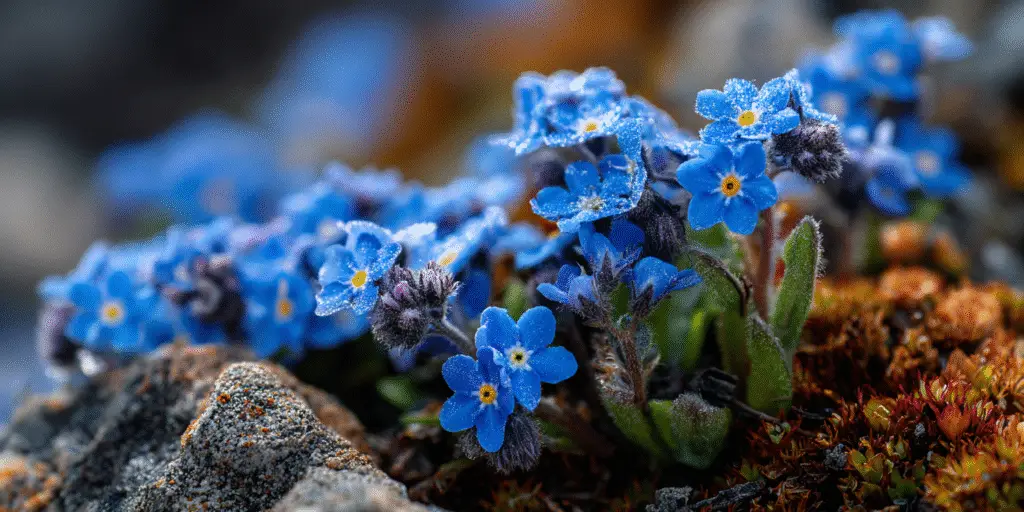
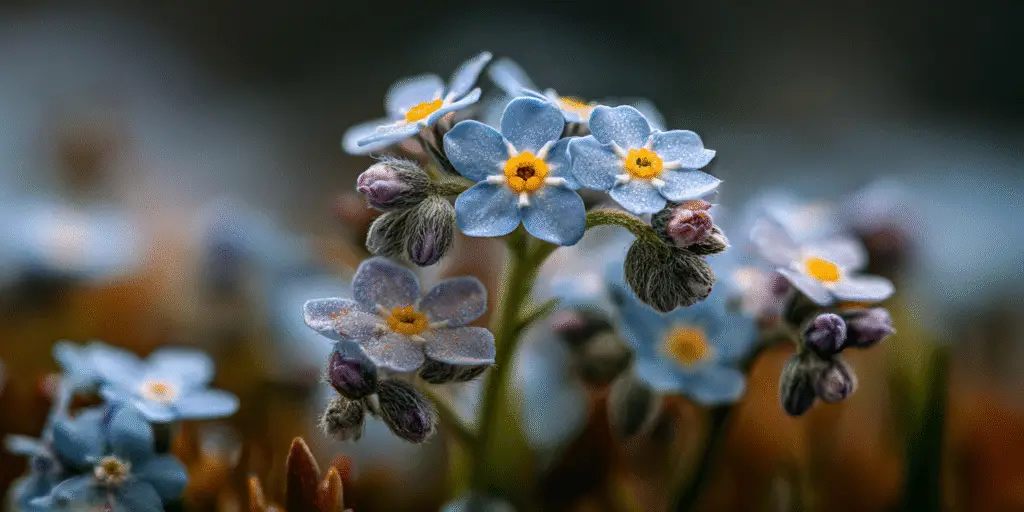
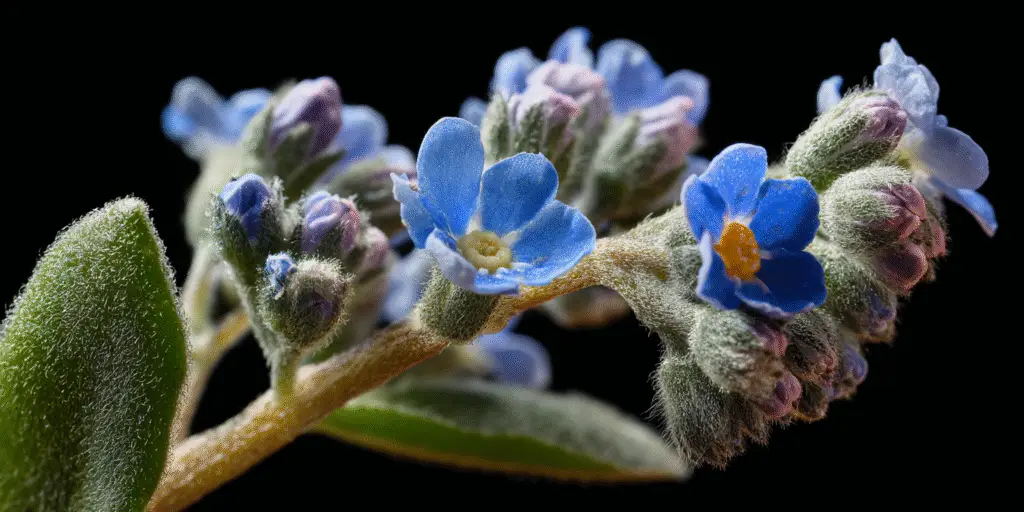
Field forget‑me‑not (Myosotis arvensis) is an annual to short‑lived perennial of disturbed ground and light soils. Plants are softly hairy with many small blue flowers and a long bloom window. It adapts to full sun or light shade and performs best where summers are not extreme. It is native to Eurasia and is naturalized across much of North America. Use it for meadows and informal plantings where self‑seeding is welcome.
At‑a‑glance
Group/Class: species; annual or short‑lived perennial
Height × spread: 4 to 16 in × 6 to 12 in (10 to 40 cm × 15 to 30 cm)
Bloom window: April to September
Color & flower form: small blue five‑lobed flowers with pale eye
Fragrance: 0 none
USDA hardiness: grown as annual in most regions
Breeder / Year / Origin: unknown
Pet safety: safe
How it differs
more drought‑tolerant than water‑edge species
longer flowering in lean soils
slighter stature with finer stems
self‑seeds readily in open ground
Strengths
thrives in well‑drained, low‑fertility soils
long bloom window in cool seasons
useful for naturalized meadows
easy from seed
Care in one minute
Give full sun to light shade on well‑drained soils.
Water during establishment; allow soil to dry slightly between waterings.
Avoid heavy feeding; excess nitrogen encourages flop.
Deadhead to reduce volunteers or leave seed to naturalize.
Thin dense seedlings to improve airflow and reduce mildew risk.
Written by: Your Flowers Guide editorial team We are a small independent group of flower lovers who research and review each guide using trusted horticultural and educational sources. Learn more about us