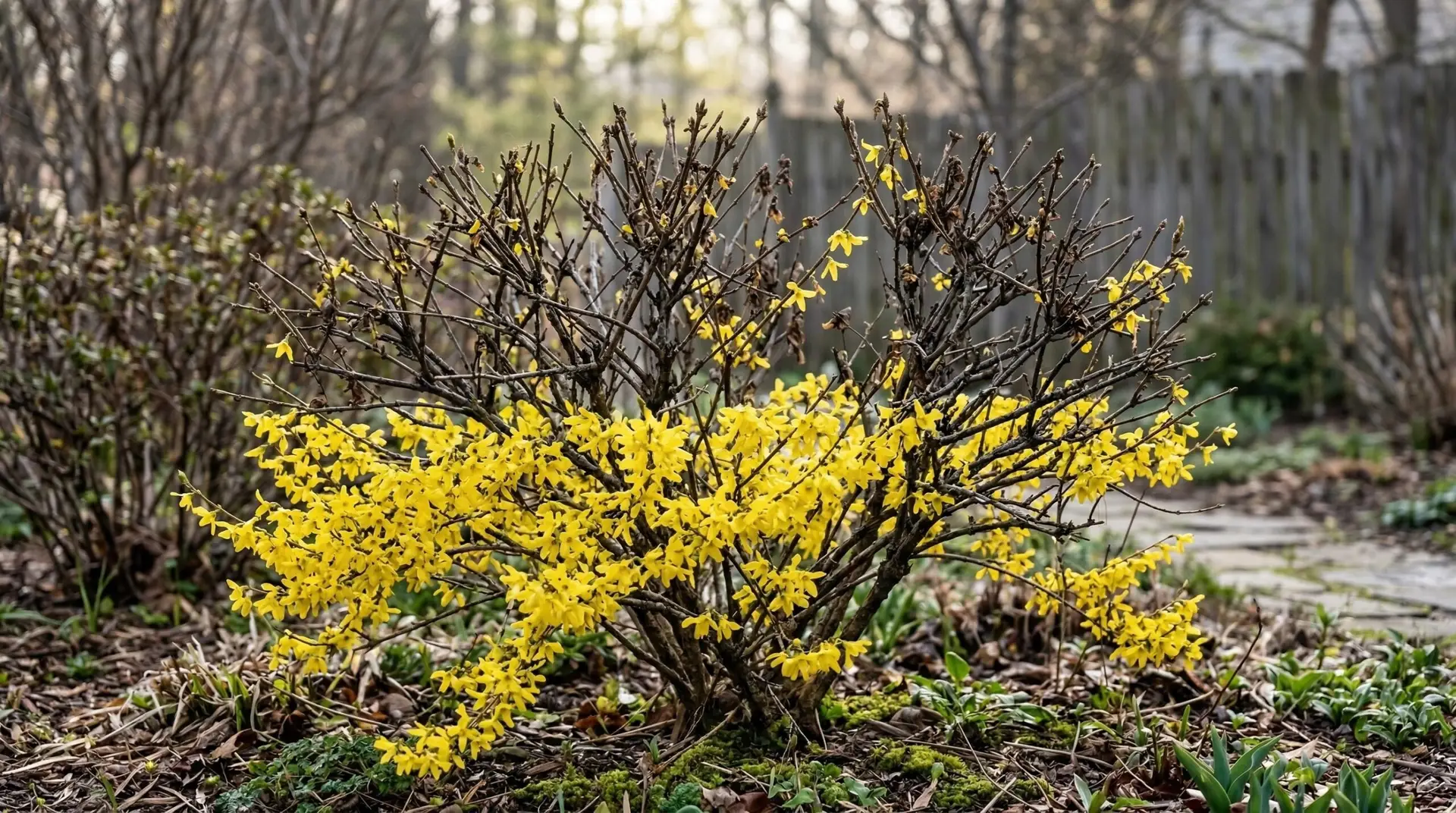
You wait all winter for your forsythia to explode into bright yellow flowers, but spring arrives and you are left staring at a disappointment. The shrub has a thick ring of beautiful yellow blooms right at the bottom, while the top six feet are completely bare and look dead. Homeowners ask me about this specific problem constantly because it looks bizarre and defeats the entire purpose of planting a spring-blooming shrub. People assume the plant is diseased, lacking fertilizer, or dying of old age. The reality is much simpler, and understanding what happened to your plant is the first step to making sure you get a full display next year. I have walked hundreds of yards diagnosing this exact issue, and the solution always comes down to either changing your pruning habits or changing the plant itself.
Understanding why cold damage stops the top from blooming
When you see a forsythia not blooming on its upper half, you are almost always looking at winter cold damage. Forsythia shrubs set their flower buds late in the summer or early in the fall of the previous year. Those tiny buds sit on the branches all winter long waiting for the warm days of spring to open. If you live in an area that experiences harsh winter temperatures, the exposed flower buds on the upper branches freeze and die. The buds on the lower branches survive simply because they were buried under a blanket of snow. Snow is an excellent insulator, protecting the lower buds from the extreme air temperatures, much like winter mulch protects a delicate azalea planted too far north. This sharp dividing line between dead buds and protected buds results in that distinct snow line blooming pattern.
Choosing the right variety for freezing climates
You cannot control the weather, but you can control what you plant in your yard. Many older forsythia varieties were bred for milder climates and their flower buds simply cannot survive temperatures that drop below minus ten degrees Fahrenheit. If you live in Zone 4 or a colder part of Zone 5, a standard variety will suffer winter bud kill almost every year. You might get a full bloom once a decade after an unusually mild winter, but the rest of the time you will be looking at bare upper branches. Instead of fighting a losing battle, the smartest solution is to replace the plant with a variety bred specifically for cold hardiness. Pulling out a mature shrub takes real physical effort, but it is far better than being disappointed by a half-dead looking plant every single spring.
Plant breeders have developed several excellent forsythia varieties that can take severe cold without losing their flower buds. The variety called Meadowlark is usually the best choice for cold climates because its flower buds can survive temperatures down to minus thirty-five degrees Fahrenheit. Northern Gold is another reliable option that will bloom all the way to the top even after a brutal winter. Digging up an established shrub requires some sweat equity, but planting a cold-hardy variety is the only permanent fix for snow line blooming. If you want a reliable spring show without the frustration, treating your yard like a cold-climate garden is essential. You have to select tough plants built for your specific weather, much like choosing a cold-hardy lilac instead of a delicate southern shrub.
Fixing the overgrown and leggy forsythia problem
Aside from cold damage, the second most common complaint I hear is that a forsythia has become a massive, tangled mess of bare wood. A forsythia leggy appearance happens when the shrub is improperly pruned over a period of several years. Many homeowners grab hedge clippers and shear the outside of the plant into a tight ball or box shape. When you shear the tips of the branches, the plant responds by pushing out a dense layer of twiggy growth right at the cut ends. This thick outer shell blocks all the sunlight from reaching the center of the shrub. Without sunlight, the interior leaves drop off entirely. This leaves you with a hollow plant made entirely of forsythia bare branches on the inside, with all the green growth concentrated on the top two inches.
To fix a leggy shrub, you have to put down the hedge shears and pick up a pair of heavy-duty loppers or a pruning saw. You need to open up the center of the plant so sunlight and air can reach the base and stimulate new growth from the roots. The correct way to prune a forsythia is by thinning it out, which means removing entire branches all the way down to the ground. When you make cuts at the soil line, it tells the plant to send up fresh, vigorous new shoots from the crown. This new growth will fill in the bare bottom and eventually replace the old, woody trunks that have stopped producing good flowers. Thinning takes more thought than shearing, but it is the only way to maintain a healthy shrub that blooms heavily from top to bottom.
How to perform a rejuvenation pruning
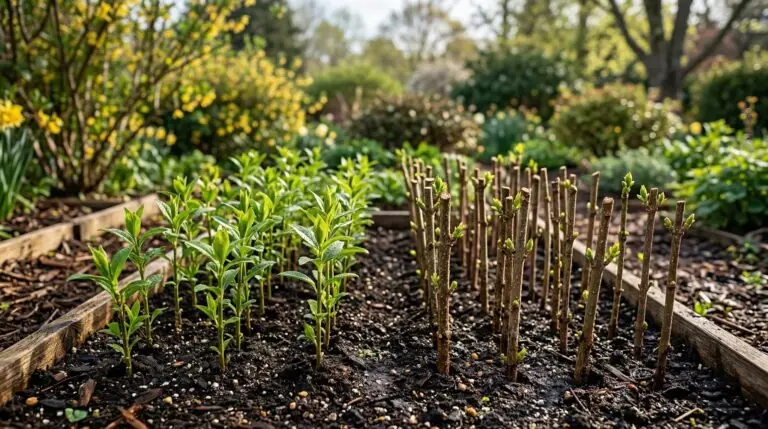
If your shrub is severely overgrown, you will need to perform a rejuvenation pruning over the course of three years. You start by identifying the thickest, oldest, and most woody trunks in the center of the plant. Cut one-third of these massive old stems completely down to the ground, leaving the remaining two-thirds of the plant alone. The following spring, you will cut out another third of the oldest remaining stems, and in the third year, you will remove the final old stems. This gradual process replaces the entire shrub with fresh wood without leaving a giant hole in your landscaping. The same patient approach works wonders for an overgrown azalea that has become too tall and woody at the base.
Timing matters immensely when you are making these heavy pruning cuts. You must prune your forsythia immediately after it finishes blooming in the spring. Because the plant sets its flower buds in late summer, pruning in the fall or winter guarantees you will cut off all of next year’s flowers. If you have a shrub that is so far gone that a three-year plan sounds exhausting, you do have a faster, more extreme option. You can cut the entire plant down to about four inches above the ground in early spring before it wakes up. The plant will look like a stump for a few weeks, but it will rapidly push up dozens of new shoots and completely rebuild itself by the end of the summer. You will miss out on the flowers for one year, but you will hit the reset button on a ruined shrub.
The single most useful piece of advice I can give anyone growing this plant is to respect its natural shape. Forsythia wants to be a wild, arching, fountain-shaped shrub, and trying to force it into a tidy geometric box will always cause problems. Let the branches arch naturally, and maintain the plant simply by removing a few of the oldest canes at ground level every spring right after the flowers fade. If you combine this simple maintenance habit with a cold-hardy variety suited for your zone, you will never have to stare at bare upper branches again. Good gardening is about working with the plant instead of fighting it. A little strategic neglect combined with the right pruning cuts will give you that massive wall of yellow you actually wanted.