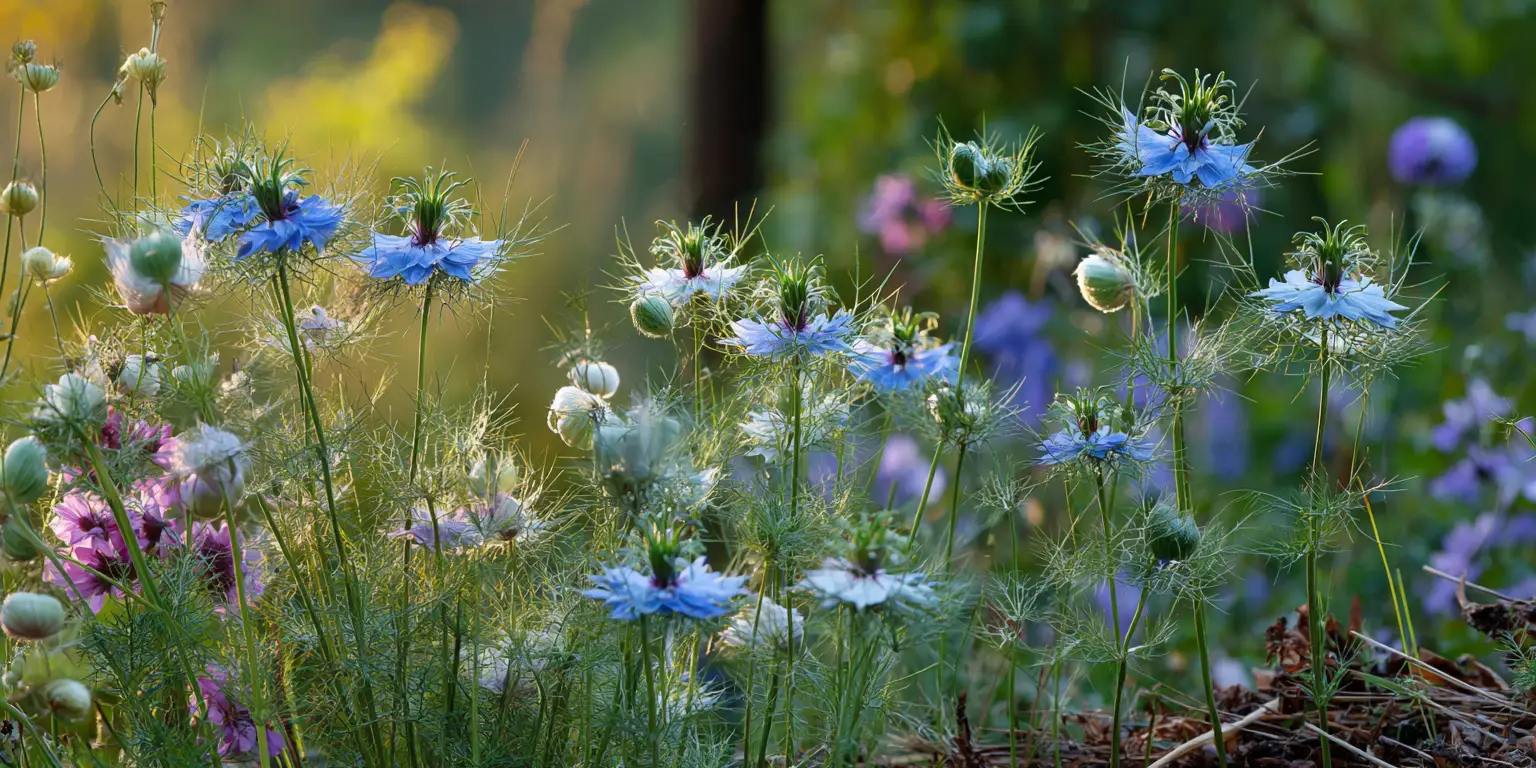
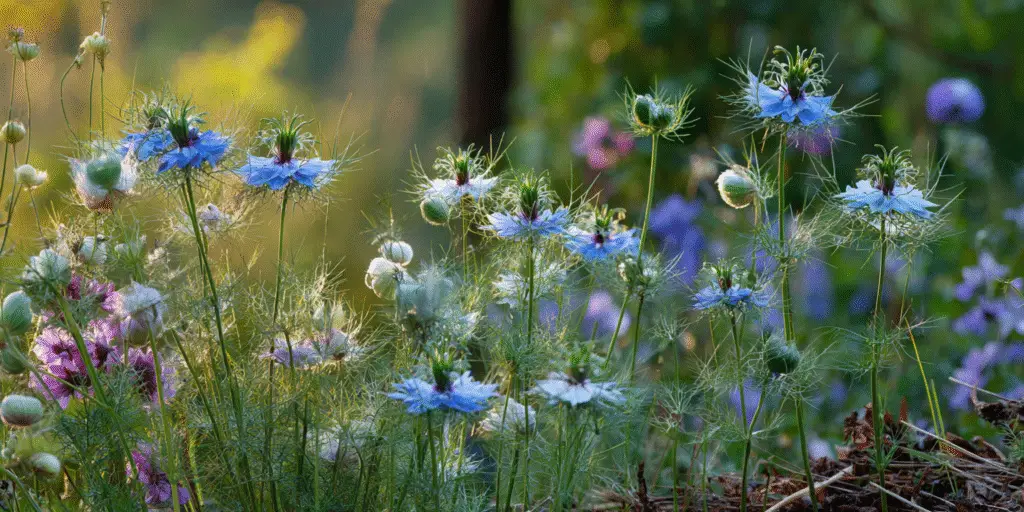
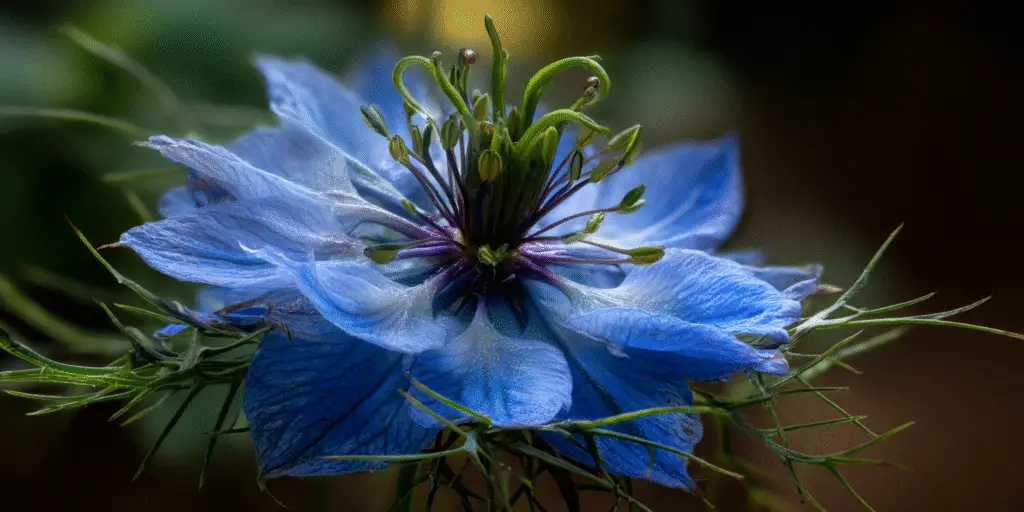
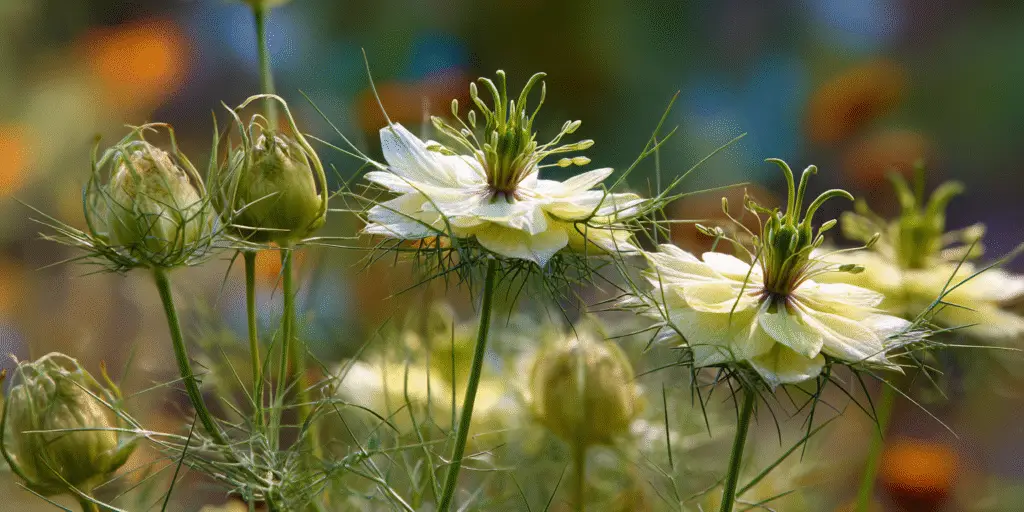
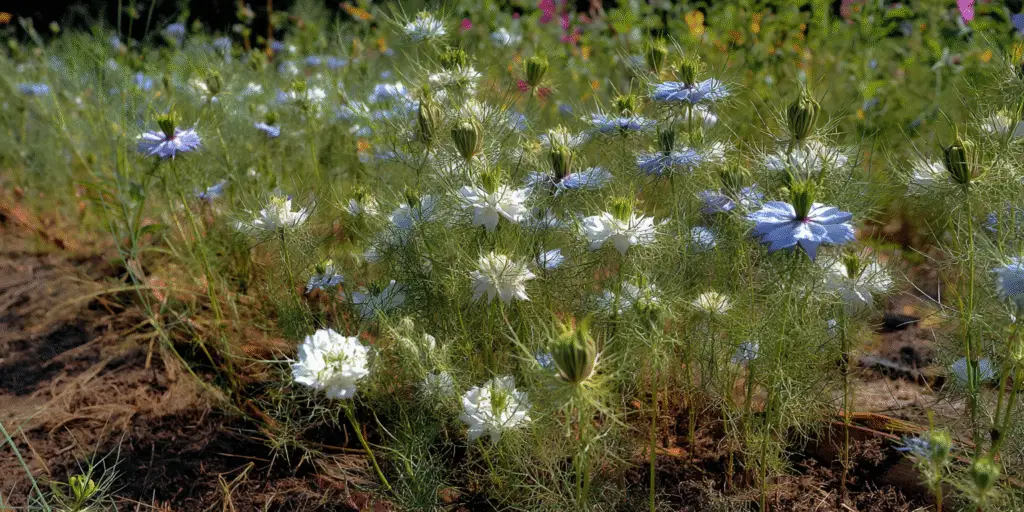
Nigella damascena is the standard love in a mist grown as a cool season annual. Fine, lacy foliage frames blue, white, or pink flowers. Showy bracts give way to inflated horned pods prized fresh and dried. Plants flower well in full sun and well drained soil across most of North America. Direct sowing is best because the long taproot dislikes transplanting.
At‑a‑glance
Group/Class: Annual nigella
Height × spread: 18-24 in (45-60 cm) × 12-18 in (30-45 cm)
Bloom window: Late spring to early summer
Color & flower form: Blue to white or pink; starry flowers with feathery bracts; inflated horned pods
Fragrance: 0 none
USDA hardiness: Grown as annual across North America
Breeder / Year / Origin: unknown; native to Mediterranean Basin to NW Iran
Cut‑flower notes: Good fresh and dried; remove lower leaves to extend vase life
Pet safety: unknown
How it differs
Earlier to bloom in cool spring than many nigellas.
Shorter stems than taller cutting selections.
Classic strong bracts; pods round with short horns.
Strengths
Self seeds to sustain displays.
Pods add structure in dried work.
Adaptable if drainage is good.
Care in one minute
Site: full sun with some wind shelter.
Soil and pH: average, well drained soil; neutral to slightly alkaline.
Watering: keep evenly moist during establishment; avoid soggy sites.
Pinch/stake/deadhead: do not pinch; deadhead to extend bloom or leave some flowers for pods.
Watch‑outs
Declines in sustained summer heat.
Direct sow; transplanting often disappoints.
Best uses (tags)
cutting; dried pods; borders; pollinators
Provenance note
Native to the Mediterranean region and western Asia; long in cultivation.
Written by: Your Flowers Guide editorial team We are a small independent group of flower lovers who research and review each guide using trusted horticultural and educational sources. Learn more about us