returns in
273
days
Bloom calendar
Nigella papillosa
Annual nigella
At‑a‑glance
- Group/Class: Annual nigella
- Height × spread: 24-36 in (60-90 cm) × 12-18 in (30-45 cm)
- Bloom window: Summer
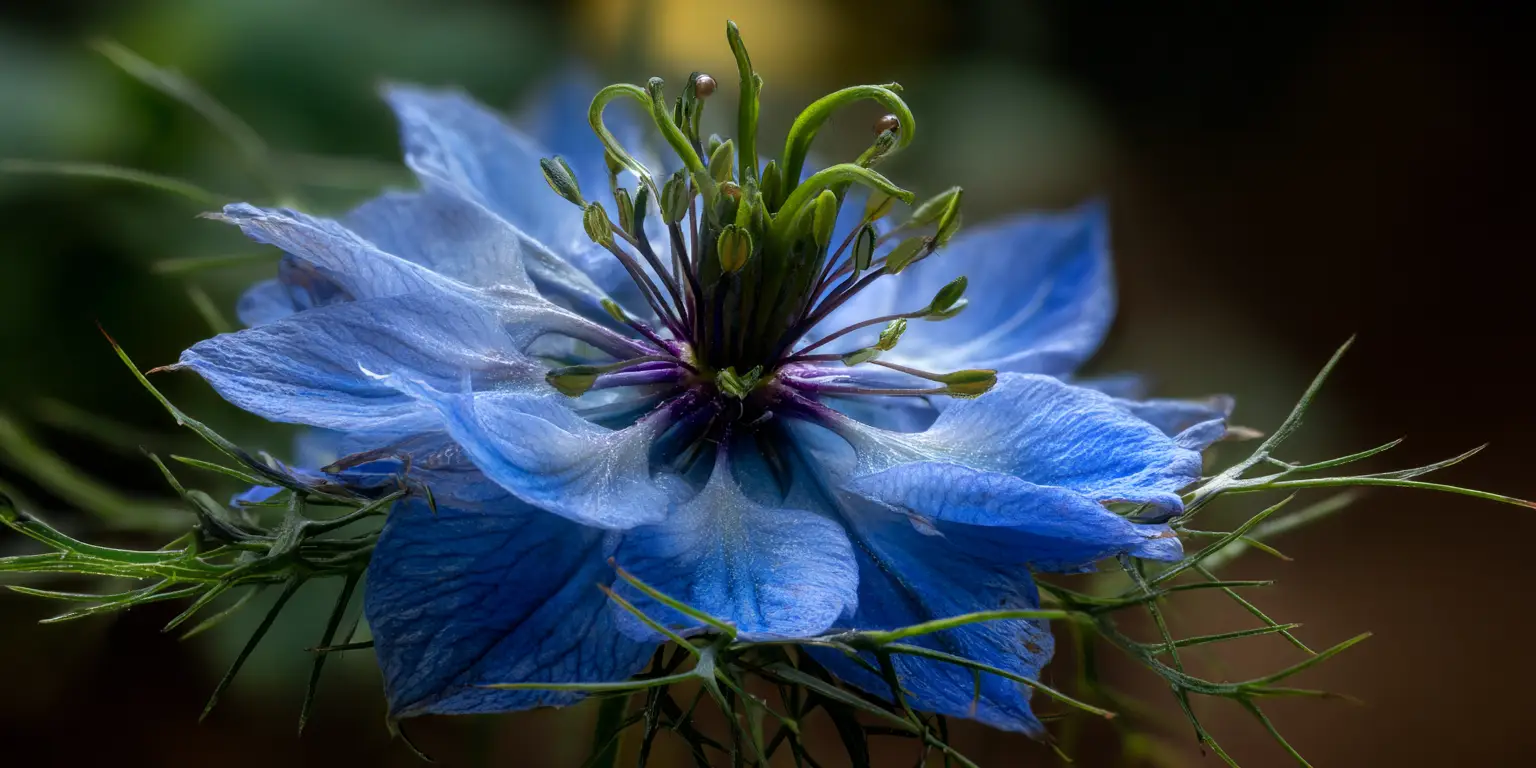
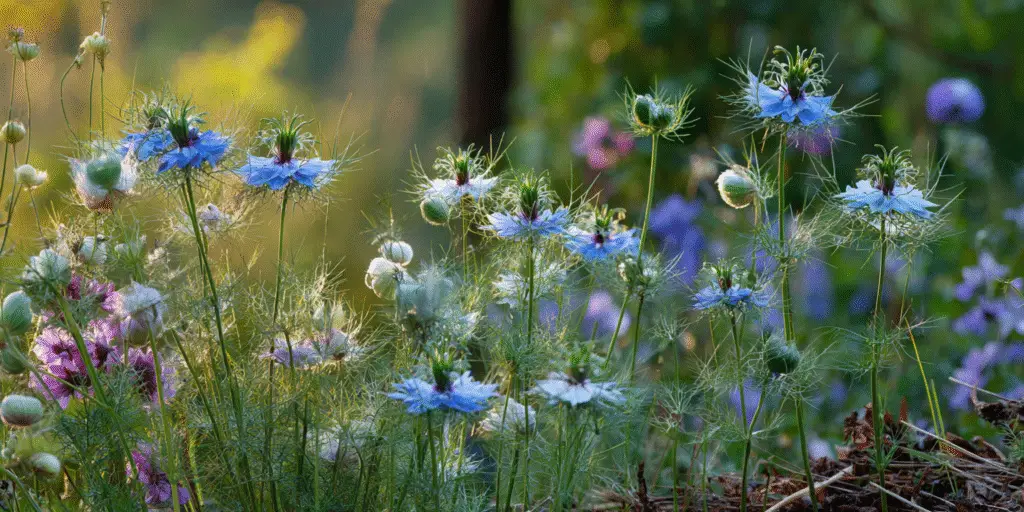
- Color & flower form: Blue to white with dark centers; larger flowers; goblet shaped pods
- Fragrance: unknown
- USDA hardiness: Grown as annual across North America
- Breeder / Year / Origin: unknown; native to the western Mediterranean (Iberian region)
- Cut‑flower notes: Both flowers and pods used fresh and dried; longer stems aid arranging
- Pet safety: unknown
How it differs
- Taller, longer stems than the typical love in a mist display.
- Flowers show darker central bosses and can appear larger.
- Seedheads are goblet shaped rather than rounded and horned.
Strengths
- Good stem length for arrangements.
- Pods dry cleanly and hold form.
- Handles a wide soil pH range if drainage is good.
Care in one minute
Site: full sun.
Soil and pH: well drained; adaptable to acid, neutral, or alkaline soils.
Watering: provide steady moisture during early growth; avoid waterlogging.
Pinch/stake/deadhead: no pinching; light staking in windy spots; deadhead if reseeding is not wanted.
Watch‑outs
- Light stems can lean in wind; provide shelter in exposed sites.
- Shade reduces stem length and flower number.
Best uses (tags)
Provenance note
Native to the western Mediterranean; described under the accepted name Nigella papillosa.
References
Similar Flowers
Enjoying our flower guides? Add YourFlowersGuide as a preferred source on Google. It helps more readers find us.
Add to Preferred Sources