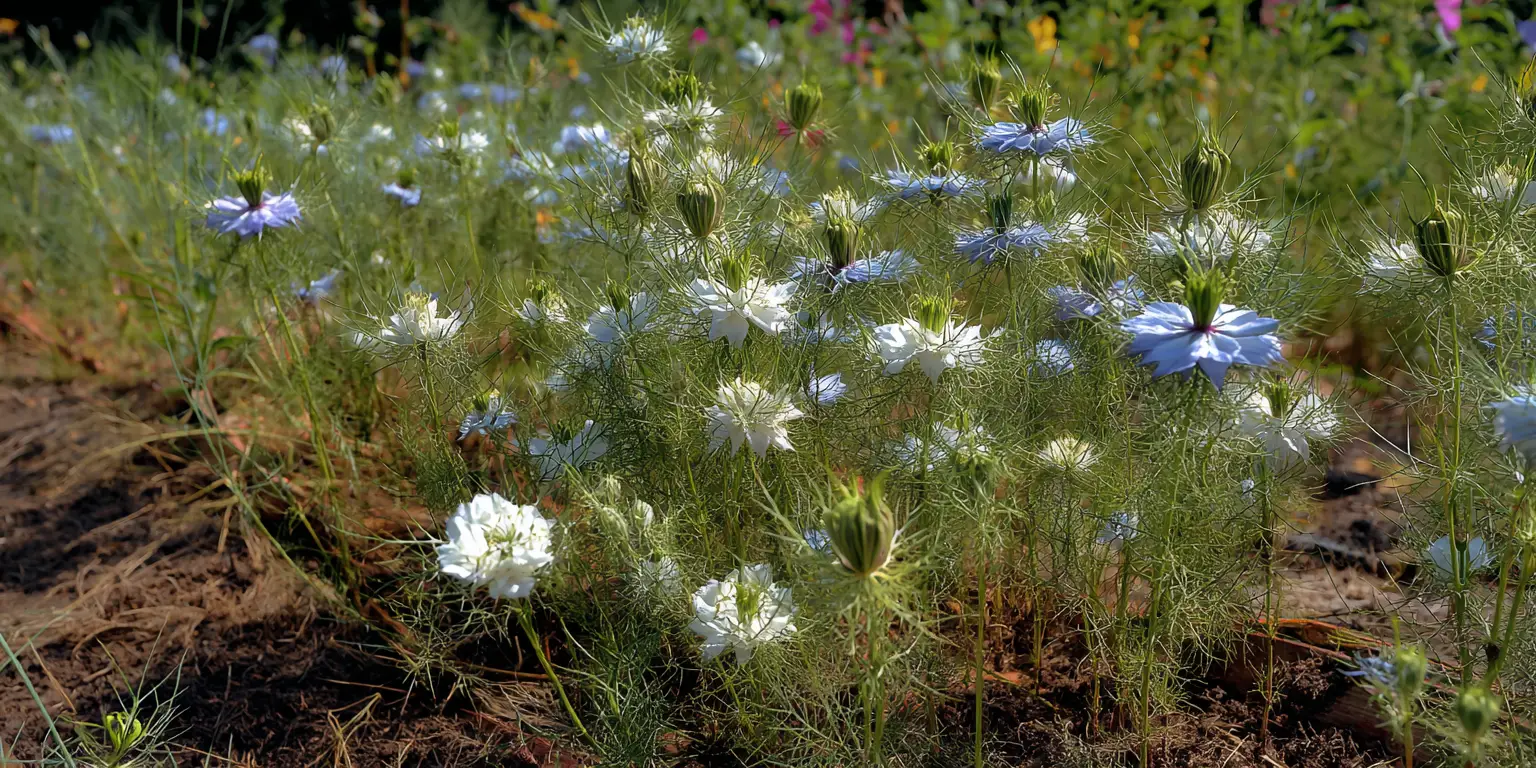
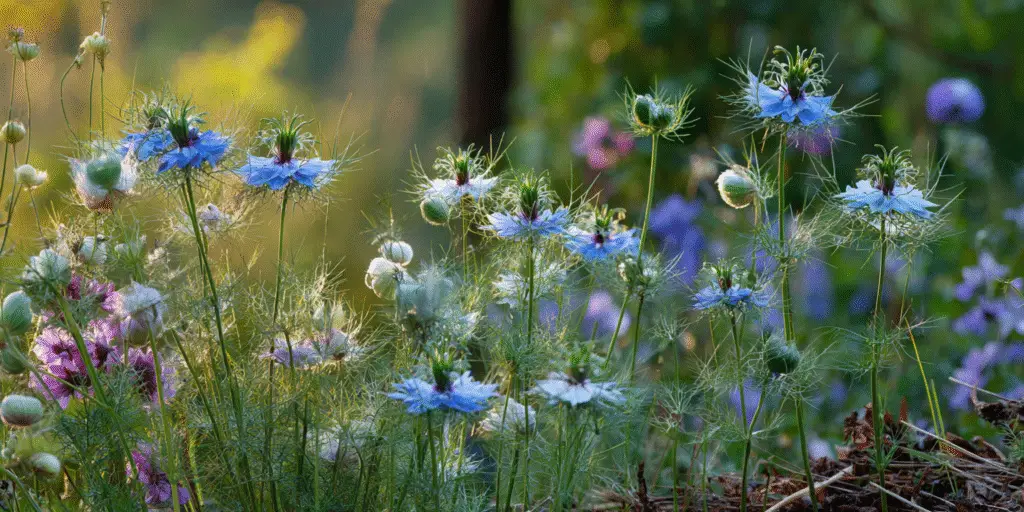
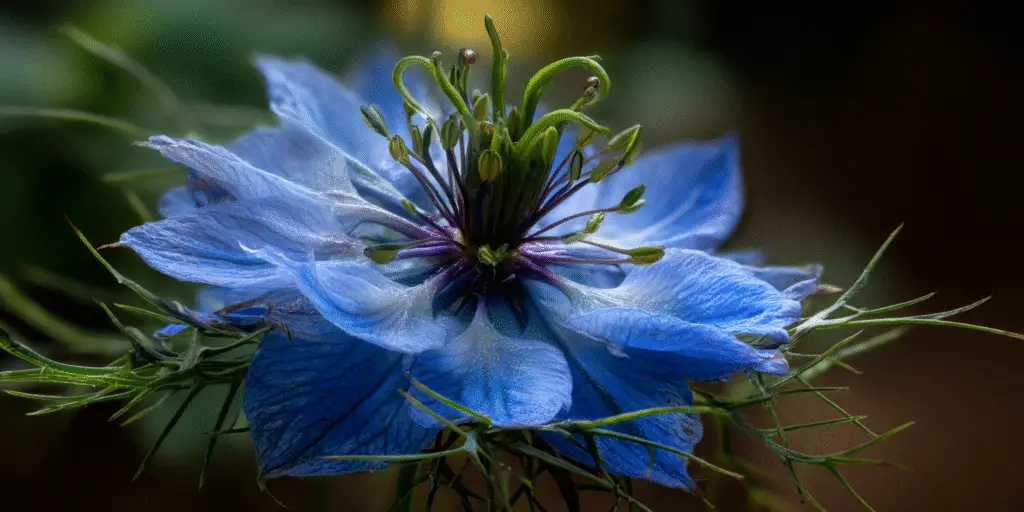
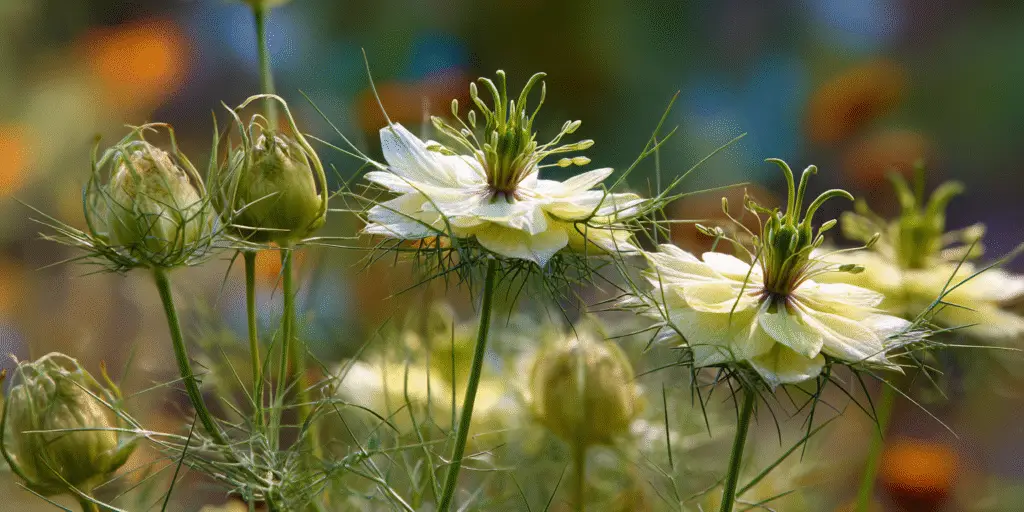
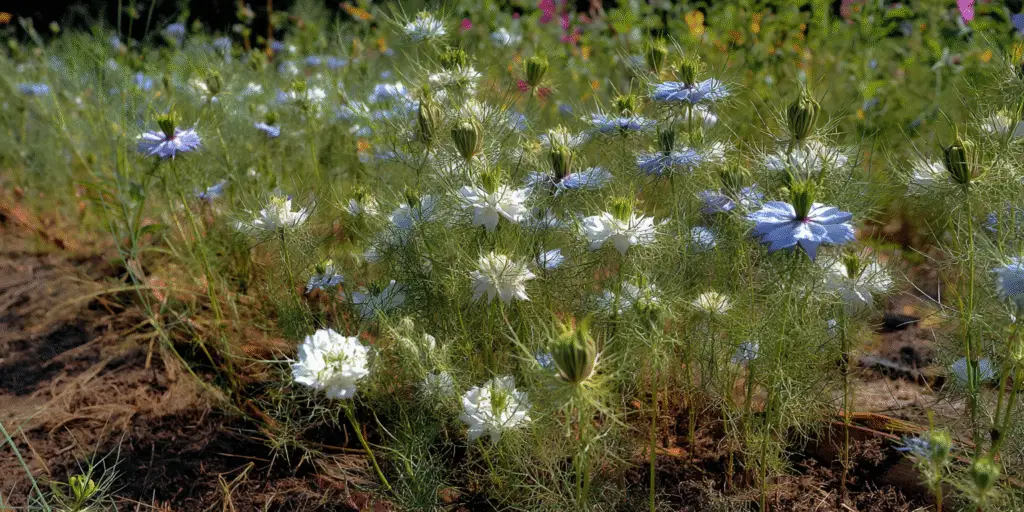
Nigella sativa is the culinary fennel flower grown for aromatic black seeds known as black cumin. Plants are compact and fine textured and suit sunny herb beds and borders. White to pale blue flowers are followed by inflated seed pods that dry well. Grow as a warm season annual in full sun and well drained soil. A relatively long, warm season is needed for reliable seed ripening.
At‑a‑glance
Group/Class: Annual nigella (culinary)
Height × spread: 10-12 in (25-30 cm) × 6-12 in (15-30 cm)
Bloom window: Summer
Color & flower form: White to pale blue; simple flowers; inflated pods
Fragrance: unknown
USDA hardiness: Grown as annual across North America
Breeder / Year / Origin: unknown; native from southeastern Europe into western and southwestern Asia
Cut‑flower notes: Not a standard fresh cut; pods are sometimes dried for arrangements
Pet safety: unknown
How it differs
Grown for edible seed rather than showy flowers.
Shortest plants in this group.
Seed maturity is the main goal; bracts are less prominent than in ornamental types.
Strengths
Useful culinary seed.
Easy to direct sow and manage.
Compact habit for small spaces.
Care in one minute
Site: full sun in a warm, open position.
Soil and pH: well drained; adaptable across a broad pH range.
Watering: regular moisture until flowering; avoid prolonged saturation.
Pinch/stake/deadhead: do not pinch; deadhead only if reseeding is not wanted.
Watch‑outs
Needs a long warm season for full seed ripening.
Less useful as a fresh cut compared with ornamental nigellas.
Best uses (tags)
herb gardens; seed harvest; dried pods; edging
Provenance note
Native from southeastern Europe into western Asia; widely cultivated for seed.
Written by: Your Flowers Guide editorial team We are a small independent group of flower lovers who research and review each guide using trusted horticultural and educational sources. Learn more about us