How to Grow and Care: Moth Orchid (Phalaenopsis)
Contents
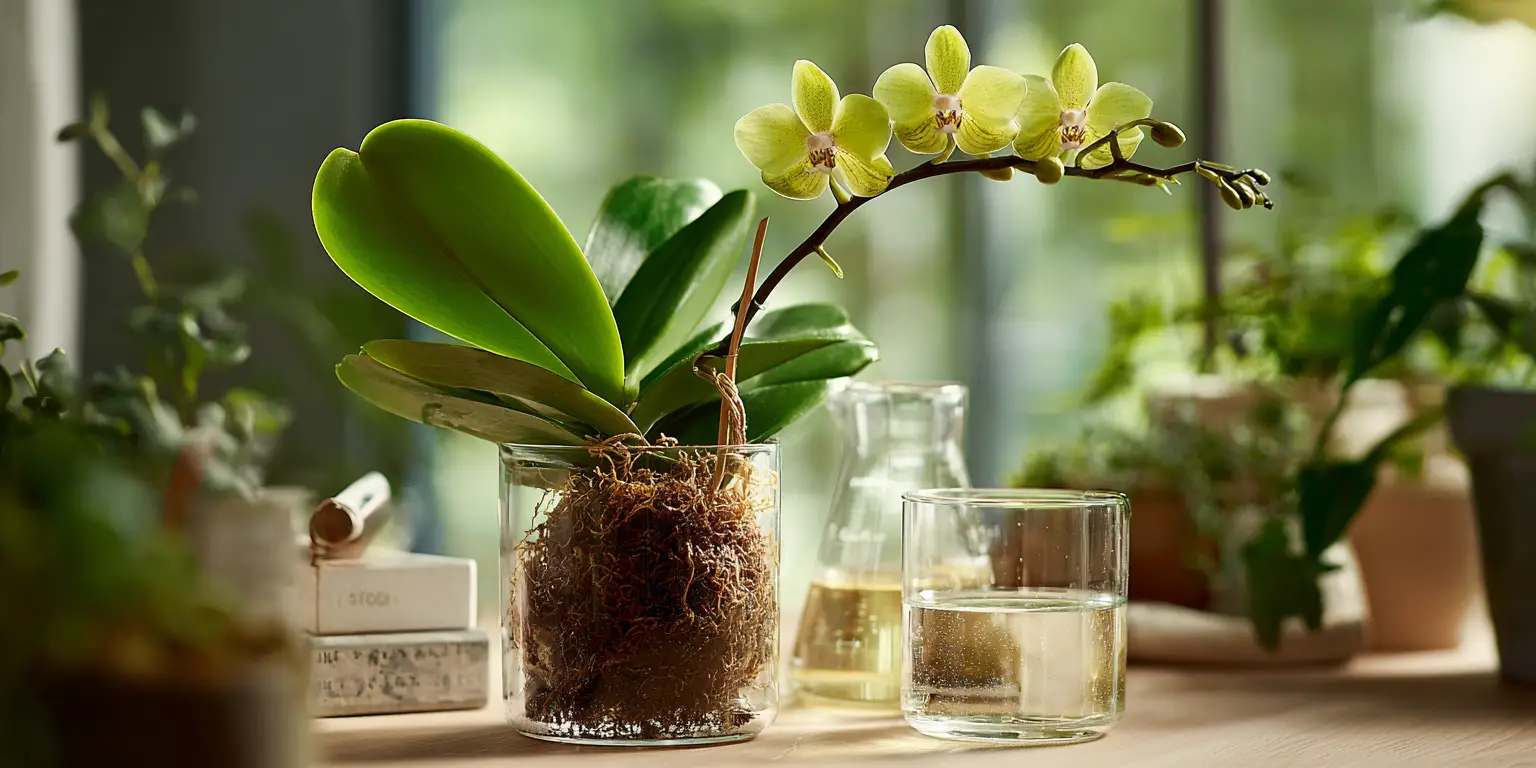
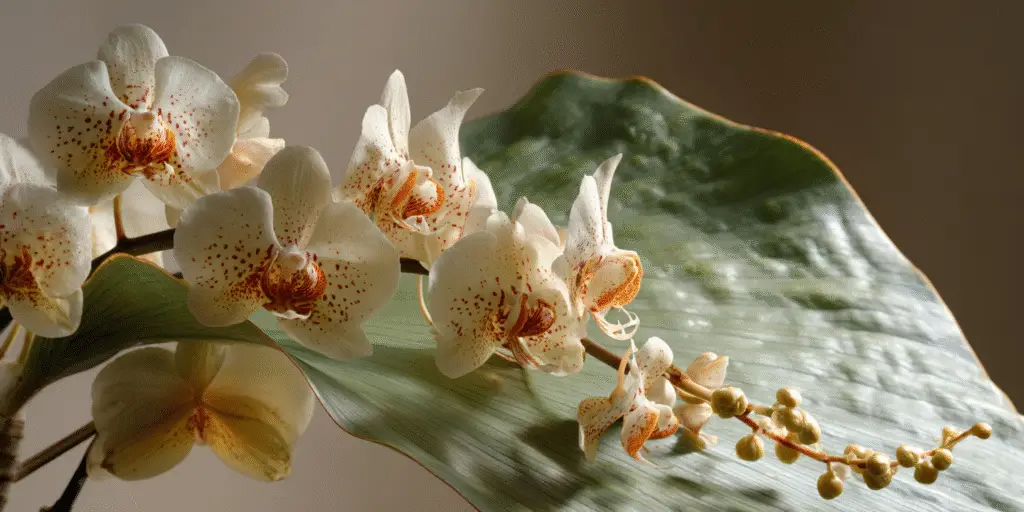
Moth orchids belong to the genus Phalaenopsis Blume, a group of mostly epiphytic orchids native to Southeast Asia and parts of Australia. In nature they anchor to tree bark rather than growing in soil. Indoors they thrive in a coarse, airy potting mix that mimics that bark environment. Common names include moth orchid and Phal. The accepted botanical name for the group is Phalaenopsis spp., with many hybrids sold simply as Phalaenopsis or moth orchid. Phalaenopsis are tender tropicals. They are grown as houseplants across the United States and can live outdoors year round only in reliably frost free climates, typically USDA Zones 11 to 12. The safe indoor target is bright filtered light. East facing windows are ideal. In stronger sun such as a south window, use a sheer curtain that softens the light. Leaves should be medium green. Dark leaves point to too little light. Yellowing or scorched patches point to too much direct sun. Keep daytime temperatures near 70 to 80°F (21 to 27°C) and nights near 60 to 65°F (16 to 18°C). Water deeply then let the potting mix approach dryness before watering again. Use a free draining orchid mix in a container with many holes. Feed lightly during active growth and flush with plain water regularly. Avoid standing water in the crown at the top of the plant. Provide gentle air movement. With these basics your Moth Orchid will produce healthy roots and repeat bloom reliably.
Soil & Bed Preparation
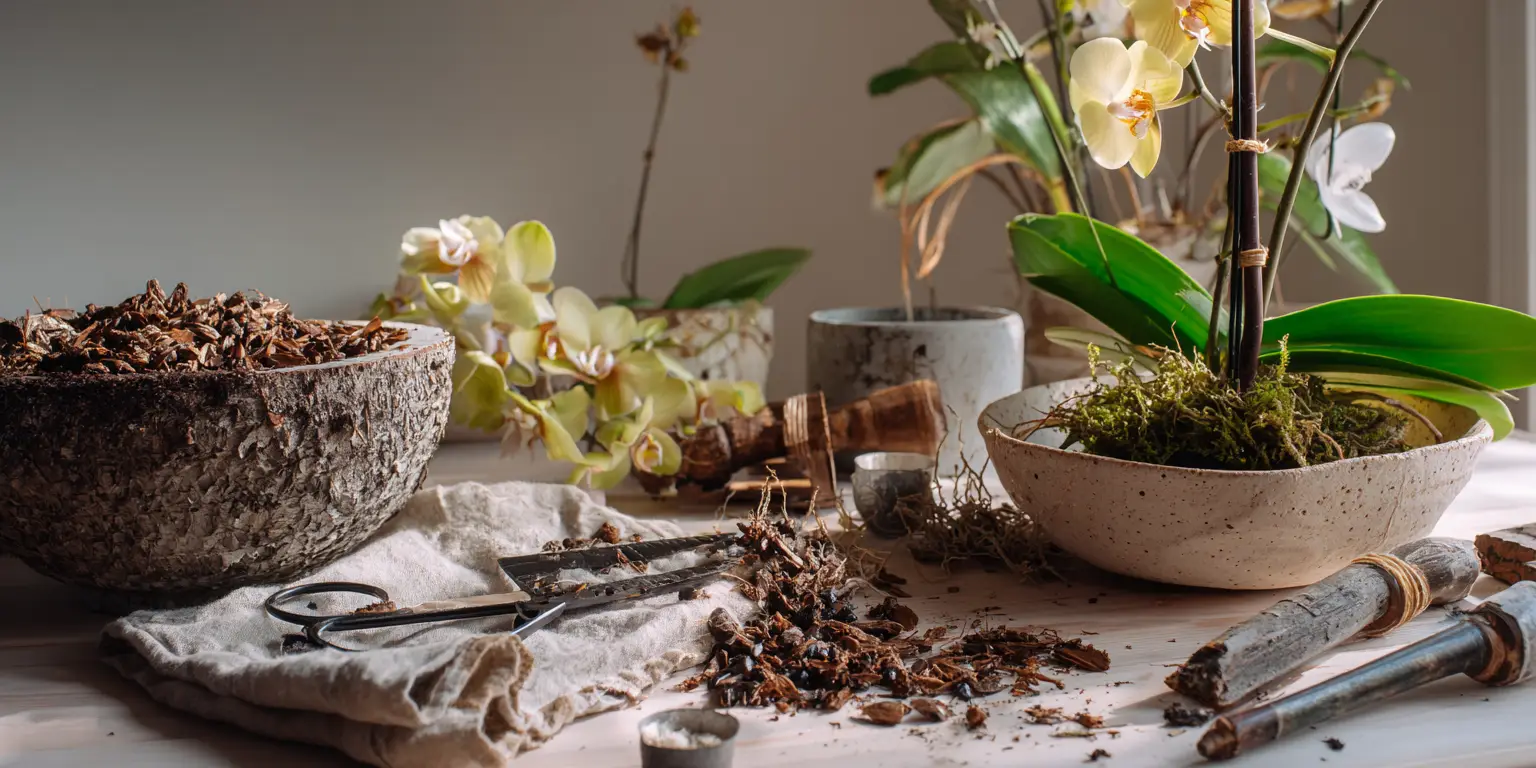
Do not use garden soil or regular potting soil for Phalaenopsis. The roots need large air spaces and quick drainage. Choose a packaged orchid mix based on medium grade fir bark, or a high quality long fiber sphagnum moss, or a blend of bark with perlite and horticultural charcoal. Bark mixes dry faster and suit most homes with average humidity. Sphagnum holds more water and fits very dry indoor air, though it requires careful watering to avoid staying wet for too long. The container must have generous drainage holes on the bottom and ideally on the sides. Clear plastic orchid pots make it easy to monitor roots and moisture but any pot with free drainage works. Aim for a mix that falls through your fingers rather than clumping. You should see big particles and plenty of empty spaces between them. These gaps keep oxygen around the roots, which prevents rot and supports healthy root tips. If your packaged mix is very dusty, rinse it before use to remove fine particles that can clog the spaces. Soak bark in clean water for a few hours to overnight before planting so it will accept moisture evenly. Fill the chosen pot with moistened mix, then pour in one cup of water. Free water should exit the drainage holes in a few seconds and the pot should feel lighter again within a day. If the pot stays heavy and wet, increase the proportion of bark or perlite. For bark based mixes, a slightly acidic pH near 5.5 to 6.5 is a good working range. For sphagnum moss, expect the pH to run mildly acidic as well, which is acceptable for Phalaenopsis. Home pH meters can be imprecise in coarse mixes, so lean on plant performance. If leaves are firm, roots are silvery green to green after watering, and the plant makes steady new leaves, your medium chemistry is in a healthy zone. Phalaenopsis are almost never planted in ground beds. In frost free gardens, advanced growers sometimes mount them outdoors on trees or slabs, but ordinary in ground soil will suffocate the roots. For patio culture, use hanging baskets, slatted orchid baskets, or ventilated pots with a moisture retentive yet airy medium. Indoors, choose a decorative cachepot that hides the plastic grow pot while leaving an open gap for airflow at the rim and base.
Planting Calendar by USDA Zone
Across Zones 3 to 9 and much of Zone 10, Phalaenopsis are indoor plants for all seasons. In Zones 11 to 12, they can live outdoors year round in shade with protection from heavy rain and strong midday sun. In the continental United States, outdoor year round culture without protection is realistic only in the warmest, frost free coastal and tropical locations.
Windows for Repotting and Moving Plants
Repot after a flowering cycle when you see new root tips starting, often late winter to spring. This timing lets roots grow into fresh medium quickly. In cold and temperate zones, you can move plants outside to bright shade after the last frost date when nights consistently stay above 60°F (16°C). Bring plants back indoors well before nights drop below 55°F (13°C), which is often late summer to early fall in many regions. If your summers are hot and humid, outside shade under a porch roof with steady airflow can speed growth. In arid or high elevation regions, outdoor humidity may be too low and sun too intense. Keep plants indoors near an east window or under bright LED grow lights positioned 12 to 18 inches (30 to 46 cm) above the leaves.
Special Caveats by Climate
Hot humid Gulf and Southeast summers can be ideal if you provide shelter from downpours that can drown the medium. Arid Southwest summers require careful shielding from hot, reflected light and extra attention to humidity. Coastal fog belts can deliver good humidity but may keep leaves cool and damp for long hours. Increase airflow to prevent spotting or rot. High elevation areas swing from warm to cool rapidly. Keep to indoor culture where temperatures and light can be managed.
Planting: Depth & Spacing
Most Moth Orchids arrive in clear or ventilated plastic pots. When repotting, set the plant so the base of the leaves sits just above the surface of the mix. Do not bury the crown. Spread living roots over and into the moistened medium, filling around them with bark or sphagnum while keeping the structure loose. Tap the pot to settle particles rather than compressing by hand. After potting, water lightly to settle the medium, then resume normal watering once you see the first new root tips growing. Use a pot only one size larger than the root mass. Oversized pots stay wet too long and slow growth. Phalaenopsis do not divide like clumping orchids, but they sometimes produce small plantlets called keikis on flower spikes. Wait until a keiki has several roots at least 3 inches (8 cm) long before removal. Cut the section of spike that holds the keiki with a sterile tool, pot the plantlet in a small container with fine to medium bark or sphagnum, and keep humidity slightly higher for several weeks while roots establish. If you buy a bare root plant, pre soak the roots for 15 to 30 minutes in room temperature water before potting to soften them and reduce breakage. In frost free gardens or in bright, humid indoor spaces, advanced growers may mount Phalaenopsis on slabs of cork, fern fiber, or rough bark. Place a thin layer of sphagnum under the root zone, secure the plant with soft ties, and mist daily in warm weather, watering thoroughly several times each week. Mounted plants dry very quickly and need consistent attention. Indoors they are best placed near a humidifier. Leave at least 6 to 12 inches (15 to 30 cm) between pots for airflow, especially when grouping plants on a shelf. After repotting or moving between light levels, acclimate gradually. Increase light over one to two weeks and watch leaves. A sudden jump to high light can spot or scorch the foliage. Gentle airflow from an oscillating fan helps plants settle without staying wet for long hours.
Watering & Mulching
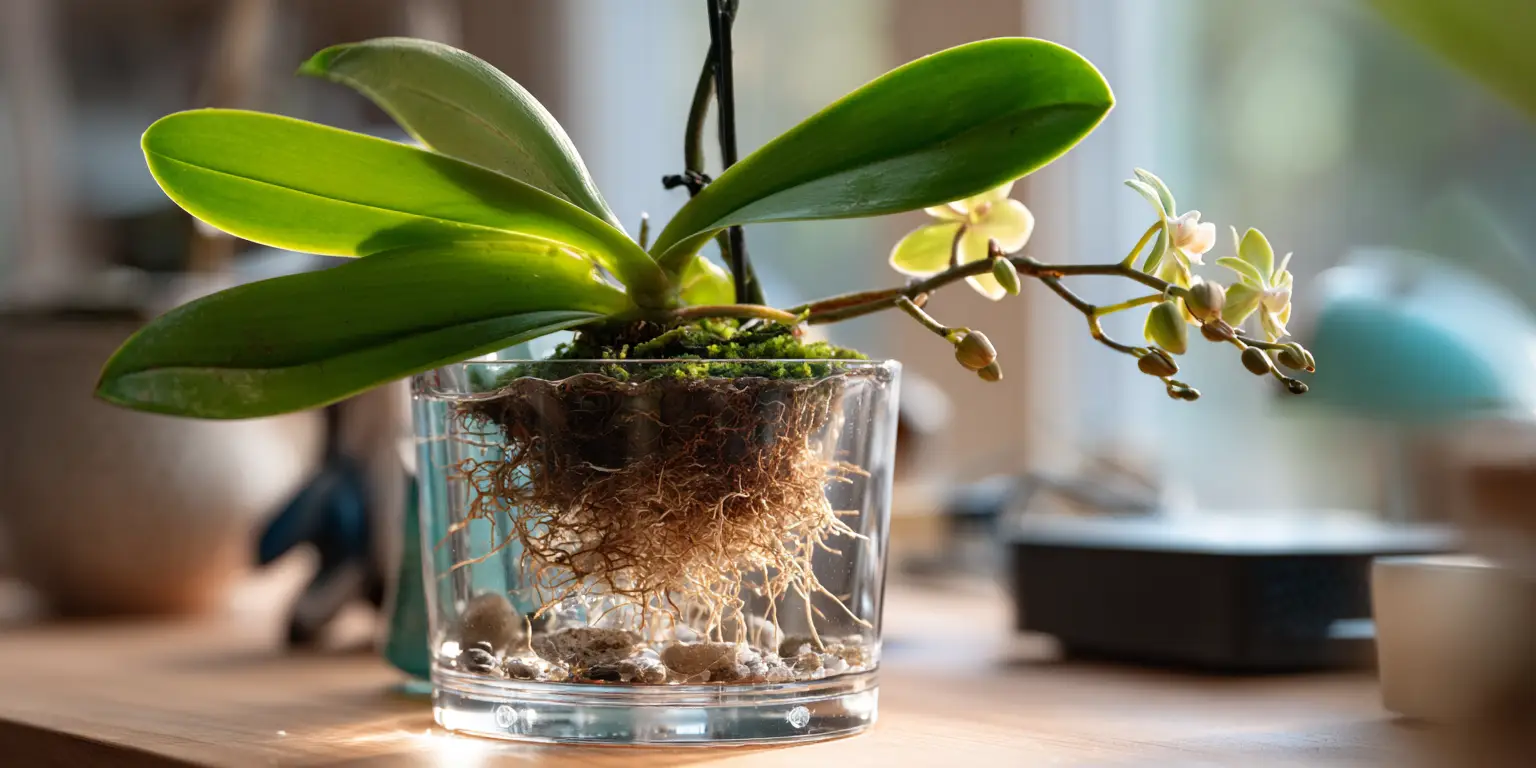
Think soak and drain rather than sip. When the mix is nearly dry, carry the pot to a sink and water thoroughly until you see a strong flow from the drainage holes. Let the pot drain completely before returning it to its cachepot or saucer. In bark, watering is often needed every 4 to 7 days in warm months and every 7 to 10 days in cooler rooms. In sphagnum, intervals may be longer. Judge by weight and by root color through a clear pot. Silvery roots that turn green after watering signal good hydration. Never leave water pooled in the crown where leaves meet. If water splashes there, tip the plant gently to pour it off or wick it away with the corner of a paper towel. Do not let pots stand in water. Empty saucers after watering. Crown rot and root rot are the quickest ways to lose a Phalaenopsis. Aim for ambient humidity near 40 to 60 percent. In dry homes, group plants, use a small room humidifier, or set pots on a tray filled with pebbles and water with the pot base resting above the waterline. During summer heat waves, plants may need water more often. In very warm rooms above 85°F (29°C), water early in the day so leaves dry by night and increase airflow to prevent fungal issues. In cool snaps, allow the medium to dry a little more between waterings. Hard water can leave mineral deposits on pots and roots. If your tap water is very hard or softened with sodium, consider using rainwater, reverse osmosis water, or a blend of distilled and tap water. Flush the pot with clean water once a month to wash out accumulated fertilizer salts. White crust on media or pots and leaf tip burn can signal salt buildup. Traditional mulch is not used with Phalaenopsis. If you want a decorative top dressing, add a very thin layer of sphagnum or a few pieces of large bark. Keep it loose and never bury the crown. Decorative moss should not stay wet for long periods.
Feeding
Phalaenopsis benefit from light, regular feeding during active growth. A balanced orchid fertilizer such as 20 to 20 to 20 works well for many homes. When plants are potted in bark, a formula with a bit more nitrogen, such as 30 to 10 to 10, can support growth because fresh bark ties up some nitrogen as it ages. Use fertilizer at one quarter to one half of the label rate. Feed every two to four weeks during spring and summer, and monthly or less in fall and winter when growth slows. Always water with plain water first if the medium is dry, then apply fertilizer solution so you do not shock the roots. Slow release pellets can be used sparingly on the surface of bark mixes, but monitor salts and be ready to flush monthly. Organic options like fish or seaweed emulsions are gentle but can cause odor indoors. If you prefer organic inputs, use very light doses and flush often. Regardless of product, consistency at low strength beats heavy feeding. You are not feeding soil. You are dosing a living root system in a coarse medium. The medium breaks down over time and changes how it holds water and nutrients. Repot every one to two years to refresh structure and reduce the risk of sour, compacted media. If new leaves emerge smaller than previous leaves and roots are weak, reduce salts with a thorough flush and check your feeding schedule rather than increasing concentration.
Pruning & Support
Flower spikes can last for months, then fade. You have two choices. If the plant is strong and the spike is still green, you may cut the spike just above a node two to three nodes below the lowest spent bloom. This can produce a side branch and a second flush of flowers. If the plant looks tired or the spike is browning, cut the spike off near the base to let the plant rest and rebuild. New spikes form from the base when the plant is ready, usually after a period with nights close to 60 to 65°F (16 to 18°C). Many Phalaenopsis produce tall, arching spikes that benefit from a slender stake. Insert the stake at the edge of the pot to avoid piercing roots. Use soft clips or ties to support the spike as it grows. As buds form, rotate the plant slightly each week so the flowers face the direction you prefer in display.
Tool Hygiene
Viruses and bacterial diseases can spread on blades. Before making cuts, clean pruners with 70 percent isopropyl alcohol or a fresh 10 percent bleach solution, and let them dry. If you cut a diseased area, stop and sterilize again. Remove dead leaves or spent sheaths that trap moisture around the crown. Work in a clean area and avoid reusing old media. Watch for mealybugs, scale, and spider mites. Inspect leaf undersides, crowns, and the base of spikes. Early action is best. Wipe pests with a cotton swab dipped in alcohol and improve airflow. For recurring infestations, isolate the plant and use an appropriate houseplant control labeled safe for orchids, following the label exactly. Yellowing leaves on older growth are normal as the plant renews itself. Mushy roots, a foul smell, or blackened crown tissue signal rot. Cut away decayed tissue and correct watering and airflow.
Overwintering
In fall and winter many homes are drier and cooler. Keep nights near 60 to 65°F (16 to 18°C) and days near 68 to 75°F (20 to 24°C). Avoid cold window glass and drafts from doors. If your plant spends summer outdoors, bring it in before nights dip below 55°F (13°C). Place it where light is strongest, often a bright east window, and increase humidity with a tray or humidifier. Water less often than summer and allow the medium to approach dryness between waterings. Phalaenopsis often set spikes when nights are a bit cooler than days for several weeks. A gentle day to night difference near 10°F helps. Do not chill the plant. Just aim for a comfortable indoor pattern with slightly cooler nights and bright morning light. Once you see a new spike, keep light bright and avoid moving the plant. Changes in position can cause buds to blast and drop. In Zones 11 to 12, protect plants during unusual cold snaps and heavy winter rain. A covered porch or lath structure is ideal. If temperatures threaten to fall near 50°F (10°C), move plants to a warmer location. Keep leaves dry at night in cool humid weather to prevent spotting. There is no need for winter mulch as used in garden beds. Maintain airflow and remove any decaying material from around crowns.
Growing Environments
Choose a pot that fits the root system snugly. A typical flowering plant is happiest in a 4 to 6 inch (10 to 15 cm) pot. Larger display specimens may move to 6 to 8 inches (15 to 20 cm) if the root system truly fills the space. More volume than the roots can use invites soggy pockets and rot. Slotted orchid pots, baskets, and net pots encourage quick drainage and abundant air. Use medium grade bark for most homes. Add a little perlite for faster drying in humid rooms or a little sphagnum for slower drying in very arid rooms. Replace media every one to two years, sooner if it collapses or smells sour. When in doubt, lift the plant out and check the core of the mix. If it is breaking down into fine particles, repot. East windows give bright morning light without harsh midday rays. In south or west windows, filter with a sheer curtain. If you use grow lights, keep LEDs 12 to 18 inches (30 to 46 cm) above leaves for 12 to 14 hours daily. Keep plants out of hot reflected light from walls and out of cold drafts. A small fan on low to move the air gently helps leaves dry after watering. In bathrooms or kitchens with bright windows, ambient humidity may already be perfect. Avoid decorative pots with no drainage holes. If you love the look, use a cachepot and keep the growing pot free draining. Elevate the inner pot on spacers so it cannot sit in runoff. Empty the cachepot after each watering. Watering from the top is simplest and safest. If you soak pots in a basin, use fresh water for each plant to limit disease spread and disinfect the basin before reuse.
Companion Planting & Design
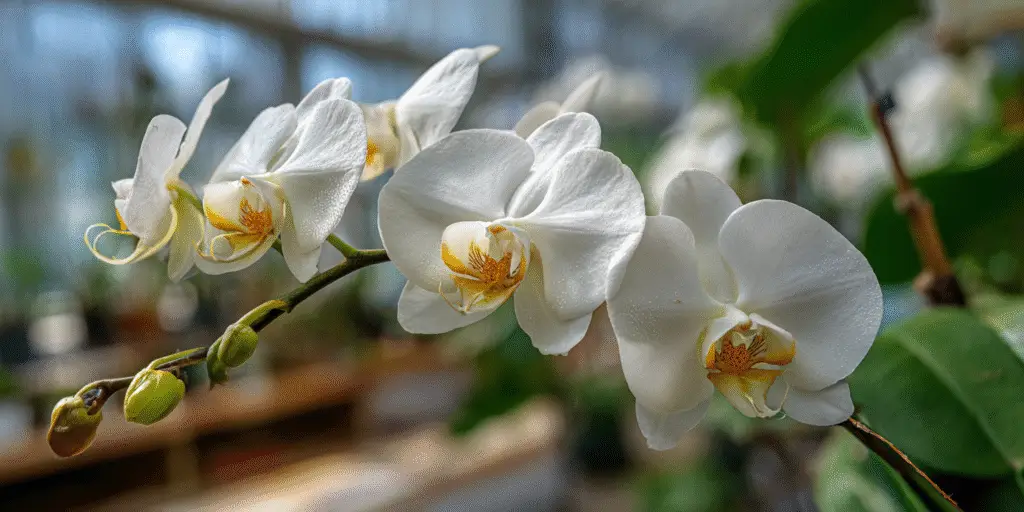
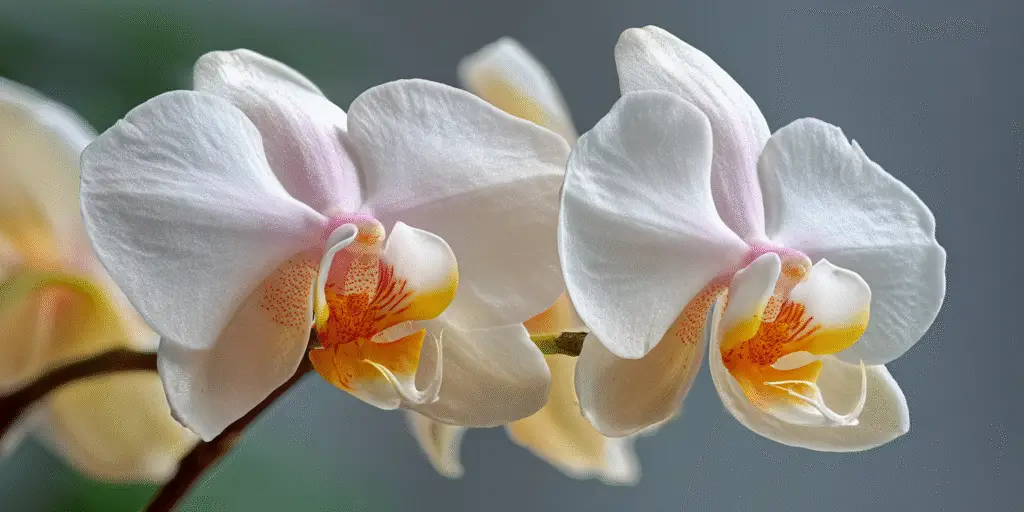
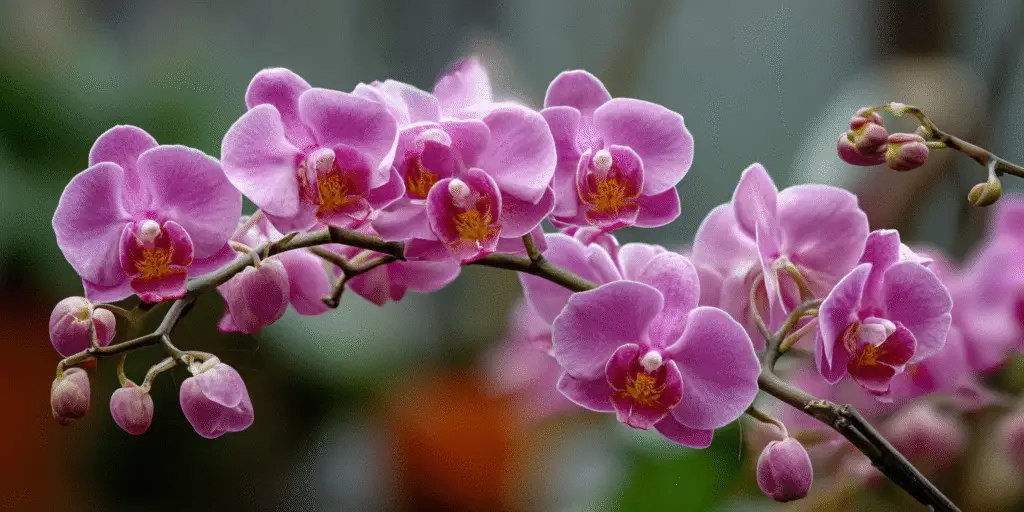
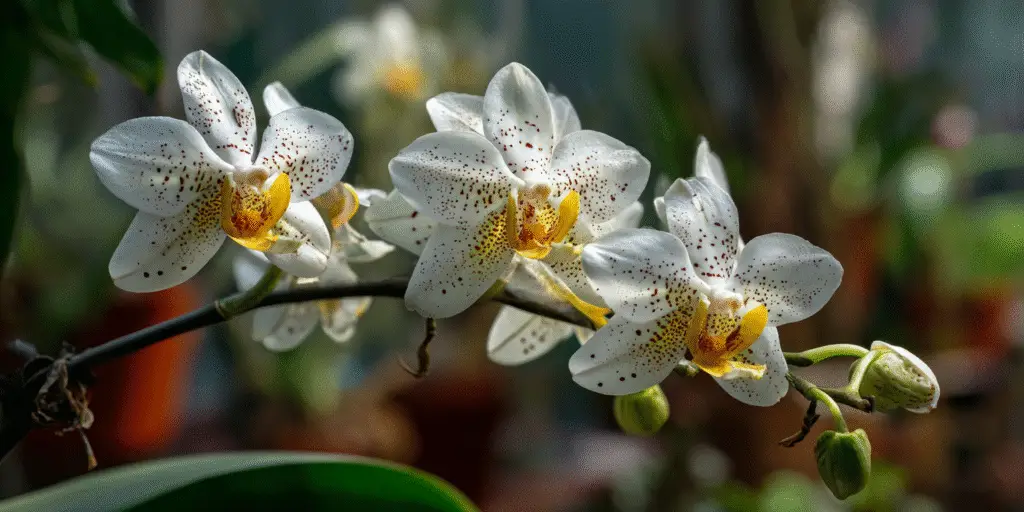
Indoors, think in terms of companions that like the same environment instead of true garden companions. Phalaenopsis pair well with ferns, peperomias, and many bromeliads under bright filtered light. Grouping several plants raises local humidity a few points, which orchids appreciate. Keep 6 to 12 inches (15 to 30 cm) between plants for airflow. Use risers to create height layers and to keep leaves from touching wet saucers. Moth orchids bloom in white, pink, purple, yellow, and many patterned blends. Use them as anchors in a display with other color themed plants. A white Phalaenopsis looks elegant beside plants from our guides on white flowers and purple flowers. Pink varieties pair beautifully with selections from pink flowers. If you are styling a seasonal table or entryway, mix flowering orchids with cut stems from classic tulips or other choices in types of flowers for a complete look. For event styling ideas and palettes, browse your wedding flowers guide for combinations that mirror bouquet colors indoors. Where year round outdoor culture is possible, mount or basket grow Phalaenopsis in bright shade beneath tree canopies. Companions can include bromeliads, bird nest ferns, and other epiphytes that share airy roots and steady moisture without waterlogged media. Avoid crowded plantings that trap moisture around crowns. Even outdoors, leave space for air to move. Indoors, pollination is not a goal, and flowers last longest when left unpollinated. Outdoors in the tropics, insects may visit blooms, but the main design goal is visual display. Keep flowers clean and dry for longest life. As plants fade, remove spent spikes to keep displays tidy.
References
- American Orchid Society. Phalaenopsis Culture Sheet.
- NC State Extension Gardener Plant Toolbox. Phalaenopsis spp. and hybrids. North Carolina State University.
- UF IFAS Gardening Solutions. Orchids for the Home. University of Florida.
Written by: Your Flowers Guide editorial team
We are a small independent group of flower lovers who research and review each guide using trusted horticultural and educational sources. Learn more about us