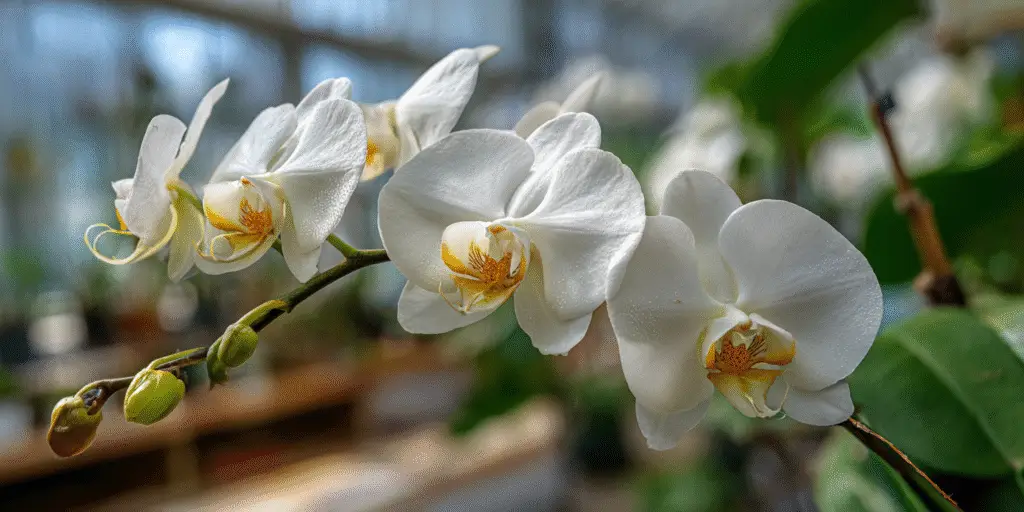
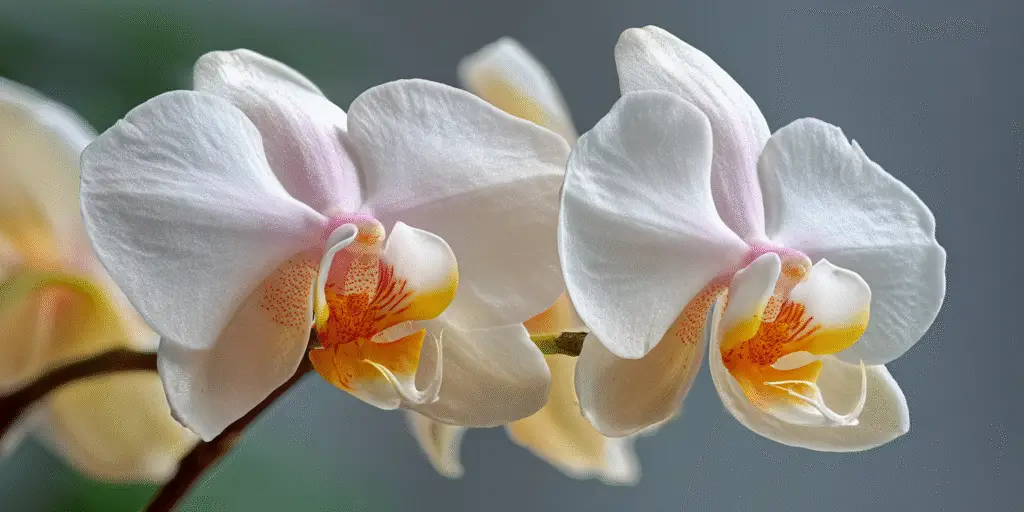
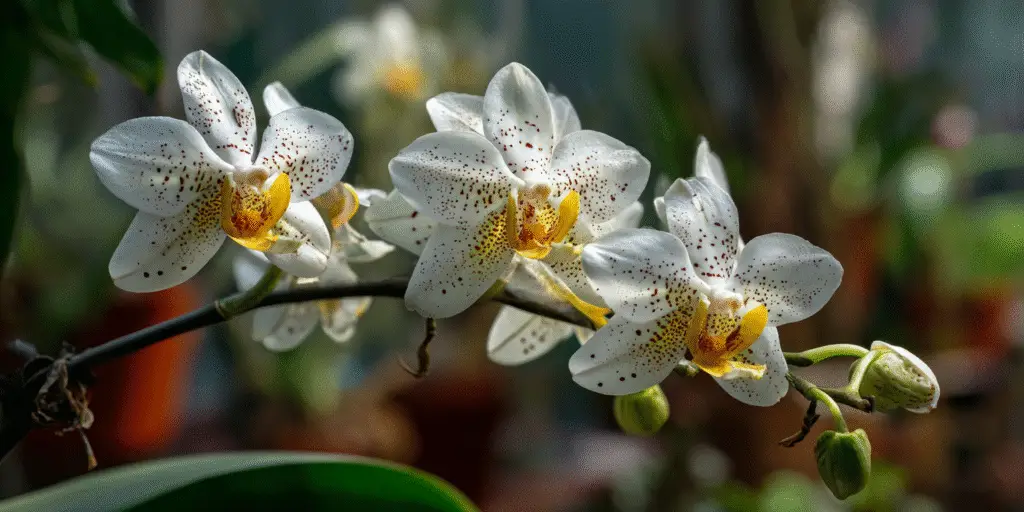
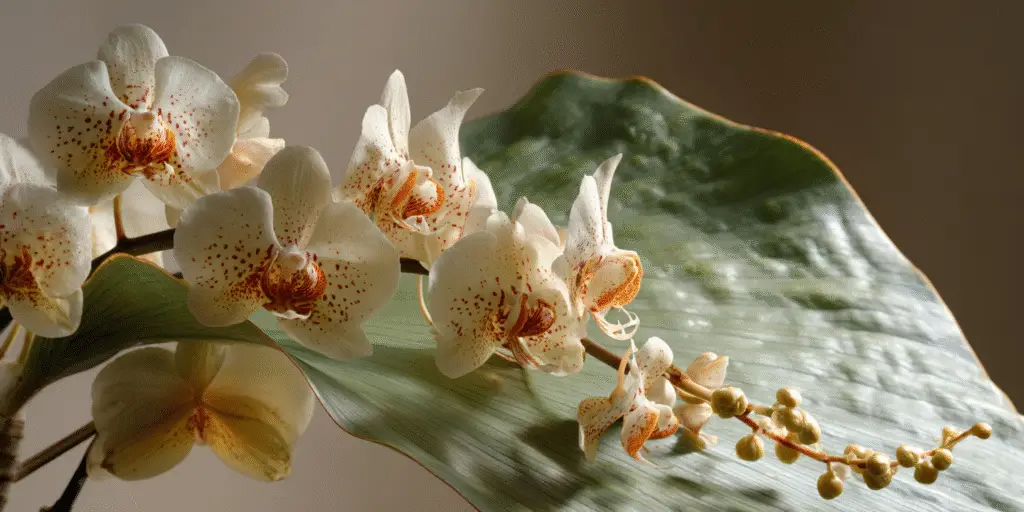
Phalaenopsis amabilis is a white‑flowered moth orchid species widely used in breeding. It is native to maritime Southeast Asia and northeastern Australia and grows epiphytically in warm forests. Broad leaves give rise to long, arching racemes with many flat, long‑lasting flowers. Blooms are white with a yellow‑marked lip and a light scent. In North America it performs best as a warm indoor houseplant in bright, indirect light and a bark‑based mix.
At‑a‑glance
Group/Class: Species (Moth Orchid)
Height × spread: 10 to 18 in × 12 to 18 in (25 to 45 cm × 30 to 45 cm); flower spikes to 40 in (100 cm)
Bloom window: late fall to early spring
Color & flower form: white with yellow‑marked lip; flat, rounded petals on arching racemes
Fragrance: 1 trace
USDA hardiness: not hardy outdoors in most areas; greenhouse only in frost‑free zones 10 to 12; grow indoors elsewhere
Breeder / Year / Origin: unknown, wild species, Malesia to NE Australia
Awards/registration: RHS Award of Garden Merit
Cut‑flower notes: arching stems with good holding strength; typical vase life about 8 to 14 days depending on season and source
Pet safety: safe
How it differs
Larger white flowers and taller, more heavily branched spikes than a typical supermarket hybrid.
Seasonal bloom tendency from late fall to spring instead of truly year‑round.
Light, clean scent rather than none.
Leaves broader and longer than average Phalaenopsis.
Strengths
Long‑lasting flowers on branched spikes.
Handles bright household light when shaded from direct sun.
Reliable parent for vigor and flower quality.
Care in one minute
Provide bright, indirect light; no harsh midday sun.
Use a bark‑based orchid mix with strong drainage.
Water when mix is nearly dry; soak and drain; keep crown dry.
Maintain 65 to 85 °F (18 to 29 °C) with 40 to 60 percent humidity and airflow.
Feed lightly during growth; flush fertilizer salts monthly.
Stake tall spikes early; keep green spikes if side branches are desired.
Watch‑outs
Bud drop can follow abrupt temperature or humidity swings.
Tall spikes need early staking to prevent kinking.
A long‑known Southeast Asian species that underpins many large white hybrid moth orchids. Verified native range covers Malesia to northeastern Australia.
Written by: Your Flowers Guide editorial team We are a small independent group of flower lovers who research and review each guide using trusted horticultural and educational sources. Learn more about us