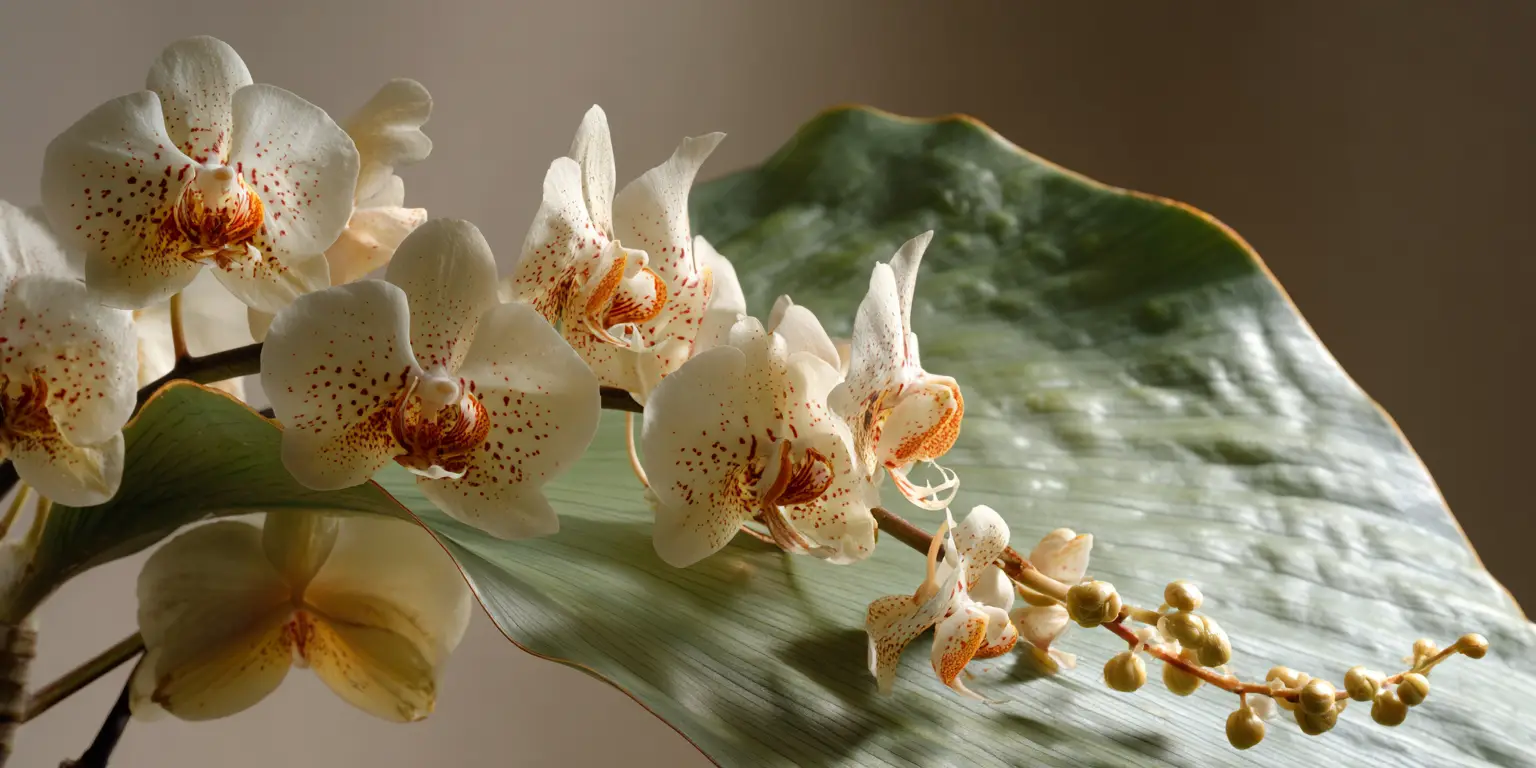
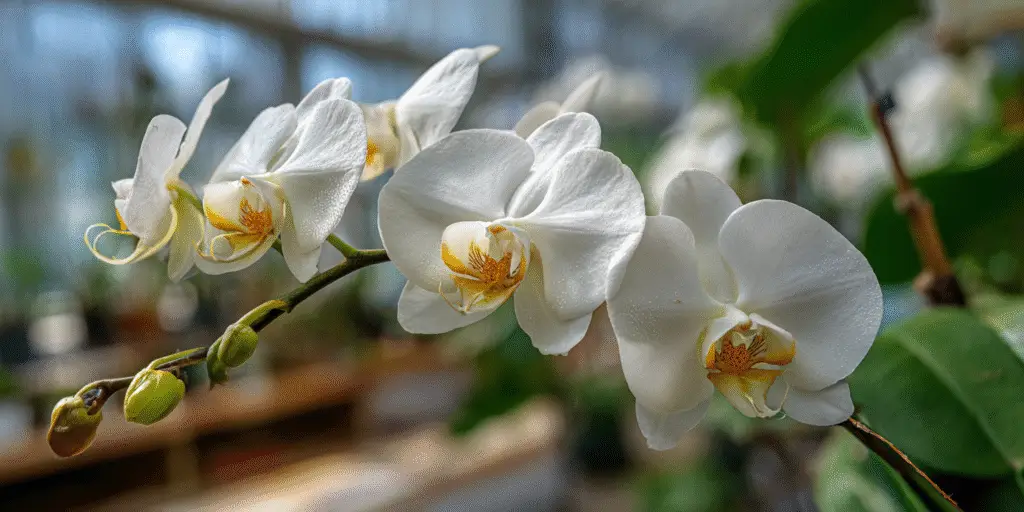
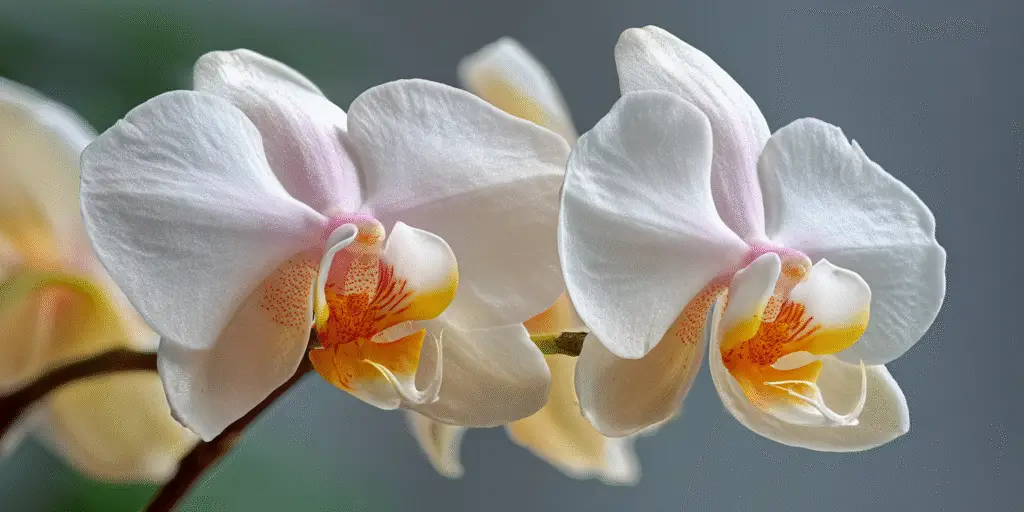
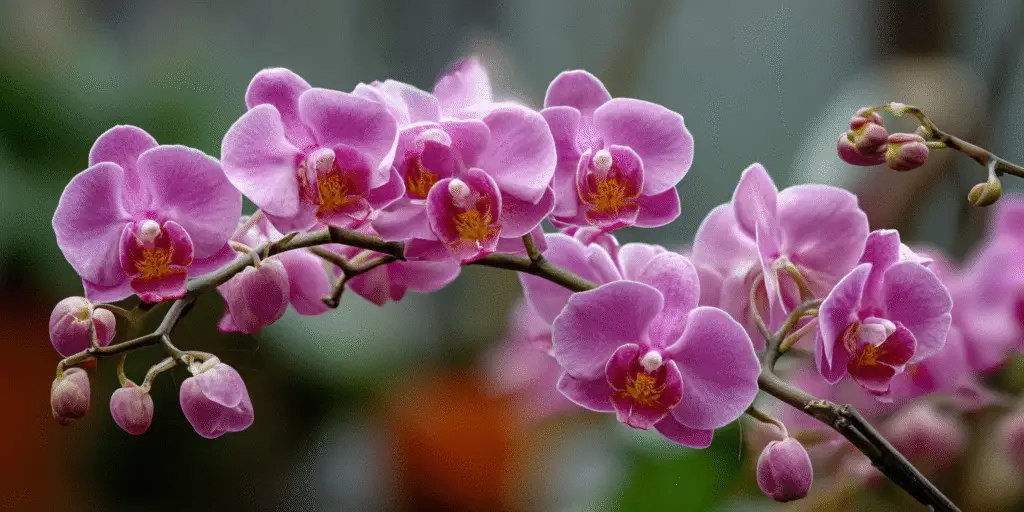
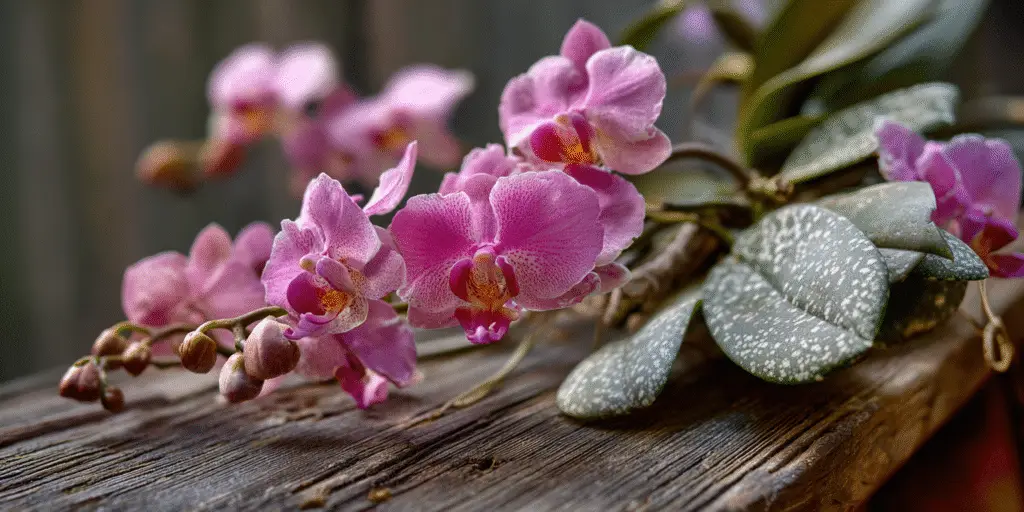
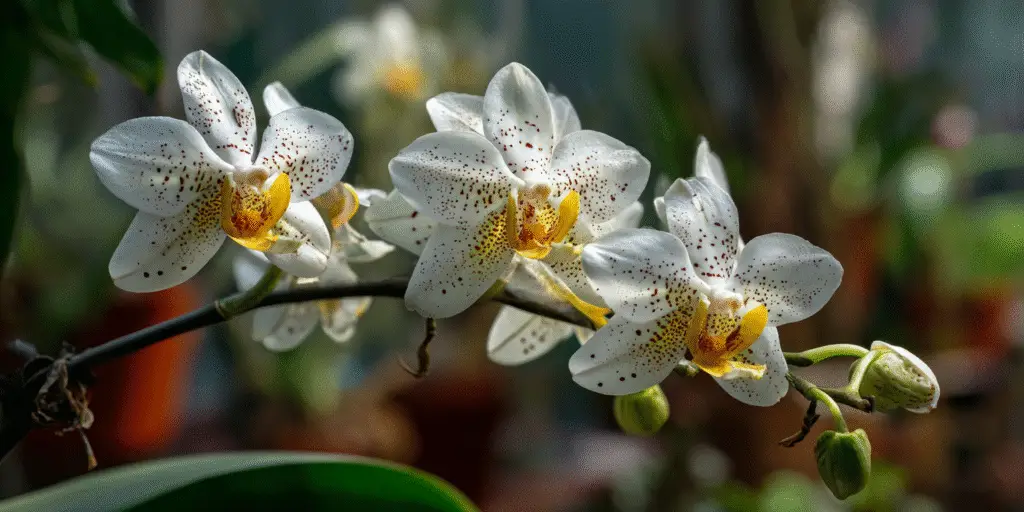
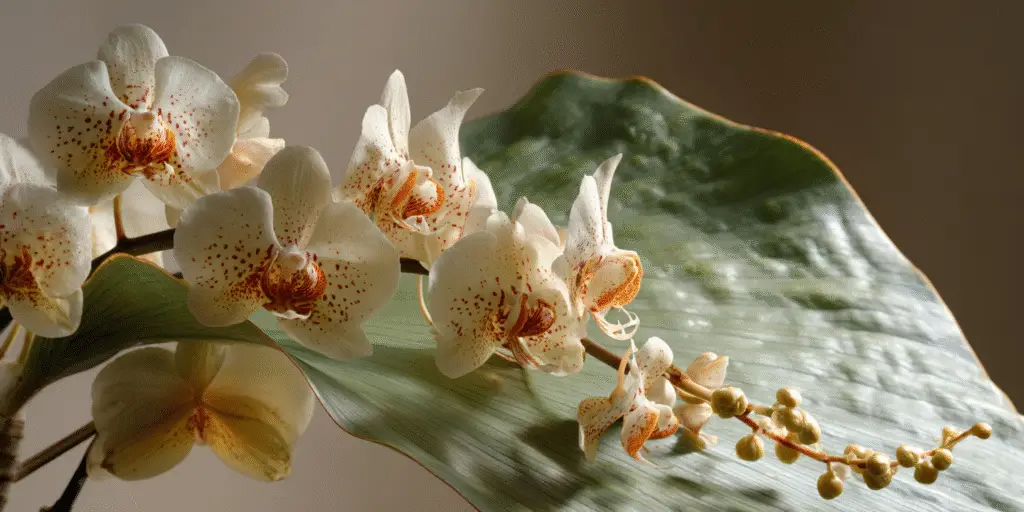
Phalaenopsis gigantea is the largest moth orchid species and is native to Borneo. It bears massive pendent leaves and many small, waxy flowers on hanging branched spikes. Flowers are cream to yellow with red‑brown spotting and have a sweet, noticeable scent. Blooming is most common in late summer to early fall under warm conditions. Plants are slow to mature and resent root disturbance, so handle repotting carefully. Grow indoors or in a warm greenhouse with filtered light and steady humidity.
At‑a‑glance
Group/Class: Species (Moth Orchid)
Height × spread: 12 to 18 in × 24 to 36 in (30 to 45 cm × 60 to 90 cm); pendent inflorescences 6 to 16 in (15 to 40 cm)
Bloom window: late summer to fall
Color & flower form: cream to yellow with red‑brown spots; many small, waxy, starry flowers on pendent branches
Fragrance: 2 noticeable
USDA hardiness: not hardy outdoors in most areas; greenhouse only in frost‑free zones 10 to 12; grow indoors elsewhere
Breeder / Year / Origin: unknown, wild species, Borneo
Cut‑flower notes: pendent racemes; typical vase life about 8 to 14 days depending on season and source
Pet safety: safe
How it differs
Much larger leaves than typical moth orchids.
Pendent, highly branched inflorescences with many small spotted flowers.
Noticeable fragrance instead of little to none.
Very slow to reach flowering size compared with common hybrids.
Strengths
Show‑stopping foliage with a unique habit.
Large flower count per spike when mature.
Performs in warm, bright indoor conditions with filtered light.
Care in one minute
Give bright, indirect light; often a touch brighter than standard phalaenopsis.
Use a very open bark mix; repot only when needed and after flowering.
Water when the mix is nearly dry; soak and drain; keep water out of leaf axils.
Maintain 70 to 85 °F (21 to 29 °C) with 40 to 60 percent humidity and airflow.
Fertilize lightly during growth; flush salts monthly.
Provide room for large leaves and pendent spikes; stake or hang for display.
Watch‑outs
Sensitive to overpotting and root disturbance at repotting.
Requires space for large leaves and hanging spikes.
Avoid water sitting in the leaf axils to prevent rot.
Written by: Your Flowers Guide editorial team We are a small independent group of flower lovers who research and review each guide using trusted horticultural and educational sources. Learn more about us