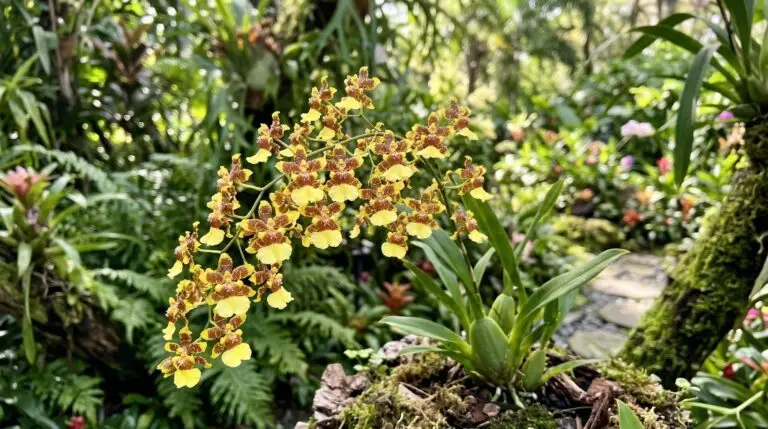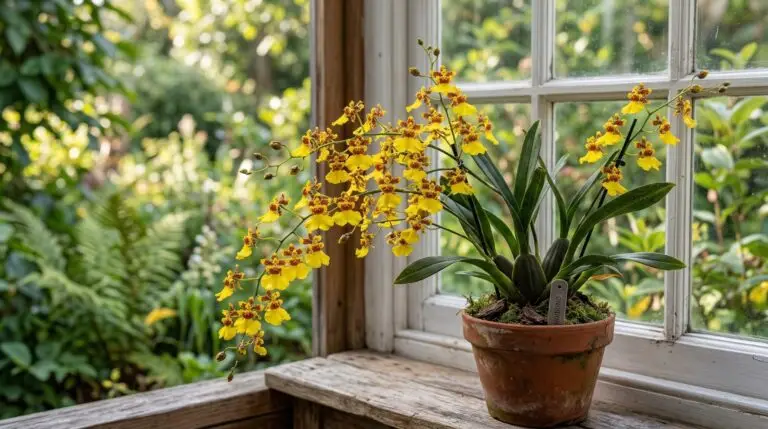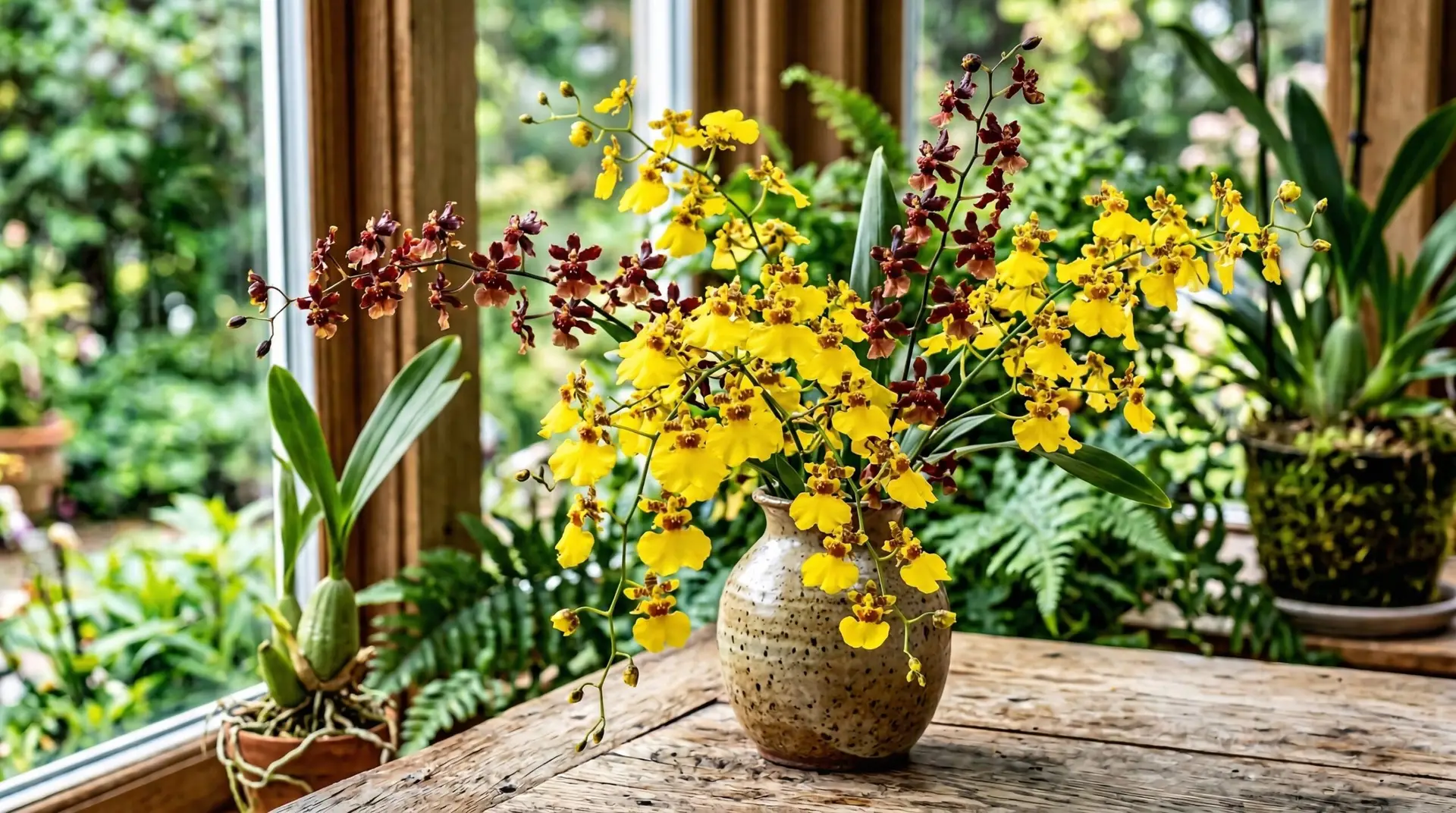
I still remember the first time I saw a Tolumnia orchid in bloom at a local society meeting. The plant itself was barely three inches tall, a tiny fan of stiff leaves perched on a piece of rough cork bark. Above that modest foliage hovered a wiry spike carrying a dozen brilliantly colored flowers that looked like tiny dancing figures in shades of rust and gold. I was immediately drawn to the contrast between the tough, succulent-like leaves and the delicate spray of blooms. For years, these were known as equitant oncidiums because of the way their leaves overlap at the base, and they share that classic dancing-lady flower shape with their larger relatives. Getting a plant that produces such a disproportionate amount of floral display for its size is an irresistible draw for anyone with limited growing space.
The miniature orchid world is full of fascinating species, but the Tolumnia orchid holds a special place for windowsill growers. You can easily fit ten of these plants in the footprint required by a single moth orchid, making them highly collectible for people in apartments or small homes. They do not take up much room, yet they offer an incredible diversity of patterns, spots, and solid colors ranging from pure white to deep maroon. I love watching the roots crawl over a mount or snake through a tiny clay pot filled with large charcoal chunks. The physical structure of the plant is satisfying in its own right, with those rigid, triangular leaves arranged in perfect little fans that look like miniature agave plants. When they are happy, they multiply quickly, sending out new fans along short rhizomes until you have a dense cluster of growth.
Growing on mounts and managing water
Getting a Tolumnia to thrive requires understanding how they grow in their native Caribbean habitats. They cling to twigs and branches where they are drenched by daily rain showers and then quickly dried by tropical breezes. Replicating this cycle is the secret to keeping them alive, which is why I prefer growing them mounted on cork bark or cedar plaques. When you water a mounted Tolumnia, you get to watch the silvery roots turn bright green instantly as they soak up moisture. The challenge is that they demand frequent watering, sometimes every day during the heat of summer, but they absolutely will rot if their roots stay soggy. I have lost a few plants over the years by trying to grow them in moisture-retaining moss out of convenience. You have to accept their need for rapid wet-to-dry cycles and find a watering rhythm that fits your daily routine.
There is a specific kind of satisfaction that comes from mastering their watering needs and watching the first spike emerge. The flower spikes appear from between the overlapping leaves and seem to grow endlessly, often reaching a foot or more in length before the buds finally swell. A single small fan can produce a branching spray of fifteen or twenty flowers, turning the tiny plant into a hovering cloud of color. These blooms often last for several weeks, and some varieties will even produce a secondary branch of flowers from the same spike if you leave it intact after the first round drops. I always check my plants closely in the early spring, looking for that dark green, thread-like spike pushing its way up from the center of the fan. Bringing a blooming mounted Tolumnia into the living room to hang in a bright window is one of the highlights of my growing year.
Standout varieties and hybrids
The breeding of these miniature orchids has expanded over the last few decades, resulting in some truly distinctive hybrids. The Jairak Firm series is one of my absolute favorites because the plants are rigorous growers with exceptionally bold flower patterns. You will often see them with deeply saturated burgundy or purple spots over a white or yellow background, creating a sharp contrast that catches the eye from across the room. They tend to be a bit more forgiving of occasional missed waterings than the pure species, making them a great starting point for new growers. I have a Jairak Firm ‘Super Brown’ that reliably puts out three spikes every spring, and the flowers have a heavy, almost waxy texture that helps them last longer in dry household air. The only drawback is that the fans can get slightly larger and more sprawling than older hybrids, but the floral display is entirely worth the extra inch of space.
For a classic look, Tolumnia Golden Sunset remains a staple in many collections, including my own. It has been used in countless breeding lines because it passes on a beautiful, full flower shape and a warm, glowing yellow base color heavily speckled with red. I also keep a few true species like Tolumnia sylvestris, which has longer, thinner leaves and delicate pink and white blooms on very long, wiry stems. The species plants can be more demanding, often requiring higher humidity to prevent their thin roots from desiccating in the winter heating. I have had moments of frustration watching a perfectly healthy species plant drop its buds because the air in my house was simply too dry during a cold snap. Still, when you get the environment right and those tiny, elegant species flowers open, the effort feels entirely justified by their delicate beauty.
The daily rhythm of miniature orchids
Living with a collection of these equitant oncidiums changes the way you interact with your plants. Instead of a weekly watering chore, caring for them becomes a brief daily ritual of misting roots and checking for new growth. I find a lot of peace in taking five minutes every morning to inspect the little fans, looking for the tiny green root tips that indicate the plant is actively growing and happy. The tactile experience of handling the stiff, textured leaves and the rough cork mounts connects you to the physical reality of the plant in a way that lifting a plastic pot does not. You learn to read their subtle signals, noticing when the leaves look slightly wrinkled from thirst or plump and rigid after a good soaking. It is a highly interactive way of growing orchids that rewards close attention and gentle, consistent care over time.
Even with the occasional heartbreak of a rotted root system or a blasted bud, I cannot imagine my growing space without them. The sheer variety of colors and forms available in such a compact package keeps the collector urge alive and well. Every time I visit an orchid show, I find myself hovering around the miniature display, looking for a new color combination to squeeze onto an already crowded windowsill. They ask for a specific kind of attention, demanding that you meet them on their terms with frequent water and high air circulation. When you provide that environment, they respond with a generosity of bloom that defies their tiny stature. That constant cycle of careful observation and explosive, colorful reward is exactly what makes growing these miniature oncidiums a lifelong pursuit.