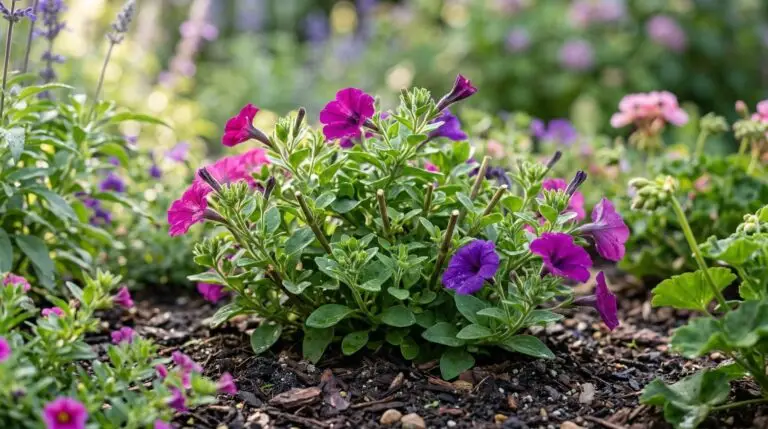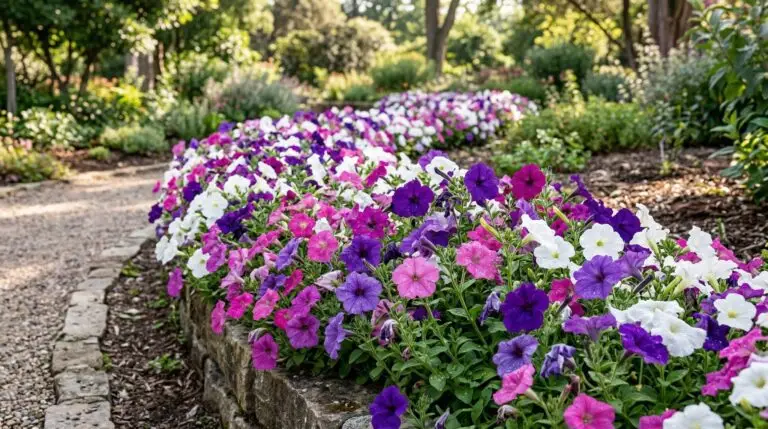
Every spring, garden centers fill their benches with blooming petunias, making it easy to forget that these robust plants begin life as something resembling a speck of dust. When you understand the unique biology of these microscopic seeds, the demanding process of growing petunia from seed suddenly makes perfect sense. We are going to look at exactly how a seed with almost no stored energy manages to grow into a sprawling summer plant. The secret lies in understanding light requirements, managing surface moisture, and having the patience to wait out a very slow initial growth phase. By the time you finish reading, you will know exactly why these seeds behave the way they do and how to give them the environment they need to thrive.
The reality of tiny seeds and light requirements
To understand petunia seed starting, you first have to look at the physical size of the seed itself. Unlike the large, easy to handle seeds of cosmos that hold plenty of stored energy, a petunia seed is practically microscopic. Because the seed is so incredibly small, it contains almost no carbohydrate reserves to fuel a long journey to the surface. This biological reality dictates the most important rule of growing petunias: the seeds must be exposed to light to germinate. If a petunia seed is buried even a fraction of an inch under the soil, it will sprout, run out of energy in the dark, and die before ever breaking the surface. The seed relies on an immediate connection with light so it can begin photosynthesizing the moment it emerges from its seed coat.
This brings us to the technique of surface sowing, which goes against the common gardening instinct to bury seeds in the dirt. When you sow petunias, you simply press the seeds gently into the surface of a pre-moistened potting mix to ensure good soil contact. Think of the soil surface like a damp sponge that the seed needs to hug tightly without sinking inside. You want the seed to draw moisture up from the soil while remaining completely exposed to the light above. This might seem contradictory to everything you have learned about planting seeds, but remembering the lack of stored energy makes the reasoning clear. The light acts as a trigger, telling the seed that it is safe to wake up because the sun is right there waiting to feed it.
Understanding pelleted seed advantages
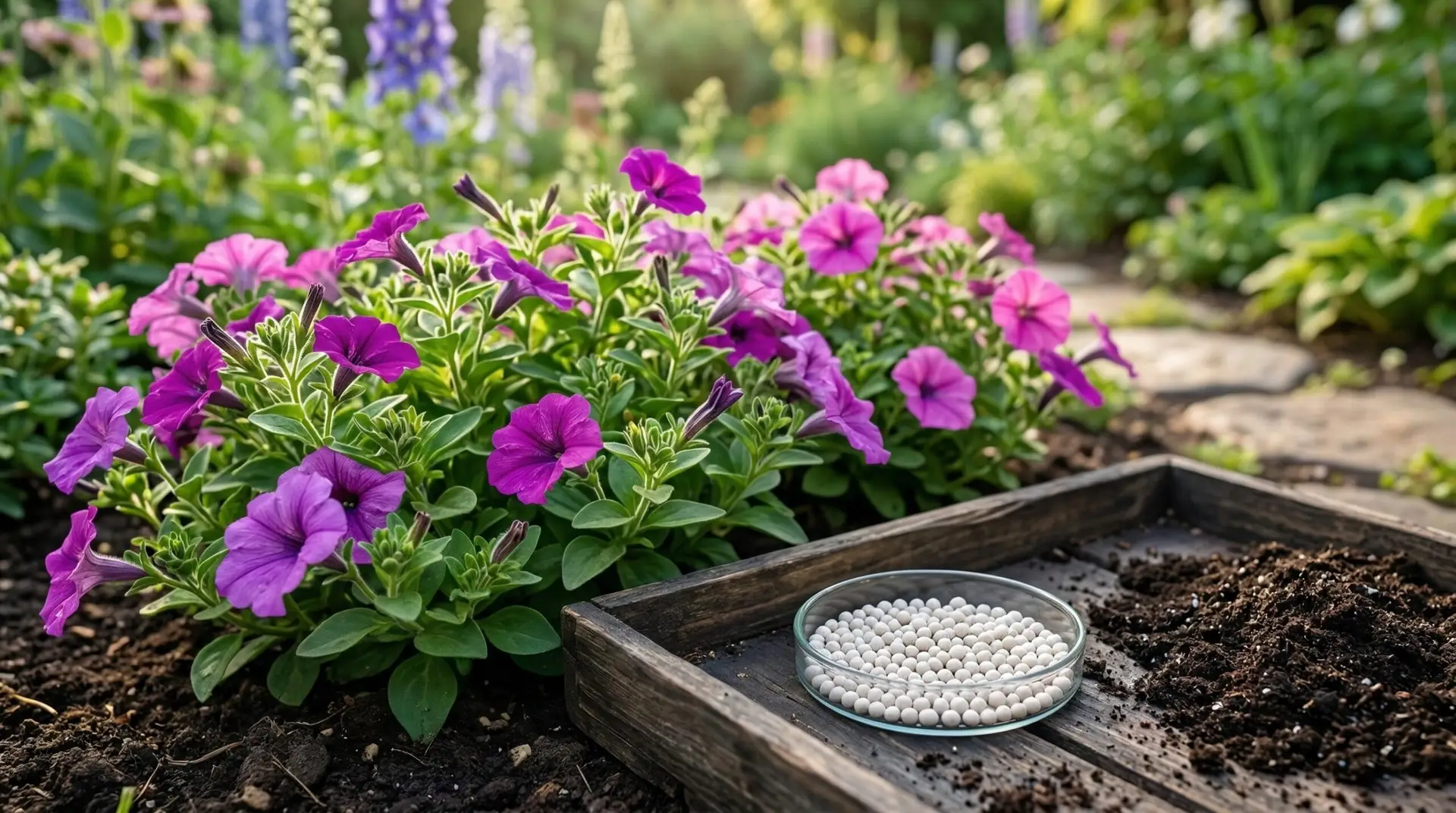
Because raw petunia seeds are so difficult to see and handle, seed companies often coat them in a layer of clay or starch to create what is known as pelleted seed. This process turns a speck of dust into a small, round bead that you can actually pick up with your fingers and place exactly where you want it. The pelleted seed advantage becomes obvious the moment you try to space your plants evenly in a seed tray. Instead of accidentally dropping fifty seeds in one corner of a pot, you can drop exactly one pellet into each individual cell. This saves a tremendous amount of time later because you will not have to thin out crowded, tangled seedlings that are competing for the same tiny pocket of soil.
While pelleted seeds solve the handling problem, they introduce a new requirement regarding moisture control. The clay coating must absorb enough water to completely dissolve, or the seed trapped inside will never be able to break free. If the pellet gets wet and then dries out before the seed germinates, the clay can harden into a tiny cement shell. To prevent this, you must maintain high humidity around the seeds by covering your trays with a clear plastic dome or wrap. Once the seeds sprout and you see tiny green leaves emerging from the dissolved pellets, you can gradually remove the cover to let air circulate. Getting this moisture balance right takes a season or two to get a feel for, and that is completely normal for anyone learning to start tiny seeds.
The timeline and patience required
The other major factor in growing petunia from seed is the exceptionally long timeline required before the plants are ready for the garden. You need to start these seeds indoors a full ten to twelve weeks before your last expected spring frost. For the first month, the seedlings will look like tiny green specks barely hovering above the soil line. They spend this initial period putting all their energy into developing a microscopic root system rather than growing leaves. It is very common for beginners to think they have done something wrong because the plants seem frozen in time. You just have to trust the process and keep providing strong light and consistent moisture while the roots slowly establish themselves.
This intense space and time commitment explains why most casual gardeners simply buy greenhouse transplants in the spring. Keeping seed trays under artificial lights for three solid months takes up valuable indoor real estate that could be used for faster crops. Much like the slow-growing impatiens, petunias require you to act as a greenhouse manager for a quarter of the year. You have to monitor the soil moisture daily, adjust the height of the grow lights as the plants finally begin to stretch, and eventually fertilize the tiny seedlings. Understanding this long lead time helps you make an informed decision about whether you want to invest the indoor space or let a local nursery do the early work for you.
The challenge of saving petunia seeds
As your garden petunias bloom profusely through the summer, you might be tempted to collect the tiny seeds they produce to plant the following year. While you certainly can save these seeds, the plants that grow from them will rarely look like the parent plant you admired. Most modern petunias are complex hybrids bred from multiple different parent lines to produce specific colors, patterns, and growth habits. When these hybrid plants produce seed, the genetics of the offspring scatter, often reverting to the traits of their wild ancestors. You might save seeds from a compact, ruffled purple petunia and end up growing a sprawling, small-flowered white plant the next spring. If you want to guarantee a specific color or growth habit, purchasing fresh hybrid seed each year is the only reliable method.
Mastering the art of starting petunias from seed fundamentally changes how you understand plant growth and development. You are taking a microscopic organism with zero energy reserves and providing the exact balance of light and moisture it needs to build itself from scratch. The entire process requires you to slow down, observe the subtle changes in the soil surface, and wait patiently while the invisible roots do their work. Once you understand that the surface sowing, the pelleted coatings, and the long indoor timeline are all biological necessities rather than arbitrary rules, the process becomes deeply logical. Your success ultimately comes down to creating a stable, bright, and humid environment that allows these vulnerable seeds to safely transition into self-sufficient plants.