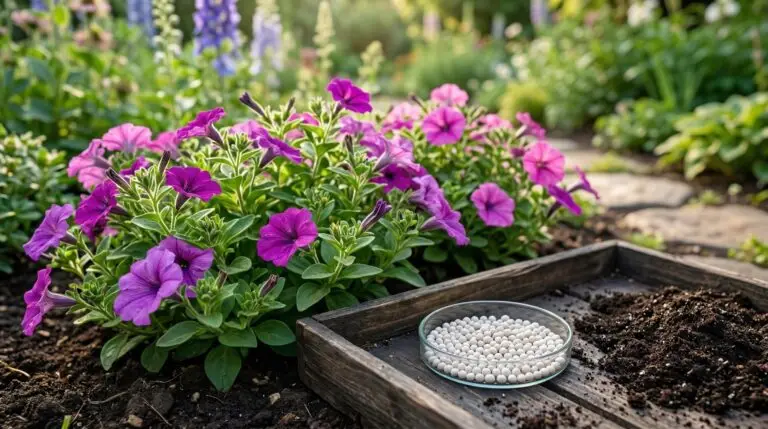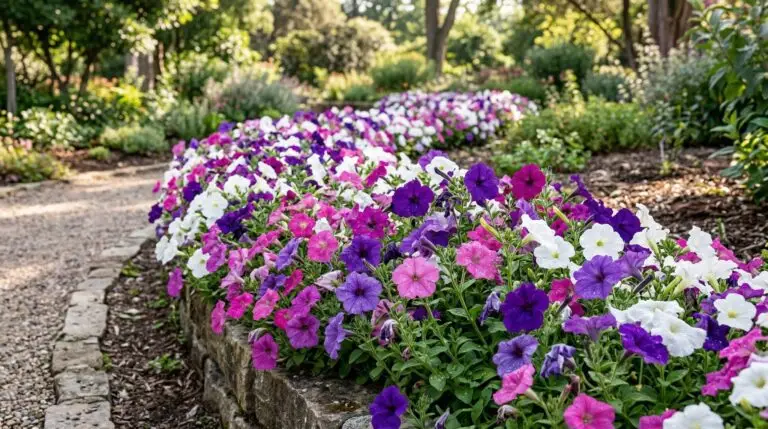
Almost every gardener has experienced the midsummer petunia slump that turns lush spring containers into an absolute eyesore. You buy a dense, heavy hanging basket in May, but by late July, the plant has transformed into a tangled mess of long, sticky stems with a few sad flowers dangling at the very ends. People often think they are doing something wrong with their watering routine or that the plant is simply dying of old age. The reality is that this straggly growth is a completely normal part of the plant’s life cycle. When petunias grow naturally, they push all their energy outward to produce flowers at the tips of their stems, leaving the older sections near the soil bare and woody. Once those early flowers fade, the plant begins producing seeds, which signals to the roots that the primary job is done and flower production can slow down. You are left with a plant that looks tired, thirsty, and completely unappealing, no matter how much daily attention you give it.
Understanding why petunias get leggy
When a petunia gets leggy, it usually means the plant has exhausted its available nutrients and is prioritizing seed production over new growth, and the fix is forcing it to restart its vegetative cycle. Heat plays a massive role in this rapid decline, as temperatures above eighty degrees cause the stems to stretch out quickly in search of more light and better air circulation. As the stems elongate, the leaves near the center of the pot drop off because they are shaded out by the remaining top growth. Many gardeners try to solve this problem by pouring more water into the pot, but overwatering an already stressed plant will only lead to root rot. You can tell your plant has reached the point of no return when the center of the pot looks like a bird’s nest of brown twigs and the only green leaves are hanging several inches over the edge of the container. At this stage, no amount of fertilizer or water will force new flowers to emerge from those dead-looking wooden stems. The only way to save the plant for the rest of the season is to intervene with a pair of sharp scissors and remove the old growth completely.
How to perform a midsummer hard cutback
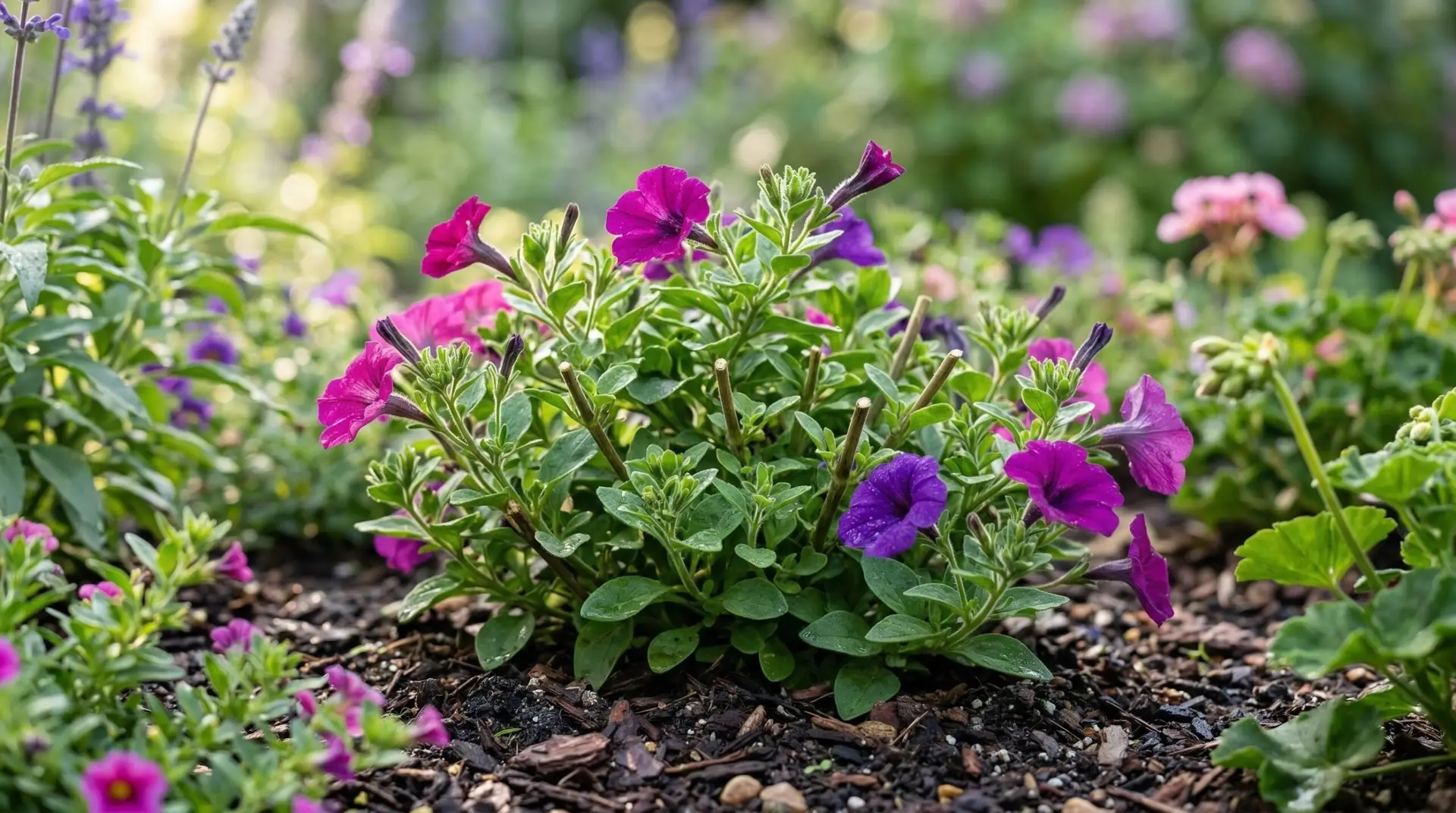
Executing a hard cutback is the single most effective way to save a leggy petunia, even though it feels incredibly destructive in the moment. The process is simple but requires a bit of nerve because you are going to remove almost all of the remaining flowers and green foliage. Take your pruning shears and cut every single stem back so that only about four to six inches of growth remains above the soil line. When you make these cuts, try to snip just above a node, which is the small bump on the stem where a leaf attaches, because this is exactly where the new branching will begin. Your plant will look completely ruined for about a week, and it is entirely normal to feel like you have made a terrible mistake by cutting away the few blooms you had left. This is the difficult part of petunia pruning, as it requires genuine patience to stare at a pot of green stubs while you wait for the plant to recover. However, removing that excess length stops the seed production immediately and forces the root system to push energy into creating dense, fresh side shoots along the remaining stems.
Fueling the recovery with water and nutrients
You cannot simply chop a plant down to the soil and expect it to bounce back without providing the right resources for new growth. When a hard cutback happens, it usually means the plant experiences temporary shock, and the fix is a steady supply of easily accessible nutrients to rebuild its foliage. Begin by giving the soil a deep, thorough soaking to ensure the root ball is completely hydrated, but be careful to let the top inch of soil dry out before watering again. Since the plant has fewer leaves to lose moisture through transpiration, it will actually need slightly less water during the first week of its recovery than it did when it was fully grown. Apply a water-soluble fertilizer that is high in nitrogen right after you cut the plant back to encourage rapid leaf development. Once you see a thick flush of green leaves covering those bare stems, switch to a fertilizer with a higher phosphorus number to trigger the formation of new flower buds. Within two to three weeks, your container will look exactly like the heavy, blooming plant you brought home in the spring, ready to tackle the second half of the summer.
Choosing varieties that require less maintenance
If the idea of chopping your hanging baskets to pieces in July sounds like too much work, you can avoid the problem entirely by selecting different plants next spring. Modern breeding has produced several self-cleaning petunia varieties, such as the popular Wave and Supertunia series, which naturally branch out and drop their spent blooms without forming seed pods. These vigorous growers rarely need a hard summer pruning, though they still benefit from an occasional light trim if they start looking untidy or asymmetrical. You might also consider mixing up your container designs with alternative trailing plants that handle summer heat with less fuss. For sunny spots, a trailing verbena provides constant color without the sticky, woody stems that plague traditional petunias. If your growing area receives partial shade, you can skip the sun-loving flowers entirely and plant impatiens, which maintain a naturally mounded shape throughout the entire growing season. Preventive planning at the garden center is the easiest way to ensure your summer containers stay full and colorful without requiring a mid-season rescue mission.
The most useful piece of advice for anyone dealing with tired summer annuals is to trust the resilience of the root system and never be afraid to make the hard cut. Plants are biologically driven to survive and reproduce, and when you remove their top growth, their immediate response is to grow back thicker and stronger to complete their life cycle. Holding onto a few stringy stems just because they have one or two flowers on them will only prolong your frustration and keep the plant in a state of slow decline. Give your plants the aggressive haircut they desperately need, provide them with a healthy dose of fertilizer, and walk away. Your willingness to endure a week of bare stems will be rewarded with a heavy second flush of blooms that lasts well into the first frosts of autumn.