A single poppy seed is smaller than a grain of sand, weighing roughly half a milligram, yet it contains the complete biological instructions to produce a waist-high plant with flowers spanning four inches across. This dramatic transformation from microscopic speck to massive bloom is one of the most efficient growth cycles in the botanical world. The seeds of the common corn poppy, scientifically known as Papaver rhoeas, are photoblastic, meaning they require absolute exposure to sunlight to trigger germination. If you bury a poppy seed even a quarter of an inch below the soil surface, it will simply go to sleep and wait, sometimes for decades, until a disturbance brings it back to the light. This evolutionary adaptation ensures the plant only attempts to grow when it has a clear path to the sun, preventing the tiny seedling from exhausting its limited energy reserves trying to push through heavy soil.
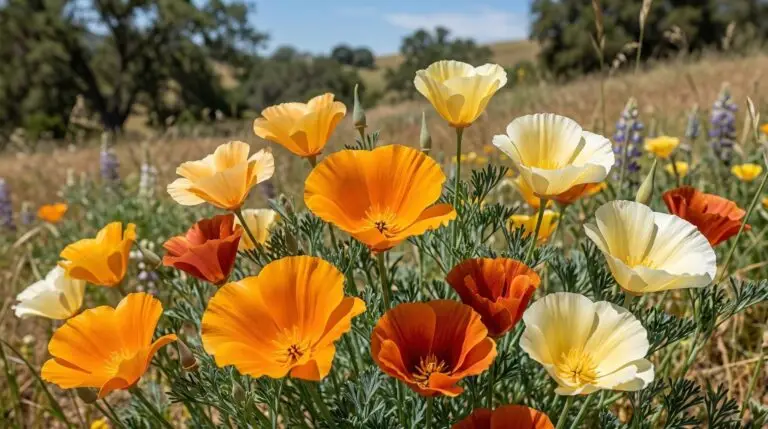
When we talk about growing poppies, we are usually discussing either the delicate field poppies or the robust breadseed poppies, Papaver somniferum. Both species share a fascinating reproductive strategy that relies on producing an overwhelming abundance of seeds rather than investing in long-lived individual plants. The flowers themselves are famously ephemeral, often lasting only a day or two before shattering and dropping their petals to the ground. Plant scientists view this fleeting nature not as a weakness, but as a highly specialized adaptation for rapid reproduction in unpredictable environments. By rushing through their vegetative growth and flowering phases, poppies guarantee they can set seed before harsh summer droughts or competing vegetation can overtake them.
Understanding the poppy taproot system
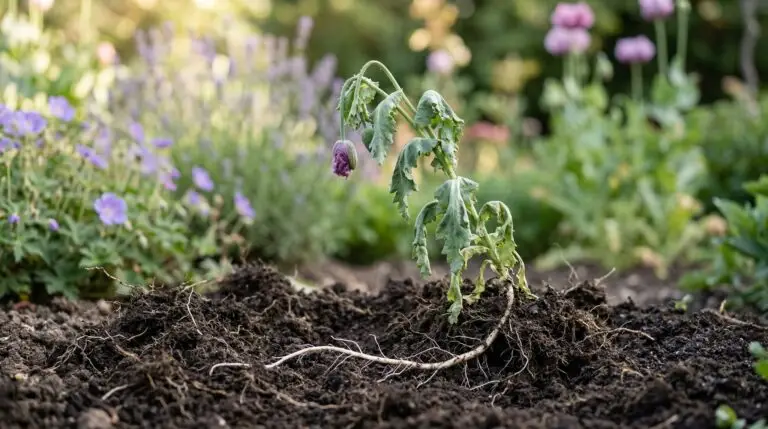
The most critical aspect of poppy care happens entirely underground in the first few weeks of the plant’s life. As soon as a poppy seed germinates, it immediately sends a single, dominant taproot straight down into the earth. This primary root acts as an anchor and a deep-water retrieval system, allowing the plant to survive in the dry, rocky soils where it originally evolved in the Mediterranean and Middle East. Because the plant relies so heavily on this unbroken taproot, growing poppies from seed requires direct sowing into their final location in the garden. If you attempt to start poppies in plastic cell packs and transplant them later, the taproot will inevitably hit the bottom of the container and curl, permanently stunting the plant and often causing it to die shortly after being moved.
This deep rooting strategy explains why poppies thrive in environments that challenge shallower-rooted annuals. The taproot pushes through poor, gravelly soils to find moisture reserves that have drained away from the surface layer. Understanding this anatomy helps gardeners realize that deeply cultivated soil is far more valuable to a poppy than heavy fertilizer applications. In fact, excessively rich or highly amended soils often result in massive, floppy foliage and very few flowers, as the plant abandons its survival-driven reproductive cycle in favor of lazy vegetative growth. Similar to how cornflowers perform best in lean conditions, poppies need a bit of environmental stress to trigger their most prolific blooming cycles.
The science of surface sowing and winter chilling
To successfully grow a poppy from seed, you have to mimic the exact conditions of a disturbed meadow in late autumn. In the wild, poppies drop their seeds in late summer, where they sit on the soil surface exposed to the elements through the freezing and thawing cycles of winter. This process is known as cold stratification, a biological mechanism that slowly breaks down the hard outer coating of the seed. The chilling period serves as a natural timer, preventing the seed from germinating during a brief warm spell in November only to be killed by the deep freezes of January. Gardeners can replicate this by scattering seeds directly over prepared soil just before the first snows, allowing nature to handle the stratification process over the winter months.
When spring arrives and the soil begins to warm, the combination of melting snow pressing the seeds into the dirt and the increasing daylight triggers mass germination. Because the seeds are so small, they contain very little endosperm, which is the starchy food reserve that powers early growth. The emerging seedling must begin photosynthesizing almost immediately upon breaking its seed coat to survive. This is precisely why surface sowing is non-negotiable for poppies, as any soil covering will block the sunlight needed for that critical first meal. The young plants develop rapidly in the cool, moist conditions of early spring, forming low rosettes of deeply lobed leaves that gather energy before sending up their tall flower stalks.
Anatomy of a fleeting bloom
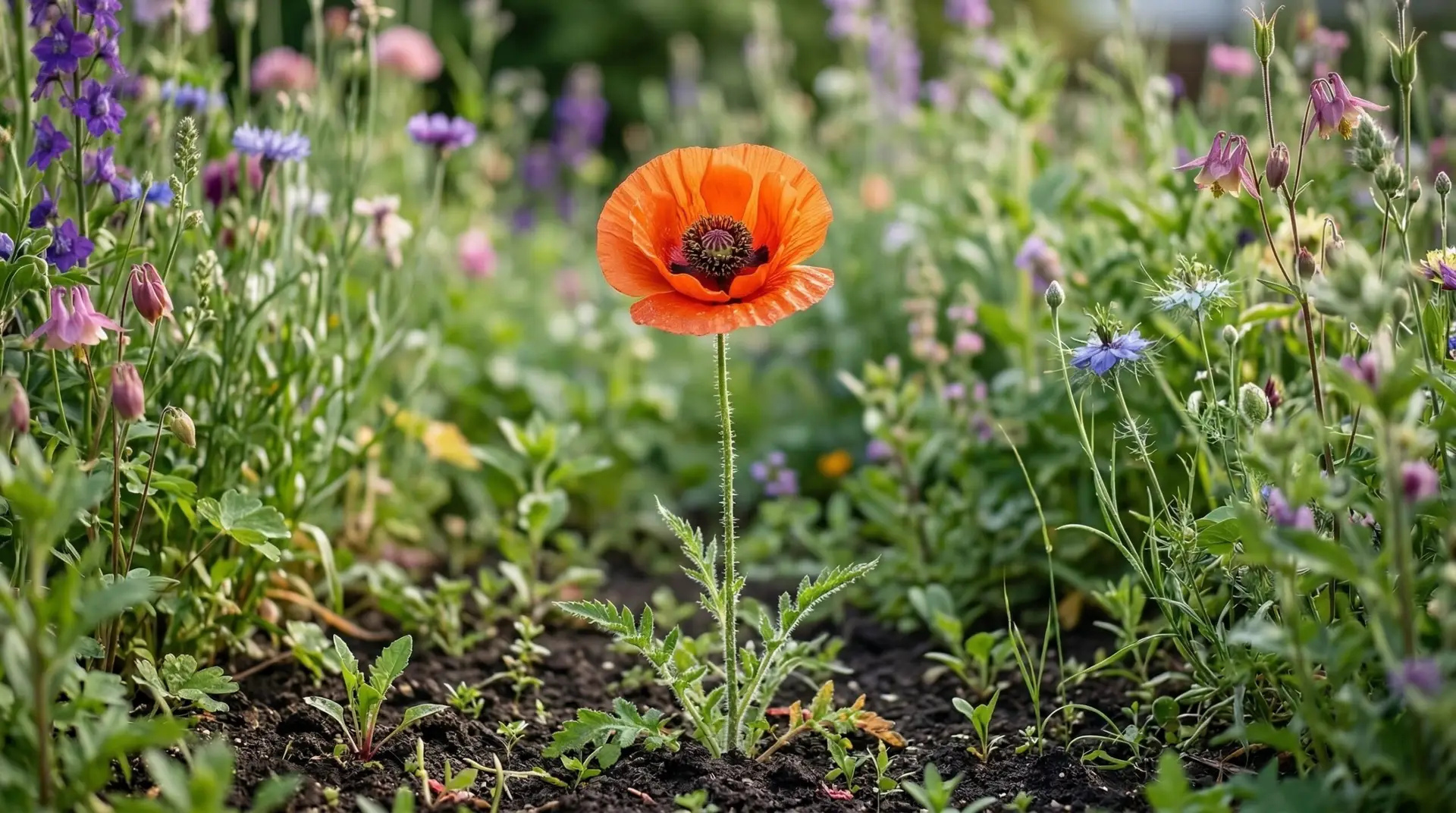
The physical structure of a poppy flower is a marvel of biological efficiency designed specifically to attract pollinators quickly. The petals are famously thin, resembling crumpled tissue paper when they first emerge from their protective hairy sepals. This delicate texture is a direct result of the plant investing almost zero energy into structural support tissues like lignin or cellulose within the petal cells. Instead, the plant pumps the petals full of pigments that are highly visible to bees, including complex ultraviolet patterns that human eyes cannot even perceive. These UV nectar guides act like airport runway lights, directing insects straight to the center of the flower where the reproductive organs are waiting.
Unlike many garden favorites, poppy flowers do not produce any nectar to reward their visitors. Instead, they operate entirely on a pollen-reward system, producing massive quantities of protein-rich pollen that bumblebees and honeybees eagerly collect to feed their hives. The central ovary of the flower is surrounded by a dense thicket of anthers that dust any visiting insect with millions of pollen grains. Once pollination is achieved, the plant immediately drops its petals, having no further biological use for the expensive, brightly colored display. This rapid transition from bud to bloom to seed pod is a trait shared with love-in-a-mist, another plant that creates a brief but spectacular floral show before shifting its energy entirely into complex seed production.
Seed pod architecture and generational survival
After the petals fall, the true architectural genius of the poppy reveals itself in the developing seed pod, botanically referred to as a capsule. The capsule swells over several weeks, turning from pale green to a woody, grayish-brown as it dries under the summer sun. At the very top of this capsule sits a flat, scalloped cap called the stigmatic disc, which served as the landing pad for pollen earlier in the season. As the pod dries completely, small pores open up just beneath the edges of this cap, creating a structure that functions exactly like a pepper shaker. This poricidal capsule is entirely dependent on the wind or passing animals to shake the stiff stem, casting the tiny seeds outward in a wide radius away from the parent plant.
A single robust poppy plant can produce tens of thousands of seeds in a single season, guaranteeing its presence in the garden for years to come. This prolific self-sowing habit means that while the individual plants are short-lived, a poppy patch is effectively permanent once established. The seeds that fall into favorable, open patches of soil will sprout the following spring, while those that fall under heavy debris will patiently wait in dormancy. This strategy of staggered germination ensures the colony survives even if a late frost or sudden drought wipes out an entire year’s crop of seedlings. It is a completely different survival mechanism than the continuous, season-long blooming strategy used by late summer annuals like cosmos, relying instead on overwhelming numbers and infinite patience.
The biology of the poppy challenges our typical understanding of plant strength and fragility. We look at the impossibly thin petals trembling in a light breeze and assume the plant is delicate and requires coddling to survive. Yet the true nature of Papaver lies in its rugged independence, its deep taproot mining for water in hostile soil, and its microscopic seeds outlasting almost every other living thing in the garden. When you scatter poppy seeds over the frozen ground in November, you are participating in an ancient ecological cycle of disturbance and renewal. The sudden appearance of those bright, papery blooms in spring is a reminder that in the botanical world, sometimes the most enduring organisms are the ones that learn to let go of their flowers the fastest.