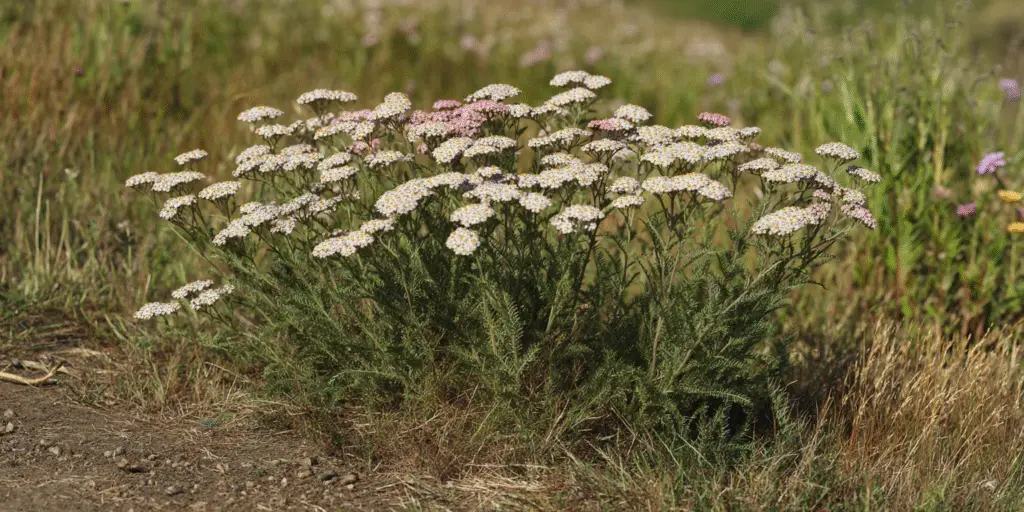
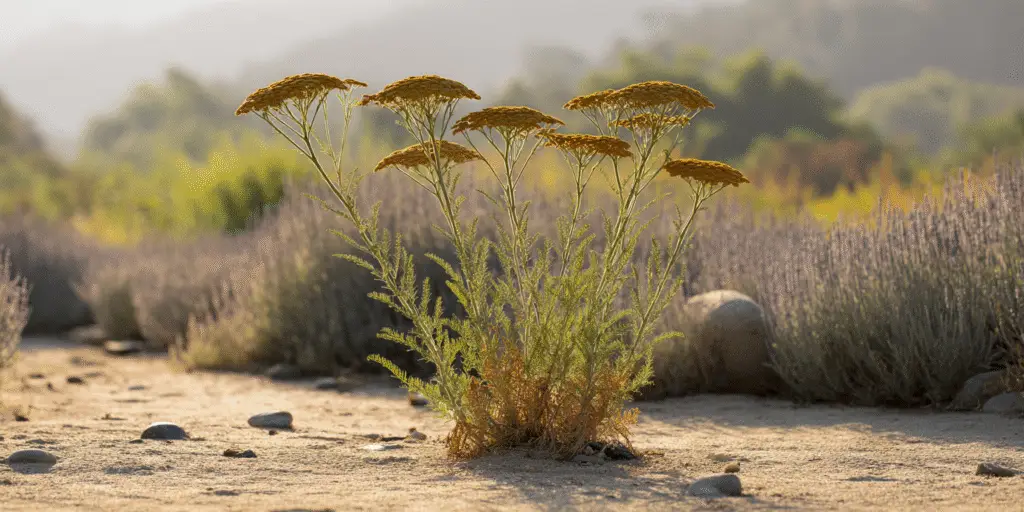
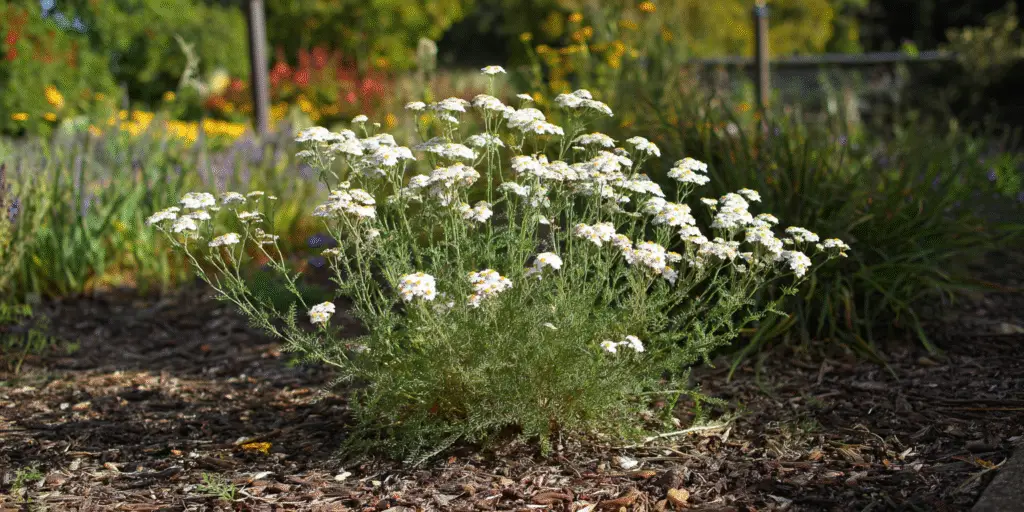
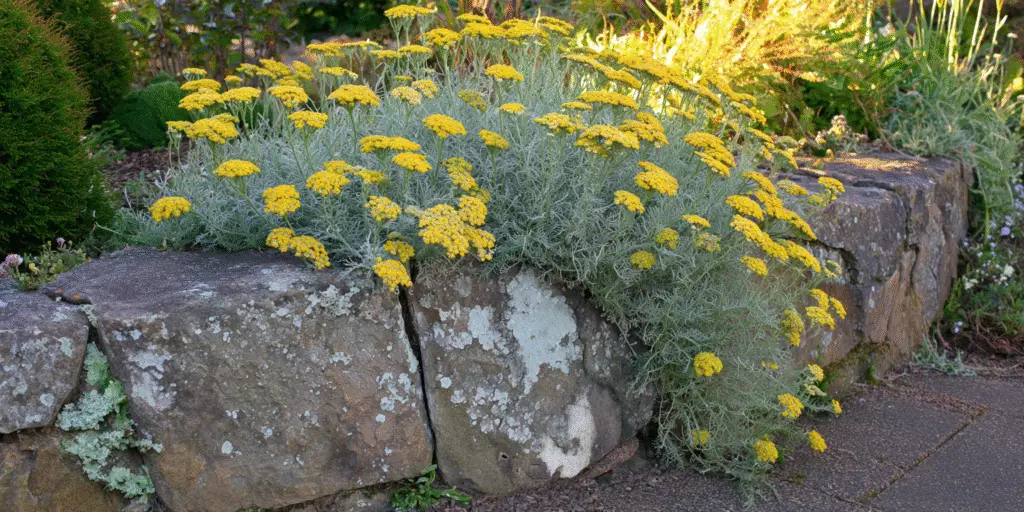
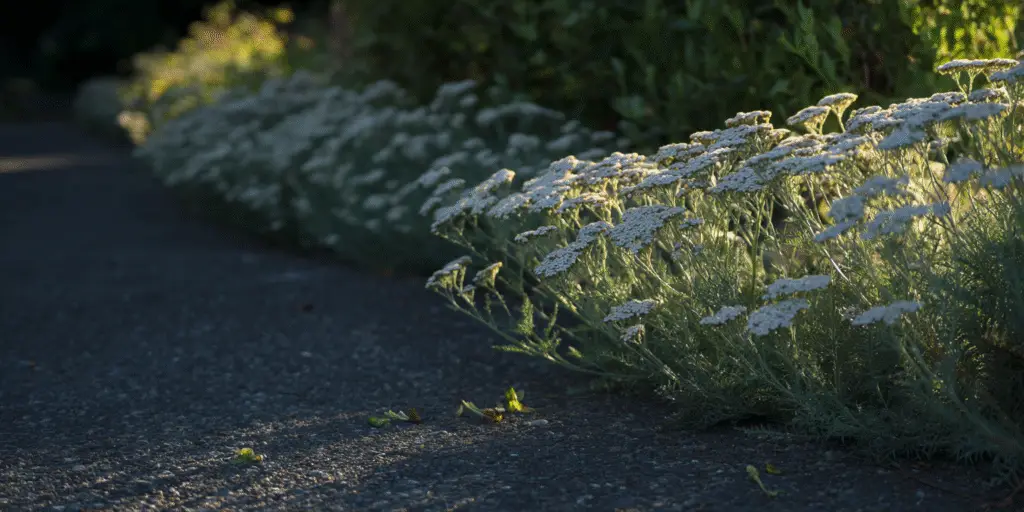
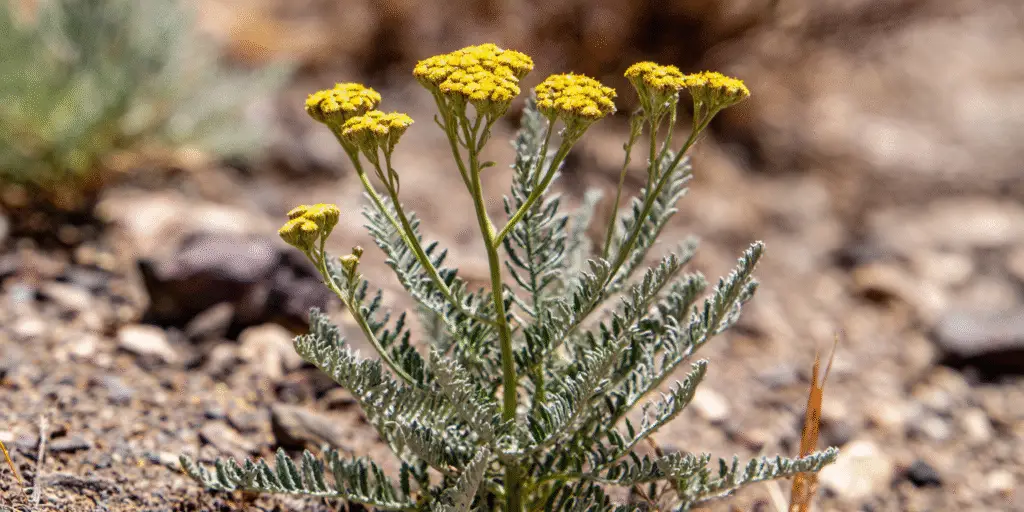
This clump‑forming species bears yellow flower clusters above gray‑green leaves. Plants prefer sunny, well‑drained sites and lean soils. Flowers are smaller than those of the tall fern‑leaf species but show similar flat‑topped form. Growth is compact, making it useful where space is limited. Foliage offers silvery contrast even before bloom. Use where summers are dry and soils drain freely.
At‑a‑glance
Group/Class: Species; herbaceous perennial
Height × spread: 12 to 20 in (30 to 50 cm) × 12 to 20 in (30 to 50 cm)
Bloom window: June to August
Color & flower form: Yellow, flat‑topped heads on compact plants
Fragrance: 1 trace
USDA hardiness: unknown / varies by climate
Breeder / Year / Origin: unknown, unknown, Balkan Peninsula
Pet safety: unknown
How it differs
Shorter than most border yarrows
Silvery foliage highlights the yellow bloom
Often flowers earlier than tall golden hybrids
Clump‑forming habit is easier to manage
Strengths
Tolerates dry, lean soils
Compact growth for edges and small borders
Deer resistant
Good heat and sun tolerance with drainage
Care in one minute
Site: full sun and open exposure.
Soil: well‑drained, sandy or gravelly; neutral to alkaline.
Water: light to moderate; avoid chronic wet.
Feeding: little to none.
Grooming: shear lightly after bloom to keep compact; divide to renew.
Winter: ensure drainage; avoid mulch against crowns.
Written by: Your Flowers Guide editorial team We are a small independent group of flower lovers who research and review each guide using trusted horticultural and educational sources. Learn more about us