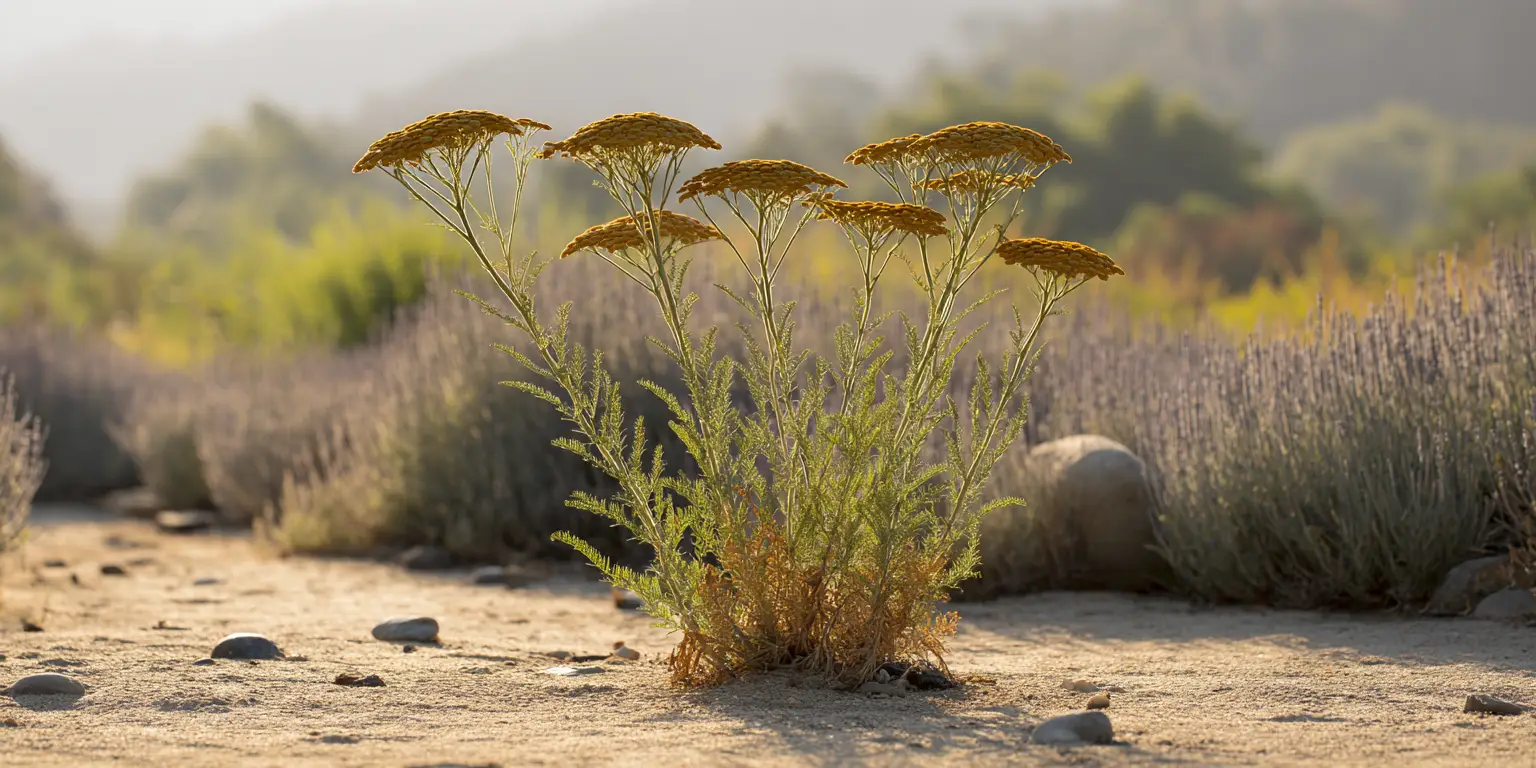
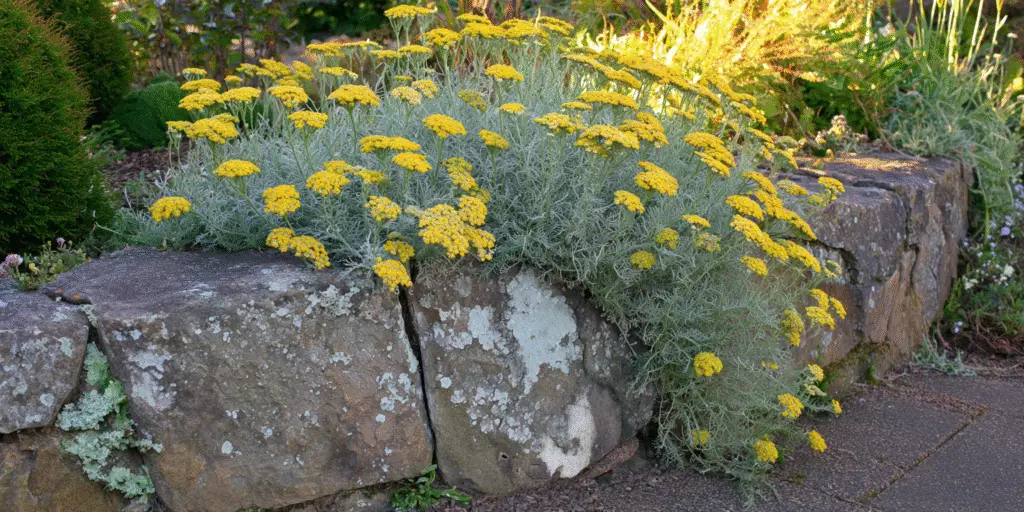
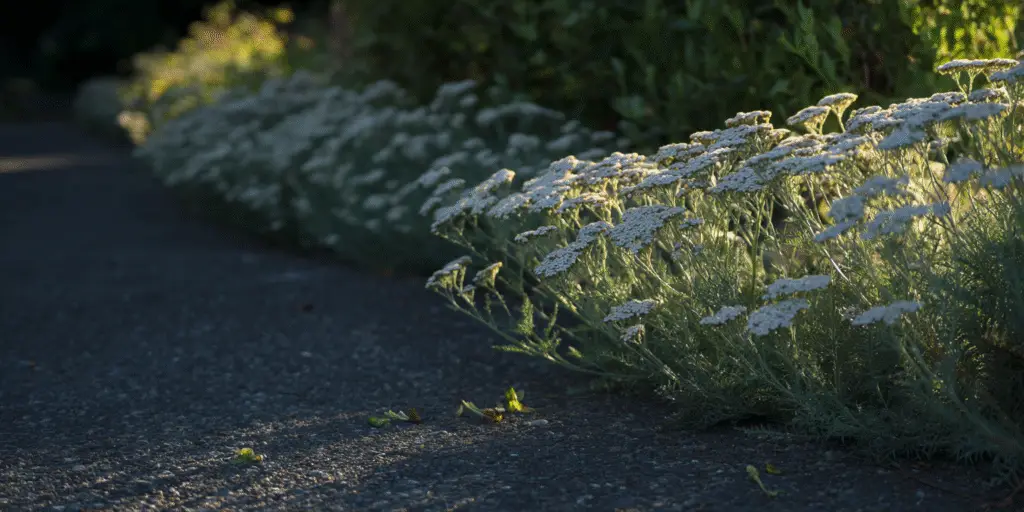
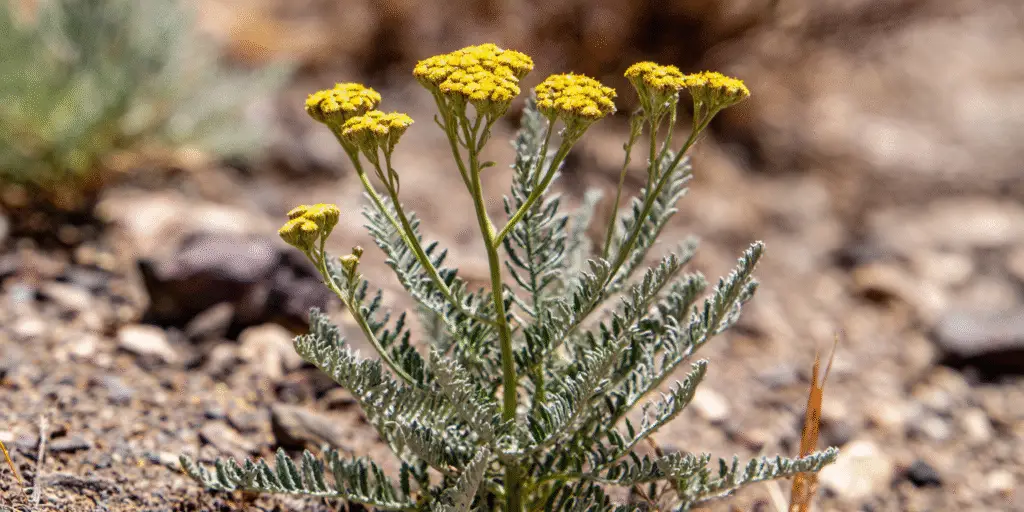
This upright species is known for tall stems topped with dense golden flower plates. It excels in sunny, open sites with lean, well‑drained soils. Plants form clumps rather than running, so maintenance is simpler than with rhizomatous yarrows. Flowering usually peaks from early to mid‑summer, with additional bloom after deadheading. Stems are often sturdy in lean soils and are valued for cut and dried use. Strong summer storms can flatten plants grown in rich soil. Heat and humidity tolerance is better than many yarrows in North America.
At‑a‑glance
Group/Class: Species; herbaceous perennial
Height × spread: 3 to 4 ft (0.9 to 1.2 m) × 2 to 3 ft (0.6 to 0.9 m)
Bloom window: June to August
Color & flower form: Golden‑yellow plates of tiny daisies
Fragrance: 1 trace
USDA hardiness: zones 3 to 9
Breeder / Year / Origin: unknown, unknown, Caucasus to Iran and Afghanistan
Cut‑flower notes: Stems typically strong; used fresh and dried; vase life varies by cultivar and conditioning.
Pet safety: unknown
How it differs
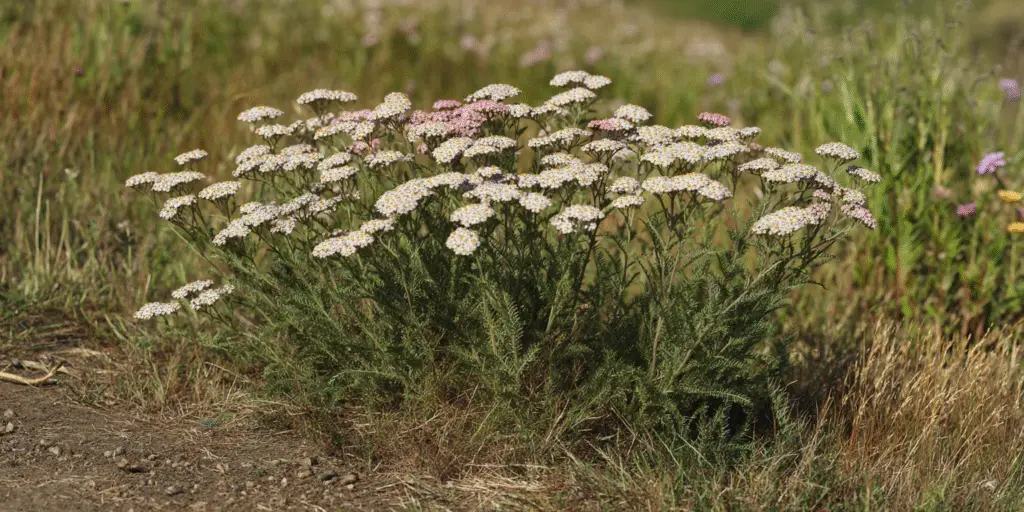
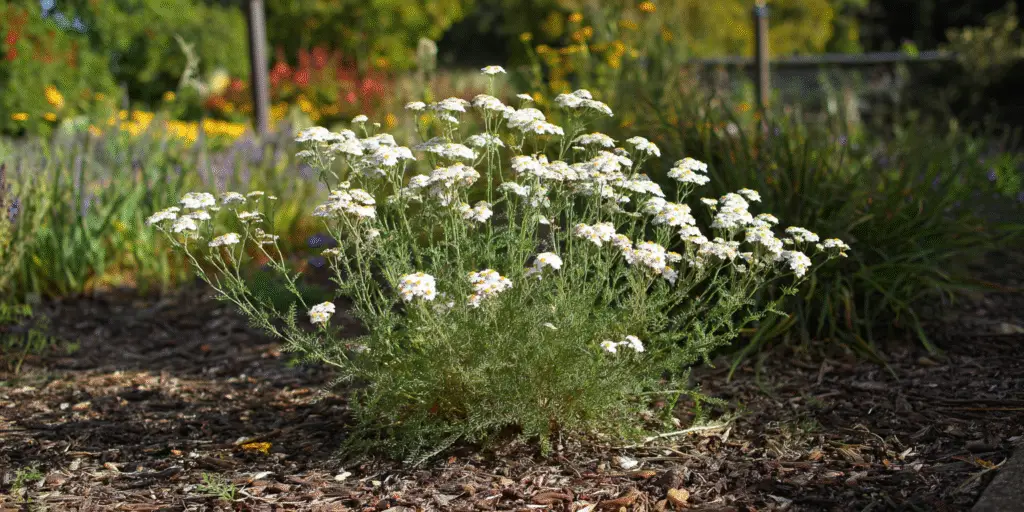
Taller and more architectural than typical meadow yarrow
Clump‑forming habit rather than running
Flower heads larger and denser
Good tolerance of summer heat and humidity
Strengths
Drought tolerant once established
Deer and rabbit resistant
Good for cutting and drying
Long bloom with deadheading
Care in one minute
Site: full sun and good air movement.
Soil: well‑drained, lean to average; neutral to slightly alkaline.
Water: moderate; keep on the dry side once established.
Written by: Your Flowers Guide editorial team We are a small independent group of flower lovers who research and review each guide using trusted horticultural and educational sources. Learn more about us