How to Grow and Care: Rose
Contents
Roses are the classic garden shrub prized for fragrance, color, and long bloom. The accepted botanical name is Rosa spp., which covers modern garden classes such as hybrid tea, floribunda, grandiflora, shrub, species, and climbing types. In the United States most roses grow well in USDA zones 4 to 9, with some exceptionally hardy selections suited to colder zones and some tender types best in warm coastal or desert regions. Roses thrive in full sun with at least 6 hours of direct light, preferably morning sun that dries leaves early. Afternoon shade is welcome in very hot areas.
Success with rose care comes down to four things. Start with disease resistant plants adapted to your zone. Plant in well prepared, well drained soil with the right pH. Water deeply and mulch to moderate heat and conserve moisture. Prune on a simple yearly schedule to renew growth, and keep foliage dry when possible to limit disease pressure.
Soil & Bed Preparation
Roses perform best in a loam or sandy loam that holds moisture yet drains freely. Compacted or heavy clay soil slows root growth and encourages root problems after summer rains. Before planting, loosen the bed 12 to 18 inches deep (30 to 45 cm) and 24 to 36 inches wide (60 to 90 cm) where each plant will sit. Blend in 2 to 3 inches of well finished compost or leaf mold on the top 8 to 10 inches (20 to 25 cm). In very heavy clay, improve drainage by integrating coarse organic matter and creating slightly raised planting areas. Avoid fresh manure or undecomposed wood chips in the root zone.
Good drainage is the foundation of rose care. Test a planting spot by digging a hole 12 inches deep and filling it with water. Let it drain, then refill and time the second drainage. If water disappears in 1 to 3 hours the drainage is good. If it stands longer than 4 hours, raise the bed or find another site. Roses prefer a slightly acidic pH, most often 6.0 to 6.5. Have your soil tested before planting. To raise a very acidic pH, apply finely ground limestone based on soil test rates. To lower an alkaline pH, elemental sulfur or soil sulfur applied months in advance is a common approach, again guided by soil test recommendations. Compost improves buffering and biological activity but it will not correct a strongly off target pH without amendments.
Raised beds warm faster in spring and improve drainage where soils are heavy or where rainfall is frequent. They are excellent for formal rose borders and for small properties with poor native soil. In sandy coastal areas or in hot dry regions, in ground beds that capture and hold moisture are often better, though a light rise of 4 to 6 inches helps during wet spells. In any case keep the planting surface level so water soaks the root zone rather than sliding away from the base of the plant.
Planting Calendar by USDA Zone
Roses are widely grown coast to coast. Many modern shrub and landscape roses succeed in zones 4 to 9. Old garden species and Canadian hardy types can manage zones 3 to 4 with protection. Tea roses and some climbers are best in zones 7 to 10 where winters are mild. Check the label for your cultivar’s range and local extension guidance for the best classes in your region.
Bare root roses ship dormant and are typically planted in late winter to early spring as soon as the ground can be worked. In zones 3 to 5, plant from early April to mid May when soil is workable. In zones 6 to 7, plant from late February to early April. In zones 8 to 9, plant mid winter to early spring, often January to March, during cool weather. In zone 10, plant in the coolest part of winter. In short season climates, stick with spring planting so roots can establish before the first hard frost.
Container roses can be planted spring through early fall. In zones 3 to 5, plant after last frost through midsummer so roots can settle well before cold weather. In zones 6 to 7, plant spring and early fall. In zones 8 to 10, plant fall through early spring to avoid peak heat. In areas with hot humid summers, spring planting is preferred. In arid regions plant as early as possible in spring or in early fall with extra attention to watering.
Hot humid climates favor foliar diseases, so choose resistant cultivars and allow generous spacing for airflow. In arid regions plan for deeper and more frequent irrigation while using mulch to slow evaporation. On windy high elevation sites, provide windbreaks and plant a little deeper in raised rings to hold water. In coastal gardens where salt spray is possible, locate roses behind a fence or hedge and rinse foliage with fresh water after storms.
Planting: Depth & Spacing
Unpack immediately and soak bare roots in a clean bucket of water for 4 to 12 hours before planting. Trim any broken roots with clean pruners. Dig a hole wide enough to spread the roots without bending. Make a small cone of soil in the center and set the plant so the graft union sits at the correct level for your climate. In cold winter regions the graft union can be 1 to 2 inches below the final soil line. In mild winter regions place it at or just above the soil line. Backfill with the native soil you improved earlier, firming gently to remove air pockets. Water thoroughly to settle soil and finish by adding a temporary watering basin to direct irrigation to the roots during the first weeks.
Slide the plant from the pot and tease out any encircling roots. Plant at the same depth as in the container, level with the surrounding soil. Backfill with your improved native soil and water deeply until the entire root ball is saturated. Shade cloth or temporary afternoon shade for three to five days helps reduce transplant stress in sunny regions. Avoid fertilizing at the time of planting, especially in hot weather. Wait until you see new growth.
Own root roses grow on their own natural roots and are planted at the same depth they grew in the pot. Grafted roses are budded onto rootstock. Take extra care with the position of the graft union as described above. Keep suckers from the rootstock removed by tracing them to the origin and cutting cleanly.
Space roses more generously than many catalogs suggest, especially where summers are humid. Hybrid tea and floribunda types are commonly spaced 24 to 36 inches apart center to center (60 to 90 cm). Larger shrub roses often need 36 to 60 inches (90 to 150 cm). Climbing roses are spaced 6 to 10 feet apart (1.8 to 3 m) depending on vigor. In rows, allow 3 to 6 feet between rows for access and airflow. A little extra room reduces disease pressure and makes pruning and harvesting simpler.
Plant on a cool overcast day if possible. Water thoroughly at planting and again two to three days later. Maintain even moisture for the first eight weeks. Use light temporary shade in intense sun. Do not over prune newly planted roses beyond removing damaged wood. A slow start is normal while roots engage new soil.
Watering & Mulching
For the first 6 to 8 weeks, keep the root zone evenly moist. In cool spring weather you may water every 3 to 4 days. In warm dry periods water every 2 to 3 days. After establishment, roses usually need the equivalent of 1 to 1.5 inches of water per week, delivered in one or two deep irrigations. Monitor soil moisture at 6 inches depth. If it is dry at that depth, water. Water at the base of the plant rather than overhead to keep leaves dry and reduce disease.
Apply 2 to 3 inches of organic mulch such as shredded bark, pine needles, leaf mold, or composted wood chips. Keep mulch pulled back 3 to 4 inches from the canes to prevent rot at the crown. Mulch buffers soil temperature, reduces weeds, and slows evaporation. In very hot climates consider a lighter colored mulch that reflects heat. Refresh mulch each spring as it decomposes.
Avoid standing water. If you see water puddling after irrigation, shorten run times and consider improving the drainage. In heavy rain periods crack the mulch slightly to allow faster drying near the crown, then restore even coverage when the weather clears. Use drip irrigation or a soaker hose to deliver water directly to the root zone. If your household water is softened with sodium, do not use it for roses. Use untreated tap or collected rainwater. Where water salinity is naturally high, deep irrigation that leaches salts past the root zone is important.
During a heat wave, increase watering frequency and add temporary shade in late afternoon using shade cloth or a light fabric held above foliage. Do not fertilize during heat stress. After prolonged drought, resume watering slowly to avoid sudden cracking of dry soils and water loss. A consistent routine is more valuable than heavy intermittent irrigation.
Feeding
If your soil test shows adequate nutrients and organic matter, new roses need little or no fertilizer their first month after planting. Begin a regular feeding program once you see vigorous new growth. In cold winter regions, feed in early spring as buds swell and again lightly after the first flush of bloom. Stop fertilizing 6 to 8 weeks before the average first frost date so new growth can harden before winter. In warm climates with continuous bloom, use smaller amounts more often during the main growing season and pause during peak summer heat.
Roses respond to balanced nutrition. A slow release fertilizer in the general range of 8 8 8 to 12 6 6 suits many gardens, applied at label rates. Organic options like composted poultry manure and alfalfa meal supply nitrogen and support soil biology. Too much nitrogen pushes soft leafy growth that invites pests and disease, so resist the urge to overfeed. If a soil test reveals high phosphorus from past gardening, choose a fertilizer with less phosphorus to avoid tie ups with micronutrients.
Aim for 3 to 5 percent organic matter by weight in mineral soils, measured by a laboratory soil test. Add compost annually as a topdress under mulch instead of working it deeply into the soil each year. Re test soil every 2 to 3 years to check pH drift and macronutrient levels. If your irrigation water is alkaline, sulfur applications may be needed over time to maintain the preferred pH.
Pruning & Support
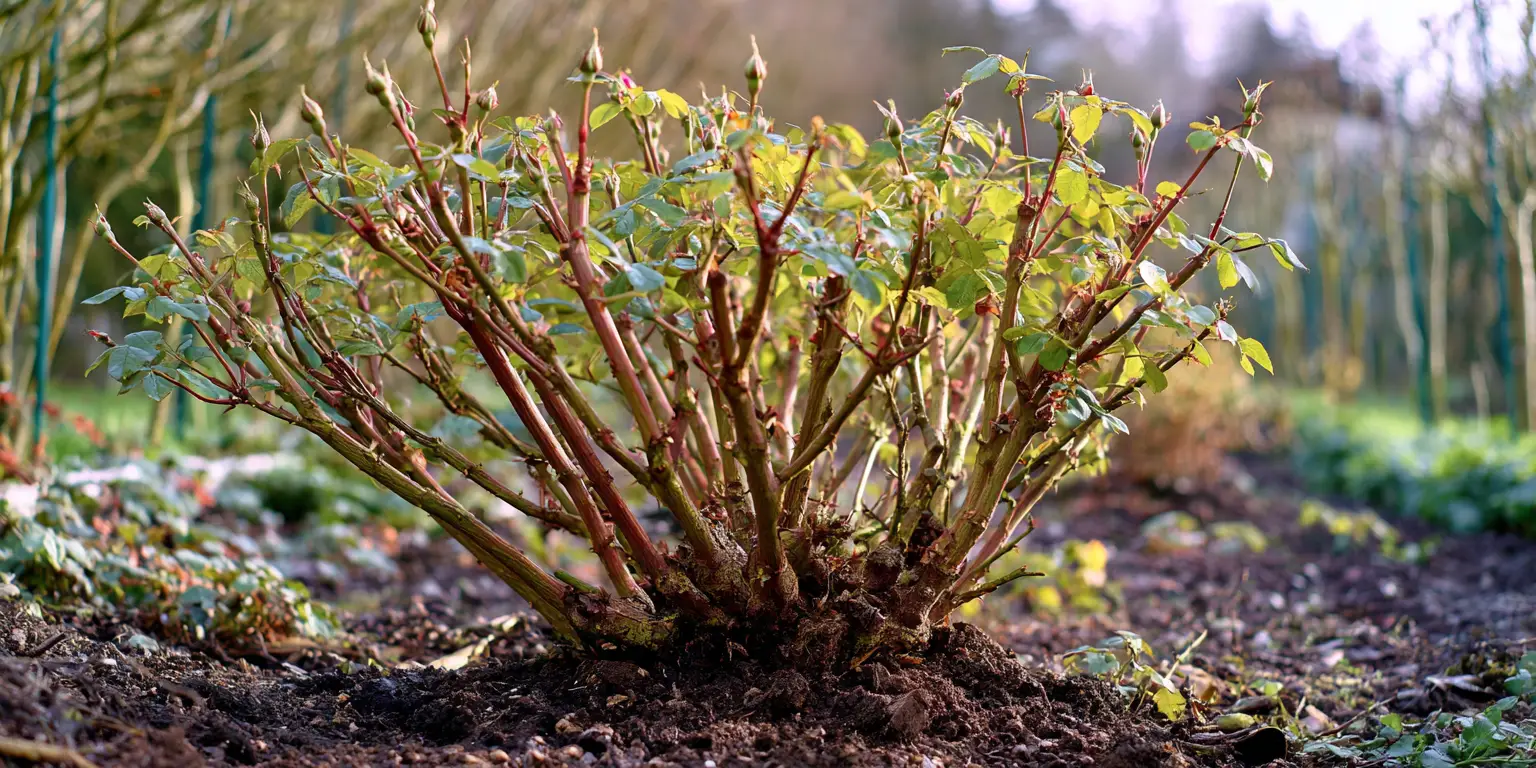
In late winter or very early spring, prune out dead, diseased, or damaged wood. Cut back to a healthy outward facing bud and to live wood that shows a pale green or white pith. Remove crossing canes that rub. Open the center for air movement. In cold regions, delay major pruning until the worst freezes have passed but before strong growth begins. In warm regions, prune when days lengthen and buds begin to swell.
Hybrid tea and grandiflora roses are usually cut back to 12 to 24 inches tall (30 to 60 cm) leaving 4 to 6 strong canes. Floribundas are taken a little less, leaving more branching for clusters of blooms. Shrub roses typically need only light shaping and the removal of the oldest canes to the base every few years to renew vigor. For once blooming old garden roses, wait to prune until after their spring bloom, since they flower on old wood formed the previous season.
Remove spent flowers to a strong five leaflet leaf to encourage rebloom. In late summer in cold climates, stop deadheading and allow hips to form, which can help signal the plant to slow growth and prepare for winter. Strip only a few leaves for bouquet work so plants keep photosynthesizing at full strength.
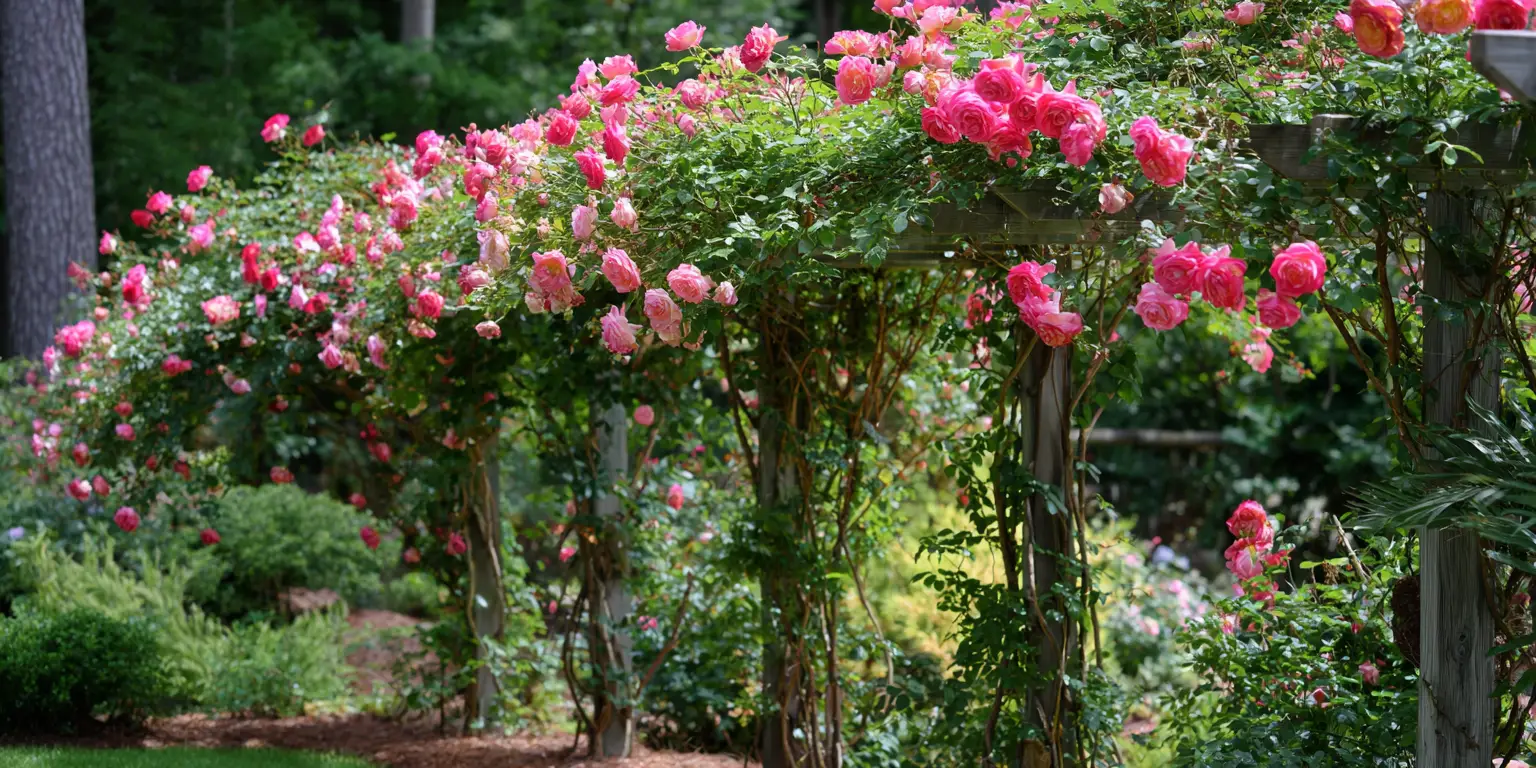
Climbing roses need a trellis, fence, or arbor with strong attachment points. Tie new canes loosely with soft ties and train them as horizontally as possible. Horizontal canes produce more flowering laterals along their length. Ramblers are typically trained over large structures or allowed to spill over walls. After bloom, remove one or two of the oldest canes to the base to stimulate new replacement growth.
Disinfect pruners between plants when disease is present. Wipe blades with 70 percent isopropyl alcohol or dip in a 10 percent bleach solution followed by a quick water rinse and thorough drying. Keep blades sharp to make clean cuts that heal quickly.
Overwintering
Winter protection depends on your zone and the rose class. In zones 3 to 5, mound 8 to 12 inches of loose compost or pine needles around the base after the ground has begun to freeze. This traps soil warmth and reduces freeze to thaw cycles that heave roots. In zones 6 to 7, a 2 to 3 inch mulch is usually enough, though tender types may benefit from an extra mound during severe cold. In zones 8 to 10, protection is minimal, focused on windbreaks where cold snaps and dry winds coincide.
In the coldest regions, after the first hard freeze, tie canes together loosely to prevent wind breakage. Where rabbits or voles are an issue, use hardware cloth cylinders sunk 2 inches into the soil around the crown to deter gnawing. Remove protective mounds gradually in spring as the ground thaws and new growth begins. Avoid uncovering during a warm spell if a hard freeze is still likely.
Move potted roses into an unheated garage, cold frame, or sheltered porch once nights are consistently below 25°F (−4°C). Water sparingly through winter, keeping the potting mix barely moist. In warm regions where roses never go fully dormant, continue light watering and light grooming but avoid heavy pruning until late winter.
Growing Environments
Roses can thrive in containers with the right volume and mix. Choose a pot at least 18 to 24 inches wide and deep for bush types, which equals roughly 10 to 15 gallons. Larger is better for reduced watering frequency. Use a high quality peat and bark based potting mix with perlite for drainage. Do not use native soil in containers since it compacts and drains poorly. Elevate pots slightly on feet so drain holes remain open. Feed lightly throughout the growing season, since frequent watering leaches nutrients.
Container roses may need water every 1 to 3 days in summer depending on climate and pot size. Water until it runs from the drain holes, then allow the top 1 to 2 inches of mix to dry before watering again. Mulch the surface with fine bark or compost to slow evaporation. Refresh or replace the top few inches of potting mix each spring to renew fertility and structure.
Maximize morning sun exposure to dry foliage quickly. In very hot regions, provide light afternoon shade from a fence or open structured tree to reduce stress and petal scorch. In windy sites, use fencing or hedge plantings as a windbreak. Avoid walls that reflect intense heat unless you can offset with extra irrigation and mulch. In coastal zones, shelter plants from direct salt spray and use fresh water rinses after storms.
Companion Planting & Design
Choose companions that tolerate the same sun and water while providing foliage contrast and seasonal interest. Catmint (Nepeta), hardy geraniums (Geranium), garden sage and ornamental salvias (Salvia), and thyme (Thymus) bring pollinators and a soft texture at the base of shrubs. Spring bulbs such as daffodils and alliums rise and fade before roses reach peak flush, solving the early season gap. Summer perennials such as veronica and scabiosa extend bloom and attract beneficial insects that help control pests. Classic aromatic partners like lavender offer fragrance and a gray green foil that makes rose colors pop.
Think in layers. Place lower perennials in front to hide bare canes and integrate the bed with the rest of the garden. Use medium shrubs like boxwood or dwarf hydrangea at the back to frame a border without stealing light. For color planning, roses carry almost every hue except a true blue. Design by echoing petal colors with companion flowers from your site hubs such as pink, white, yellow flowers, or purple flowers. Group three of the same rose cultivar for a strong color block, then repeat that block down a border for rhythm. If you enjoy event styling, pull ideas from your wedding flowers guide when designing a cutting border for bouquets at home. For broader context on plant families and bed organization, see types of flowers and the dedicated roses hub when finalizing your plant list.
Keep at least 12 to 18 inches (30 to 45 cm) of open space around the base of each rose for air to move and for easy pruning access. Avoid overcrowding with dense shrubs. Train climbers on open supports, not solid fences, to allow airflow behind the canes. Water companions at their base and avoid wetting rose leaves when you irrigate the rest of the bed.
References
- University of Florida IFAS Extension, Gardening Solutions. Roses.
- ASPCA. Rose, non toxic to dogs and cats.
Written by: Your Flowers Guide editorial team
We are a small independent group of flower lovers who research and review each guide using trusted horticultural and educational sources. Learn more about us