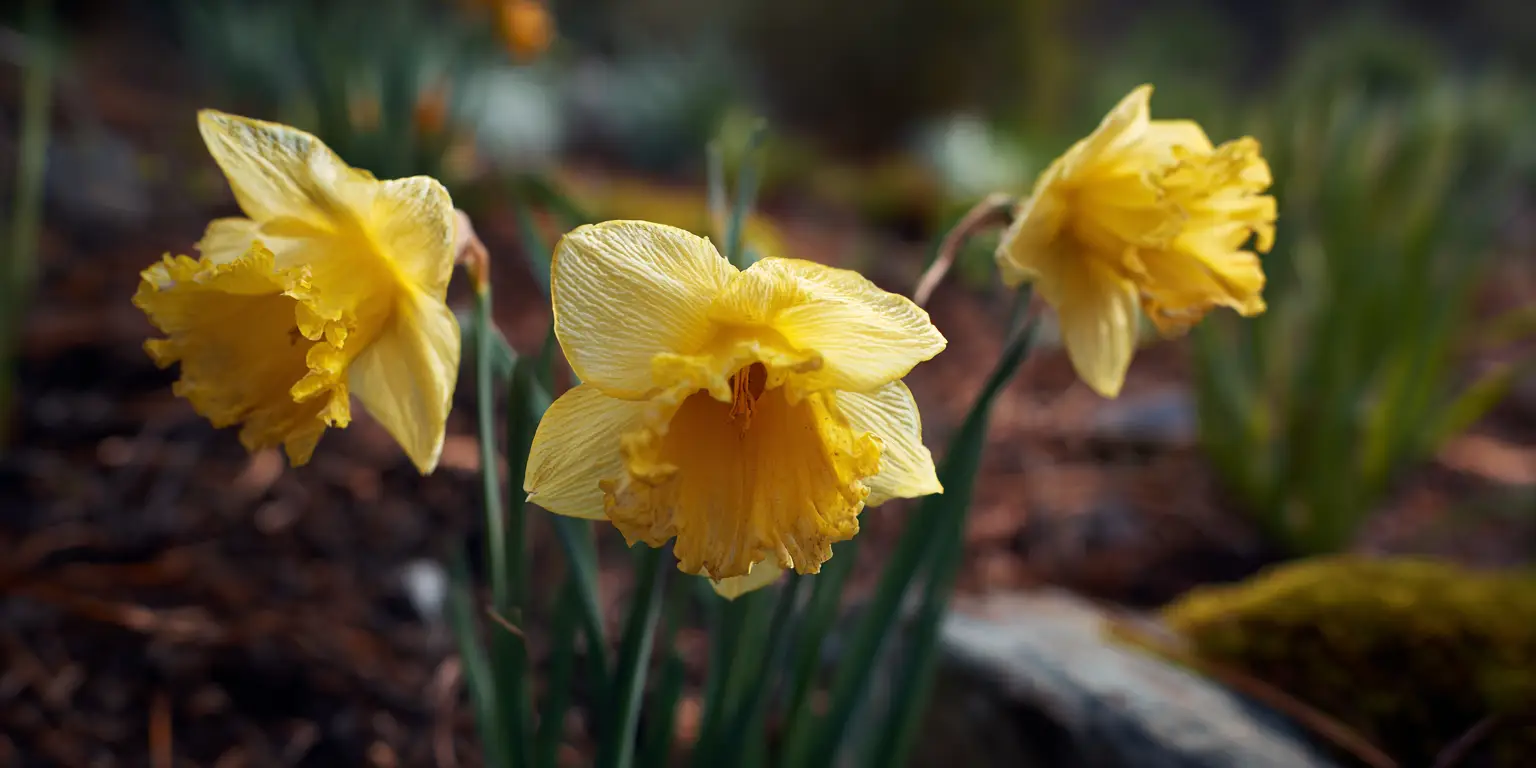
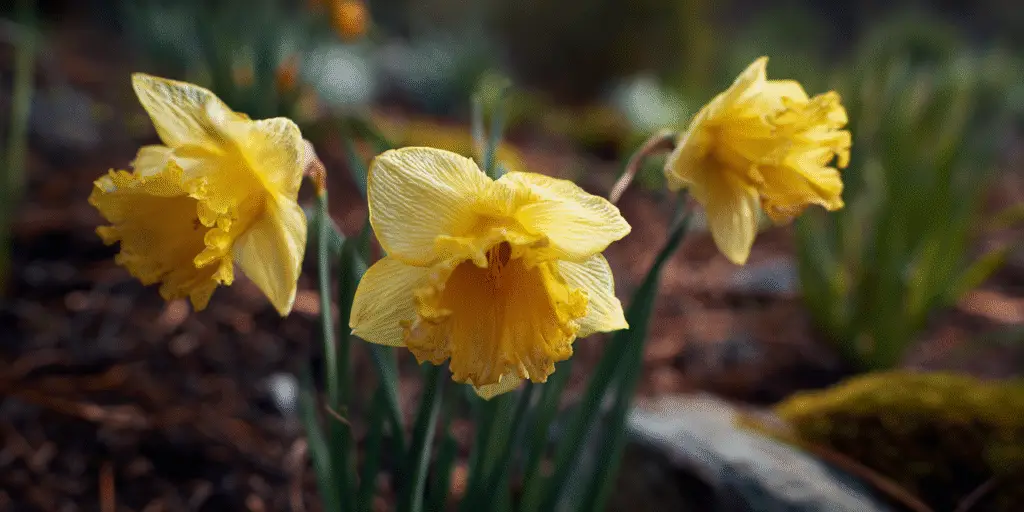
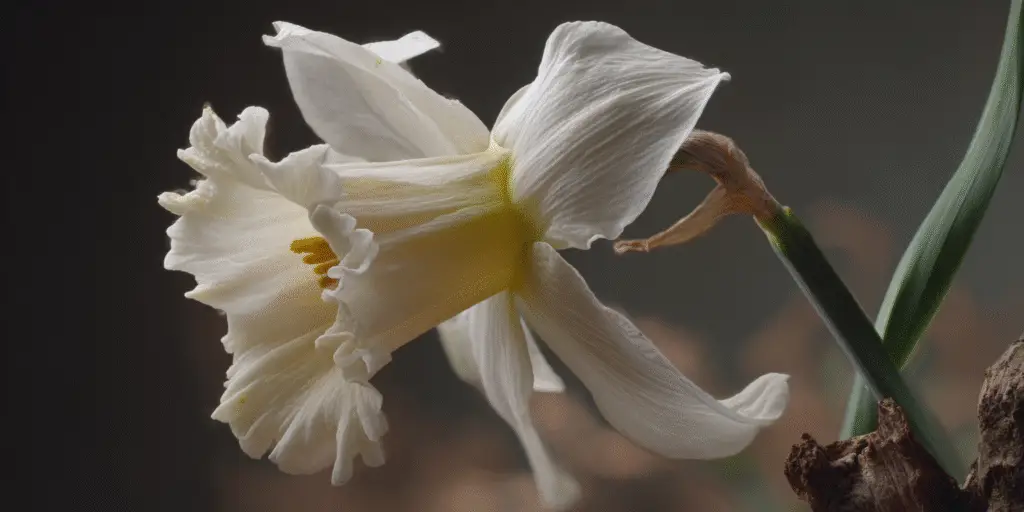
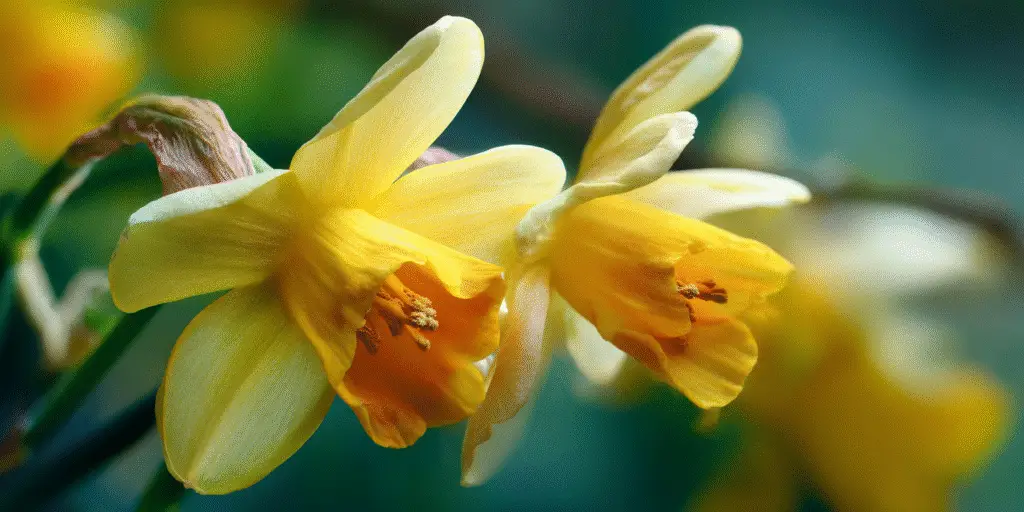
This trumpet daffodil is a widely planted yellow cultivar for parks and home gardens. It is valued for large flowers, reliable return, and early to mid spring bloom in most temperate climates. Plants perform best in full sun with well‑drained soil. They naturalize where summers are dry and soils do not stay wet. Stems are sturdy enough for borders and massing. This cultivar suits USDA zones listed below in the North American context. All parts of Narcissus are toxic if eaten, so site away from curious pets and children. Use it as the classic golden daffodil under deciduous trees or in meadows.
At‑a‑glance
Group/Class: Division 1 (Trumpet)
Height × spread: 16–20 in × 12–21 in (40–50 cm × 30–55 cm)
Bloom window: early to mid spring
Color & flower form: golden‑yellow perianth; long trumpet with slightly flared, notched rim
Fragrance: 1 trace
USDA hardiness: zones 3–7
Breeder / Year / Origin: Matthew Zandbergen, 1948 (raised 1938), Netherlands
Awards/registration: RHS Award of Garden Merit
Cut‑flower notes: stems fairly sturdy; condition separately before mixing due to sap; vase life relatively short, varies by handling
Pet safety: avoid
How it differs
Trumpet longer than perianth, unlike many large‑cupped daffodils on the pillar page.
Earlier than mid‑season cultivars such as ‘Carlton’ in many climates.
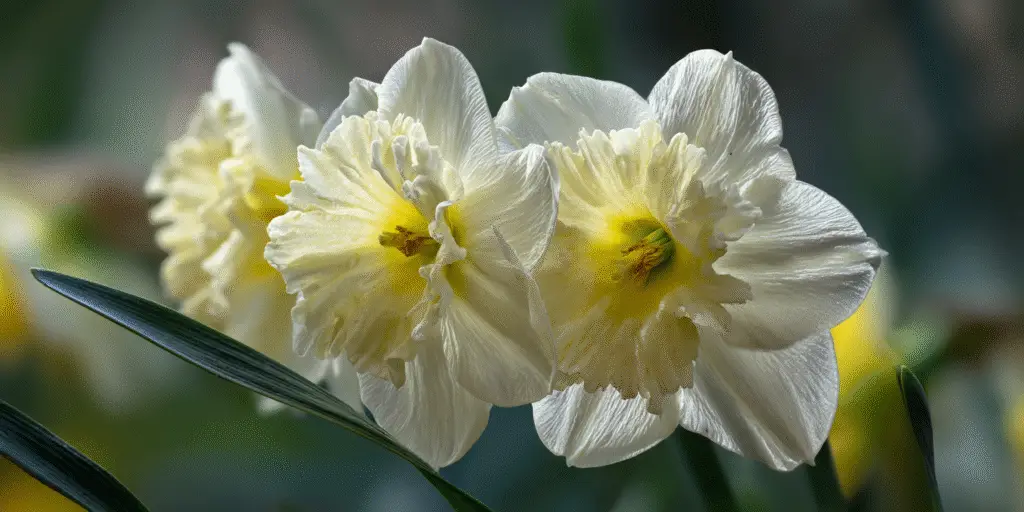
Uniform all‑yellow color rather than bicolor or white forms.
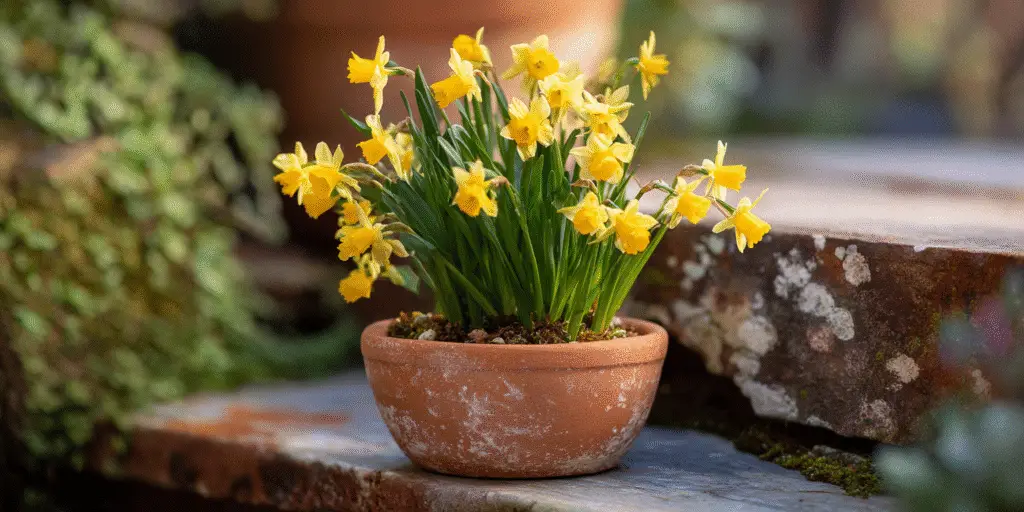
Taller stems than miniature types like ‘Tête‑à‑Tête’.
Strengths
Dependable perennial return in suitable drainage.
Good naturalizer where summers are dry.
Sturdy stems for landscape use.
Widely available and easy to combine with early bulbs.
Care in one minute
Plant bulbs 6–8 in deep (15–20 cm) in full sun to light shade with well‑drained loam.
Water during active growth in spring; keep dryish in summer dormancy.
Soil pH mildly acidic to neutral is fine; avoid waterlogged clay.
After bloom, remove spent flowers; allow leaves to yellow naturally for 6–8 weeks.
Top‑dress with bulb fertilizer in fall if soils are low in nutrients.
Watch‑outs
Can decline in poorly drained or irrigated summer soils.
Clumps may crowd after several years; divide after foliage dies back.
Best uses (tags)
borders, naturalizing, cutting, meadows, under trees
Provenance note
Raised in the Netherlands and later registered by Matthew Zandbergen. Its registration follows its first flowering in 1938 and it has since earned broad garden recognition.
Written by: Your Flowers Guide editorial team We are a small independent group of flower lovers who research and review each guide using trusted horticultural and educational sources. Learn more about us