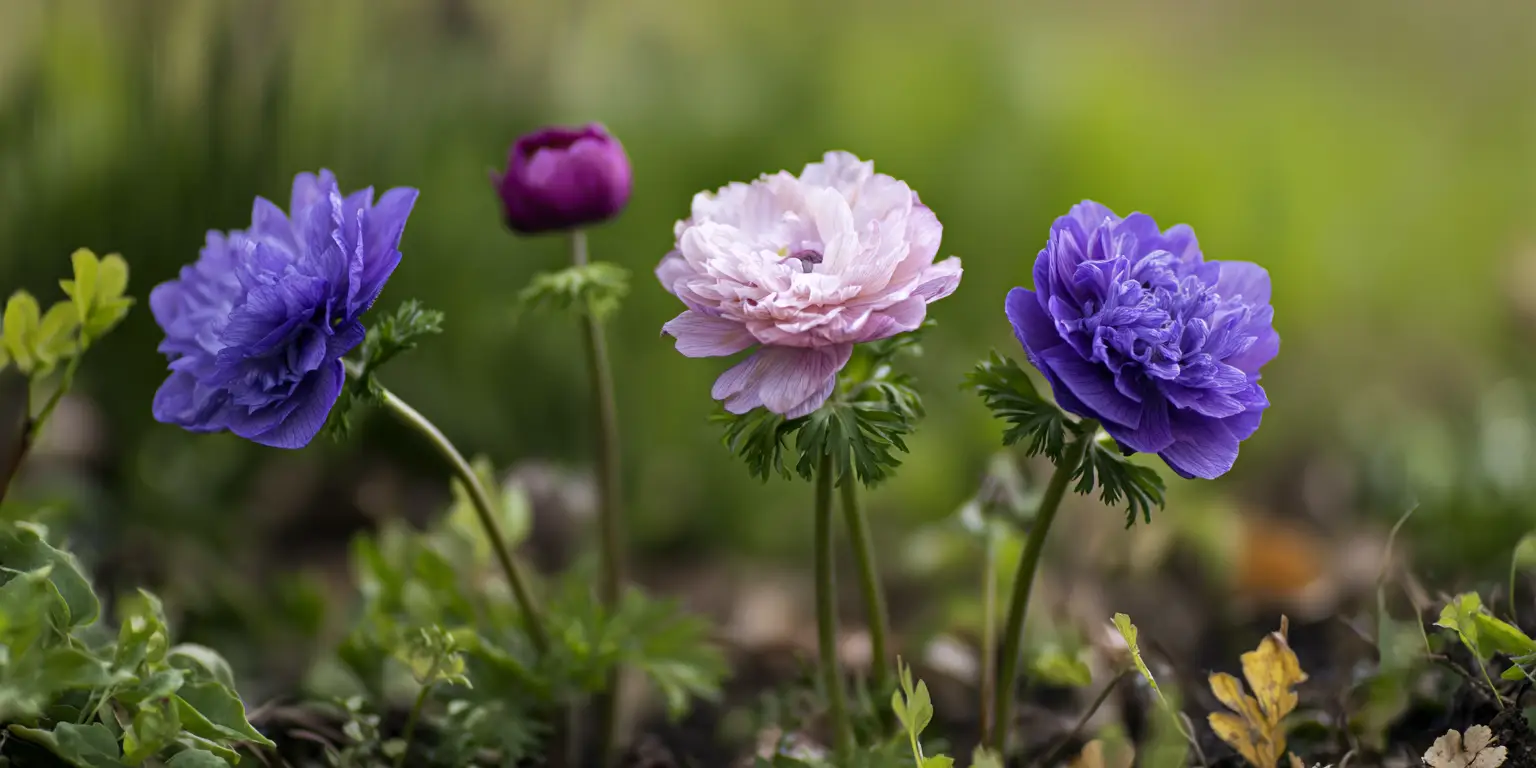
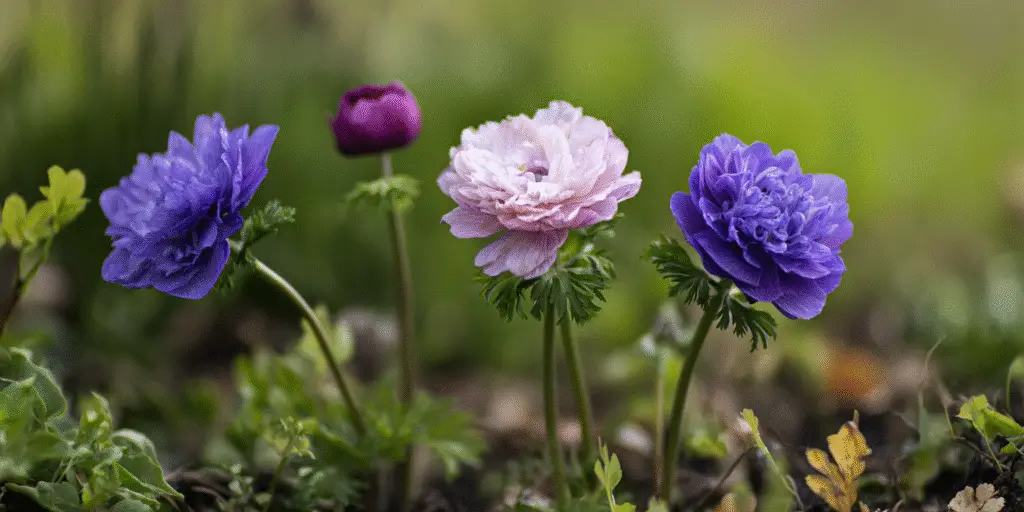
This is the St. Brigid Group of Anemone coronaria selected for semi‑double to double blooms. It stands out for ruffled flowers in a broad mix of colors. Plants perform best in cool seasons with free‑draining soil. In most of North America this group is grown from tubers as a cool‑season annual. Clumps are low and go dormant after flowering. Cut stems add texture to spring arrangements when cut at the colored‑bud stage. Give sun and protection from prolonged winter wet.
At‑a‑glance
Group/Class: Brigid Group (semi‑double to double forms)
Height × spread: 10-18 in (25-45 cm) × 6-9 in (15-23 cm)
Bloom window: spring
Color & flower form: semi‑double to double; wide color range with dark centers
Fragrance: 0 none
USDA hardiness: zones 7-10; grown as annual in colder zones
Breeder / Year / Origin: unknown, unknown, Netherlands
Cut‑flower notes: harvest at colored‑bud stage; vase life typically 3-7 days with preservative; ethylene sensitive; avoid mixing with fresh daffodils
Pet safety: avoid
How it differs
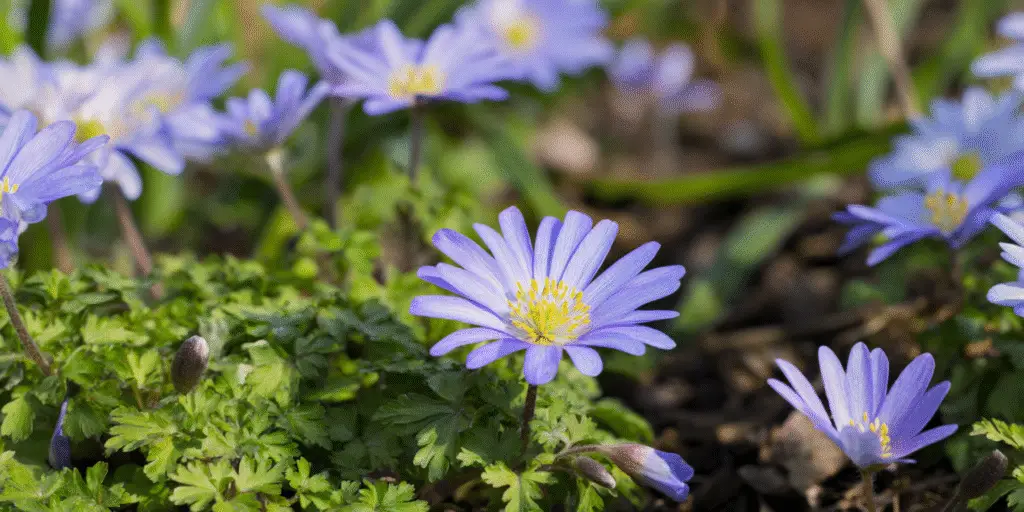
Ruffled, fuller blooms compared with single De Caen types.
Similar stature to other A. coronaria but denser petals.
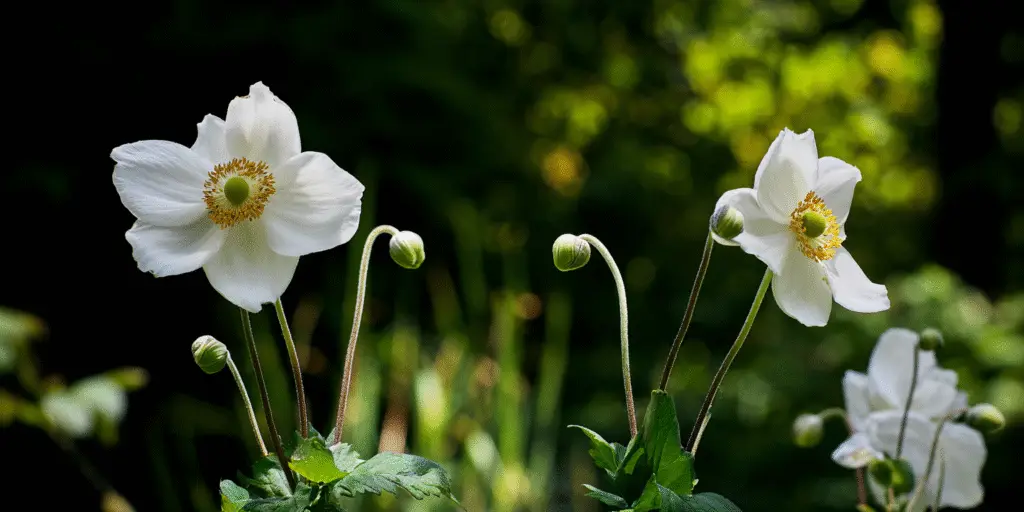
Spring bloom long before fall‑flowering Japanese anemones.
Color range includes many bicolors common in this group.
Strengths
Showy, textured flowers for spring displays.
Usable for cutting when stems are long enough.
Deer and rabbit tolerance commonly noted for the species.
Handles dry summer dormancy after bloom.
Care in one minute
Light: full sun to light shade.
Soil: sandy or loamy, well‑drained; neutral to slightly alkaline.
Water: steady moisture during growth; keep dry in dormancy.
Feeding: light fertilizer when shoots emerge and at bud stage.
Planting: pre‑soak tubers; plant 2 to 3 in deep, 4 to 6 in apart.
Overwintering: lift and store in cold zones; protect from winter wet where left in ground.
Watch‑outs
Requires sharp drainage to prevent tuber rot.
Susceptible to fungal problems in wet or humid springs.
Short vase life relative to many cuts.
Best uses (tags)
cutting, borders, containers, spring color, massing
Provenance note
St. Brigid selections are long‑grown forms of Anemone coronaria noted for double flowers; origin is recorded broadly in European breeding.
Written by: Your Flowers Guide editorial team We are a small independent group of flower lovers who research and review each guide using trusted horticultural and educational sources. Learn more about us