returns in
212
days
Bloom calendar
Blue Shades
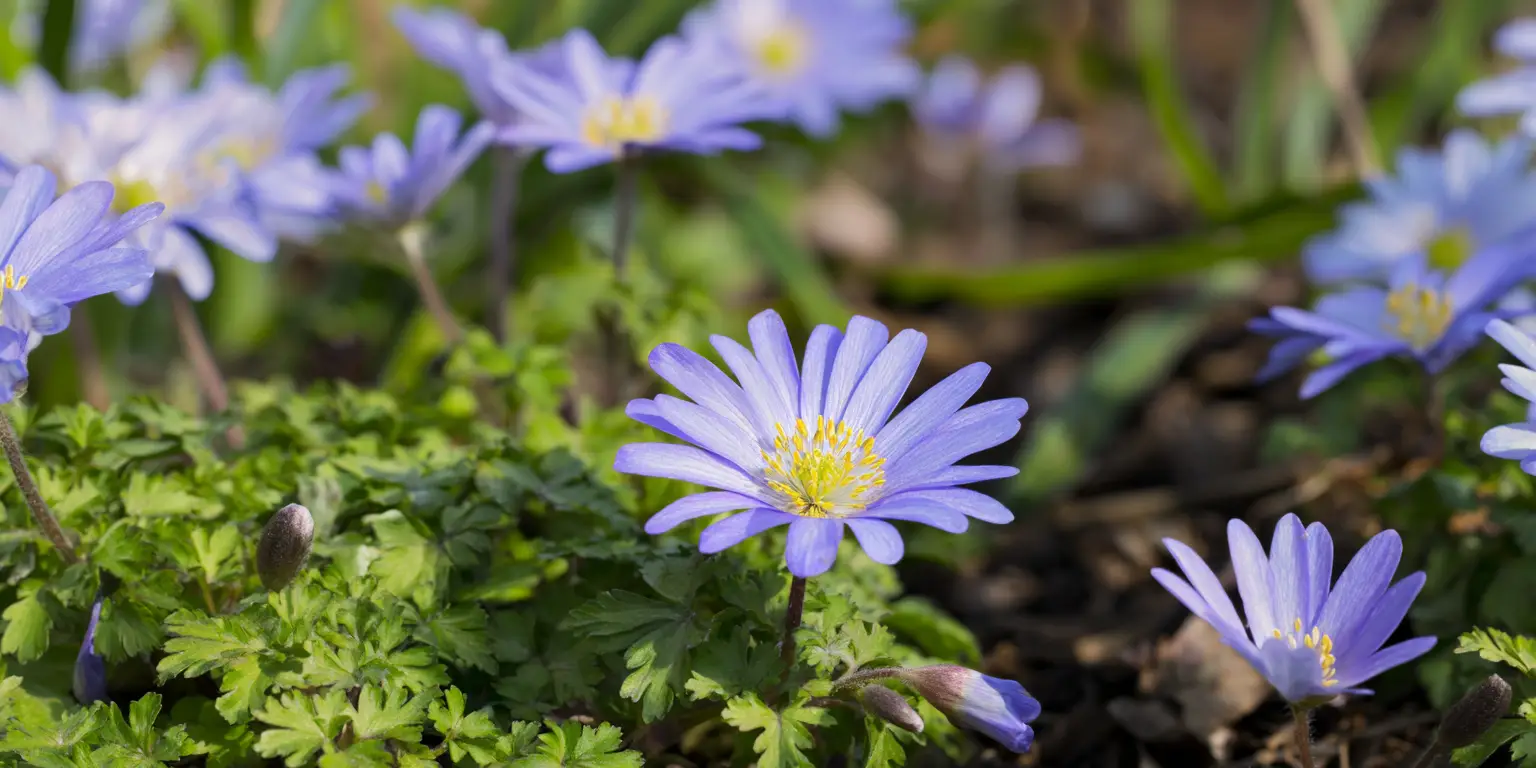
Grecian windflower cultivar
At‑a‑glance
- Group/Class: Grecian windflower cultivar
- Height × spread: 4–8 in (10–20 cm) × 6–9 in (15–23 cm)
- Bloom window: early spring
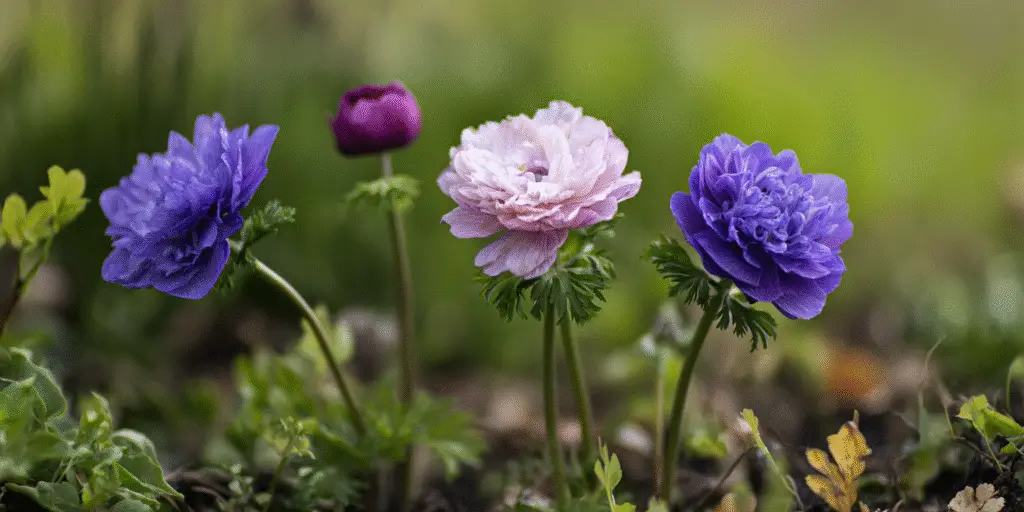
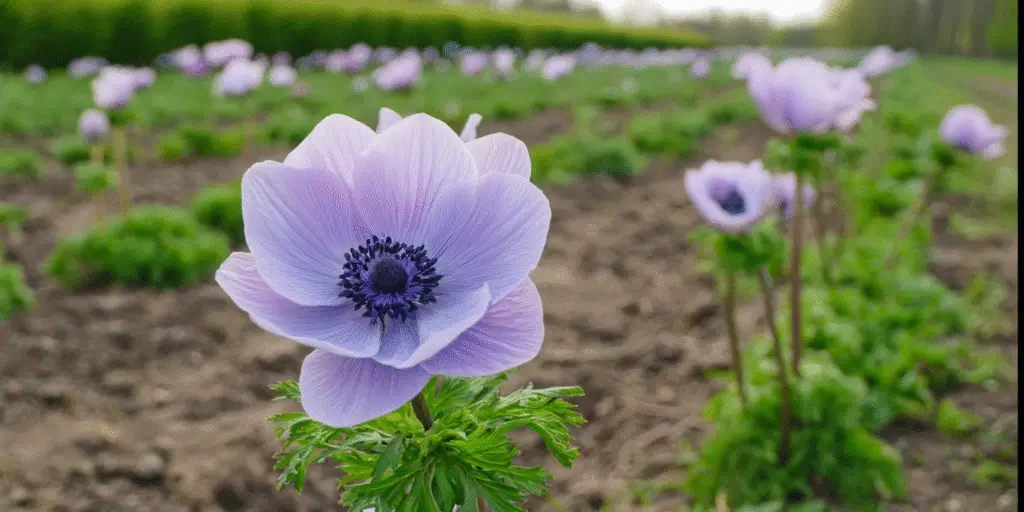
- Color & flower form: single daisy‑like flowers in blue shades
- Fragrance: 0 none
- USDA hardiness: zones 5–8
- Breeder / Year / Origin: unknown, unknown, southeastern Europe to Turkey (species native range)
- Pet safety: avoid
How it differs
- Much shorter and earlier than other windflowers.
- Forms carpets for naturalizing beneath deciduous canopies.
- Handles partial shade better than many A. coronaria strains.
- Leaves disappear cleanly after bloom.
Strengths
- Very early color when few perennials are in flower.
- Fits rock gardens, pathways, and underplantings.
- Deer and rabbit tolerance commonly noted.
- Reliable in cold winters within its hardiness range.
Care in one minute
Site with sun in spring and light shade thereafter.
Soil: humus‑rich, well‑drained loam; neutral to slightly alkaline.
Water: modest moisture during growth; keep dry in summer dormancy.
Planting: pre‑soak tubers; plant 2 to 3 in deep and 3 to 4 in apart.
Feeding: light compost or bulb food at emergence.
Watch‑outs
- Declines in poorly drained or waterlogged soils.
- May be slow to establish from small tubers.
- Dormant foliage leaves gaps after bloom; plan companions.
Best uses (tags)
Provenance note
The species is native to southeastern Europe, the Caucasus, and Turkey; ‘Blue Shades’ is a selected seed strain with variable blue tones.
References
- Missouri Botanical Garden – Anemone blanda ‘Blue Shades’ Plant Finder
- North Carolina Extension Gardener Plant Toolbox – Anemone blanda
Similar Flowers

Enjoying our flower guides? Add YourFlowersGuide as a preferred source on Google. It helps more readers find us.
Add to Preferred Sources