returns in
212
days
Bloom calendar
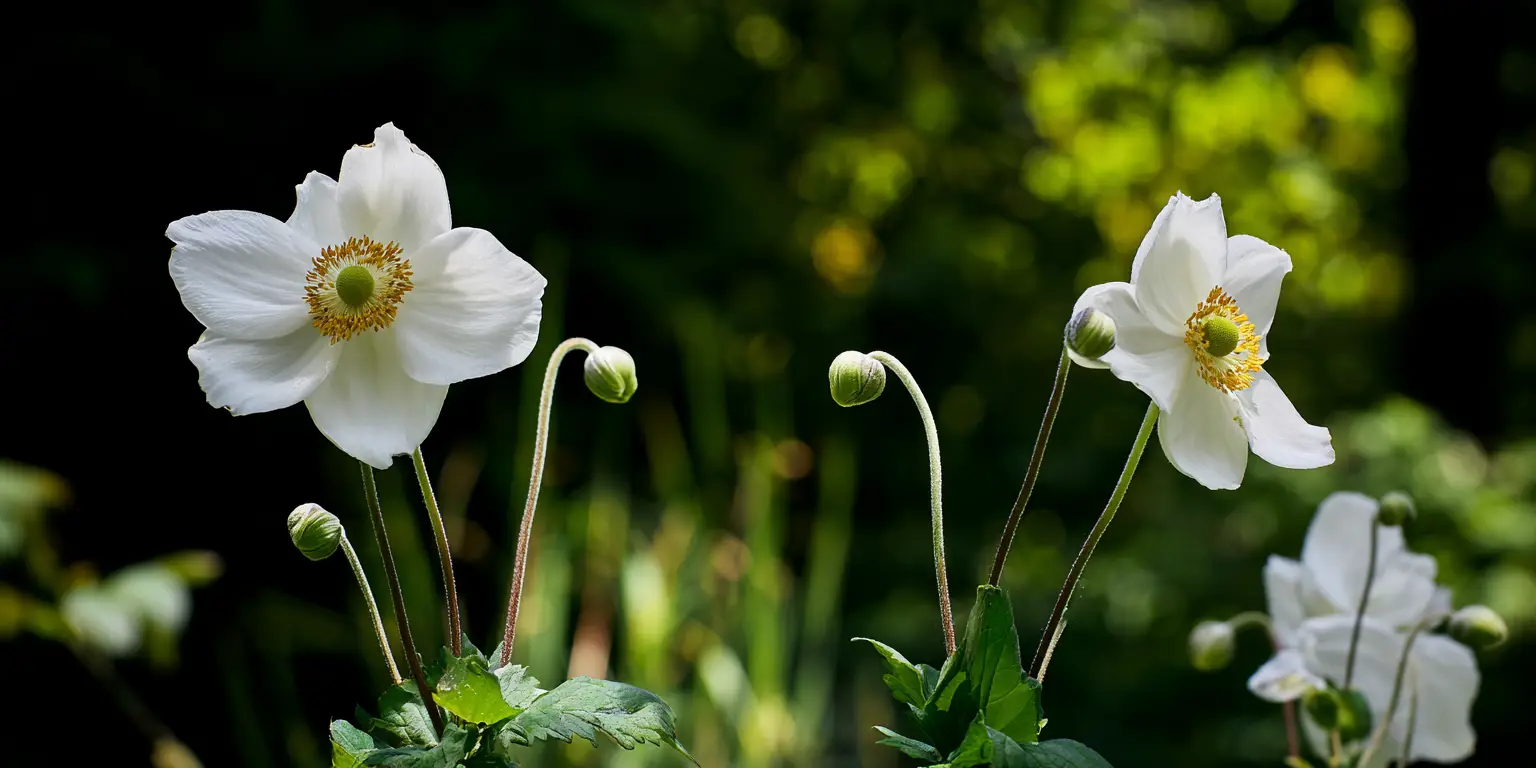
Honorine Jobert
Japanese anemone hybrid cultivar
At‑a‑glance
- Group/Class: Japanese anemone hybrid cultivar
- Height × spread: 3–4 ft (0.9–1.2 m) × 2–3 ft (0.6–0.9 m)
- Bloom window: late summer to fall
- Color & flower form: single white flowers with yellow stamens
- Fragrance: 0 none
- USDA hardiness: zones 4–8
- Breeder / Year / Origin: unknown, 1858, France
- Awards/registration: RHS Award of Garden Merit; Perennial Plant Association Perennial of the Year 2016
- Pet safety: avoid
How it differs
- Much taller than spring‑blooming A. coronaria types.
- Flowers in the late season when borders need color.
- Tolerates more shade than most windflowers.
- Spreads by rhizomes to make naturalized drifts.
Strengths
- Long bloom season in late summer and fall.
- Fair deer tolerance noted by botanic gardens.
- Reliable in cold winters within listed zones.
- Elegant white flowers pair well with many perennials.
Care in one minute
Site in part shade with shelter from strong wind.
Soil: fertile, well‑drained loam; neutral to slightly acidic.
Water: keep evenly moist; mulch to conserve moisture.
Feeding: light spring compost or balanced fertilizer.
Maintenance: divide or root‑prune to control spread; stake if needed; cut back after frost.
Watch‑outs
- Spreads; use edging or division to contain.
- Can flop in wind; staking may be needed on exposed sites.
- Leaf spots and powdery mildew may appear in humid weather.
Best uses (tags)
Provenance note
Discovered in Verdun, France in 1858 and long grown in European gardens; widely recognized for garden merit.
References
- RHS Plant profile – Anemone × hybrida ‘Honorine Jobert’
- University of Wisconsin Extension – Anemone ‘Honorine Jobert’
Similar Flowers

Enjoying our flower guides? Add YourFlowersGuide as a preferred source on Google. It helps more readers find us.
Add to Preferred Sources