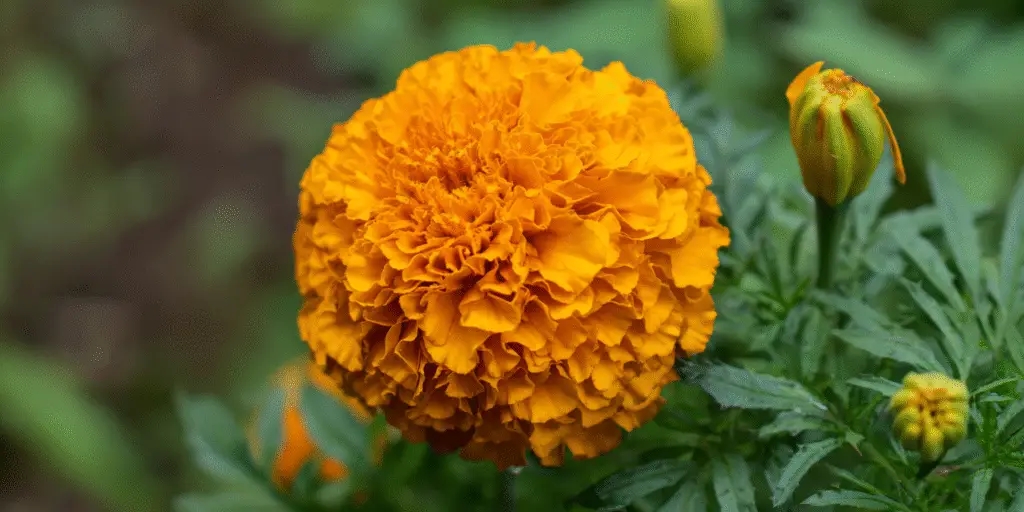
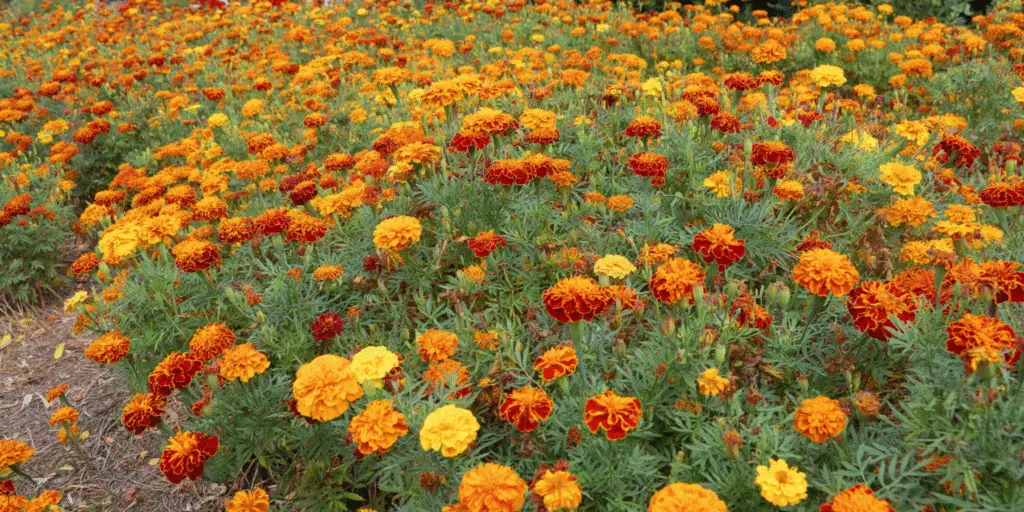
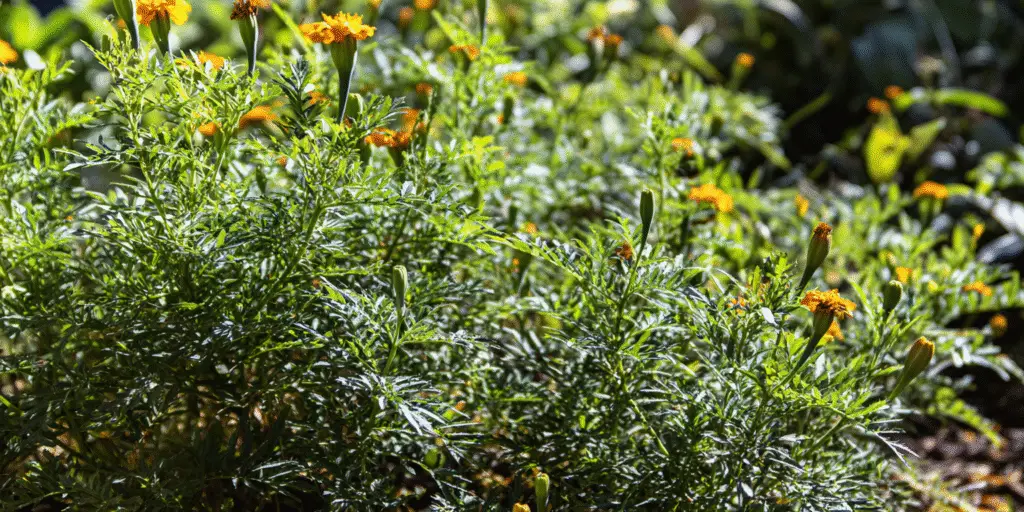
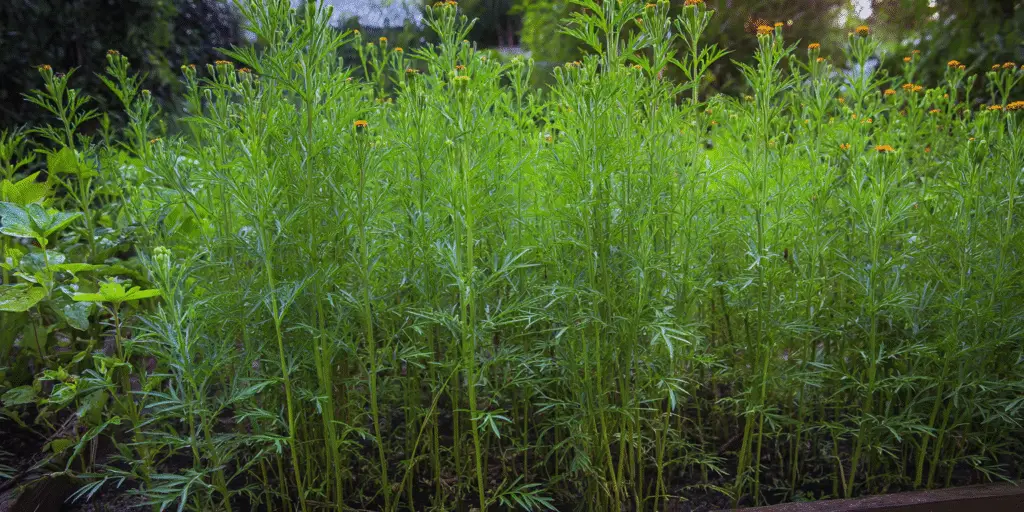
Tagetes tenuifolia is the signet marigold, a fine‑textured species with lacy foliage and many small single flowers. It stands out for an airy mound and citrus‑scented leaves. Plants thrive in full sun and well‑drained soils and tolerate lean conditions and heat. Bloom runs from early summer to fall; many small flowers replace heavy heads. In most of North America it is grown as an annual; in frost‑free areas it can act as a short‑lived perennial. Compact size suits edging, rock gardens, and containers.
At‑a‑glance
Group/Class: Signet marigold (species)
Height × spread: 8-30 in × 9-30 in (20-75 cm × 23-75 cm)
Bloom window: early summer to fall
Color & flower form: Yellow to orange; small single daisies 0.5-1 in
Fragrance: 1 trace
USDA hardiness: grown as annual in most of North America
Breeder / Year / Origin: Cavanilles, 1793, Mexico to Peru
Pet safety: avoid
How it differs
Finer foliage and smaller single blooms than typical marigolds.
Mounded, airy habit that stays neat in heat.
Often more tolerant of drought once established.
Less prone to snapping because flower mass is light.
Strengths
Long bloom with regular deadheading.
Handles heat and lean soils.
Deer resistant and attractive to bees and butterflies.
Low maintenance with tidy habit.
Care in one minute
Full sun; well‑drained soil, pH around 6 to 7.5.
Water to establish; then weekly in hot, dry periods.
No heavy feeding; a light, balanced start charge is enough.
Deadhead to extend bloom; shear lightly if plants tire.
Written by: Your Flowers Guide editorial team We are a small independent group of flower lovers who research and review each guide using trusted horticultural and educational sources. Learn more about us