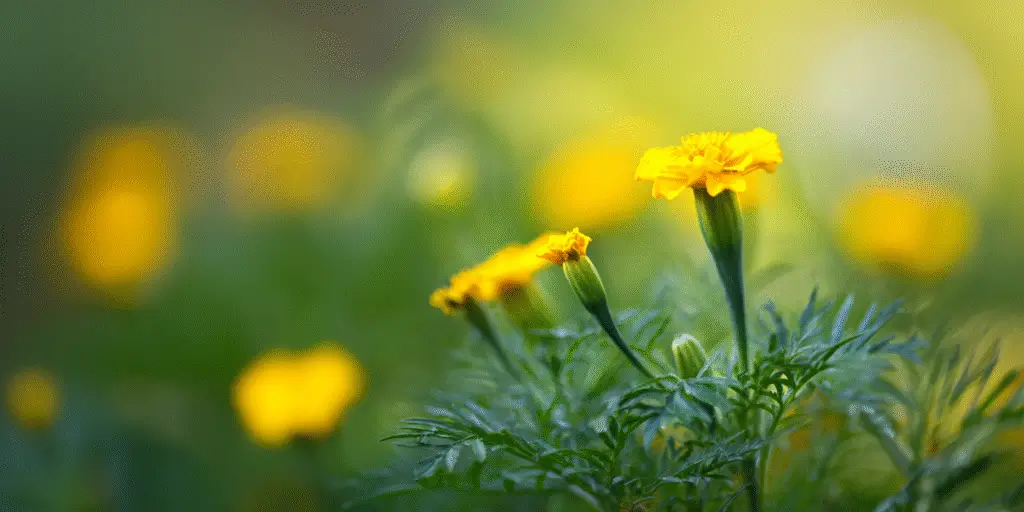
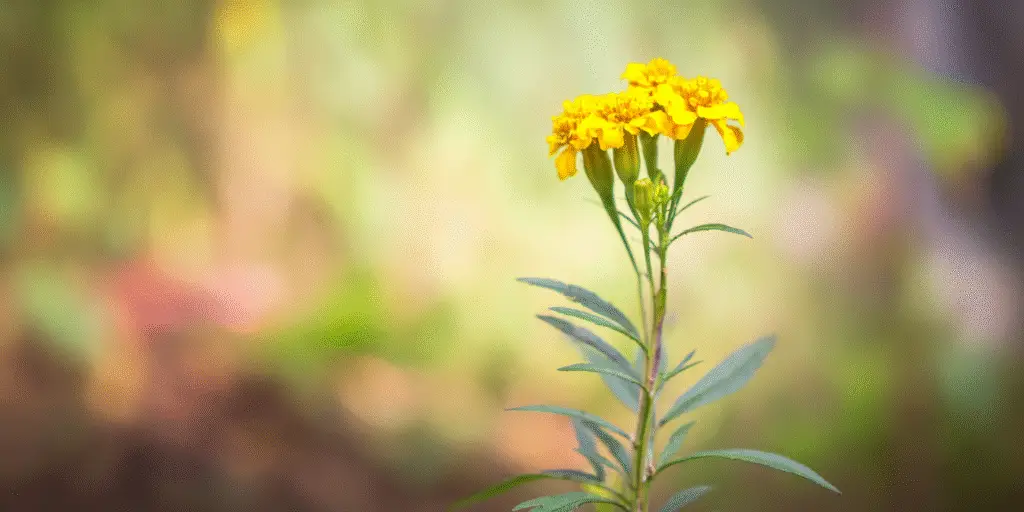
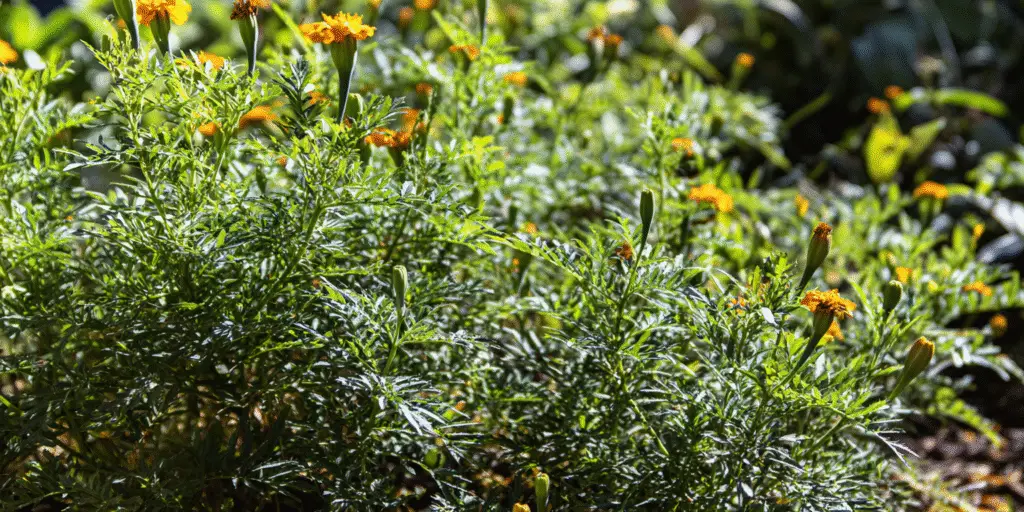
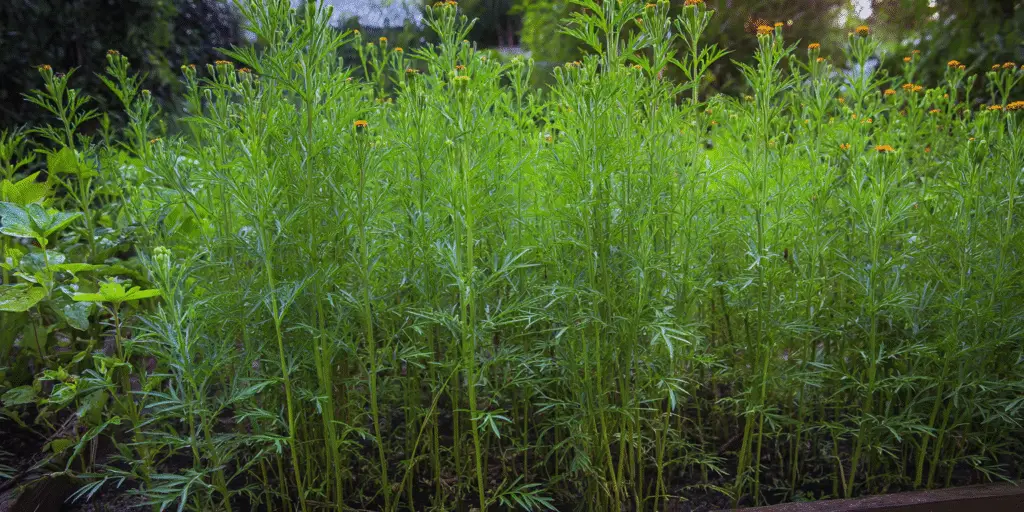
Tagetes minuta is southern marigold, also called Peruvian black mint, a tall, strongly aromatic annual from South America. It stands out for fast growth and fine, lacy foliage topped by clusters of small white flowers with yellow centers. Across North America it is generally grown as an annual in full sun and well‑drained soil. Mature plants often reach 3 to 6 feet tall and 1 to 3 feet wide. The foliage contains compounds used in marigold‑based nematode management; benefits depend on species and cultural practice. Sap can irritate skin and eyes; gloves are recommended when handling. This species is more often grown as an herb or cover crop than as a bedding ornamental.
At‑a‑glance
Group/Class: Southern marigold (species)
Height × spread: 3-6 ft × 1-3 ft (0.9-1.8 m × 0.3-0.9 m)
Bloom window: late summer to fall
Color & flower form: Small white with yellow centers; single heads in clusters
Fragrance: 3 strong
USDA hardiness: grown as annual in most of North America
Breeder / Year / Origin: Linnaeus, 1753, South America
Pet safety: avoid
How it differs
Much taller and airier than typical bedding marigolds.
Small white flowers instead of yellow to orange heads.
Noted for root exudates used to suppress certain nematodes.
Sap is a stronger skin irritant than many marigolds.
Strengths
Rapid growth and high biomass.
Can aid nematode management when grown and incorporated correctly.
Tolerates heat and lean soils.
Care in one minute
Full sun; well‑drained soil.
Water to establish; then moderate irrigation as needed.
Avoid heavy nitrogen that causes lank growth.
Thin or stake tall stands to prevent lodging.
No overwintering outdoors in cold zones.
Watch‑outs
Skin and eye irritation from sap; handle with gloves.
May self‑seed where conditions suit it.
Crowded, humid plantings can increase disease pressure.
Best uses (tags)
background, rotations, herb gardens, wildlife, late season
Provenance note
Described by Linnaeus in 1753; native to South America and widely naturalized.
Written by: Your Flowers Guide editorial team We are a small independent group of flower lovers who research and review each guide using trusted horticultural and educational sources. Learn more about us