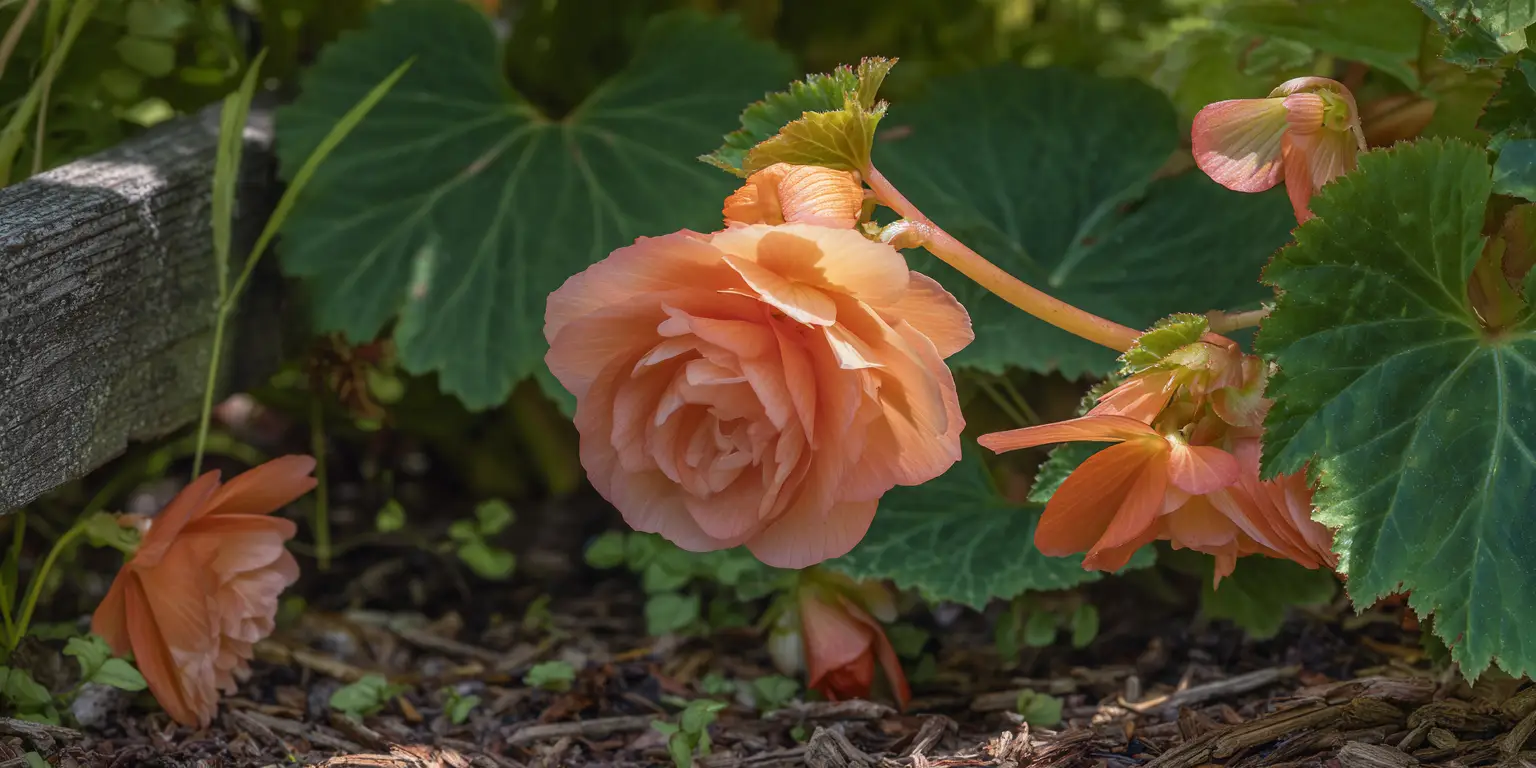
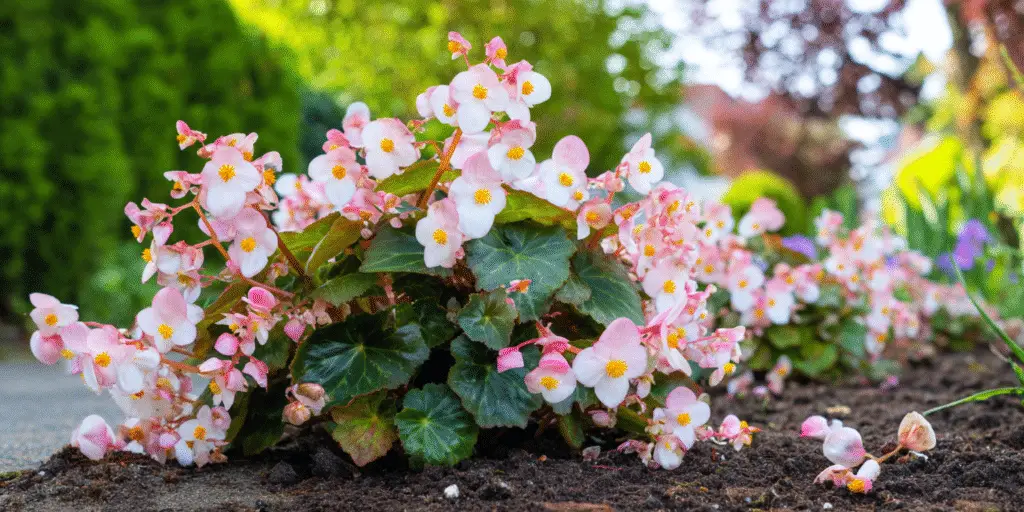
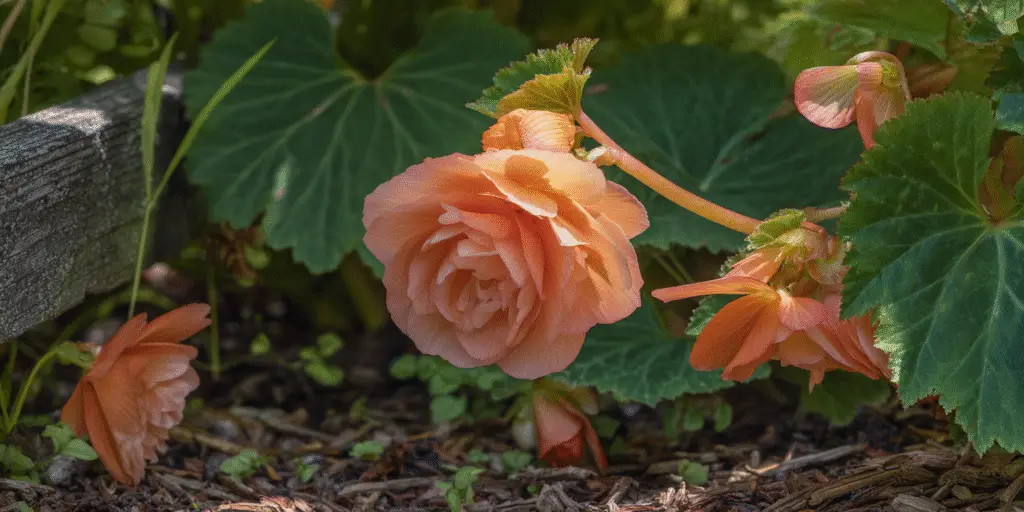
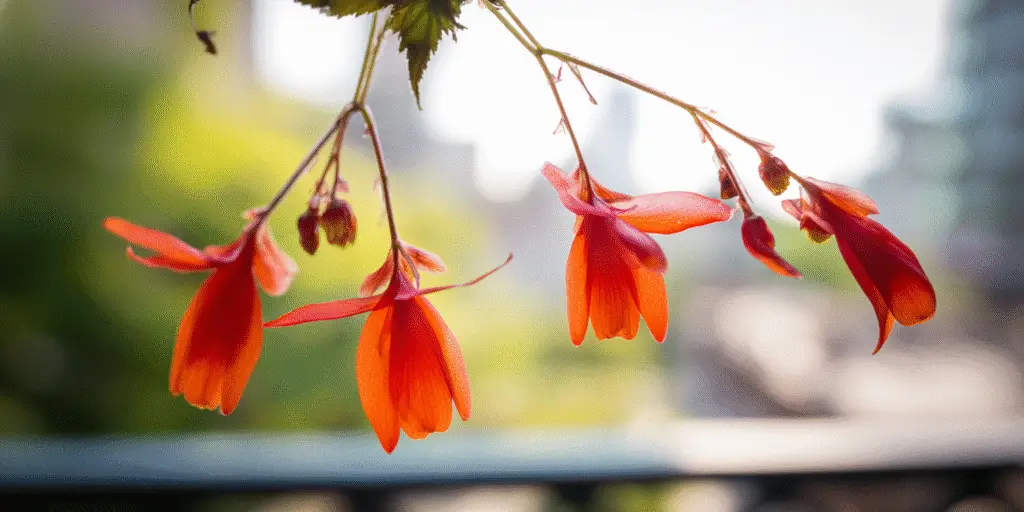
These are hybrid tuberous begonias grown from starchy tubers that rest in winter. They stand out for large, showy flowers in many forms from midsummer to early fall. Plants prefer bright shade or dappled light and cool conditions. They dislike high heat and humidity and need excellent drainage. In most of North America they are planted after frost and the tubers are stored dry for winter.
At‑a‑glance
Group/Class: Tuberosa Group
Height × spread: 12-18 in × 12-18 in (30-45 cm × 30-45 cm)
Bloom window: July to September
Color & flower form: White, yellow, orange, pink, red; single to double; upright and trailing forms
Fragrance: 0 none
USDA hardiness: zones 9-11; grown as annual elsewhere
Breeder / Year / Origin: John Seden, 1870, United Kingdom (early hybrid milestone)
Pet safety: avoid
How it differs
Forms underground tubers and enters dormancy after frost.
Produces larger and more elaborate blooms than most Begonia groups.
Prefers cool summers and bright shade; less tolerant of full sun.
Includes cascading selections for baskets as well as upright types.
Strengths
Spectacular flowers and wide color range.
Excellent for shaded containers and hanging baskets.
Soil and pH: rich, well‑drained mix; neutral to slightly acidic.
Water: keep evenly moist; avoid wetting flowers and foliage.
Feeding: apply a balanced fertilizer every 2 to 3 weeks in growth.
Grooming: pinch lightly early for branching; remove spent blooms.
Overwintering: after frost, dry and store tubers in a cool, frost‑free place until late winter.
Watch‑outs
Tubers rot in wet or poorly drained media.
Susceptible to botrytis and powdery mildew in humid, stagnant air.
Brittle stems; protect from wind and heavy rain.
Frost kills top growth; lift tubers before hard freezes.
Best uses (tags)
containers; hanging baskets; shade‑tolerant; seasonal color
Provenance note
Modern tuberous begonias descend from crosses among Andean species such as Begonia boliviensis, B. veitchii and B. pearcei. One early landmark hybrid, Begonia × sedenii, was raised by John Seden at Veitch Nurseries and distributed in 1870.
Written by: Your Flowers Guide editorial team We are a small independent group of flower lovers who research and review each guide using trusted horticultural and educational sources. Learn more about us