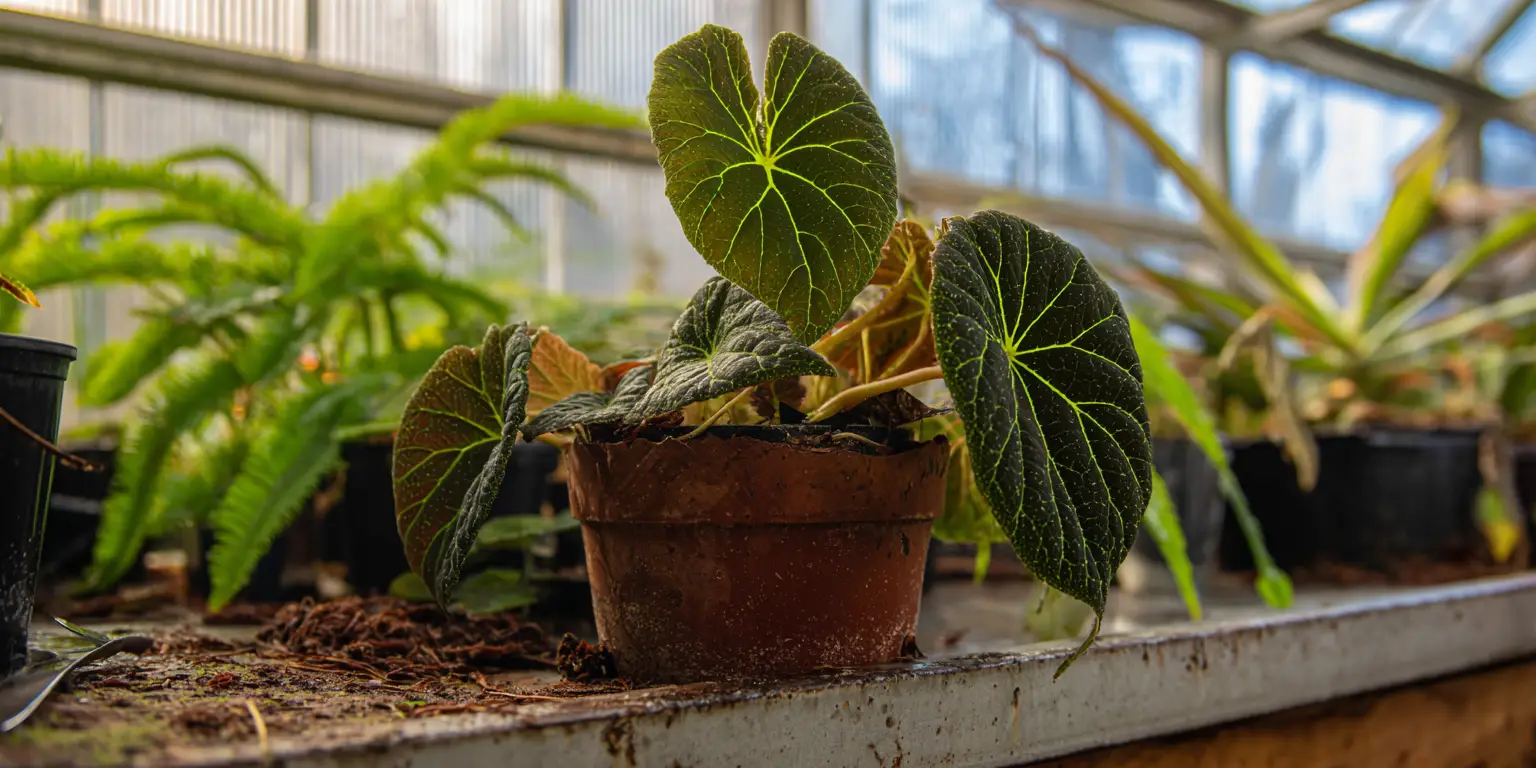
Begonia masoniana
Rhizomatous begonia (species) · Irmscher ex Ziesenhenne, 1971, China to Vietnam (wild origin)
At‑a‑glance
- Group/Class: Rhizomatous begonia (species)
- Height × spread: 12-18 in × 12-18 in (30-45 cm × 30-45 cm)
- Bloom window: spring to summer
- Color & flower form: Greenish‑white cymes; leaves bright green with dark cross
- Fragrance: 0 none
- USDA hardiness: zones 11-12 outdoors; otherwise grown indoors
- Breeder / Year / Origin: Irmscher ex Ziesenhenne, 1971, China to Vietnam (wild origin)
- Pet safety: avoid
How it differs
- Textured leaves with a distinct dark cross, unlike most begonias.
- Rhizomatous habit; spreads slowly from thickened stems at soil level.
- Prefers high humidity and consistent moisture without waterlogging.
- Often smaller and more compact than cane or tuberous types.
Strengths
- Striking foliage effect with compact habit.
- Performs indoors where bright, indirect light is available.
- Tolerates division; propagates from rhizome pieces.
Care in one minute
Site: bright, filtered light indoors or shaded patio in frost‑free areas.
Soil and pH: peat‑free, well‑aerated, well‑drained mix; neutral to slightly acidic.
Water: keep evenly moist in growth; let surface dry slightly between waterings.
Feeding: light, regular feeding during spring and summer.
Grooming: remove old leaves; divide rhizomes to rejuvenate clumps.
Overwintering: grow indoors except in zones 11-12.
Watch‑outs
- Frost tender; temperatures below 55°F can injure plants.
- Powdery mildew and leaf spots if foliage is kept wet or air is stagnant.
- Slugs and snails may damage leaves outdoors.
Best uses (tags)
Provenance note
Named for English plantsman Maurice Mason from plants introduced to cultivation; later confirmed from wild populations in southern China and northern Vietnam.
References
- Missouri Botanical Garden – Begonia masoniana
- Kew – Plants of the World Online: Begonia masoniana
- IPNI – Begonia masoniana (publication details)
- ASPCA – Begonia (toxicity)
Similar Flowers

Enjoying our flower guides? Add YourFlowersGuide as a preferred source on Google. It helps more readers find us.
Add to Preferred Sources