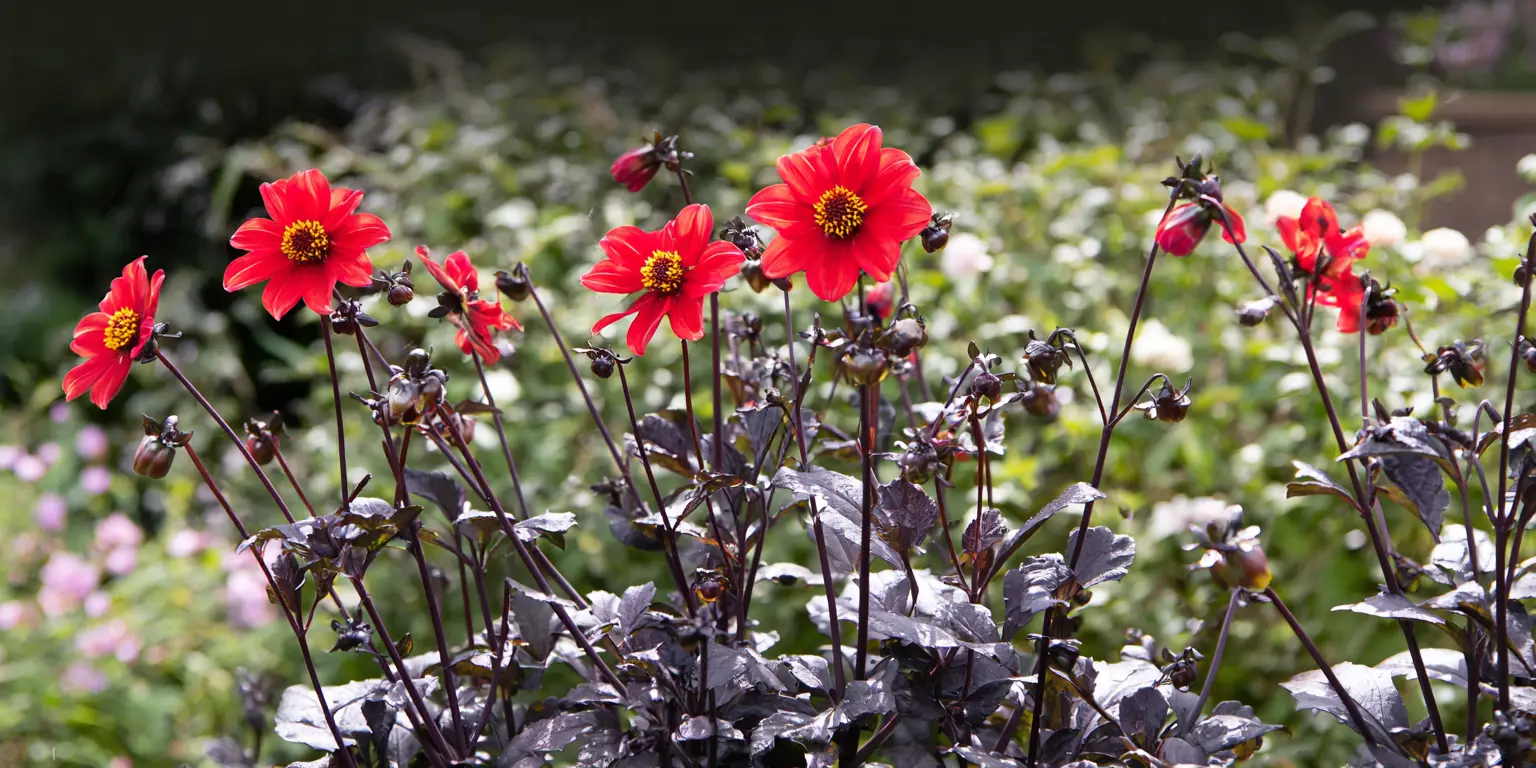
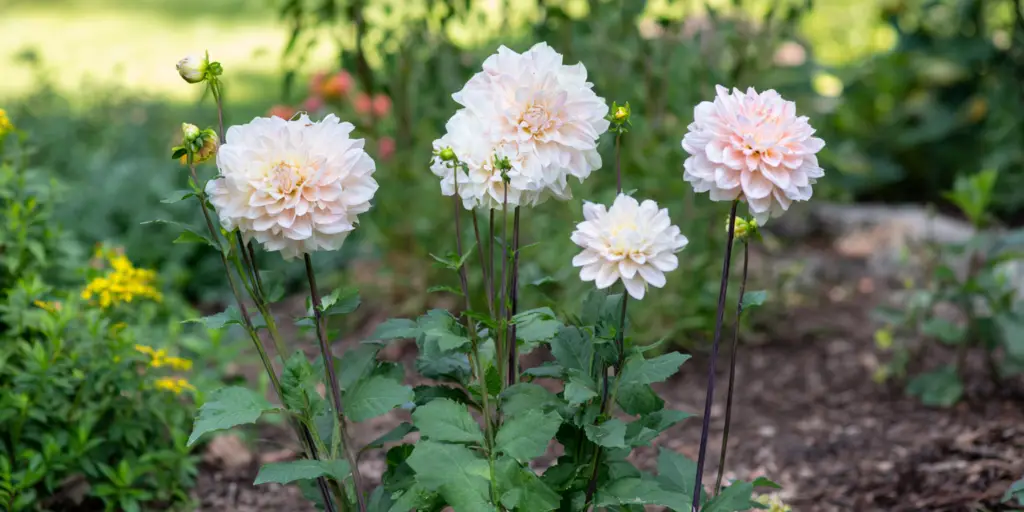
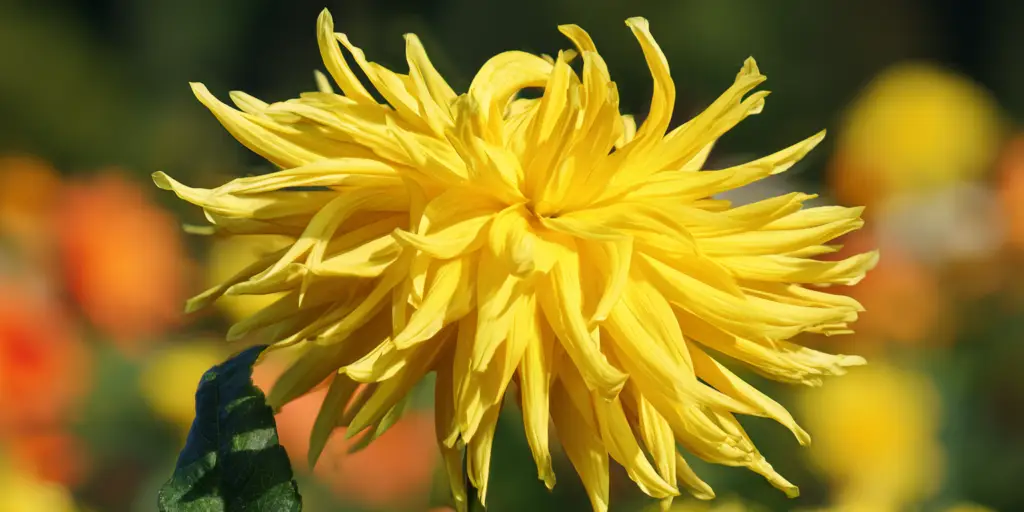
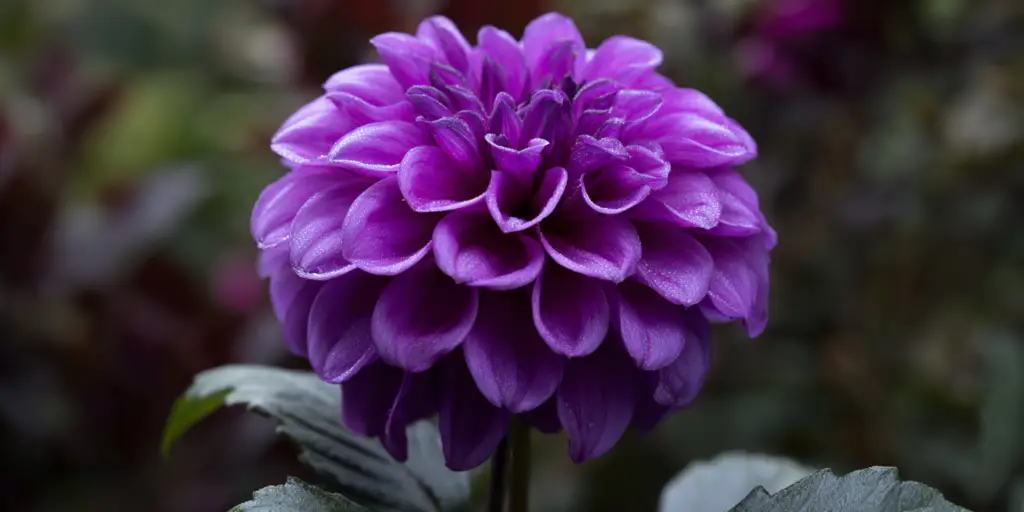
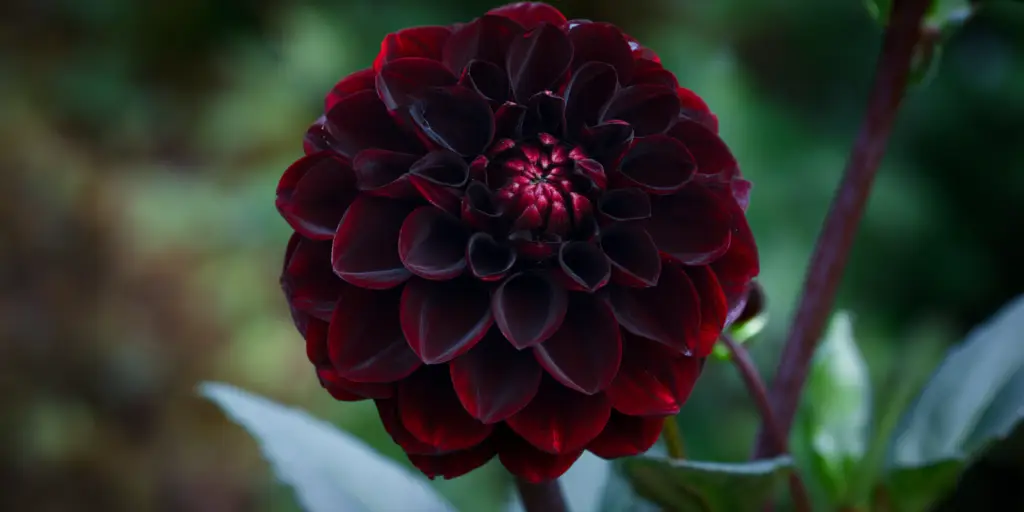
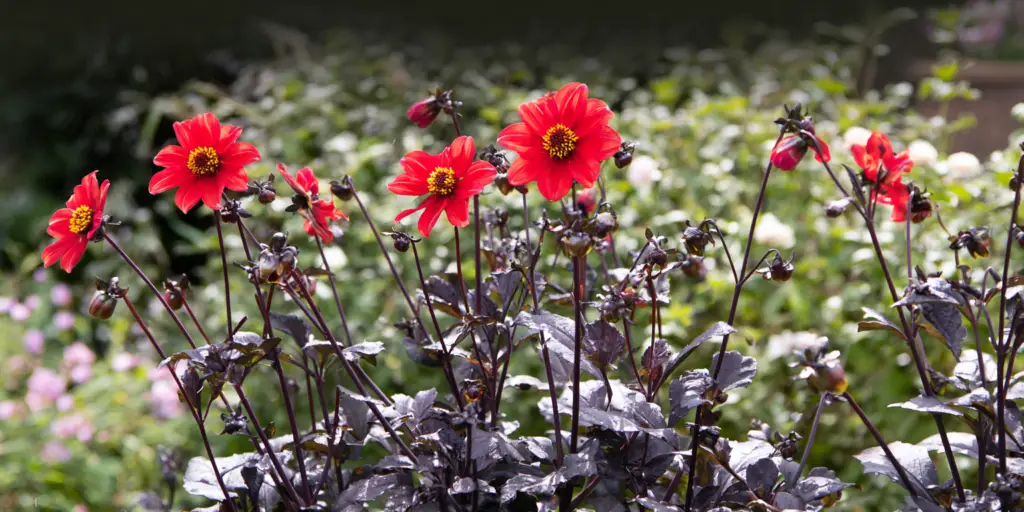
Dahlia ‘Bishop of Llandaff’ is a classic peony‑flowered dahlia with dark foliage and scarlet blooms. It performs well in full sun and fertile, well‑drained soil. Flowering runs from summer to autumn and continues to frost with deadheading. The open, semi‑double form provides accessible pollen. The plant is medium height and shows well in borders and pollinator plantings. It is frost‑tender and tubers need protection or lifting in cold winters.
At‑a‑glance
Group/Class: Peony‑flowered (semi‑double)
Height × spread: 3-3.5 ft × 1.5-2 ft (0.9-1.1 m × 45-60 cm)
Bloom window: summer to frost
Color & flower form: bright red; semi‑double peony type with dark foliage
Fragrance: 0 none
USDA hardiness: grown as annual in most regions; may overwinter in ground in Zone 7 to 10 where soils are well‑drained
Breeder / Year / Origin: Treseder, 1928, United Kingdom
Awards/registration: RHS Award of Garden Merit
Cut‑flower notes: moderate stem length; vase life about 4 to 6 days when cut early and conditioned.
Pet safety: avoid
How it differs
Single to semi‑double flowers offer pollen access unlike many fully double dahlias.
Dark bronze foliage gives strong contrast compared with green‑leafed forms.
Recognized by the RHS for consistent garden merit.
Strengths
Useful to pollinators thanks to open centers.
Dependable summer‑to‑frost bloom with deadheading.
Dark foliage adds season‑long structure.
Care in one minute
Site: full sun; fertile, humus‑rich, well‑drained soil; neutral pH.
Water: steady moisture; avoid soggy conditions.
Feeding: moderate fertilizer; avoid excess nitrogen that reduces flowering.
Training: pinch once at 12 to 18 in; stake if exposed; deadhead to prolong bloom.
Overwintering: lift after frost and store around 40 to 45°F (4 to 7°C), or mulch and risk in‑ground only in mild, well‑drained Zone 7 to 10 sites.
Watch‑outs
May need staking in wind despite moderate height.
Leaves can scorch in reflected heat without adequate moisture.
Written by: Your Flowers Guide editorial team We are a small independent group of flower lovers who research and review each guide using trusted horticultural and educational sources. Learn more about us