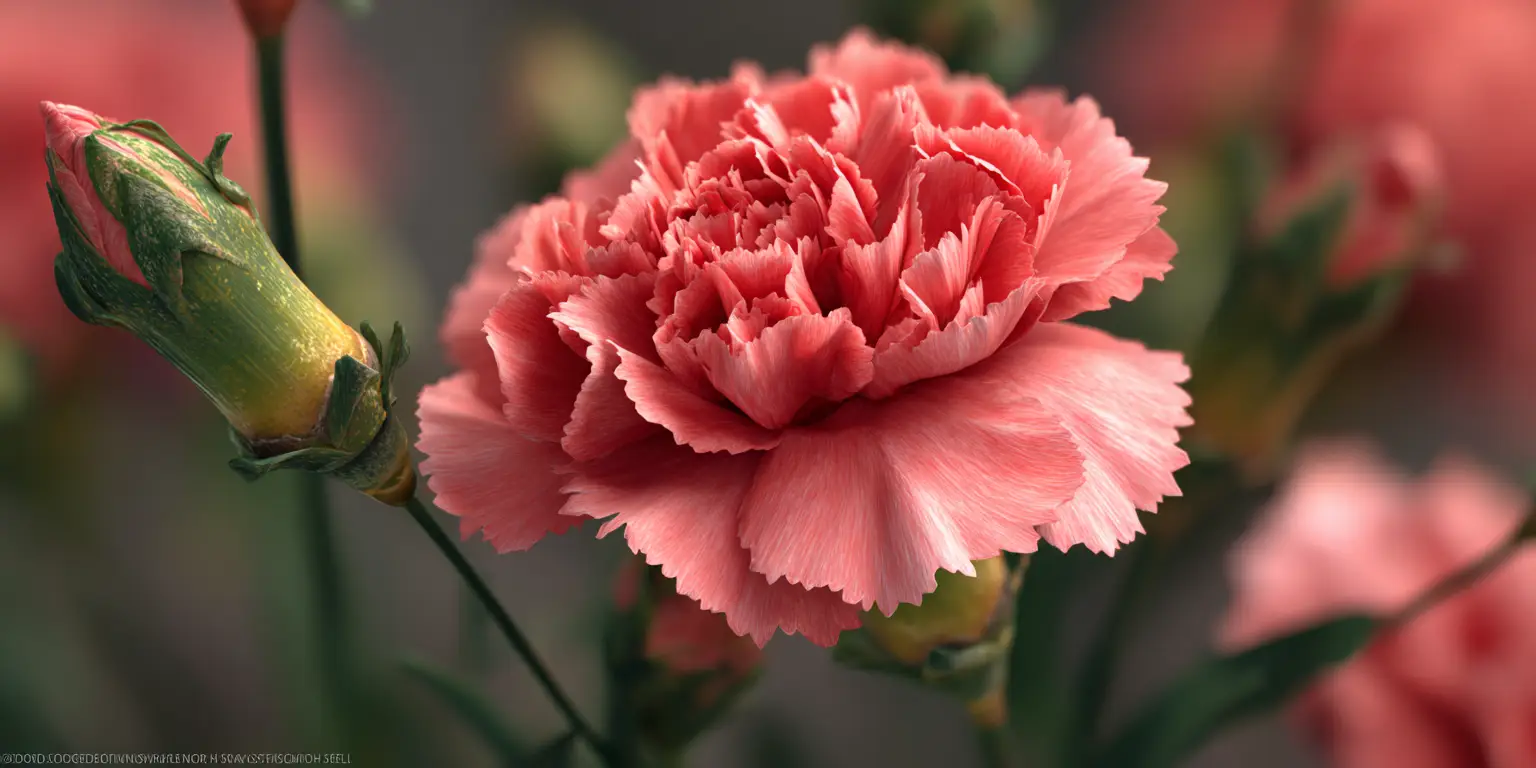
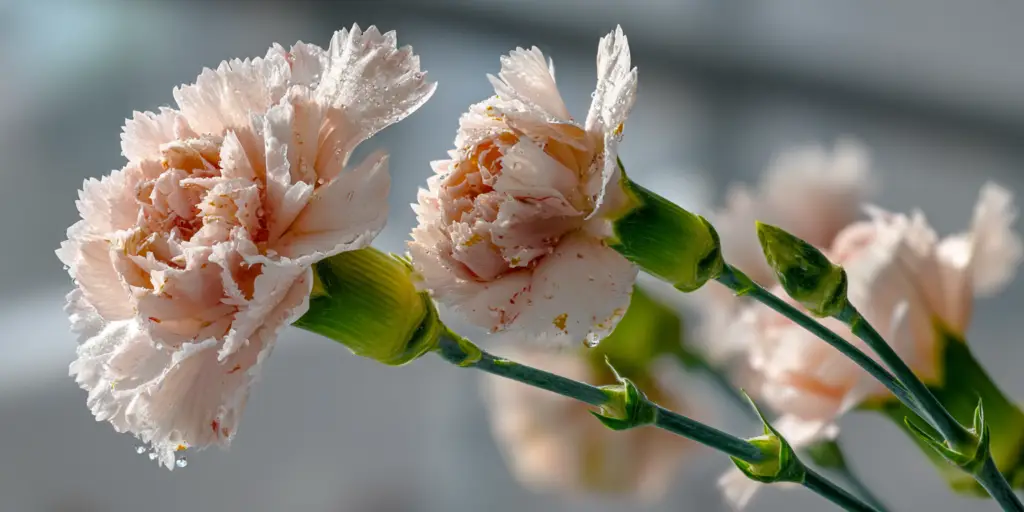
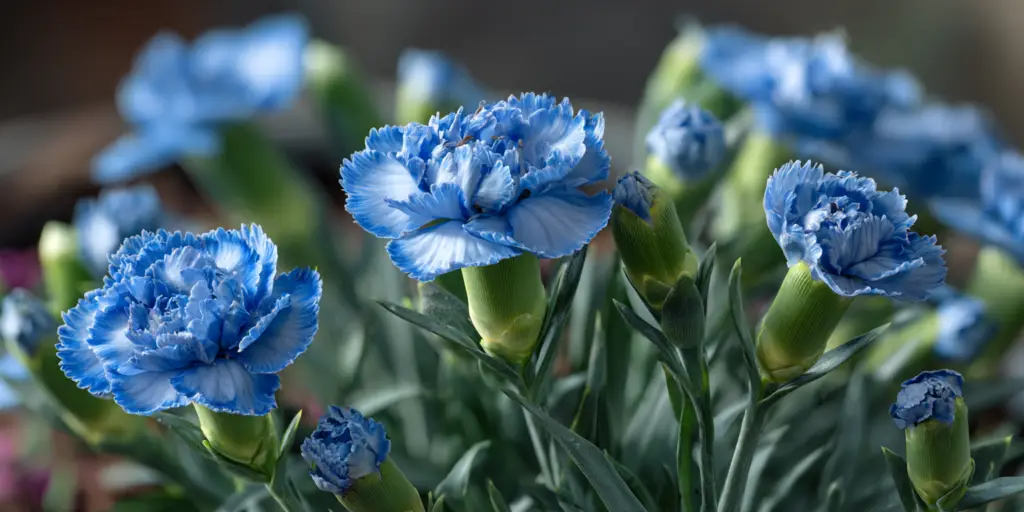
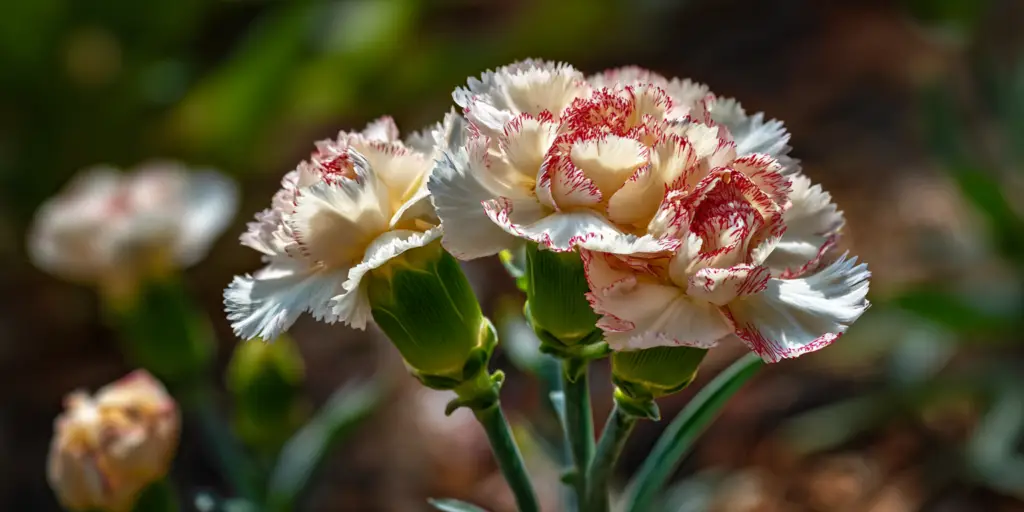
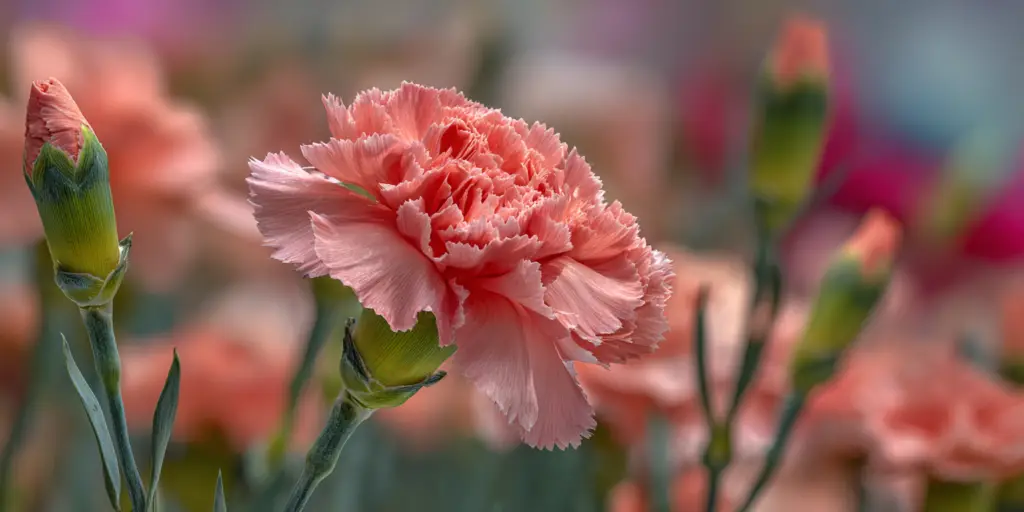
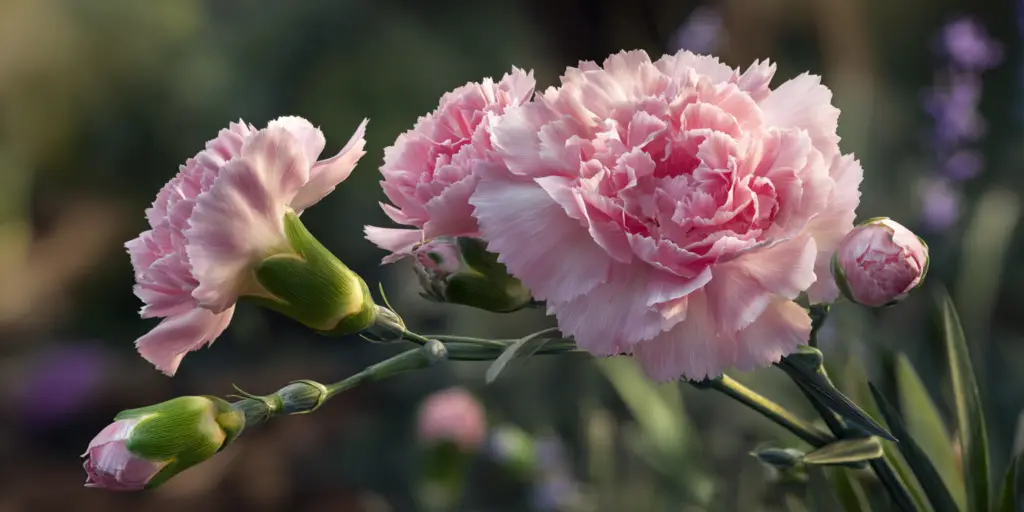
Standard Carnation is the classic florist style of Dianthus caryophyllus bred and grown for one large flower per stem. It is most often produced under protection for consistent stem length and quality. Outdoors, it behaves like a short-lived perennial in mild zones and is often treated as an annual where summers are hot or winters are severe. Standard types are usually disbudded so the plant puts energy into a single, full head. Many modern commercial standards are selected for shipping and storage performance, not fragrance. In gardens, it performs best in full sun with cool nights, excellent drainage, and steady moisture.
At‑a‑glance
Group/Class: Standard cut carnation type
Height × spread: 3-4 ft (0.9-1.2 m) × 6-12 in (15-30 cm)
Bloom window: summer outdoors; year-round under glass (varies by climate)
Color & flower form: one large, fully double flower per stem; wide color range
Fragrance: 0-1 (varies by cultivar; many modern cut types are low-scent)
USDA hardiness: 6a-9b (often grown as an annual outside these zones)
Breeder / Year / Origin: unknown / varies by cultivar; species origin Mediterranean region
Cut-flower notes: very ethylene sensitive; tight-bud harvest can open later under proper handling
Pet safety: avoid
How it differs
One main bloom per stem is the goal, so side buds are often removed.
Stems are typically longer and thicker than garden border strains.
Fragrance is often weaker than older garden selections.
Performance is best in cool, controlled conditions compared with hot summer beds.
Strengths
Consistent, large flower head for formal arrangements.
Strong stems when properly supported and grown.
Stores well at near-freezing temperatures in commercial handling.
Wide availability of colors and forms.
Care in one minute
Plant in full sun (use light shade only in very hot areas).
Use well-drained soil with neutral to slightly alkaline pH (about 6.0-8.0).
Water to keep soil evenly moist, and avoid persistent soggy conditions.
Feed lightly during active growth, and avoid excess nitrogen.
Stake early, and disbud if you want one large bloom per stem.
In much of North America, overwinter only where winters are mild and drainage is excellent.
Watch‑outs
Heat stress reduces quality and flowering reliability in hot regions.
Botrytis and crown rot are more likely with wet foliage and poor airflow.
Ethylene exposure can cause premature petal wilting and “sleepiness.”
Stems can snap if allowed to dry out, then rehydrate suddenly.
Standard types are the single-bloom-per-stem form used in commercial cut-flower production, and postharvest work emphasizes their ethylene sensitivity and ability to open from tight buds when handled correctly.
Written by: Your Flowers Guide editorial team We are a small independent group of flower lovers who research and review each guide using trusted horticultural and educational sources. Learn more about us