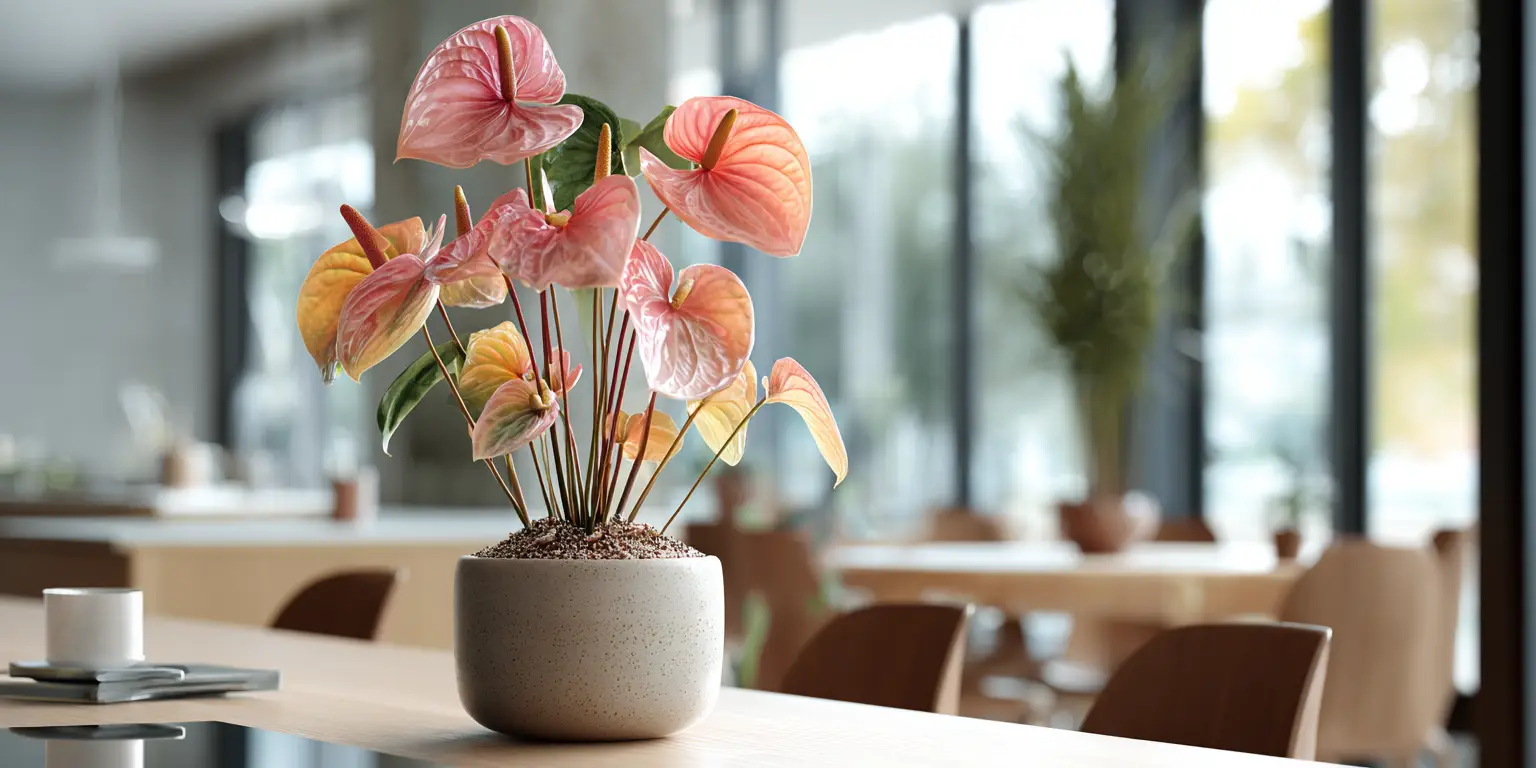
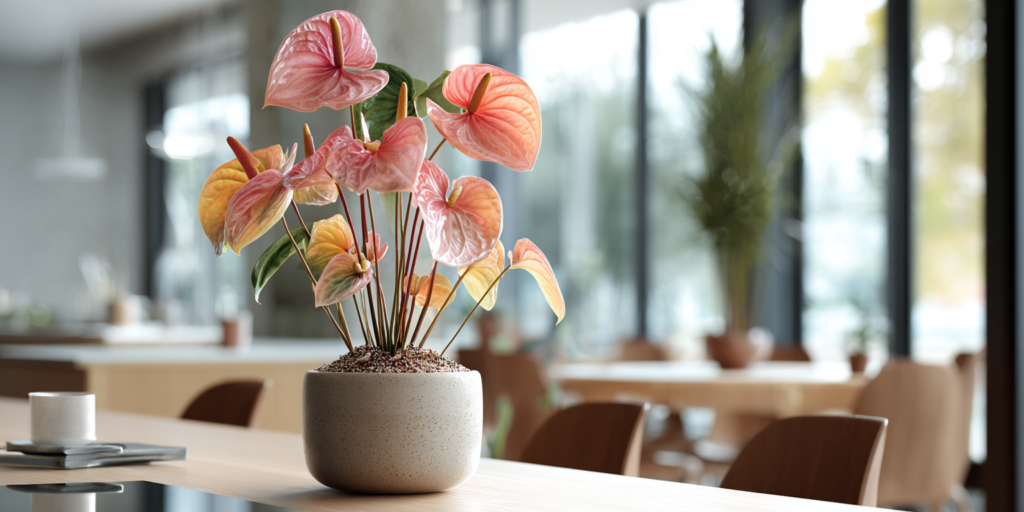
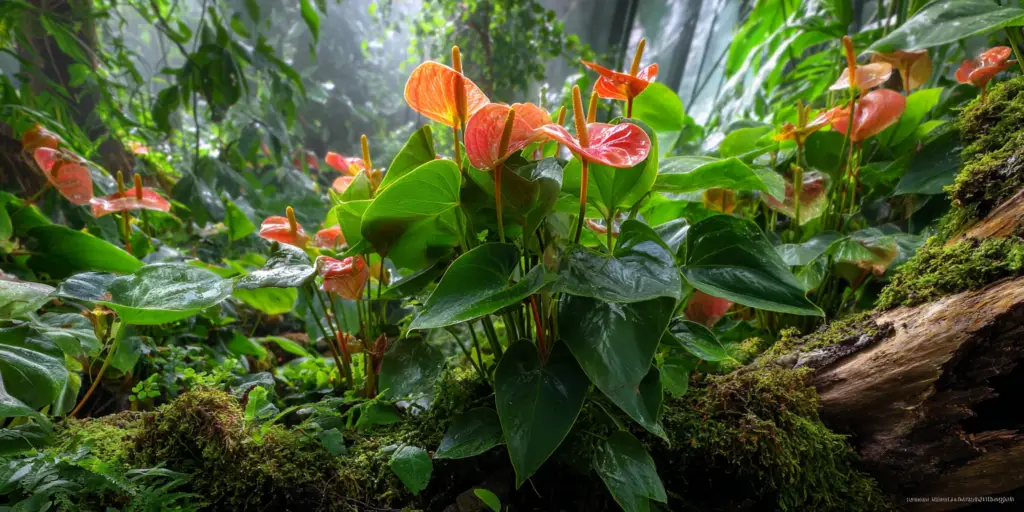
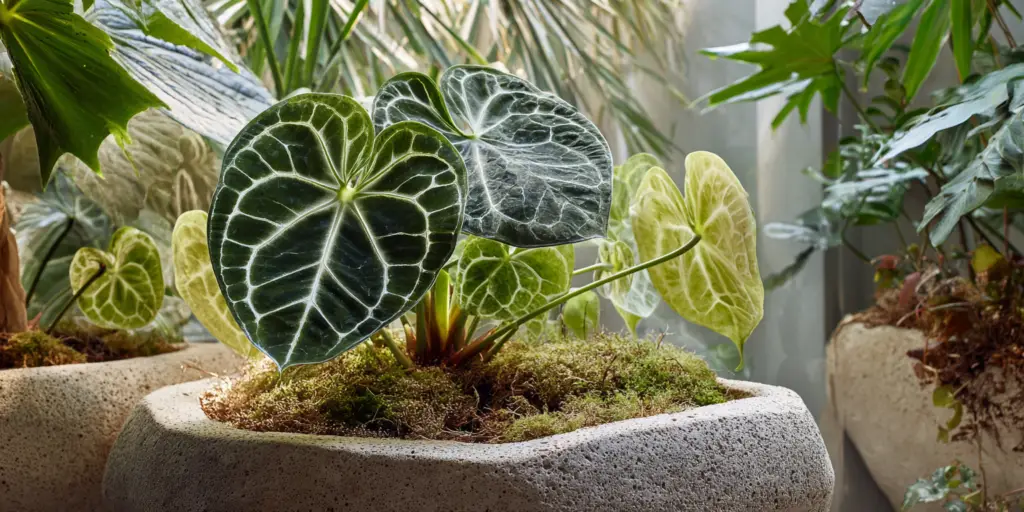
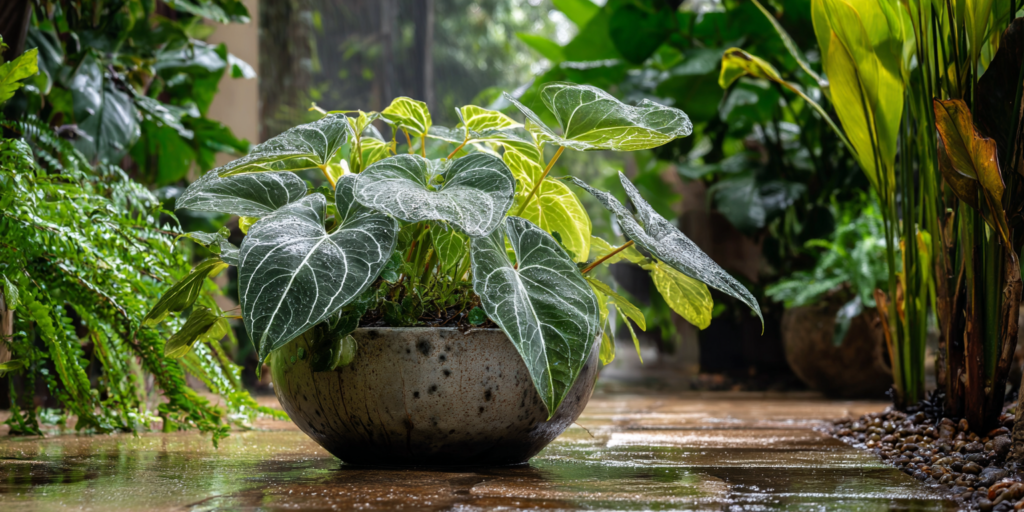
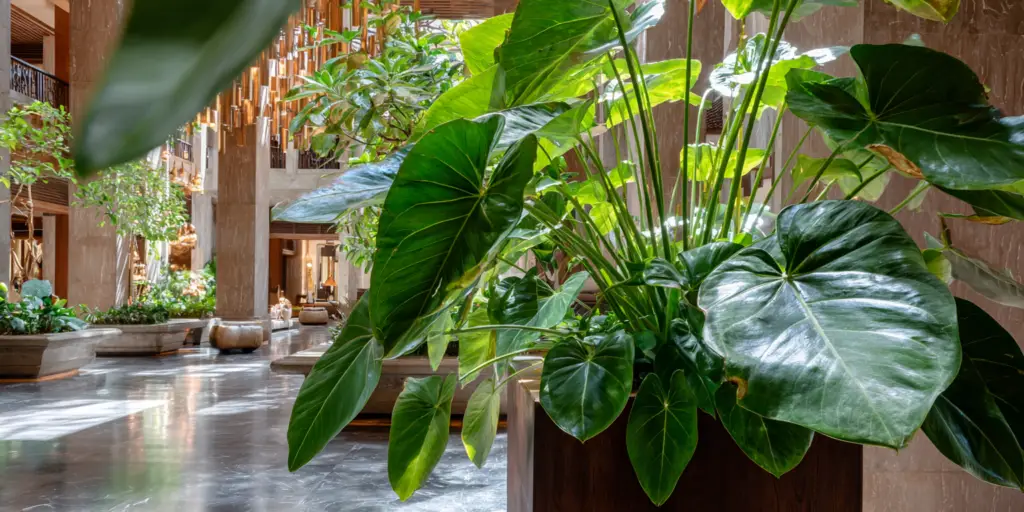
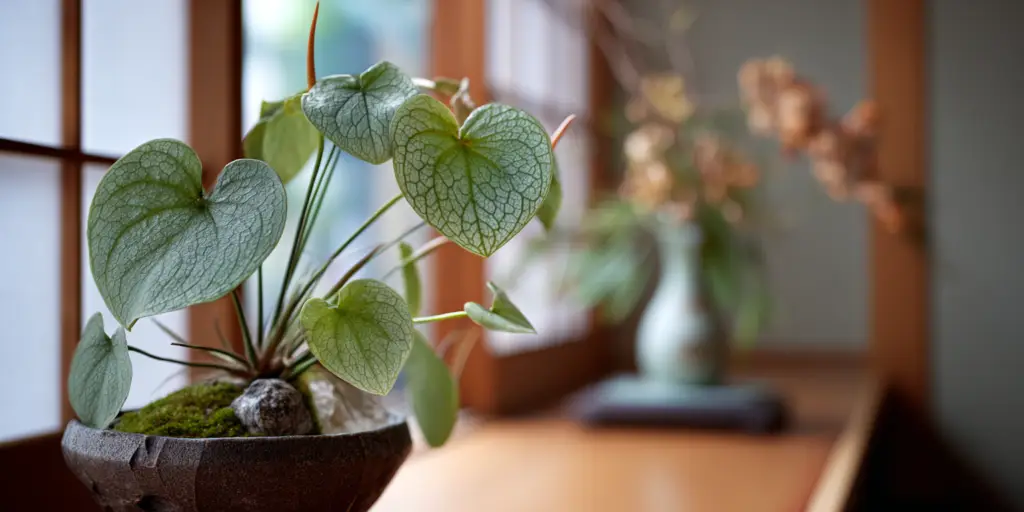
This species is the classic flamingo flower grown for its long-lasting, glossy spathes and upright spadix. It stands out for dependable, repeat bloom indoors and strong stems useful for arranging. It performs best in bright, indirect light with consistent warmth and humidity. It is native to the wet tropics of Colombia and Ecuador, so in North America it is usually grown as a houseplant. Outdoors it is suitable only for frost-free sites. Blooms can appear intermittently through the year under good light.
At‑a‑glance
• Group/Class: evergreen aroid; epiphytic perennial • Height × spread: 12 to 18 in (30 to 45 cm) × 12 to 18 in (30 to 45 cm) • Bloom window: intermittent year-round indoors • Color & flower form: waxy red to pink to white spathes; yellow to white spadix • Fragrance: 0 none • USDA hardiness: 11 to 12; indoors elsewhere • Breeder / Year / Origin: unknown • Awards/registration: RHS Award of Garden Merit • Cut-flower notes: sturdy stems; typical vase life up to 2 to 3 weeks when conditioned • Pet safety: avoid
How it differs
Showiest spathe display among commonly grown anthuriums
Blooms reliably under household light when bright and indirect
Stronger stems than most foliage types
Many color forms from white to deep red
Strengths
Long-lasting spathes
Can flower year-round indoors
Handles typical indoor temperatures well
Widely available starter sizes
Care in one minute
Site: bright, indirect light away from hot sun.
Soil: chunky, well-drained aroid mix; pH 6.0 to 6.5; good aeration.
Water: keep evenly moist; let top 1 in (2 to 3 cm) dry before watering.
Feeding: light, balanced houseplant feed monthly in spring to summer.
Overwintering: keep 65 to 80°F (18 to 27°C) and humidity 50% or higher.
Watch‑outs
Sensitive to cold below 55°F (13°C)
Overwatering can cause root rot in dense mixes
Susceptible to bacterial and fungal diseases in stagnant, humid air
Best uses (tags)
containers; interiors; cutting; gift plant; shade-tolerant
Provenance note
Native to Colombia and Ecuador and widely hybridized in cultivation. Recognized with the RHS Award of Garden Merit for reliable performance under glass.
Written by: Your Flowers Guide editorial team We are a small independent group of flower lovers who research and review each guide using trusted horticultural and educational sources. Learn more about us