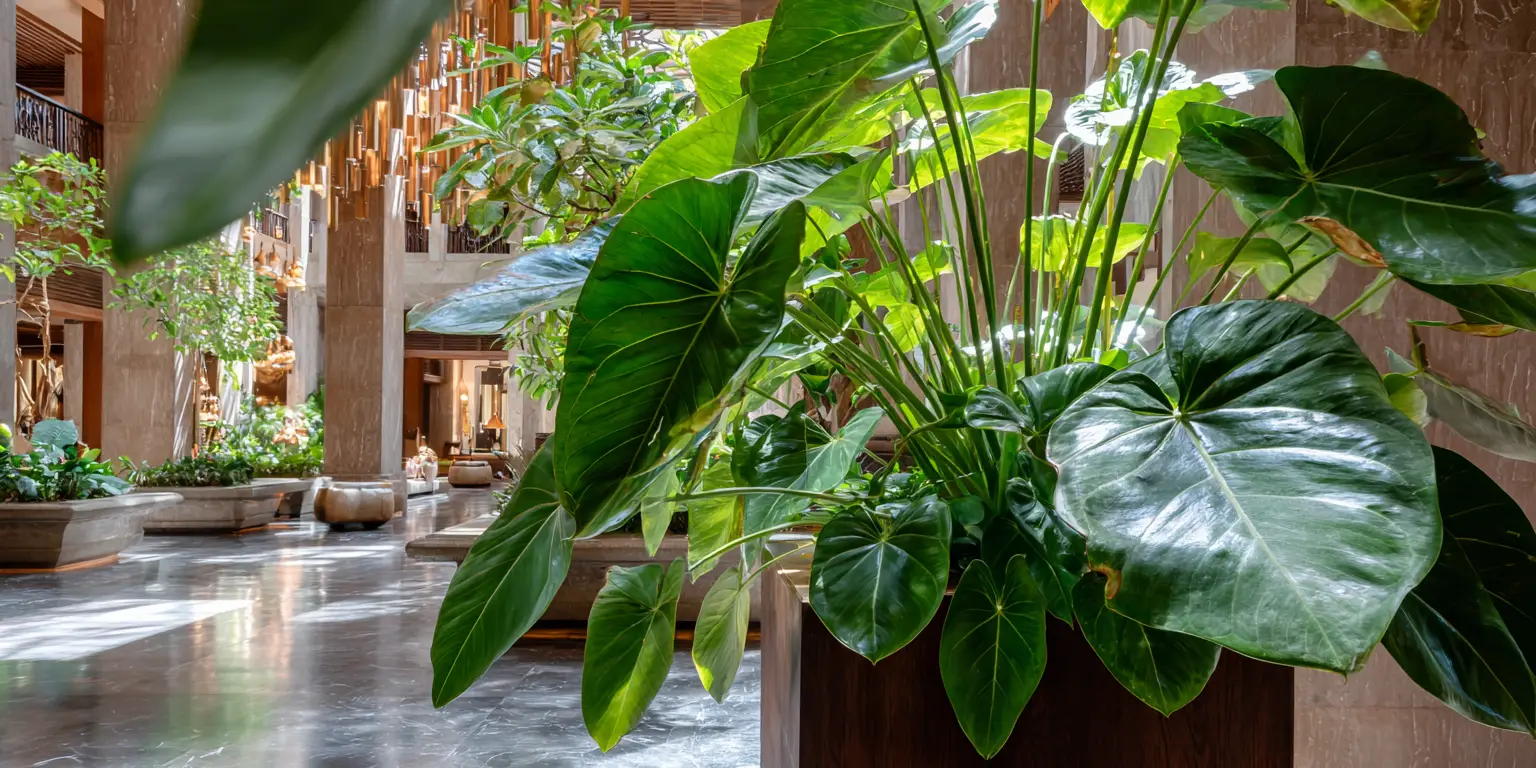
in bloom
now
through Dec
Bloom calendar
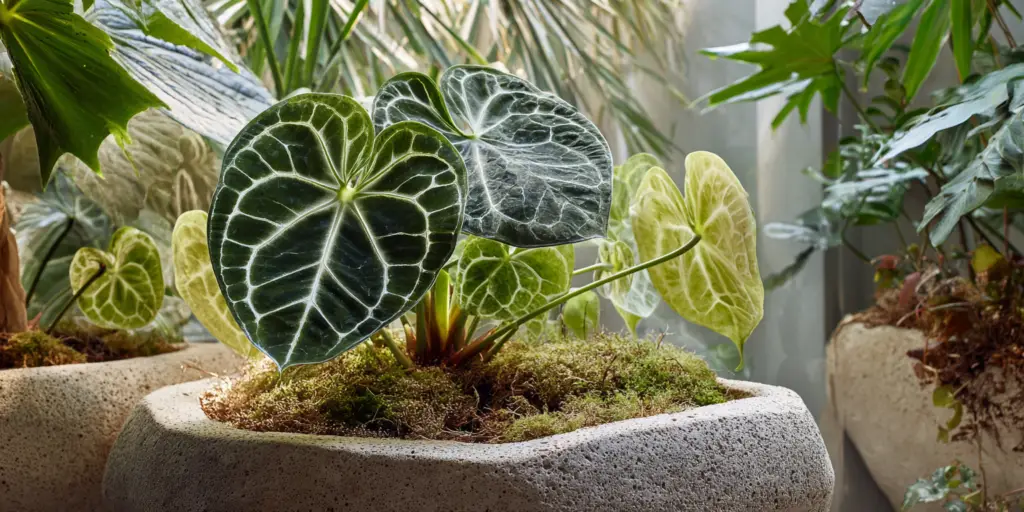
Anthurium warocqueanum
evergreen aroid; epiphyte
At‑a‑glance
- Group/Class: evergreen aroid; epiphyte
- Height × spread: 24 to 48 in (60 to 120 cm) × 18 to 30 in (45 to 75 cm) (varies by culture)
- Bloom window: infrequent indoors; not grown for flowers
- Color & flower form: green spathe and greenish spadix; foliage the focus
- Fragrance: 0 none
- USDA hardiness: 11 to 12; indoors elsewhere
- Breeder / Year / Origin: unknown
- Pet safety: avoid
How it differs
- Produces some of the longest leaves in the genus under high humidity
- More sensitive to dry air and handling than most anthuriums
- Benefits from support and excellent air movement
Strengths
- Iconic foliage for display collections
- Responds to stable warmth and humidity with steady growth
- Leaf venation becomes more prominent with age
Care in one minute
Site: bright, filtered light; avoid direct sun on leaves.
Soil: very airy aroid mix with large bark and perlite; pH 6.0 to 6.5.
Water: water thoroughly, then allow the top 1 in (2 to 3 cm) to dry; ensure fast drainage.
Feeding: light, regular feeding during warm months; reduce in low light.
Overwintering: keep 65 to 80°F (18 to 27°C) and 60% to 80% humidity; provide gentle airflow; stake large leaves if needed.
Watch‑outs
- Low humidity causes edge burn and leaf collapse
- Cold drafts and temperatures below 60°F (16°C) slow growth
- Waterlogging quickly leads to root issues
Best uses (tags)
Provenance note
Native to Colombia, including the Chocó region. Grown chiefly for its extraordinary foliage in controlled indoor environments.
References
- NC State Extension: Anthurium (genus) profile
- ASPCA: Flamingo Flower (Anthurium) toxicity
Similar Flowers
Enjoying our flower guides? Add YourFlowersGuide as a preferred source on Google. It helps more readers find us.
Add to Preferred Sources