in bloom
now
through Dec
Bloom calendar
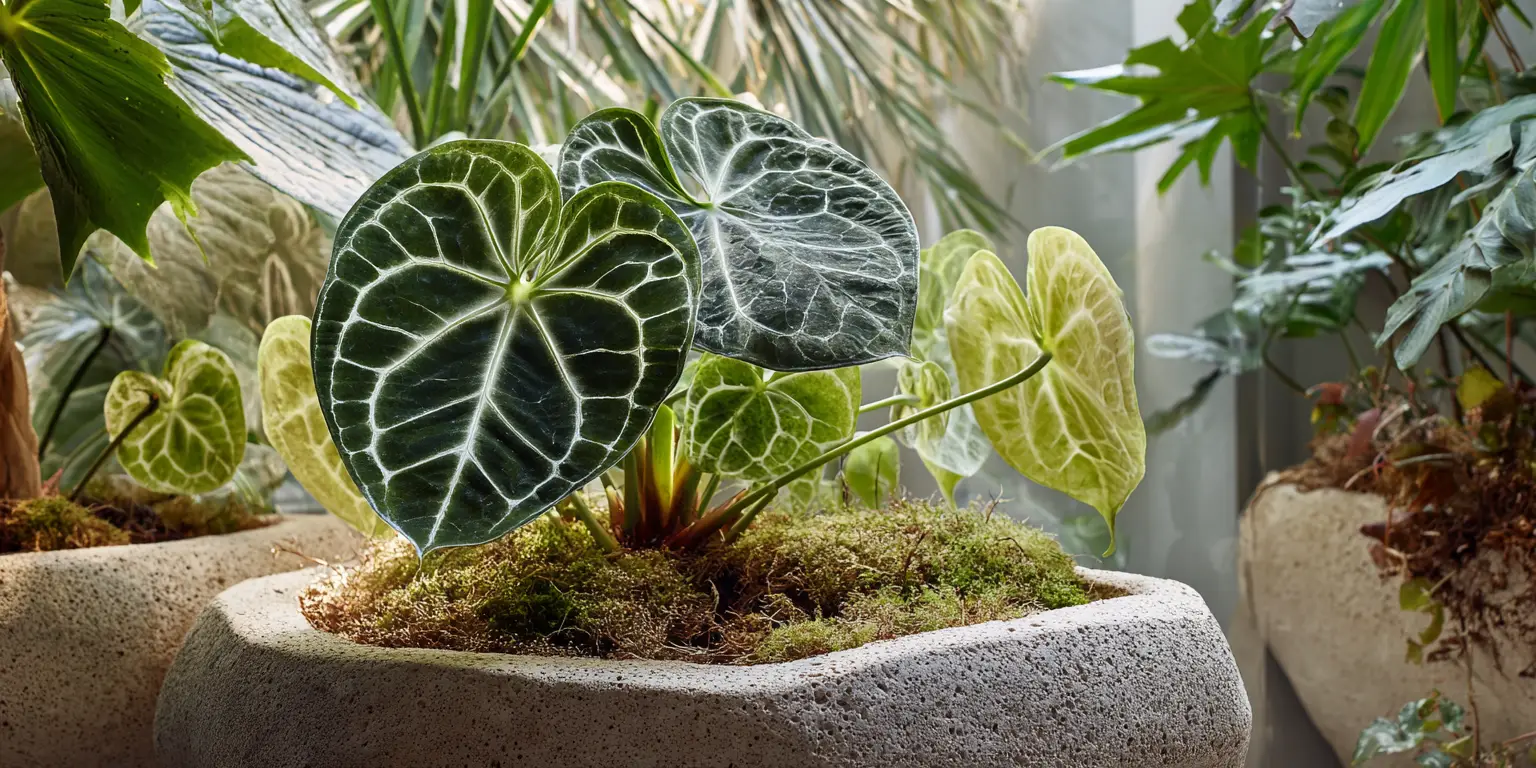
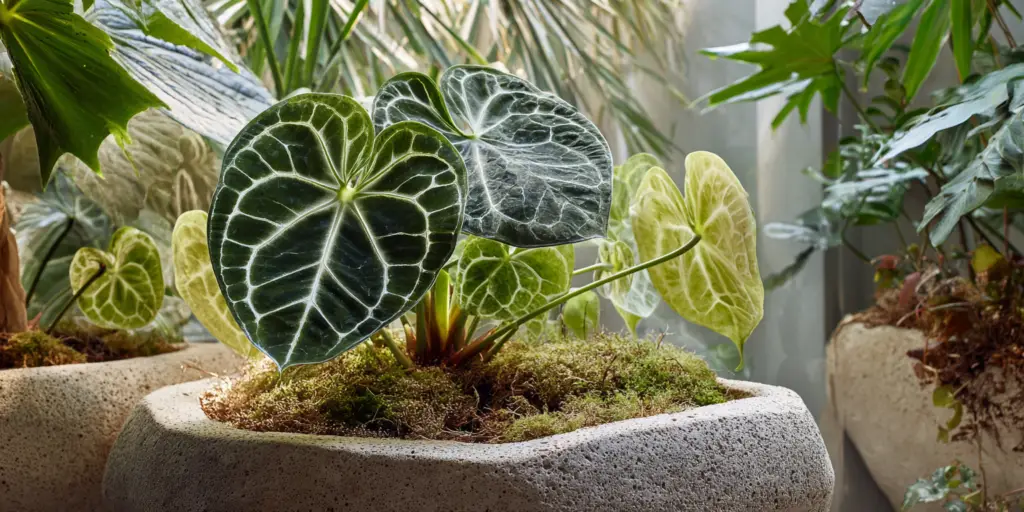
Anthurium clarinervium
evergreen aroid; epiphytic to lithophytic subshrub
At‑a‑glance
- Group/Class: evergreen aroid; epiphytic to lithophytic subshrub
- Height × spread: 12 to 24 in (30 to 60 cm) × 12 to 24 in (30 to 60 cm)
- Bloom window: sporadic indoors; not grown for flowers
- Color & flower form: small greenish to whitish spathe with pale spadix; foliage the focus
- Fragrance: 0 none
- USDA hardiness: 11 to 12; indoors elsewhere
- Breeder / Year / Origin: unknown
- Pet safety: avoid
How it differs
- Grown for velvety, white-veined leaves rather than showy spathes
- More compact than many velvet-leaf species
- Prefers consistently humid air for best leaf edges
Strengths
- Striking leaf pattern on manageable plants
- Adapts to containers and indoor light when bright and indirect
- Leaves often maintain good form with regular wiping and even moisture
Care in one minute
Site: bright, indirect light; avoid hot, direct sun.
Soil: coarse aroid mix with bark and perlite; pH 6.0 to 6.5; excellent drainage.
Water: let top 1 in (2 to 3 cm) dry; water thoroughly; avoid standing water.
Feeding: light monthly feed spring to summer; flush salts periodically.
Overwintering: keep 65 to 80°F (18 to 27°C) and 50% to 70% humidity; protect from drafts.
Watch‑outs
- Root rot in dense or waterlogged media
- Leaf margin browning in dry rooms
- Thrips or mites can blemish foliage
Best uses (tags)
Provenance note
Native to Chiapas, Mexico. Leaves commonly reach about 12 to 16 in long in cultivation, with larger leaves in ideal conditions.
References
- International Aroid Society: Anthurium clarinervium
- NC State Extension: Anthurium (genus) profile
- ASPCA: Flamingo Flower (Anthurium) toxicity
Similar Flowers
Enjoying our flower guides? Add YourFlowersGuide as a preferred source on Google. It helps more readers find us.
Add to Preferred Sources